Trump Tariffs Rattle Global Trade
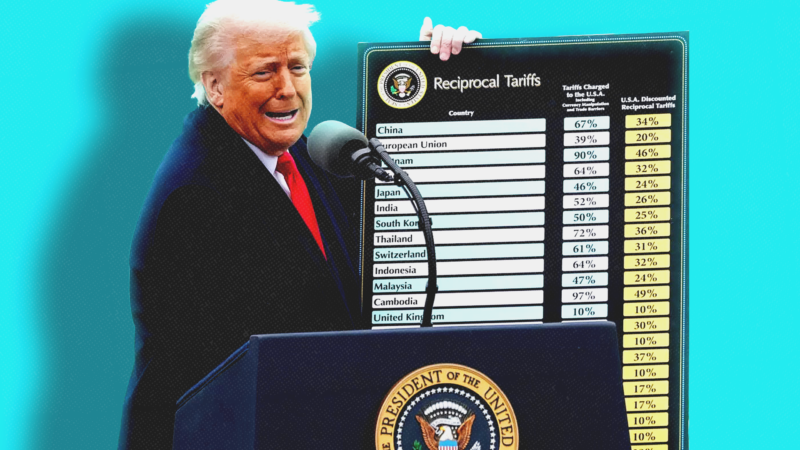
Trump Tariffs Rattle Global Trade
The return of Trump tariffs to the center of the political and economic conversation is not just another campaign talking point. It is a warning flare for companies already stretched by inflation, geopolitical risk, shipping disruptions, and a supply chain model that has never fully recovered its pre-crisis confidence. When tariff threats re-enter the debate, executives hear one thing clearly: costs are about to get harder to predict.
That uncertainty matters far beyond Washington. Manufacturers, retailers, logistics firms, and consumers all sit downstream from trade policy. A tariff can sound abstract in a speech, but in practice it hits procurement plans, supplier contracts, inventory timing, and shelf prices. For voters, it is framed as toughness. For businesses, it is a spreadsheet problem with political consequences. And for global markets, it is another sign that the rules of trade are becoming more transactional, more nationalistic, and more volatile.
- Trump tariffs are back in focus because they could sharply raise import costs across multiple industries.
- Businesses face renewed pressure to diversify suppliers, move production, or absorb higher prices.
- Consumers may ultimately pay more as tariff costs flow through pricing and inventory decisions.
- Markets are reacting not just to policy details, but to the broader return of trade uncertainty.
Why Trump Tariffs Matter Again
Tariffs are politically attractive because they are easy to message. They promise leverage, domestic protection, and a visible response to trade imbalances. But the economics are messier. A tariff is effectively a tax on imported goods, and while it may be targeted at foreign producers in theory, the immediate payer is often the importer. That cost then gets split between companies, suppliers, and end customers.
The latest debate around Trump tariffs lands in a very different environment than the one seen during his first term. Back then, many companies still believed they could ride out periodic shocks. Now, after years of pandemic bottlenecks, semiconductor shortages, war-driven commodity swings, and elevated borrowing costs, resilience has become expensive. There is less appetite for policy turbulence, and less room for mistakes.
Trade policy no longer lives in a narrow policy lane. It now intersects with inflation, national security, industrial strategy, election politics, and corporate risk planning all at once.
How Tariffs Actually Hit the Economy
The first impact is on importers
When tariffs rise, importers have to decide quickly whether to absorb the cost, renegotiate with suppliers, or pass the increase to customers. None of those options is painless. Absorbing the cost can compress margins. Renegotiation can strain vendor relationships. Passing costs forward can weaken demand.
The second impact is on supply chains
Companies that rely on global manufacturing rarely switch sources overnight. Tooling, compliance, quality assurance, labor skill, and shipping infrastructure all limit how fast production can move. Even firms that want to re-shore or friend-shore face a difficult transition period. Trade friction tends to create a lag where costs rise before new capacity is ready.
The third impact is on consumers
Tariffs can eventually surface in everyday categories: electronics, vehicles, industrial components, machinery, home goods, and apparel. Even when brands avoid direct price hikes, they may cut promotions, reduce model variety, or delay upgrades. Consumers experience tariffs not only as a higher price tag, but as a less efficient market.
What Businesses Are Likely Doing Right Now
Executives do not wait for every policy detail to become law. They game out scenarios. The practical response to tariff risk usually includes the same playbook, even if the specifics vary by sector.
- Reviewing supplier concentration in high-risk regions
- Reworking contracts to account for tariff-triggered cost changes
- Pulling forward inventory before possible implementation dates
- Modeling price elasticity to see what customers will tolerate
- Accelerating automation to offset labor and import costs
For larger enterprises, this often means building decision trees inside procurement and finance systems. A sourcing team may create scenario plans such as 10_percent_tariff, 25_percent_tariff, or full_category_restriction. Smaller firms have fewer buffers, which makes them more vulnerable. If you are a mid-market importer, you cannot always spread risk across multiple geographies or negotiate from strength.
Why Markets React Before Policy Becomes Reality
Markets do not wait for the final text. They price probabilities. That is why tariff rhetoric alone can move stocks, currencies, and commodities. Investors know that even the threat of major duties can alter earnings guidance, capital spending, and cross-border trade expectations.
The bigger issue is confidence. Businesses make long-cycle decisions based on assumptions about policy stability. If executives believe tariffs could expand quickly or unpredictably, they may delay factory investments, hold excess inventory, or preserve cash rather than spend aggressively. Those defensive moves can drag on growth even before any formal measure is enacted.
Uncertainty is its own tax. Companies can survive higher costs more easily than they can survive constant policy whiplash.
Trump Tariffs and the Politics of Toughness
Supporters of tariffs argue that they project strength and force trading partners to the table. There is political logic to that argument. Trade deficits and manufacturing decline remain powerful themes, especially in regions that feel hollowed out by globalization. Tariffs are presented as proof that government is willing to intervene on behalf of domestic workers.
Critics counter that broad-based tariffs often function as blunt instruments. They may generate headlines, but they can also hit domestic manufacturers that depend on imported inputs. A company assembling finished products in the US may still need foreign steel, electronics, batteries, machine parts, or specialized chemicals. If those costs rise, the competitive position of domestic production can weaken rather than strengthen.
That tension is what makes Trump tariffs such a potent and divisive issue. They sit at the intersection of economic nationalism and business pragmatism. The political upside is simple to explain. The operational downside is not.
Who Faces the Biggest Exposure
Retail and consumer goods
Retailers are especially exposed because they operate on thin margins and highly seasonal demand. A tariff introduced at the wrong moment can disrupt holiday planning, back-to-school inventory, or promotional calendars.
Automotive and industrial manufacturing
Modern manufacturing depends on deeply interconnected supply chains. A single finished vehicle or machine may include parts sourced across several countries. Tariffs can create cascading cost pressure rather than a single clean adjustment.
Technology hardware
Hardware companies remain vulnerable because production ecosystems are concentrated, complex, and difficult to replicate quickly. Even when assembly shifts, upstream components may still come from tariff-exposed regions.
Small import-dependent businesses
Smaller firms often have the least leverage and the narrowest cash cushions. They may lack the software, staff, or scale to redesign sourcing quickly. For them, trade policy is not a macro debate. It is an immediate survival variable.
What This Means for Consumers
Consumers may not follow tariff schedules, but they feel the effects when product prices rise or choices narrow. Inflation fatigue has already changed buying behavior. Households are more price sensitive, more promotion-driven, and more willing to delay purchases. Add tariff-related cost pressure, and brands have less room to maneuver.
Some companies will try to shield customers through temporary margin sacrifices. Others will use hidden forms of repricing: smaller bundles, fewer premium features, longer replacement cycles, or selective increases on high-demand items. The result is often subtle at first, then cumulative.
The Strategic Shift Beyond One Election Cycle
Even if specific tariff proposals change, the larger direction of travel is hard to miss. Global trade is becoming more politically managed. Companies are increasingly designing supply chains around resilience, not just efficiency. That means more dual sourcing, more regionalization, and more tolerance for redundancy.
This is the long tail of the tariff era. The real consequence may not be one specific tax rate. It may be a permanent re-pricing of stability. Businesses now assume that geopolitics can interrupt commerce at any moment, whether through tariffs, export controls, sanctions, shipping chokepoints, or industrial policy.
For leaders, the new baseline is clear: trade strategy is now core strategy. It belongs in boardrooms, not just customs departments.
Why This Matters Now
The current debate over Trump tariffs matters because it arrives at a fragile moment. Inflation remains politically toxic. Central banks are still navigating uneven growth. Supply chains are more diversified than they were a few years ago, but they are also more complex and expensive. Any new tariff wave would hit an economy already carrying a lot of friction.
There is also a signaling effect. Tariffs tell the market that cross-border commerce is no longer governed primarily by cost and comparative advantage. It is governed by political priorities that can change quickly. That forces every serious business to think less like a buyer and more like a risk manager.
The tariff story is bigger than trade. It is a preview of how economics, security, and politics now move together.
Bottom Line
The appeal of tariffs in politics is obvious. The consequences in business are rarely so clean. For companies, renewed tariff threats mean higher planning costs, tougher sourcing decisions, and a market where uncertainty itself becomes a competitive factor. For consumers, it could mean another round of price pressure at a time when patience is already thin.
That is why this moment deserves attention. Trump tariffs are not just about punishing imports or projecting strength. They are about who pays, how fast supply chains can adapt, and whether the global economy is entering a new phase where volatility is no longer an exception, but the operating system.
The information provided in this article is for general informational purposes only. While we strive for accuracy, we make no guarantees about the completeness or reliability of the content. Always verify important information through official or multiple sources before making decisions.