Sudan Needs a Civilian Exit
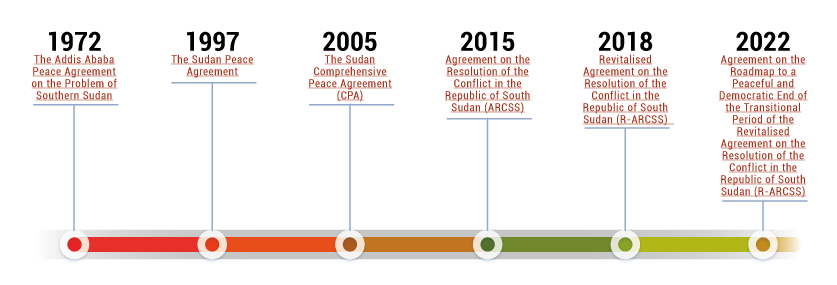
The Sudan peace roadmap is not a diplomatic nicety. It is the only serious answer to a war that has turned cities into ruins, displaced millions, and made every ceasefire look temporary. Sudan’s prime minister is effectively arguing that the country does not need another recycled power-sharing deal. It needs a civilian-led reset that can survive the guns, reopen aid channels, and restore a minimum of state legitimacy. That argument matters because the alternative is not stalemate – it is a slow-motion fragmentation of the country, with armed actors, regional patrons, and exhausted communities all paying the price.
If that sounds stark, it should. Sudan is not facing a normal transition crisis. It is facing a test of whether politics can still outrun war. And right now, the most credible way out is not a grand bargain struck over the heads of civilians. It is a practical, enforced, and internationally backed process that gives ordinary Sudanese more power than the men with rifles.
- The war has no clean military finish. Any exit built around battlefield victory is fantasy.
- Civilians must lead the reset. Legitimacy will not come from armed camps alone.
- A ceasefire is only the start. Humanitarian access and local governance matter just as much.
- Regional spillover is already here. Sudan’s collapse would destabilize neighbors and trade routes.
- Accountability cannot wait. Reconstruction without justice would simply reward destruction.
Why the Sudan peace roadmap matters
The central flaw in many Sudan talks is the assumption that peace is what happens after the shooting slows. In reality, peace is the architecture that makes the shooting politically impossible. The current war between the SAF and the RSF has shredded that architecture. It has blurred the line between combat zones and civilian life, weakened state institutions, and created a parallel economy of violence that benefits from prolonged instability.
That is why the prime minister’s framing is more important than a soundbite. A real Sudan peace roadmap has to answer the question that every other process dodges: who owns the state after the guns go quiet? If the answer is just another coalition of armed elites, then Sudan gets a pause, not a future. If the answer puts civilians, local administrators, and service delivery at the center, then the country has a chance to rebuild trust from the ground up.
The hardest truth is this: a ceasefire that preserves armed domination is not peace. It is a timeout for the next war.
Ceasefire is a tool, not the ending
Many policy conversations treat a ceasefire as the victory line. It is not. It is the minimum condition for stopping the bleeding. What comes next is even harder: securing roads, restoring market access, protecting aid convoys, and rebuilding local administration in places where the state has all but vanished. Without those layers, any ceasefire becomes an empty signature on paper while civilians continue to starve, flee, or live under coercion.
That is where the skepticism comes in. Sudan has already seen how quickly promises unravel when enforcement is weak and incentives are upside down. Armed actors can sign to buy time, regroup, or reshape the battlefield. A serious roadmap has to assume that bad faith is the default and build around it with verification, consequences, and local participation.
Civilians have to own the reset
There is no durable recovery if the public is asked to wait patiently while armed factions negotiate its future. Sudanese professionals, neighborhood committees, women’s groups, municipal leaders, and displaced communities need a seat at the table, not a ceremonial role after decisions are already locked in. They are the ones who know which services failed first, which neighborhoods need immediate security, and which local arrangements can actually hold.
This is where the prime minister’s argument gains force. A civilian-led transition is not a moral luxury. It is the only practical way to rebuild consent. The state does not return because a document says so. It returns when people can access hospitals, open businesses, move safely, and believe that authority exists for them rather than over them.
What the Sudan peace roadmap actually requires
The best path forward is not glamorous, and that is exactly why it may work better than the usual headline-grabbing diplomacy. The roadmap needs narrow goals, visible benchmarks, and enough pressure to make obstruction expensive.
- A monitored
ceasefire. Not a vague pause, but one with verification, public reporting, and consequences for violations. - Safe humanitarian corridors. Aid must move reliably, or famine and displacement will keep compounding the war.
- Local civilian administration. Municipal services, schools, clinics, and courts need immediate support in recovered areas.
- Security sector limits. Armed groups cannot be allowed to monopolize power while pretending to transition.
- Accountability mechanisms. War crimes, abuses, and looting must be documented now, not after impunity hardens.
Each of those items sounds basic. None of them are easy. But that is the point. Sudan’s crisis has been treated as if complexity itself were an excuse for delay. It is not. The more violent the environment becomes, the more disciplined the response needs to be.
Humanitarian access is the credibility test
If aid cannot move, every other promise is decorative. Food, medicine, shelter, and fuel are not side issues in Sudan. They are the difference between a political process and a humanitarian disaster masquerading as diplomacy. The first sign of seriousness will be whether convoys can reach trapped populations without being taxed, blocked, or weaponized.
That is also why outside actors matter. Regional governments and global powers cannot keep sending contradictory signals, financing proxies, or hedging for influence while claiming to support peace. The map of intervention has to shrink around the needs of civilians, not expand around the ambitions of armed patrons.
Accountability will shape the next decade
Reconstruction without accountability is just a reset for the guilty. Sudan has already paid too high a price for elite bargains that protect perpetrators and leave victims carrying the bill. If the country is to avoid repeating that cycle, investigations, evidence preservation, and sanctions against spoiler behavior need to begin now. Not because justice solves everything, but because impunity solves nothing.
Pro tip for watching this process: ignore the ceremony and track the mechanics. Who controls checkpoints? Who funds local services? Who gets aid through? Those are the indicators that tell you whether the roadmap is real or just rhetorical theater.
Why the Sudan peace roadmap has regional stakes
Sudan’s war is often described as a domestic tragedy, but that undersells it. The conflict is already reshaping regional security, migration routes, cross-border trade, and diplomatic alignments. A failing Sudan puts pressure on Chad, South Sudan, Egypt, Ethiopia, and the Red Sea corridor. It also creates new spaces for smuggling networks, armed recruitment, and opportunistic interference.
That wider spillover is what should worry policymakers who still think of Sudan as a contained crisis. Contained crises are rare in a neighborhood this connected. The longer the war drags on, the more neighboring states will hedge for self-protection, and the harder it becomes to build a unified push for peace. In other words, delay does not preserve options. It burns them.
The economic stakes are just as serious. Ports, agricultural systems, and transport corridors cannot function in a country that is permanently at war with itself. Investors will not return on the back of promises alone, and recovery financing will not unlock without security. If the peace process fails, Sudan risks becoming a cautionary tale of how a strategically important country can be hollowed out from the inside while the world argues over process.
Sudan does not need a louder peace plan. It needs a smaller, tougher one with real enforcement and civilian ownership.
What happens next
The most optimistic reading is that Sudan’s leaders and their external backers finally accept a hard truth: there is no stable end state built around perpetual armed competition. The most realistic reading is that any breakthrough will be partial, fragile, and repeatedly tested. Both can be true. What matters is whether the process is designed to absorb failure without collapsing back into total war.
That means the next phase should privilege measurable steps over symbolic declarations. Restore a road. Reopen a clinic. Move a convoy. Pay civil servants. Reconnect a school. Each small success is a political signal that life can be organized without violence. That is how a Sudan peace roadmap becomes more than a headline. It becomes a system of incentives that makes peace harder to sabotage.
Sudan’s prime minister is right to frame the exit as a path, not a moment. The path will be ugly, contested, and full of reversals. But it is still the only credible route out of the horrors of war. Anything less is just postponing the next catastrophe.
The information provided in this article is for general informational purposes only. While we strive for accuracy, we make no guarantees about the completeness or reliability of the content. Always verify important information through official or multiple sources before making decisions.