Suez Route Stays in Play
Suez Route Stays in Play
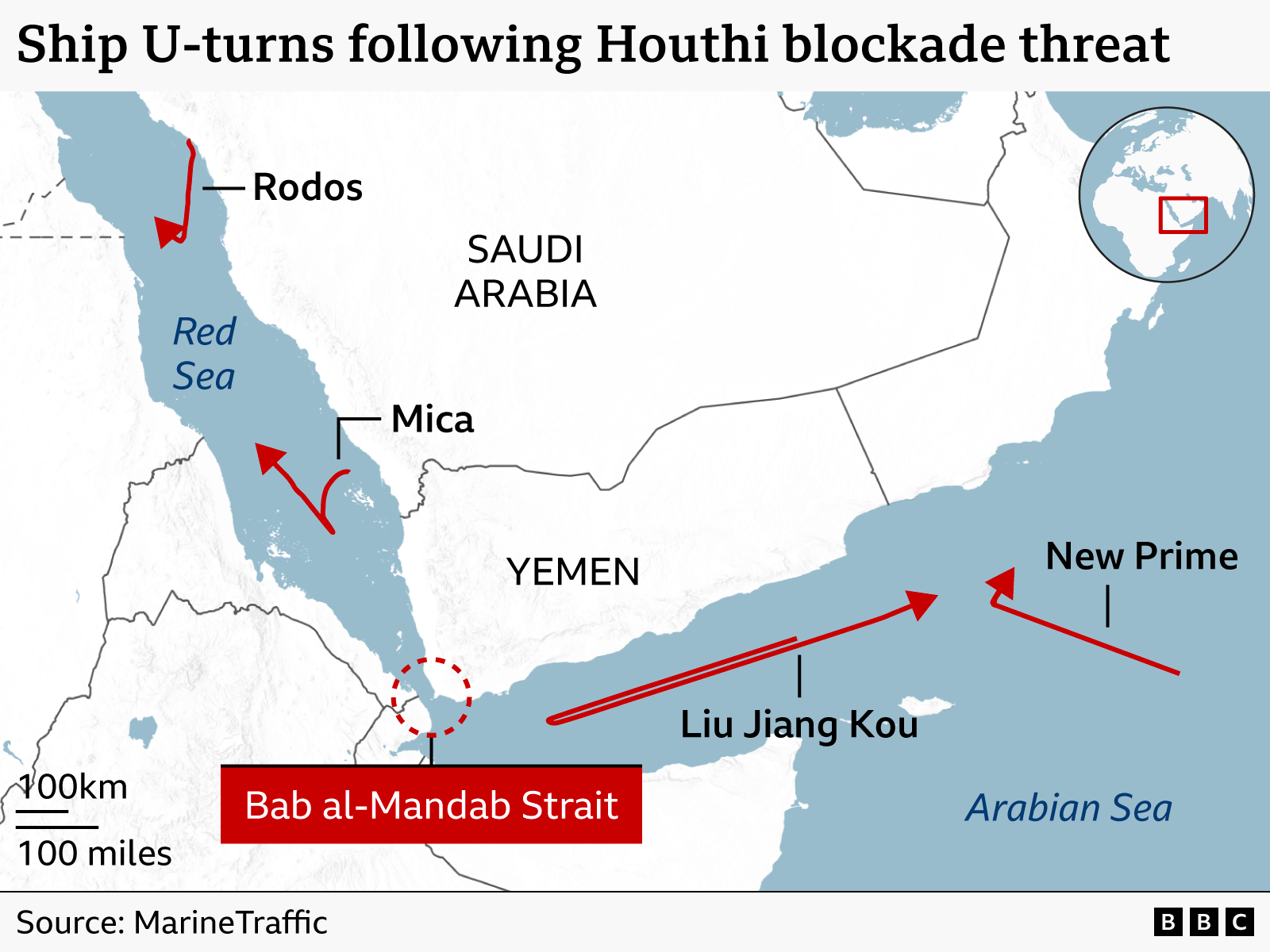
The Suez Canal is back in the spotlight for a reason that should worry anyone watching energy bills: when the Red Sea turns hostile, the old shipping shortcuts suddenly look like lifelines. As Houthi attacks have effectively choked traffic through Bab al-Mandeb, Asian oil consumers are being forced to ask a blunt question: can the Suez Canal meaningfully soften the shock, or is the best it can do merely reduce the damage? The answer matters far beyond tanker routes. It shapes freight rates, refinery margins, insurance costs, delivery schedules, and ultimately the price of fuel from Singapore to Seoul. This is not just a maritime detour. It is a stress test for global energy logistics, and the market is discovering how fragile “efficient” supply chains really are.
- The
Suez Canalcan help reroute some flows, but it cannot fully replace the security lost in the Red Sea. - Asian buyers face higher freight, insurance, and transit uncertainty even when cargoes keep moving.
- Refiners and traders are likely to lean harder on inventory buffers and longer-term supply planning.
- The real story is not just volume. It is cost, timing, and the price of geopolitical risk.
Why the Suez Canal matters now
The shipping crisis around the Red Sea has turned a regional security problem into a global energy pricing issue. When vessels avoid Bab al-Mandeb, they do not simply disappear. They divert around the Cape of Good Hope, adding days or even weeks to voyages. That means fewer effective tanker cycles, tighter vessel availability, and higher charter rates. For Asian oil consumers, especially import-dependent economies, the pain shows up in a familiar chain reaction: more expensive delivered barrels, tighter refinery planning, and less room to absorb volatility.
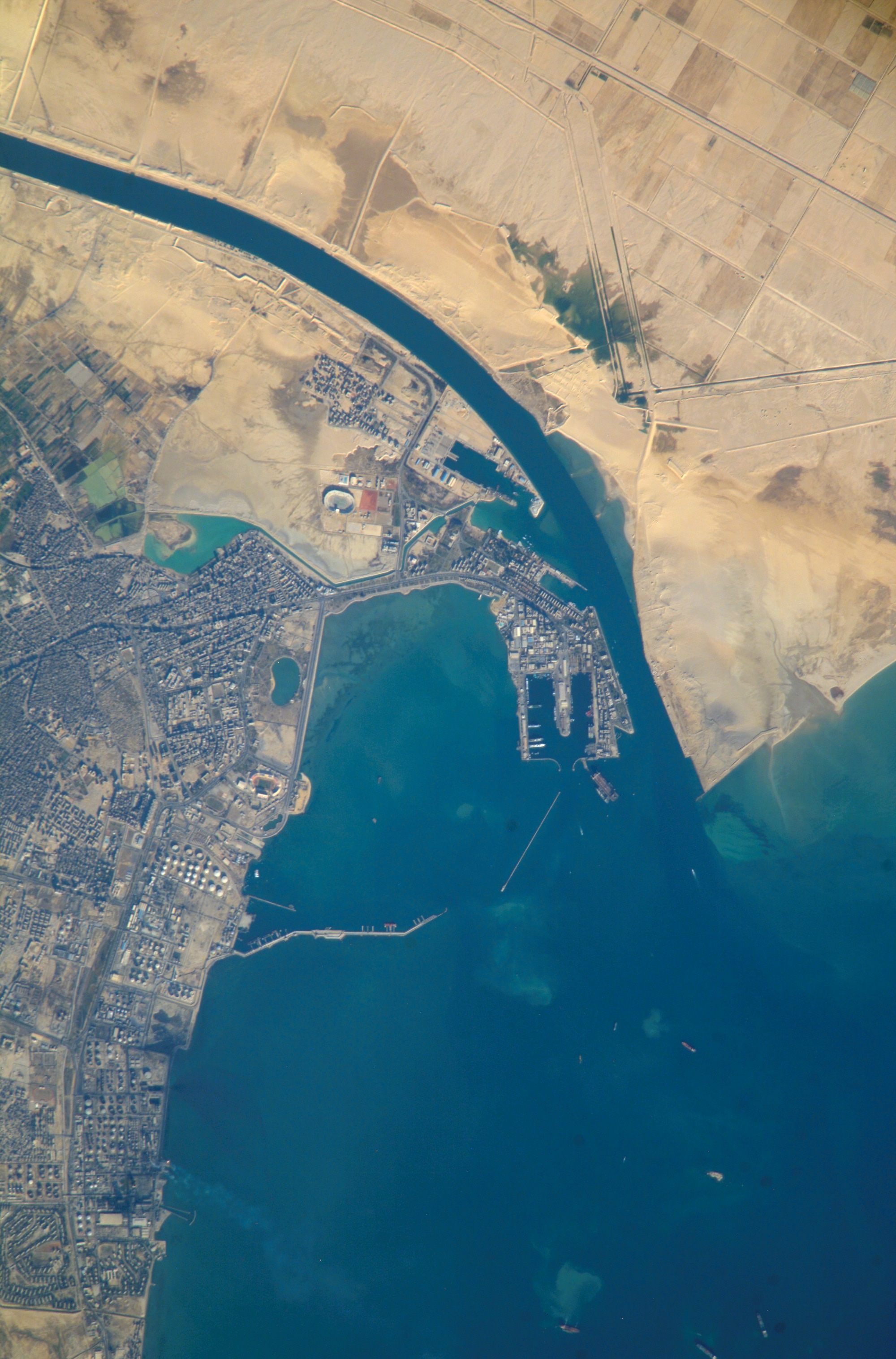
The Suez Canal is strategically important because it offers a shorter route between Europe, the Middle East, and Asia than the southern detour around Africa. Yet its usefulness depends on whether ships can safely reach it and on how carriers balance risk against cost. The canal is not a magic switch that restores normality. It is one piece of a disrupted network. That distinction matters because markets often reward the illusion of rerouting before they price in the knock-on effects.
“A route is only useful if the cargo can reach it safely, on time, and at a cost that does not erase the advantage.”
What Asian oil consumers are really buying
For refiners and state-backed importers, crude is never just crude. They are buying supply certainty, shipping reliability, and optionality. When a chokepoint like Bab al-Mandeb is disrupted, those hidden inputs get repriced fast. The immediate question is whether cargoes can be redirected through the Suez Canal without triggering a second wave of bottlenecks. In practice, the answer is mixed.
Cost rises even when barrels arrive
Longer voyages mean more fuel burned by the tanker itself, higher crew and operating costs, and often a more expensive insurance bill. These costs are not theoretical. They flow directly into delivered crude prices and product margins. If the market senses prolonged risk, shipowners can demand premiums simply to keep sailing certain lanes. That premium is the real tax on disruption.
Timing becomes a strategic variable
Refineries run on precision. Feedstock arrivals that miss their window can force expensive adjustments, including stockdraws, operating rate changes, or replacement purchases on the spot market. Asian buyers can usually manage a little turbulence. What they cannot easily absorb is persistent uncertainty. The Suez Canal may preserve access, but it does not remove the scheduling problem caused by reroutes and convoy anxieties.
Inventory turns into insurance
When shipping gets risky, inventories matter more. Companies with large storage positions can ride out delays; those running lean inventories are exposed to every headline. That is why the current environment may reward buyers with stronger balance sheets and well-managed storage hubs in places like Singapore, Fujairah, and key Northeast Asian terminals. Physical optionality has become a competitive advantage again.
The Suez Canal is a relief valve, not a reset button
There is a temptation to treat the Suez Canal as the solution to the Red Sea disruption. It is not. At best, it is a relief valve that prevents the situation from becoming even worse. That is because the canal does not address the core problem: heightened danger in adjacent sea lanes. If risk remains elevated near Bab al-Mandeb, then insurance, routing, and vessel scheduling all remain distorted.
Still, the canal’s importance should not be underestimated. When markets lose confidence in a key route, every alternative becomes more valuable. The canal can support a partial normalization of flows for some cargoes, especially if shipping firms judge the risk acceptable or if governments and carriers coordinate around safer transit patterns. But the economics are unforgiving. If a detour around Africa is the only option for many vessels, then the system remains structurally more expensive than before the disruption.
That is the central takeaway: the market is not choosing between “normal” and “chaos”. It is choosing between different levels of inefficiency, each with its own price tag.
How traders and refiners should read the signal
For energy desks, the practical question is not whether headlines are alarming. It is how long the disruption lasts and whether the market has already priced it in. The smartest operators are likely taking a layered approach:
- Lock in supply earlier: secure cargoes before shipping premiums widen further.
- Hedge transport risk: build freight and insurance costs into pricing models sooner rather than later.
- Rebalance inventories: keep enough buffer stock to absorb delays without overpaying for emergency cargoes.
- Track route economics daily: the relative value of
Suez Canaltransit versus Cape routing can change fast. - Stress-test refinery runs: model worst-case delivery delays and use those scenarios to plan throughput.
These are not just defensive moves. They are a way to preserve margin in a market where logistics, not geology, may be setting the marginal barrel price. Traders who assume the shipping problem is temporary may underprice the persistence of risk. Those who overreact may pay too much for protection. The middle path is disciplined flexibility.
Why this disruption reaches beyond oil
Energy does not move in isolation. When oil flows get rerouted, the ripple effects travel through petrochemicals, shipping fuel demand, manufacturing schedules, and inflation expectations. Asian importers are particularly sensitive because many regional economies rely heavily on seaborne energy. Higher delivered costs can affect transport prices, electricity generation economics, and refining spreads. Even if governments cushion consumers, businesses still feel the squeeze first.
There is also a broader strategic signal here. The Red Sea disruption exposes how much global trade still depends on narrow maritime corridors. That dependence has always been visible on maps. What changes during a crisis is how expensive that geography becomes. A vessel that misses the shortest route by choice is making a financial calculation. A vessel that misses it because of force majeure is revealing a systemic vulnerability.
“The market price of energy security is not paid at the pump alone. It is paid in freight, insurance, inventory, and the quiet cost of uncertainty.”
What could happen next
The near-term outlook depends on three variables: the security situation near Bab al-Mandeb, the willingness of carriers to transit the Suez Canal, and the ability of Asian buyers to absorb higher logistics costs. If attacks continue, the market will likely normalize around elevated freight and insurance premiums. If risk eases, some traffic may return more quickly than expected. But even a partial recovery can take time because shipping contracts, fleet positioning, and refinery scheduling do not reset overnight.
There is a deeper structural question too. If repeated disruptions convince more buyers to diversify away from vulnerable routes, then the long-term consequence could be a less efficient but more resilient global oil trade. That would mean more redundancy, more inventory, and more cost. It is a classic tradeoff: resilience rarely comes cheap.
The likely market shape
Expect a pattern of cautious adaptation rather than a dramatic snapback. Shipowners will price risk conservatively. Buyers will keep more buffer stock. Governments will watch inflation. And analysts will keep asking the same question in different forms: is the system healing, or merely learning to function at a higher cost?
The answer, for now, is closer to the latter. The Suez Canal may keep cargo moving, but it cannot fully erase the strategic shock delivered by the closure of a major Red Sea corridor. Asian oil consumers may avoid the worst-case scenario, but they are not getting a free pass. They are paying in higher logistics costs, greater operational complexity, and a persistent premium for uncertainty.
That is the real story: the canal can soften the blow, but it cannot restore the illusion that global oil flows are always one safe passage away from normal.
The information provided in this article is for general informational purposes only. While we strive for accuracy, we make no guarantees about the completeness or reliability of the content. Always verify important information through official or multiple sources before making decisions.