Supreme Court Showdown Reshapes Birthright Citizenship
Supreme Court Showdown Reshapes Birthright Citizenship
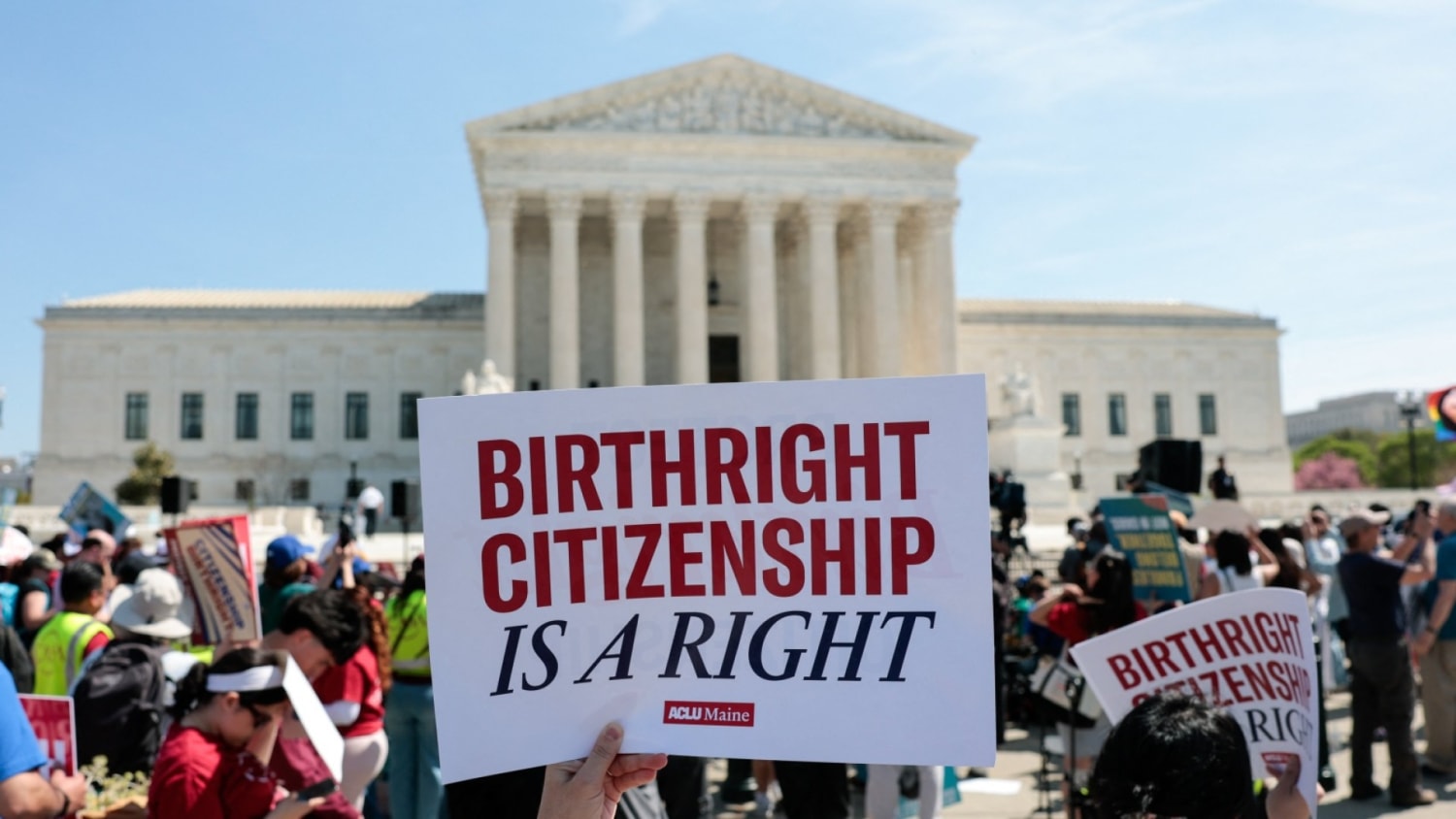
The Supreme Court has stepped into a political minefield, and the stakes could not be higher. The fight over birthright citizenship is more than a legal scuffle-it is a stress test for the Constitution, a referendum on national identity, and a fresh battleground for 2026 campaign narratives. As justices probe whether the 14th Amendment guarantees citizenship to everyone born on U.S. soil, the answer could redefine who belongs, who votes, and who gets to shape America’s future. The rhetoric inside the marble chamber is fierce, the political consequences are seismic, and the country is bracing for a precedent that could reverberate for generations. The phrase “Supreme Court birthright citizenship” is no longer legal jargon; it is the headline shaping every strategy room from Washington to Silicon Valley.
- The Court is weighing whether the
14th Amendmentmandates automatic citizenship for all U.S.-born children. - A ruling to curb birthright citizenship could trigger legislative chaos and massive administrative overhauls.
- Political campaigns are already weaponizing the arguments to mobilize base voters.
- Tech, business, and border states anticipate labor and innovation shocks if the standard shifts.
Why the Supreme Court Birthright Citizenship Question Hit Now
Timing is everything. The current docket folds immigration, national security, and electoral politics into one high-stakes dispute. Petitioners argue that the Citizenship Clause should exclude children of certain noncitizens, while respondents insist that the text and history of the 14th Amendment draw no such lines. The Court’s acceptance signals appetite to revisit assumptions that had felt settled since United States v. Wong Kim Ark, the 1898 decision that cemented the modern understanding of birthright citizenship.
Key insight: Any departure from
Wong Kim Arkwould be a generational pivot, not a minor tweak. The judiciary is being asked to redraw the nation’s civic map.
Behind the scenes, political operatives see an opportunity: framing citizenship as a sovereignty issue energizes voters who want tighter borders, while civil rights advocates warn of a slippery slope toward tiered citizenship. The Court’s oral arguments featured sharp questions about textualism, congressional intent, and practical fallout, underscoring that this is not just a historical exercise-it is a live wire for policy and politics.
Main Fault Lines in the Oral Arguments
Textualism vs. Pragmatism
Conservative justices leaned on textualism, parsing the phrase “subject to the jurisdiction thereof” in the 14th Amendment. They queried whether the framers intended automatic citizenship for children of parents present without authorization. Liberal justices countered with pragmatic concerns: if birthright citizenship is curbed, who decides eligibility and how does the government avoid a bureaucracy nightmare? The clash underscored a central tension: constitutional purity versus administrative feasibility.
Federal Power vs. State Impact
Several questions probed whether states might have a role in determining citizenship criteria if the federal default changes. Border states warned about increased enforcement costs and documentation burdens. A decision redefining citizenship could force states to retool vital records, hospital protocols, and school enrollments. The fear is simple: a fragmented patchwork replacing a uniform standard.
Historical Precedent Under Siege
Petitioners sought to narrow Wong Kim Ark, arguing that the 1898 context does not map cleanly to modern unauthorized immigration. Respondents emphasized that the principle of jus soli is bedrock, not discretionary. The Court must weigh whether stability and reliance interests override a new interpretive push.
Potential Outcomes and Their Shockwaves
The Court has several options, each with massive consequences:
- Uphold current birthright citizenship: The status quo remains, but the Court issues a modern affirmation, shutting down legislative attempts to narrow citizenship.
- Narrow birthright eligibility: Children of certain noncitizens are excluded, prompting Congress to legislate criteria and agencies to build new verification systems.
- Invite Congress to act: The Court defers, signaling that legislative clarity is required, igniting partisan gridlock and uncertainty for millions.
Even a narrow ruling could trigger documentation demands at hospitals, requiring parents to prove status before a birth certificate is issued. That would slow processes, increase administrative error, and open new vectors for discrimination litigation.
Pro tip: Any organization handling identity- from hospitals to startups building digital ID-should model scenarios where proof-of-status becomes a prerequisite to vital records. Build APIs and audit trails now.
Political Theater Meets Constitutional Law
Election-year dynamics are impossible to ignore. Campaigns already deploy targeted ads claiming that birthright citizenship fuels unauthorized immigration. Conversely, rights groups frame the case as an attack on equal protection and the core promise of the Fourteenth Amendment. The justices appeared wary of being cast as political actors, yet the timing ensures their opinion will color voter turnout and legislative agendas.
Strategists note that suburban voters may recoil from bureaucratic hurdles for newborns, while border-focused constituencies may cheer tighter definitions. The Court’s majority must balance doctrinal purity with the risk of being seen as reshaping the electorate from the bench.
Operational Chaos or Managed Transition?
Agencies Under Pressure
If birthright citizenship is narrowed, agencies like USCIS and CBP will scramble to issue guidance, redefine status categories, and coordinate with state vital records offices. The technology stack underpinning citizenship verification is outdated, and sudden policy shifts could expose gaps in identity resolution, data matching, and privacy compliance.
Hospitals and Schools as Frontline Gatekeepers
Healthcare providers could become de facto immigration screeners. Schools might face enrollment documentation disputes. Expect litigation over equal access to education and emergency care if status checks proliferate.
Private Sector Exposure
Banking, fintech, and gig platforms that rely on know-your-customer processes will need to revise onboarding flows. Companies should prepare for increased requests to validate place of birth and parental status, raising both compliance costs and privacy risk.
Why This Matters for Business and Tech
Citizenship status influences labor mobility, startup formation, and patent production. Restrictive definitions could shrink the pool of eligible workers, especially in border economies and tech hubs reliant on immigrant talent. Venture firms already factor immigration friction into funding risk; a tighter citizenship regime amplifies that concern.
Future signal: Expect a surge in demand for secure identity tools, document authentication, and cross-border workforce platforms. Firms that solve verification elegantly could become essential infrastructure.
Data privacy is another flashpoint. Verifying parental status might require accessing sensitive immigration files, creating temptation for data sharing across agencies and private contractors. Robust audit logs, minimal data retention, and clear consent flows will be essential to avoid abuse and mission creep.
Legal and Historical Context
The Text of the 14th Amendment
The Citizenship Clause states: “All persons born or naturalized in the United States, and subject to the jurisdiction thereof, are citizens of the United States.” The interpretive fight hinges on whether “jurisdiction” was meant broadly (all born on U.S. soil) or narrowly (excluding certain categories).
Wong Kim Ark as Precedent
The 1898 decision held that a child born in San Francisco to Chinese parents was a citizen, despite the Chinese Exclusion Act. The Court leaned on English common law and the concept of jus soli. Petitioners now argue that the modern landscape of unauthorized migration alters the calculus, but respondents stress reliance interests and the dangers of destabilizing citizenship retroactively.
Global Comparisons
Many developed countries have tightened birthright citizenship, moving toward jus sanguinis (citizenship via bloodline). The U.S. has long been an outlier, and a shift could align it with peers while severing a distinctive promise that underpinned its immigration narrative.
Risk Map: What Could Break First
- Vital records delays: Hospitals and states may hold birth certificates pending status proof, slowing access to healthcare and benefits.
- Litigation spike: Equal protection and due process suits could flood federal courts as families challenge denials.
- Identity fraud incentives: New documentation requirements could spawn black markets for forged status papers.
- Economic drag: Labor shortages in agriculture, service, and tech intensify if cohorts lose automatic citizenship.
- Diplomatic friction: Countries of origin may dispute responsibility for children born and raised in the U.S., complicating removal efforts.
What Advocates and Opponents Are Missing
Advocates of narrowing citizenship often underestimate operational complexity and the risk of creating stateless children. Opponents sometimes gloss over genuine public concern about border management. The missing middle is a legislative plan that pairs humane protections with clear eligibility rules and modernized identity infrastructure.
Bottom line: If the Court opens the door, Congress must do more than react. It must design a durable citizenship architecture that resists litigation and technological obsolescence.
How to Prepare Now
Organizations should not wait for the opinion to drop. A proactive checklist mitigates shock:
- Audit onboarding flows for citizenship proof and add optional fields for parental status without making them mandatory yet.
- Coordinate with counsel on data retention policies tied to identity verification.
- Invest in
privacy-by-designlogging so any new documentation checks are accountable. - Model workforce scenarios if certain hires lose automatic citizenship eligibility.
- Plan communications that explain changes in plain language to avoid panic and misinformation.
Outlook: The Next 24 Months
If the Court narrows birthright citizenship, expect an emergency rulemaking sprint at DHS, lawsuits seeking injunctions, and a scramble among states to standardize documentation. If the Court upholds the status quo, political actors will still leverage the issue, pushing for constitutional amendments or statutes aimed at border control. Either way, the debate will reshape immigration platforms in 2026 and 2028, influence tech hiring plans, and test how fast American governance can adapt.
The Supreme Court birthright citizenship clash is a rare intersection of constitutional text, technological capacity, and political theater. However the justices rule, the decision will ripple through maternity wards, HR departments, campaign war rooms, and data centers. Prepare for a country re-arguing what it means to belong-and for every sector to feel the aftershocks.
The information provided in this article is for general informational purposes only. While we strive for accuracy, we make no guarantees about the completeness or reliability of the content. Always verify important information through official or multiple sources before making decisions.