Supreme Court Term Tests Power
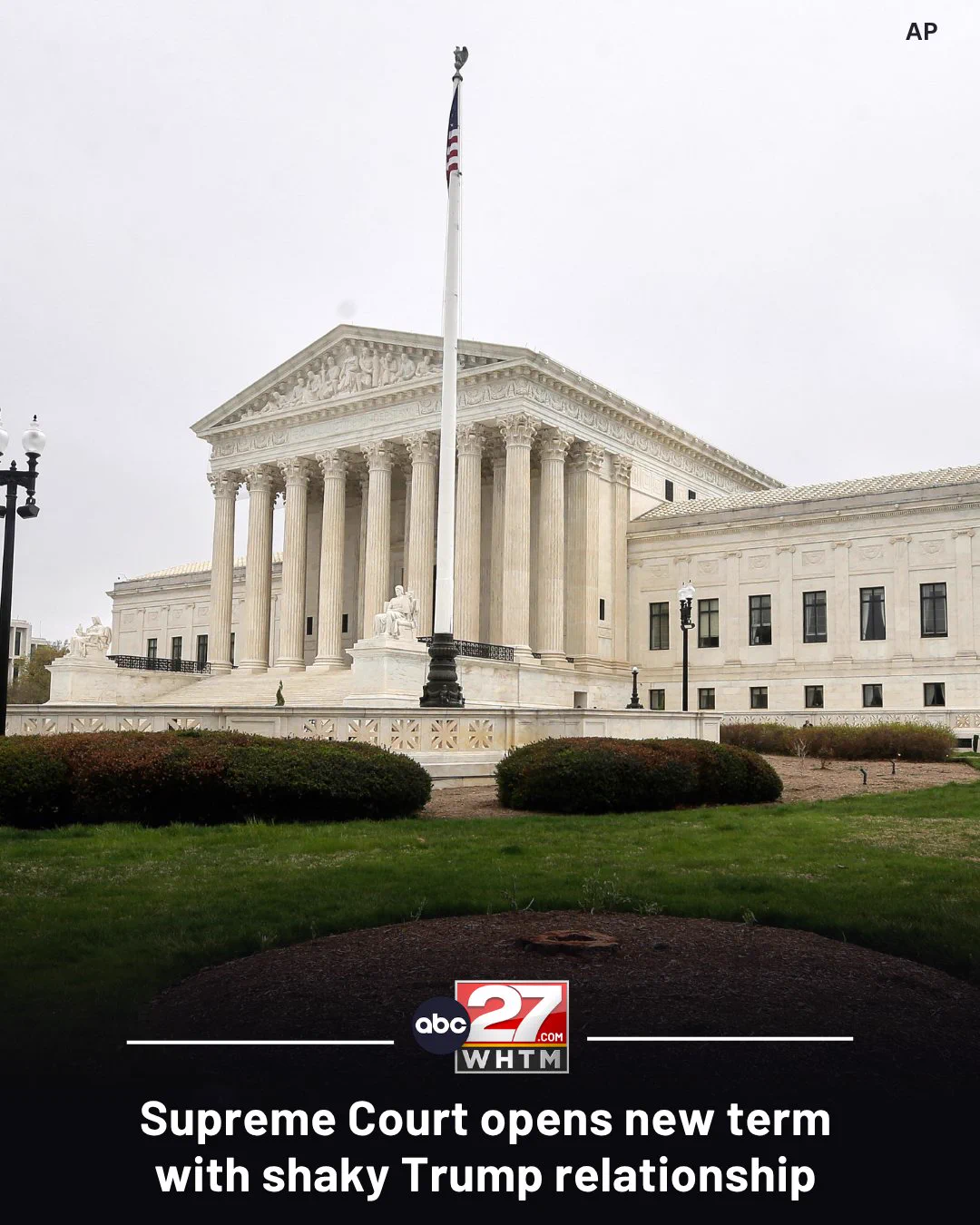
Supreme Court Term Tests Power
The next Supreme Court new term is not just another legal calendar. It is a pressure test for American power: who can regulate fast-moving technology, who can constrain federal agencies, and how far government can go when national security, energy independence, and private industry all collide. For readers watching the headlines blur together – court fights, nuclear projects, space ambitions, and political brinkmanship – the signal is clear. The legal system is becoming the operating layer for the next decade of innovation. Decisions handed down in Washington can shape what gets built in orbit, how energy projects are licensed, and whether agencies can keep pace with industries moving faster than Congress.
- The Supreme Court new term could reshape the balance between courts, agencies, Congress, and the White House.
- Energy and space policy are increasingly tied together as planners look at
nuclear powerfor long-duration lunar operations. - Private companies need legal certainty before betting billions on advanced infrastructure in space or on Earth.
- The biggest fight is not only ideological – it is institutional, asking who gets to make binding rules for complex technologies.
Why the Supreme Court new term matters beyond politics
The Supreme Court is often covered as a culture-war machine, but its most consequential work increasingly sits in the machinery of governance. The justices are deciding how much authority federal agencies have to interpret old statutes in new conditions. That sounds procedural until it touches energy permitting, environmental review, telecommunications, financial markets, labor rules, and space commercialization.
For technology and science-driven industries, the court is not a distant referee. It is becoming a market force. A ruling that narrows agency discretion can delay rules, invite litigation, or force Congress to write more specific laws. A ruling that empowers agencies can unlock faster implementation but also create compliance risk when administrations change.
The most important Supreme Court cases are not always the loudest. Sometimes they are the ones that decide whether the government can still move at the speed of the systems it is trying to regulate.
This is why the term deserves attention from founders, investors, engineers, utilities, environmental advocates, and anyone tracking the future of space infrastructure. The court may not be designing reactors or lunar habitats, but it is shaping the permissions architecture around them.
The strategic thread: law is becoming infrastructure
The source moment pairs two seemingly separate storylines: a new Supreme Court term and the idea of using nuclear power on the moon. The connection is not random. Both stories are about institutional capacity. Can the United States govern extremely complex, high-stakes systems before they become crises?
On Earth, agencies such as the Nuclear Regulatory Commission, NASA, the Department of Energy, and environmental regulators operate inside statutes that were not written for every modern scenario. In space, the challenge becomes even sharper. A lunar reactor would raise questions around launch approval, safety standards, liability, international commitments, commercial ownership, defense implications, and emergency response.
None of those issues can be solved by engineering alone. A working reactor is only useful if it can be licensed, launched, insured, operated, defended, and trusted. That is where the courts enter the story indirectly but powerfully.
The administrative state faces another stress test
Recent legal battles have put administrative law at the center of American politics. The broader trend is unmistakable: the court is skeptical of open-ended agency power, especially when regulators claim authority over major economic or political questions. That skepticism creates a new operating environment for every regulated industry.
If agencies need clearer congressional authorization before acting, then ambitious policy moves become harder. Climate rules, industrial policy, telecom standards, health regulations, workplace mandates, and energy licensing can all become vulnerable to challenge. The upside is democratic accountability. The downside is paralysis when Congress cannot move quickly enough.
Pro Tip: Companies building in regulated markets should now treat legal strategy as product strategy. The question is not just whether a technology works. It is whether the regulatory basis for deploying it can survive judicial review.
Supreme Court new term and the future of energy authority
Energy is where these questions become concrete. The United States wants abundant power for data centers, manufacturing, electrified transport, defense systems, and scientific expansion. At the same time, energy projects face intense scrutiny over safety, land use, emissions, cost, and public trust.
Nuclear power is having a strange second life in the public conversation. After decades of political hesitation, it is back because the math is brutal. Intermittent renewables need storage and grid upgrades. Fossil fuels remain politically and environmentally contested. Data centers require constant power. Advanced manufacturing cannot run on vibes. Space missions need reliable energy where solar availability can be limited.
But nuclear expansion is not just a technology question. It is a permitting question, a waste question, an insurance question, a federalism question, and eventually a Supreme Court question if disputes rise far enough. When legal doctrine changes, the economics of nuclear deployment can change with it.
Why lunar nuclear power is no longer science fiction
A sustained human presence on the moon needs power through long lunar nights, harsh temperature swings, dust exposure, and mission-critical operations. Solar can help, but it is not a complete answer everywhere. That is why planners have explored compact fission systems that could provide reliable electricity for habitats, rovers, communications gear, resource extraction, and scientific instruments.
A lunar fission system would likely be designed for resilience rather than massive output. The point is not to recreate a terrestrial grid. It is to provide dependable baseline power in an environment where repair crews are not a short drive away and failure can become existential.
- Reliability: A reactor could operate when sunlight is unavailable or degraded by terrain and dust.
- Scalability: Modular systems could support expanding lunar bases over time.
- Strategic value: Power infrastructure can determine which nation or company controls the pace of lunar development.
- Commercial potential: Energy is the first utility required for mining, manufacturing, and long-term habitation.
The moon will not become an industrial zone overnight. But energy decisions made now will influence whether lunar activity remains episodic exploration or becomes durable infrastructure.
The legal questions hiding inside lunar ambition
The moon sounds remote, but the legal questions are immediate. Who authorizes a private company to launch a compact reactor? What safety threshold applies during launch? What happens if debris reenters the atmosphere? How does the United States interpret its obligations under space treaties? Can a company sell power on the lunar surface? Who regulates a dispute between a reactor operator and a lunar mining venture?
These are not fringe hypotheticals. They are the governance questions that appear whenever a frontier becomes commercial. The internet had them. Commercial aviation had them. Cryptocurrency had them. Space will have them too, only with higher stakes and fewer precedents.
Space commercialization does not escape law. It intensifies the need for law because the cost of ambiguity rises with distance, danger, and capital intensity.
This is where the Supreme Court’s broader approach to agency power matters. If regulators are constrained from filling statutory gaps, Congress may need to legislate space infrastructure with unusual precision. If agencies retain flexibility, they may build frameworks faster, but those frameworks could swing between administrations or face lawsuits from affected players.
The private sector wants certainty, not slogans
Founders and aerospace contractors can tolerate technical risk. They price it, test it, insure it, and iterate. What they struggle with is undefined legal risk. A lunar reactor program could take years of development before generating revenue. Investors will ask whether approvals are durable, whether liability is capped, whether export controls apply, whether procurement commitments are stable, and whether courts might unwind a regulatory framework after the money is spent.
That means law becomes part of the capital stack. A cleaner legal pathway lowers financing costs. A chaotic pathway raises them. For emerging space infrastructure, legal ambiguity can be as limiting as launch cost.
Why this matters for business, science, and national power
The deeper story is that American institutions are being asked to govern technologies that do not fit neatly into 20th-century boxes. Artificial intelligence challenges copyright and labor law. Advanced biotech challenges health regulation. Space infrastructure challenges treaty interpretation and property concepts. Nuclear systems challenge safety culture and climate strategy.
The Supreme Court new term arrives at the center of that collision. Its rulings may not mention lunar reactors directly, but they can define how much room agencies have to interpret authority when technology outruns statutory language. That is the hinge.
For business leaders, the lesson is practical: regulatory architecture is now competitive infrastructure. For policymakers, the warning is sharper: if Congress avoids hard technical legislation, courts will end up making governance choices through the negative space of judicial review. For scientists and engineers, the takeaway is sobering: building the future requires not only better hardware, but better institutions.
What to watch next
The term should be read through three lenses. First, watch how the court treats agency interpretations of broad statutes. That will shape the federal government’s ability to respond to technical complexity. Second, watch cases involving separation of powers, because the court’s view of executive authority can ripple into procurement, national security, and industrial policy. Third, watch how regulated industries respond. Litigation strategy is now a standard tool for shaping markets.
On the space side, watch for more concrete movement around lunar surface power, commercial payload rules, international coordination, and safety standards for nuclear systems beyond Earth. The decisive signals may not arrive as dramatic announcements. They may appear as procurement language, agency guidance, test milestones, and quiet legal memos that determine what can actually fly.
The future is not waiting for the law to catch up. It is already forcing the issue. This Supreme Court term matters because it will help decide whether the United States can govern the next technological era with confidence – or whether every major leap becomes another courtroom fight before it becomes real infrastructure.
The information provided in this article is for general informational purposes only. While we strive for accuracy, we make no guarantees about the completeness or reliability of the content. Always verify important information through official or multiple sources before making decisions.