Tiny Swirls May Power Solar Flares
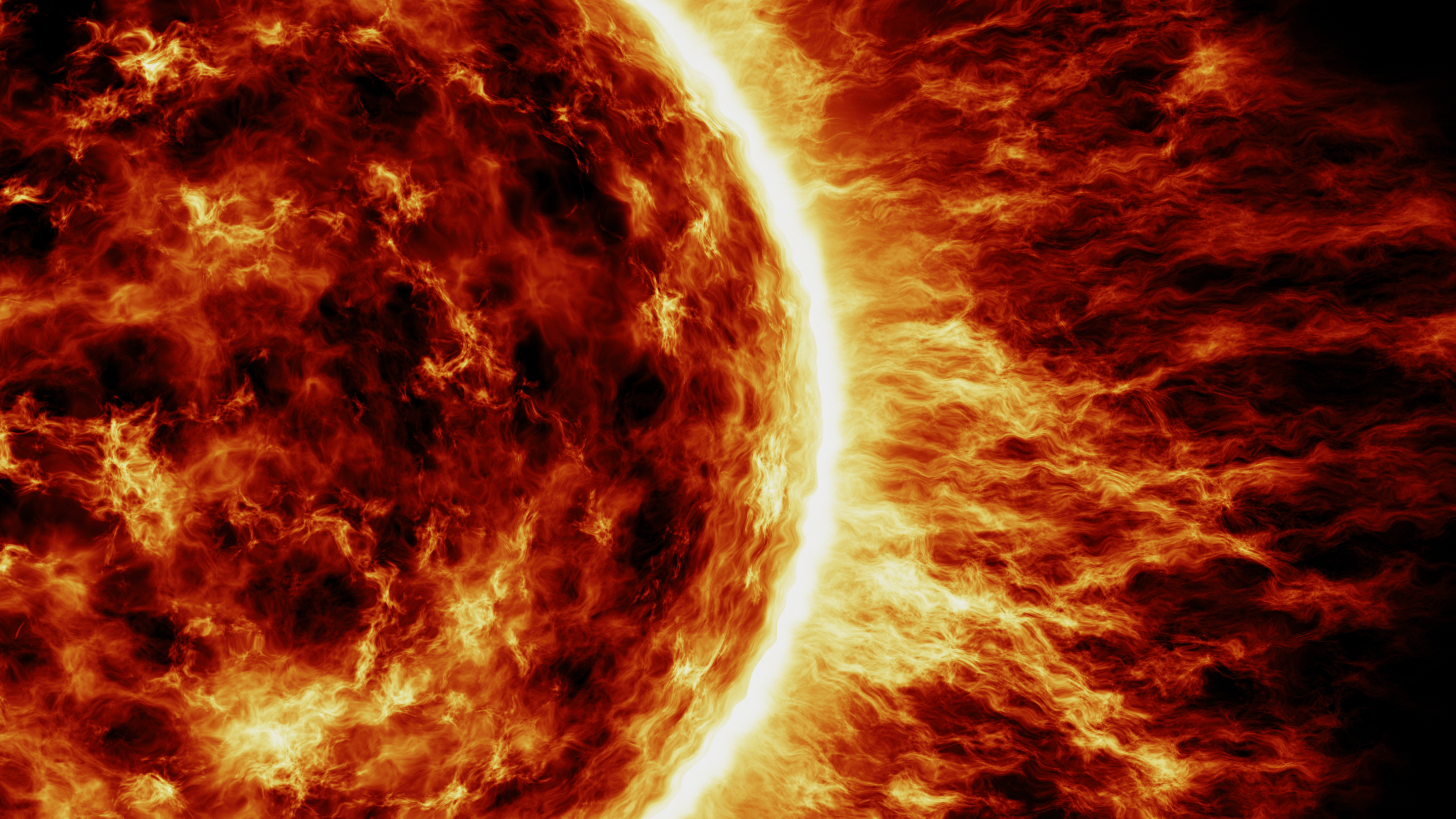
The Sun looks steady from here, but its surface is a pressure cooker of magnetic chaos. That matters more than most people realize, because the same star that keeps life going can also disrupt satellites, scramble radio signals, and threaten power grids in minutes. Now scientists are zeroing in on a surprisingly small suspect: tiny swirls on the Sun that may help trigger solar flares. If that link holds up, it could change how we think about space weather forecasting. Instead of watching only for big, dramatic eruptions, researchers may need to track subtle motion at much smaller scales – the kind of detail that usually gets lost in the glare of the solar surface. For industries that depend on precision timing and reliable connectivity, this is not just interesting. It is operationally important.
- Tiny swirling motions on the Sun may help destabilize magnetic fields and spark flares.
- The finding could improve solar flare prediction by adding a smaller-scale warning signal.
- Better forecasts matter for satellites, aviation, GPS, and electric grids.
- Researchers still need to prove whether the swirls are a cause, a trigger, or a symptom.
Why tiny swirls matter in solar flares
The phrase solar flares usually conjures up huge blasts of light and radiation, but the physics behind them is built on small-scale magnetic interactions. The latest thinking suggests that tiny swirls in the Sun’s outer layers may twist magnetic field lines until they snap into a more relaxed configuration, releasing enormous energy in the process. That is a big shift in perspective. Instead of treating flares as purely large-scale events, scientists are increasingly looking for the minute motions that set the stage.
This matters because forecasting space weather has always been a little like weather forecasting before satellites: useful, but often too coarse. If researchers can identify the precursors that happen minutes or hours before a flare, they may be able to issue earlier warnings. That could give operators time to put satellites into safe mode, reroute communications, or prepare vulnerable systems on Earth.
Small motions can have outsized consequences when magnetic energy is being stored and released at planetary scale. The challenge is proving which motions are meaningful and which are just background noise.
How scientists are reading the Sun differently
For decades, researchers have studied active regions on the Sun by watching sunspots, loops, and magnetic field maps. That work remains essential, but it can miss the granular turbulence happening underneath the headline-grabbing eruptions. The new focus on swirls is part of a broader shift toward high-resolution solar physics, where the smallest details are finally visible enough to matter.
These swirls are not literal whirlpools of water, of course. They are patterns of plasma motion, shaped by the Sun’s magnetic field. Plasma is electrically charged, so its movement is tightly coupled to magnetism. When that plasma starts spinning or shearing in just the wrong way, it can stress magnetic field lines until the field becomes unstable.
The key question is whether those motions are a direct trigger. That distinction matters. A swirl could be the spark that tips the system over the edge, or it could simply be a visible symptom of deeper magnetic stress already building. Either way, detecting it could still be valuable, because forecasting does not always require perfect causation. Sometimes the best warning sign is the one that reliably appears before the event.
The science behind the trigger
Magnetic tension builds silently
The Sun’s atmosphere is a magnetic engine. Fields rise from the interior, loop through the corona, and sometimes become tangled. As energy accumulates, the system can hold steady for a while, but once the stress exceeds a limit, the field can rapidly reconfigure. That release shows up as a flare.
Swirls may help destabilize the field
Tiny rotational motions may inject additional twist into already tense magnetic structures. Think of it like winding a rubber band tighter and tighter until it finally snaps or slips into a new shape. The Sun is not doing this with rubber bands, but the metaphor is close enough to explain the principle. The energy is stored in magnetic geometry, then released suddenly when the field can no longer remain in place.
High-resolution imaging changes the game
What makes this research possible is not just sharper telescopes, but better models and processing tools that can interpret the data. The Sun is noisy, layered, and constantly moving. Separating meaningful swirl patterns from ordinary convection is a serious analytical challenge. That is why this finding is still an active area of investigation rather than a settled rule.
Still, the idea is compelling because it creates a bridge between tiny fluid motions and massive space weather events. That is the kind of link scientists love and forecasters need.
Why this matters for Earth
Solar flares are not just astronomy trivia. They can create radiation hazards for astronauts, disturb high-frequency radio, and contribute to geomagnetic effects that ripple into critical infrastructure. In a society built on always-on connectivity, even brief disruptions can have cascading costs.
Here is where the practical implications become obvious:
- Satellite operators can protect hardware from radiation spikes.
- Aviation teams can adjust routes and communication plans.
- Grid operators can prepare for induced currents and instability.
- Navigation systems can account for degraded GPS accuracy.
That is why a better understanding of flare precursors is more than academic. The more precisely we can predict solar storms, the less exposed modern infrastructure becomes to an event it cannot stop but can potentially survive.
The prediction problem in space weather
Forecasting space weather has always been difficult because the Sun does not announce its intentions cleanly. Big eruptions are visible after they start, but the moment before release is harder to pin down. Researchers are trying to move from broad probability statements to more specific alerts, and tiny swirls could become part of that new toolkit.
That said, skepticism is warranted. Solar physics is full of correlations that looked promising until more data showed they were incomplete. A swirl may occur before many flares, but if it also happens frequently without a flare, its predictive value drops fast. The field needs statistical rigor, not just a visually appealing mechanism.
For a forecasting signal to matter, it has to be both observable and reliable. A beautiful pattern that appears too often without consequence is not a warning sign. It is noise.
What researchers will need to prove next
The next step is not simply to find more swirls. It is to show consistent timing, structure, and physical linkage across many events. Scientists will need to answer three hard questions:
- Do tiny swirls appear consistently before solar flares?
- Are they present only in regions that become unstable?
- Can they be detected early enough to improve practical forecasts?
Answering those questions requires more than one telescope image or one case study. It demands repeated observations, careful modeling, and a willingness to abandon a flashy idea if the data do not support it. That is good science, even if it is not the most glamorous path.
Pro tips for understanding the next wave of solar research
If you want to follow this story without getting lost in the jargon, focus on a few markers. First, watch for whether researchers describe the swirls as a trigger, a precursor, or a correlation. Those are not interchangeable terms. Second, look at whether the observations come from direct imaging, magnetic field measurements, or simulations. Each method answers a different part of the question. Third, pay attention to whether findings are reproduced across multiple active regions on the Sun.
That kind of reading discipline matters because solar physics moves quickly, and early claims often get simplified into headlines before the uncertainty has been properly explained. The real story is usually more interesting than the simplified one.
The bigger picture for the next decade
The long-term payoff here could be substantial. If scientists can connect small-scale swirling motion to flare onset, space weather prediction may become more granular and more actionable. That could reshape how agencies, satellite firms, and utility operators prepare for solar activity. It may also help researchers build better models of how magnetic energy accumulates and releases in stellar atmospheres more generally.
There is also a broader scientific payoff. The Sun is our closest laboratory for plasma physics, and every improvement in understanding it helps refine theories that apply across the universe. Tiny swirls on the Sun may sound like a niche detail, but they sit at the intersection of fluid dynamics, magnetism, and high-energy astrophysics. That is where some of the most consequential discoveries start.
For now, the takeaway is simple: the next big leap in solar forecasting may not come from watching bigger explosions. It may come from noticing the smallest motions first.
The information provided in this article is for general informational purposes only. While we strive for accuracy, we make no guarantees about the completeness or reliability of the content. Always verify important information through official or multiple sources before making decisions.