Trump Crypto Earnings Raise Alarm
Trump Crypto Earnings Raise Alarm
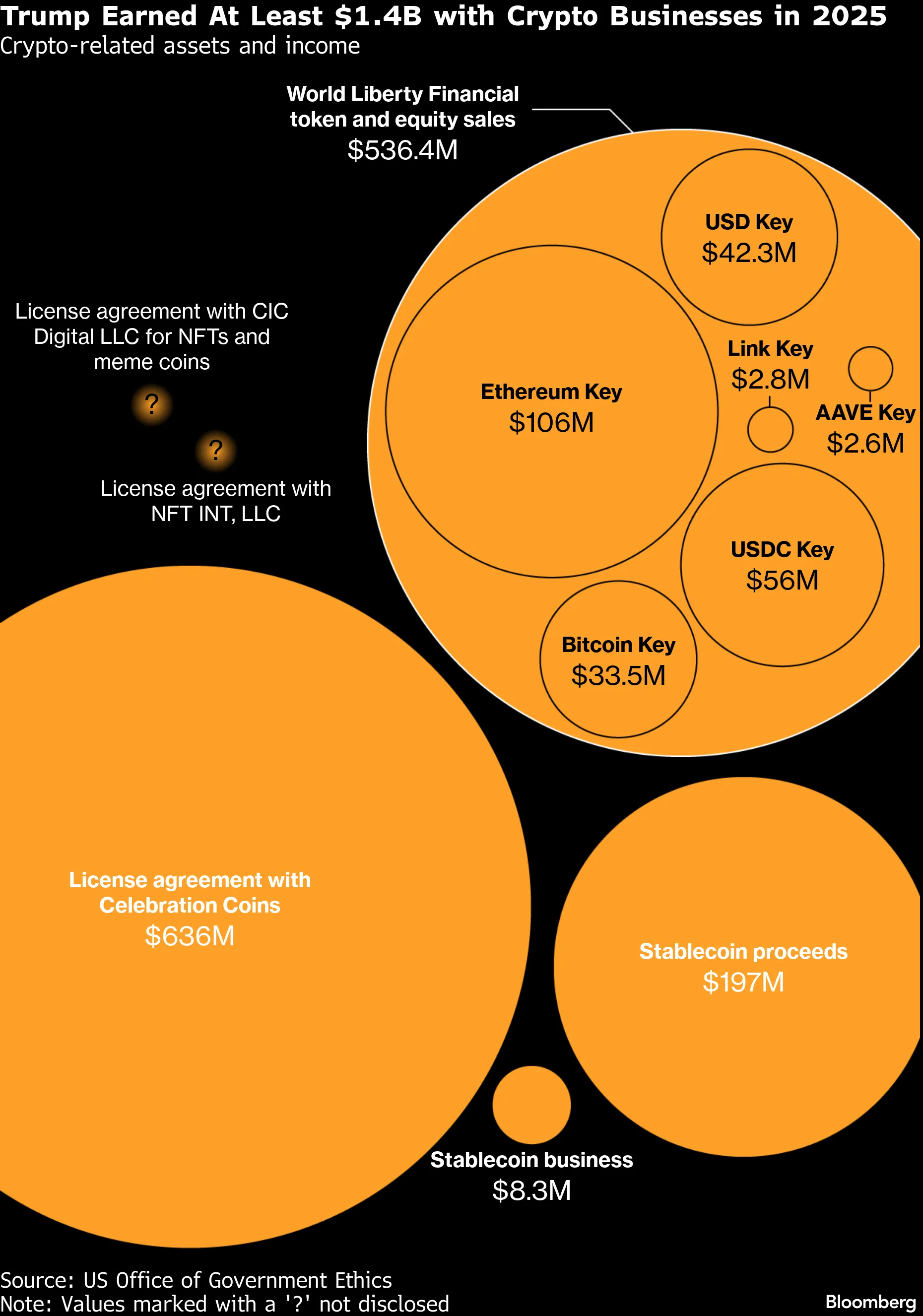
Donald Trump’s growing crypto footprint is not just another political side quest. It is a test of how far the line between public power and private gain can be bent before it snaps. As digital assets move deeper into mainstream finance, the stakes are no longer limited to traders and speculators. They now reach into campaign politics, foreign influence risk, and the basic credibility of public office. That is why the issue of Trump crypto earnings matters beyond the usual partisan noise. If a high-profile political figure can profit from a sector he may also help shape, the question is not whether the market is exciting. The question is whether the guardrails are strong enough to keep democracy from becoming a monetization engine.
- Trump crypto earnings highlight a growing ethics problem at the intersection of politics and digital finance.
- The core issue is not just money, but the power to influence rules that can directly affect asset values.
Cryptois uniquely vulnerable to hype, opacity, and conflicts of interest.- The broader risk is reputational: every unanswered question chips away at trust in both markets and government.
Why Trump Crypto Earnings Are More Than a Campaign-Side Distraction
Political money has always been messy, but Trump crypto earnings introduce a modern twist: a fast-moving asset class with limited transparency and powerful speculative momentum. That combination is combustible. Unlike traditional businesses, crypto projects can surge or collapse on sentiment, memetic branding, and perceived access to influence. When those forces are connected to a former or current public official, the ethical stakes escalate immediately.
The concern is not simply that someone is making money. Politicians, celebrities, and founders do that all the time. The problem is that crypto markets are often more sensitive to narrative than fundamentals. If supporters believe access, regulation, or policy could be shaped by a politician’s interests, then the market itself can become a vehicle for favor trading, or at least the appearance of it.
When public office and speculative finance overlap, the damage is not always immediate. But the trust erosion can be permanent.
The Ethics Problem Behind Trump Crypto Earnings
Ethics rules exist for a reason: to separate public duty from private enrichment. Yet digital assets complicate that separation. Tokens, exchanges, wallets, NFT-like products, and promotional deals can be structured in ways that are hard to trace and even harder to police. That makes Trump crypto earnings a case study in why old transparency frameworks are struggling to keep pace with new financial tools.
Opacity is the feature, not the bug
Crypto often prides itself on decentralization, but in practice many projects still rely on centralized promotion, insider allocations, and opaque revenue streams. If a political figure receives income through branded digital assets, licensing deals, or affiliated ventures, the public may never get a clean view of who profits, when, and under what conditions. That ambiguity is precisely where ethics concerns thrive.
There is also the issue of leverage. A politician does not need to explicitly change a law to affect markets. Public statements, policy signals, staffing choices, and enforcement priorities can all move expectations. In a sector as volatile as crypto, even perceived influence can function like an asset.
Why the conflict of interest feels different now
Historically, ethical scrutiny focused on hotels, real estate, and speaking fees. Those are visible, tangible, and easier to audit. Trump crypto earnings are harder to map because they can flow through wallets, tokens, intermediaries, and speculative valuations that shift by the minute. The result is a much blurrier picture of where value comes from and who is effectively paying whom.
That blur is not just a compliance headache. It is a democratic legitimacy problem. Voters are asked to trust that public decisions are made for the public good, not for portfolio gain. The more complex the financial arrangement, the harder that trust becomes to maintain.
Trump Crypto Earnings and the Political Economy of Hype
One reason the story has legs is that crypto thrives on narrative. It is a sector built on future promises: faster payments, programmable money, borderless finance, decentralized ownership. But those promises have always come wrapped in speculation. The market rewards attention, and attention rewards recognizable names.
That is where political branding becomes especially potent. A major public figure can lend legitimacy to a token, platform, or ecosystem simply by being associated with it. For supporters, that may feel like confidence. For critics, it looks like monetized influence. Both things can be true at once, and that is what makes the ethics debate so hard to settle cleanly.
In crypto, reputation is often a financial instrument. When politics enters the mix, that instrument becomes even more dangerous.
This is also why regulators and watchdogs tend to be cautious. They are not just looking for an explicit quid pro quo. They are looking for structures that create incentives to shape policy in ways that benefit private holdings. With Trump crypto earnings, the public is asking whether the architecture itself invites that kind of conflict.
Why This Matters for the Future of Crypto Regulation
The broader significance of Trump crypto earnings is that they may accelerate calls for stronger disclosure rules, clearer ethics standards, and tighter enforcement around digital assets tied to political figures. Even if no law is broken, the episode can still push lawmakers to confront a simple reality: the current system is not built for assets that can be promoted globally, settled instantly, and obscured behind pseudonymous infrastructure.
That matters because crypto regulation is already a political minefield. Supporters argue that overregulation kills innovation. Critics say underregulation invites fraud, market manipulation, and consumer harm. Add political self-enrichment to the equation, and compromise gets even harder. Every side sees the other as using the issue for power, not principle.
What could change next
- Stricter disclosure requirements for political figures holding or profiting from
cryptoassets. - More aggressive review of promotional deals, licensing arrangements, and affiliated token sales.
- Greater scrutiny of how policy proposals might affect personal holdings, even indirectly.
- Expanded enforcement attention on misleading marketing in politically connected digital-asset projects.
None of that guarantees cleaner outcomes. But it would make the system less vulnerable to hidden incentives. And that is the minimum expectation when public office is involved.
What Readers Should Watch Next
If Trump crypto earnings continue to grow as a political and financial story, the real indicators will not be price charts. They will be disclosures, ethics findings, policy shifts, and the language used by campaign surrogates and regulators. Watch for whether new ventures are structured to avoid clear accountability. Watch for whether the public gets plain answers about ownership and profit-sharing. Watch for whether the rules are applied consistently, regardless of party.
For everyday investors, the lesson is also practical. A project tied to political power may generate excitement, but excitement is not a business model. If a token’s value depends heavily on access, influence, or the hope of favorable treatment, the risk profile is far higher than the branding suggests. The same speculation that can inflate a project can also leave latecomers exposed when momentum fades.
The Bottom Line on Trump Crypto Earnings
Trump crypto earnings are not just a scandal story or a market story. They are a stress test for modern democracy and modern finance at the same time. The collapse of trust rarely happens all at once. It happens when people start assuming that every policy move has a hidden invoice attached. In a sector already fighting for mainstream credibility, that is the kind of perception crypto can least afford.
If there is a broader takeaway here, it is simple: the faster money moves, the more important transparency becomes. And when political power is anywhere near the transaction, transparency is not optional. It is the whole game.
The information provided in this article is for general informational purposes only. While we strive for accuracy, we make no guarantees about the completeness or reliability of the content. Always verify important information through official or multiple sources before making decisions.