Trump Escalates US Canada Trade War
Trump Escalates US Canada Trade War
The US Canada trade war is no longer a headline about brinkmanship. It is now a live economic problem with costs that can spread from factory floors to grocery aisles faster than politicians can rewrite the narrative. When talks between Washington and Ottawa unravel, the fallout rarely stays neatly inside a press release. Tariffs hit margins. Delays hit supply chains. Uncertainty hits investment. And because the United States and Canada are deeply entwined trading partners, even a short fuse can produce long-term damage.
What makes this fight especially combustible is that it is happening between two countries that are supposed to be allies, not adversaries. That tension matters. It signals that trade policy is being used not just to negotiate better terms, but to project leverage, domestic toughness, and political control. For businesses, that is the worst possible combination: unstable rules, loud rhetoric, and no clear off-ramp.
- The US Canada trade war threatens tightly integrated supply chains on both sides of the border.
- Tariffs can quickly raise costs for consumers, manufacturers, and exporters.
- Political escalation makes planning harder for businesses already operating on thin margins.
- The dispute may reshape North American trade strategy well beyond the current headline cycle.
- Companies exposed to cross-border logistics should treat this as a risk-management issue, not a temporary feud.
Why the US Canada trade war matters now
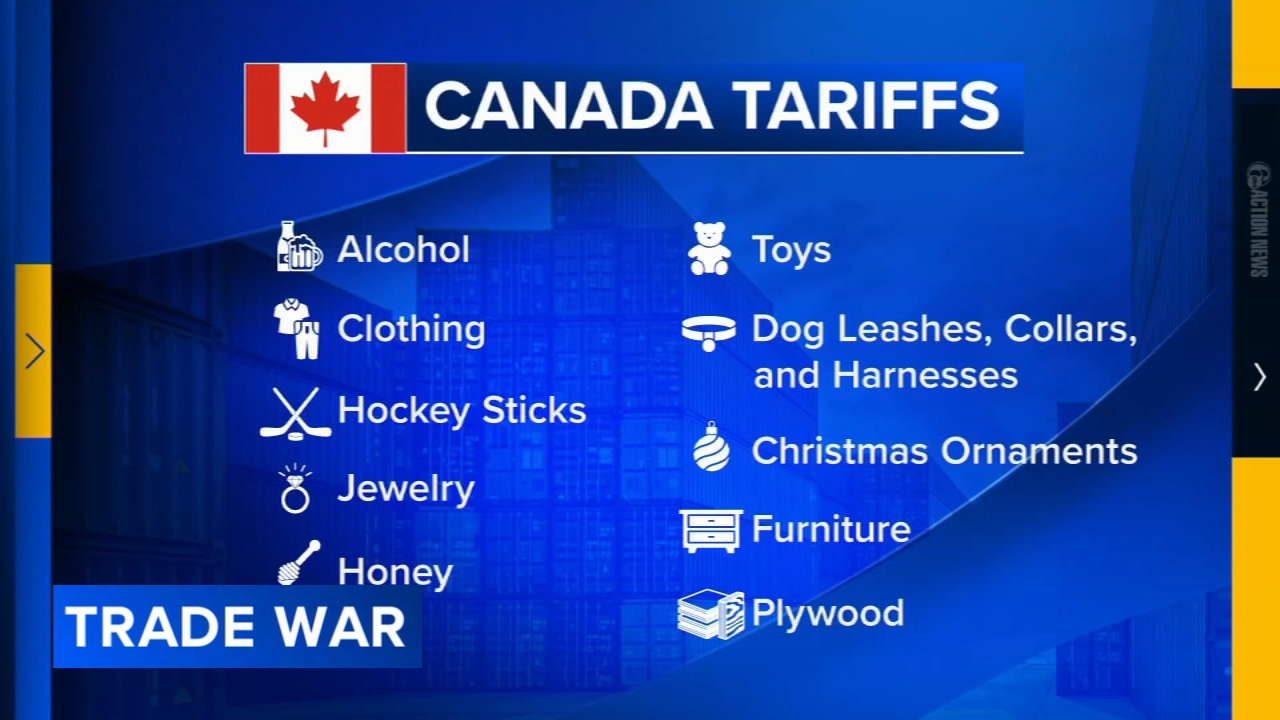
Trade disputes only become dangerous when they move from symbolism to implementation. This one is dangerous because the U.S. and Canada are wired together through auto parts, energy, agriculture, lumber, machinery, and consumer goods. A tariff on one side of the border can ricochet through multiple industries before a single shipment clears customs.
That interdependence is why this story deserves more than the usual diplomatic eye-roll. The modern North American economy is built on cross-border efficiency. Components often cross the border multiple times before a product reaches a customer. In that setup, even modest tariffs can compound into meaningful cost inflation. The business impact is immediate: higher input costs, tighter inventory planning, and more pressure on companies that cannot easily absorb the hit.
Trade wars are rarely won by the side that talks loudest. They are usually “won” by the side that can endure the most pain, and that is a dangerous metric for consumers and companies alike.
How the dispute can hit real-world costs
The first damage from a US Canada trade war is not abstract geopolitics. It shows up in invoices. Tariffs are taxes on trade, and taxes usually end up somewhere in the chain between producer and consumer. Sometimes exporters swallow part of the cost. Sometimes importers pass it through. Often, everyone eats a slice of the pain.
That matters because North American supply chains are optimized for speed, not redundancy. Businesses do not keep a ton of slack in the system. They rely on steady border flows, predictable customs procedures, and stable trade rules. When those assumptions break, the costs are not just financial. They are operational.
Manufacturing gets squeezed first
Manufacturers are the most exposed because they depend on recurring shipments of parts, raw materials, and specialized inputs. If a carmaker, appliance maker, or machinery producer faces new duties, the math changes immediately. Some firms may try to reshore production, but that is a slow and expensive fix. Others may renegotiate contracts, cut margins, or delay launches.
For smaller firms, the problem is worse. Large multinationals can hedge, reroute, or lobby. Smaller suppliers often cannot. They are left with thin buffers and little negotiating leverage. In practice, that means a policy fight in Washington can quietly wipe out profitability in a town far from the capital.
Consumers feel it at checkout
Consumers usually hear about trade wars in the language of sovereignty and leverage. They feel them in the language of prices. Imported food, household goods, cars, construction materials, and electronics can all get more expensive if tariffs stick. Even when the direct price increase is limited, the broader effect can still matter because businesses often raise prices more aggressively once uncertainty becomes the norm.
That is why trade disputes often become political boomerangs. The rhetoric promises strength, but households notice sticker shock. And sticker shock is the kind of feedback loop that can outlast the dispute itself.
The political logic behind the escalation
The current fight makes sense only if you understand trade as political theater as much as economic policy. Hardline trade rhetoric is designed to signal resolve. It plays well with audiences that believe foreign partners have taken advantage of American power. It also creates a useful villain when leaders want to frame economic frustration as someone else’s fault.
But the political upside is often short-lived. A tariff threat can generate applause. A tariff regime generates bills.
That is the central tension inside the US Canada trade war: the same policy that projects strength can also expose how dependent the U.S. is on frictionless trade with its closest neighbor. Canada is not a peripheral partner. It is a core part of North American production and energy security. Escalating a dispute there is not a small tactical move. It is a strategic gamble.
When leaders turn trade policy into a performance, they often lose sight of the supply chain reality underneath. The market always notices first.
What businesses should watch next
For executives, this is the point where scenario planning stops being optional. Companies exposed to U.S.-Canada flows should assume policy volatility, even if the headlines cool temporarily. The practical question is not whether the dispute will continue forever. It is whether your business can survive the next policy shock without scrambling.
- Map exposure: Identify every product, component, and raw material that crosses the U.S.-Canada border.
- Stress-test pricing: Model how much margin you lose if tariffs rise or stay in place.
- Review contracts: Check who absorbs new trade costs under current supplier and customer agreements.
- Diversify logistics: Build alternate sourcing paths where possible, even if they cost more upfront.
- Monitor policy signals: Track not just formal announcements, but also rhetoric that hints at the next move.
These steps are not about panic. They are about resilience. Businesses that treat trade policy as a background risk usually pay for that assumption later, often in the worst possible quarter.
The bigger strategic stakes
The deeper concern is what this dispute says about the future of North American integration. For decades, U.S.-Canada trade has been treated as a pillar of stability. That stability enabled just-in-time manufacturing, cross-border energy flows, and investor confidence. If that foundation starts to look fragile, the consequences extend beyond one tariff round.
Investors may demand a risk premium. Manufacturers may choose more expensive but safer supply chains. Governments may discover that protectionist rhetoric is easy to start and hard to stop. And once businesses begin planning around political instability, they rarely go back to assuming calm.
This is how trade wars become structural. One round of retaliation triggers another. Temporary measures become embedded assumptions. Companies build inefficiency into their models because the policy environment no longer rewards precision. That is a tax on growth that no one sees directly on a billboard.
Why this dispute could outlast the headlines
Most trade fights eventually fade from the front page. The economic damage does not vanish with them. Even if Washington and Ottawa strike a deal, the episode can leave behind lasting scars: delayed investment, broken supplier relationships, and a more cautious business climate.
That is why the US Canada trade war should be understood as more than a diplomatic spat. It is a warning about how quickly strategic language can become operational reality. The next phase may not be defined by a dramatic announcement. It may be defined by a thousand small decisions: a company postponing expansion, a distributor rerouting shipments, a consumer paying a little more at the register.
Those are not headline moments. They are the slow costs of policy instability. And they are often the ones that matter most.
Bottom line
If the dispute keeps escalating, the real story will not just be who won the argument. It will be how much damage was done to a system built on trust, speed, and predictability. That is what makes this more than another angry exchange between neighbors. It is a test of whether North America still believes in the economic logic that made its supply chains work in the first place.
For businesses, the safest assumption is that volatility is now part of the operating environment. For consumers, the price effects may arrive quietly but persist longer than the political outrage cycle. And for policymakers, the lesson is blunt: once a US Canada trade war starts, the costs are far easier to impose than to unwind.
The information provided in this article is for general informational purposes only. While we strive for accuracy, we make no guarantees about the completeness or reliability of the content. Always verify important information through official or multiple sources before making decisions.