Trump Iran Strait Crisis Reshapes Global Risk
Trump Iran Strait Crisis Reshapes Global Risk
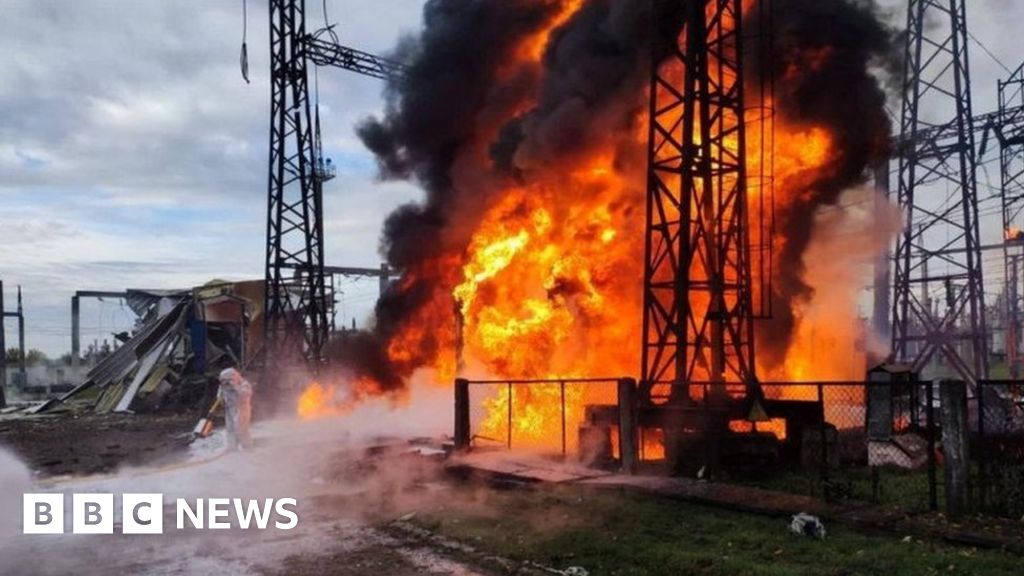
The Trump Iran Strait crisis is not just another flashpoint built for cable news banners. It is a live stress test for oil markets, shipping lanes, military deterrence, and the credibility of political messaging at a moment when even a small miscalculation can ripple across the global economy. When the Strait of Hormuz enters the conversation, investors hear price shocks, governments hear escalation risk, and ordinary consumers eventually feel it at the gas pump. That is why this story matters beyond Washington and Tehran. The immediate question is whether rhetoric, military signaling, and backchannel diplomacy can hold the line before a tactical confrontation turns into a strategic mess. The bigger issue is what happens when one narrow waterway becomes the hinge point for energy security, geopolitical leverage, and domestic political narratives all at once.
- The Strait of Hormuz remains one of the world’s most dangerous economic choke points.
- Any Trump-Iran escalation can move oil prices, shipping costs, and broader market sentiment fast.
- Political signaling matters, but so do naval posture, proxy activity, and diplomatic off-ramps.
- The core risk is not only war: it is sustained uncertainty that distorts trade and investment decisions.
Why the Trump Iran Strait crisis matters now
Few geopolitical stories combine symbolism and material risk as directly as a confrontation tied to the Strait of Hormuz. A huge share of the world’s seaborne oil trade passes through this narrow corridor. That alone makes any threat to its stability globally relevant. But the current tension is also politically charged because it sits at the intersection of U.S. election-era rhetoric, Iranian regional strategy, and a global economy still vulnerable to supply shocks.
The significance of the Trump Iran Strait crisis is not simply whether a formal war begins. Markets do not wait for declarations. They react to signals: military deployments, tanker warnings, insurance pricing, sanctions language, and whether diplomatic channels appear open or frozen. Even the perception of reduced navigational safety in the strait can increase shipping premiums and tighten energy expectations.
When Hormuz becomes a headline, the real story is leverage: who can threaten disruption, who can absorb it, and who can convince the world that escalation is still controllable.
How the Strait of Hormuz became the pressure point
The Strait of Hormuz is strategically powerful because geography does the work politics cannot. It is narrow, crowded, and essential. For Iran, that creates asymmetrical leverage. Tehran does not need to fully close the strait to create economic anxiety. It only needs to make passage appear less predictable, more expensive, or more dangerous.
For the United States and its partners, the challenge is deterrence without accidental escalation. Naval power can keep routes open, but it cannot erase the possibility of harassment, drone incidents, proxy attacks, or limited confrontations that trigger wider responses. This is why every statement from political leaders gets dissected for intent, limits, and room for negotiation.
It is a military issue, but also an insurance and logistics issue
Too much coverage treats these crises like a simple countdown to conflict. That misses how disruption usually works in practice. The first effects often show up in commercial systems:
- Shipping insurers raise risk premiums.
- Energy traders price in supply uncertainty.
- Import-dependent economies brace for volatility.
- Companies review fuel, freight, and inventory exposure.
That means the cost of the crisis can rise well before the first large-scale military exchange. In modern geopolitics, uncertainty itself is a billable event.
Iran’s leverage is calibrated ambiguity
Iran’s strategic toolkit often relies on ambiguity. It can signal strength, apply pressure through regional networks, and test red lines without immediately crossing into a direct conventional war. That ambiguity complicates responses from Washington because overreaction can strengthen Tehran’s narrative, while underreaction can invite more probing.
This is where the political framing around Trump becomes especially relevant. A leader known for maximalist rhetoric can alter deterrence calculations in both directions. Strong language can project resolve, but if it is seen as inconsistent or improvisational, adversaries may try to exploit the gap between words and action.
What Trump changes in the escalation equation
Trump’s approach to foreign policy has always mixed unpredictability, public pressure tactics, and a preference for dominant optics. Supporters see strategic ambiguity. Critics see volatility. In a crisis involving Iran, both interpretations matter because perception shapes response.
The immediate effect of Trump-centric messaging is to make every statement market-sensitive. A hardline comment can spike fears of confrontation. A sudden call for a deal can reverse assumptions just as quickly. That style may create negotiating room, but it can also increase misread signals, especially in a region where military postures are already dense and trust is thin.
The danger is not only what leaders intend. It is what rivals think they intend under pressure, on deadline, with imperfect intelligence.
Deterrence needs consistency
Deterrence works best when red lines are clear, capabilities are visible, and consequences are believable. The challenge in the Trump Iran Strait crisis is that public rhetoric can sometimes outrun operational clarity. Allies want reassurance. Markets want predictability. Adversaries look for hesitation, contradiction, or a domestic political incentive to escalate messaging without escalating action.
Pro Tip: When tracking this kind of crisis, watch for operational indicators rather than just speeches. Carrier movement, maritime advisories, evacuation notices, sanctions language, and regional proxy activity are often more useful than headline soundbites.
What happens if the Strait of Hormuz is disrupted
A complete closure is the nightmare scenario, but it is not the only scenario that matters. Limited disruption can be enough to trigger real consequences. Even a short period of heightened risk can pressure oil benchmarks, increase shipping costs, and push governments to release emergency messaging or adjust strategic reserves.
Energy markets would react first
The first-order impact is energy pricing. Oil markets tend to move on expectations, not only actual shortages. If traders believe tanker flows may slow, or that military tension could widen, prices can jump quickly. Higher energy prices then spread outward into transportation, manufacturing, and consumer inflation.
Countries heavily reliant on imported energy would feel the pressure fastest. Central banks, already wary of inflation persistence, would have to assess whether a geopolitical price spike is temporary noise or a broader macroeconomic threat.
Shipping and supply chains would follow
Once freight risk rises, supply chains tighten. Companies that depend on just-in-time delivery or energy-intensive production become more exposed. This matters because many businesses still operate in a fragile environment shaped by previous disruptions. They have less patience for another chokepoint crisis and, in many cases, less pricing flexibility.
At the operational level, firms may revisit contingency planning like this:
risk_checklist = ["fuel exposure", "shipping insurance", "supplier redundancy", "inventory buffer", "currency volatility"]
That is not code for engineers alone. It is effectively the executive dashboard for geopolitical resilience.
The diplomatic off-ramp still matters
For all the focus on confrontation, most serious actors understand the economic costs of letting the Strait of Hormuz become unmanageable. That creates an incentive, however uncomfortable, for some version of de-escalation. Backchannel diplomacy, regional intermediaries, and public face-saving language often do more work in these moments than dramatic press conferences.
The most plausible near-term goal is not a grand peace deal. It is a temporary stabilization mechanism: enough communication to prevent miscalculation, enough signaling to reassure allies, and enough restraint to avoid forcing irreversible military responses.
Why a formal deal is hard
Any durable agreement would have to address far more than one shipping lane. It would touch sanctions, enrichment concerns, regional militias, security guarantees, and domestic politics in multiple capitals. That is why breakthrough narratives should be treated carefully. In crises like this, the first win is often simply avoiding a larger loss.
The realistic objective is not trust. It is controlled tension with guardrails.
Why this matters beyond geopolitics
It is tempting to frame the story as a distant standoff between political elites. That is too narrow. The Strait of Hormuz is one of those rare places where geography can hit household budgets. If instability lifts oil prices, consumers feel it. If freight costs rise, prices can climb elsewhere. If markets see prolonged risk, investment decisions shift.
This also matters for democratic accountability. Foreign policy crises are often discussed in abstract language about resolve, deterrence, and strategy. But those choices carry measurable costs. Voters deserve to know whether leaders are managing risk, amplifying it for domestic advantage, or improvising under pressure.
The strategic takeaway for business and policy watchers
The smart read on the Trump Iran Strait crisis is not to ask only whether war is imminent. The better question is whether the conditions for persistent instability are hardening. That includes mixed messaging, proxy activity, sanctions pressure, and commercial hesitation around Hormuz-linked routes.
- For policymakers: clarity beats theatrical escalation.
- For businesses: scenario planning beats reactive panic.
- For markets: volatility will likely reflect signaling as much as fundamentals.
- For the public: energy security and foreign policy are tightly connected, whether politicians admit it or not.
The broader lesson is familiar but still underappreciated: the global economy remains surprisingly dependent on narrow chokepoints and fragile assumptions. A crisis in one maritime corridor can become a test of diplomacy, deterrence, and economic resilience in a matter of hours.
That is why this moment deserves close attention. Not because every headline means war, but because every unresolved signal raises the cost of uncertainty. And in the Strait of Hormuz, uncertainty is never local for long.
The information provided in this article is for general informational purposes only. While we strive for accuracy, we make no guarantees about the completeness or reliability of the content. Always verify important information through official or multiple sources before making decisions.