Trump Targets Fishing Rules
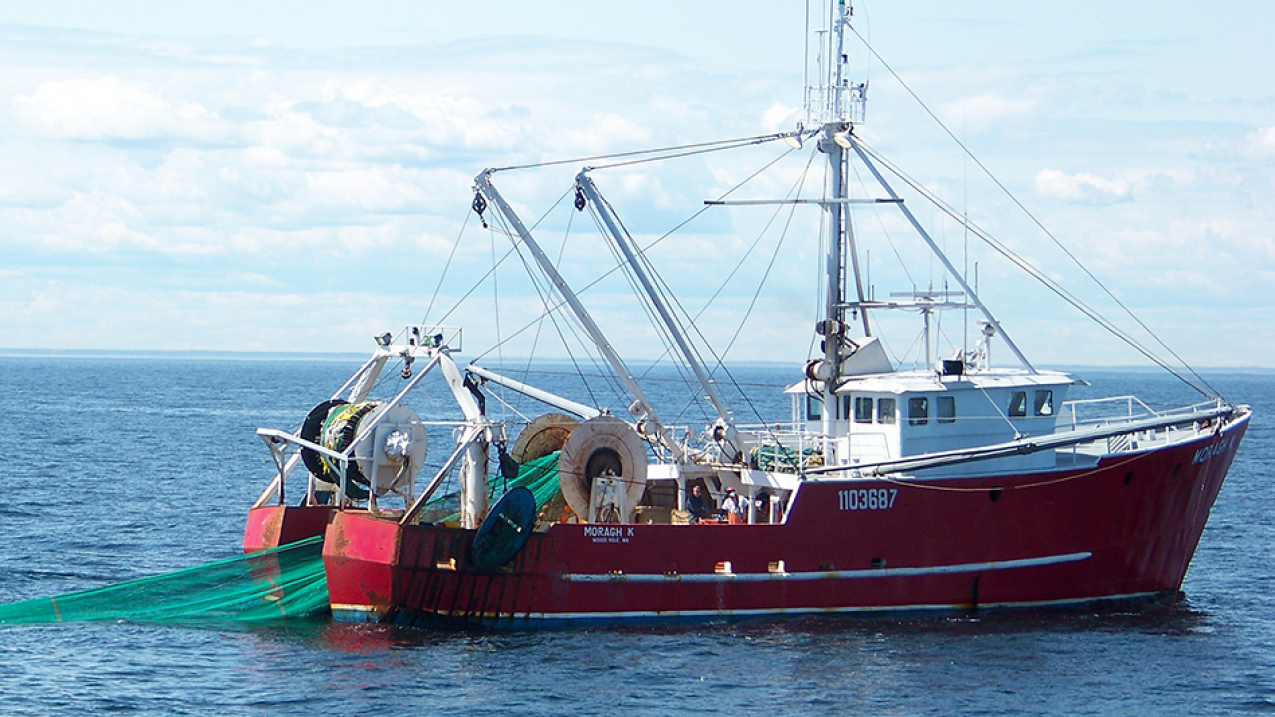
Trump Targets Fishing Rules
The Trump administration’s push to cut regulations on US commercial fishing is more than a policy tweak. It is a direct challenge to how one of America’s oldest industries is managed, policed, and protected. For fishing fleets already squeezed by fuel costs, labor shortages, weather swings, and tighter margins, deregulation sounds like relief. But it also raises a harder question: how much oversight can disappear before the long-term costs show up in depleted stocks, shakier safety standards, or weaker market confidence? This is not just about rules on paper. It is about who gets to decide the future of seafood supply, coastal jobs, and the balance between economic freedom and environmental restraint.
- The administration is signaling a broader rollback of
US commercial fishingoversight. - Fishing companies may see lower compliance costs and faster operations.
- Environmental and safety critics warn of long-term risks to stock sustainability and worker protection.
- The move could reshape how federal agencies balance industry growth with conservation.
- The biggest impact may be felt in coastal communities that depend on stable fisheries and stable rules.
What the US commercial fishing rollback really means
The phrase “cut regulations” sounds simple, but in fisheries policy it can mean a lot of different things: fewer reporting requirements, looser gear rules, lighter permit oversight, reduced inspections, or a more hands-off approach from federal regulators. Each of those changes affects the industry differently. A skipper may welcome less paperwork. A processor may like faster throughput. But the system that supports commercial fishing is built on more than efficiency. It is built on rules designed to prevent overfishing, protect ecosystems, and keep workers alive in one of the most dangerous jobs in America.
That tension is what makes this policy move so politically potent. Supporters will frame it as common sense and economic liberation. Opponents will see a familiar pattern: short-term business relief now, harder ecological and social damage later. The truth, as usual, sits somewhere in the machinery of enforcement, data collection, and science-based quota management.
When regulators trim back too aggressively, the pain rarely shows up immediately. It surfaces later, when catches become less predictable, insurance costs climb, and fleets discover that “less red tape” can also mean less stability.
Why US commercial fishing regulation has always been a balancing act
Fishing is one of those industries where the state is both a referee and a survival system. Federal rules have historically tried to keep fish populations from collapsing under commercial pressure while also making sure fleets can operate profitably. That means setting harvest limits, monitoring catch data, protecting certain habitats, and enforcing gear restrictions that reduce bycatch.
For the industry, that structure is frustrating because it can feel slow, expensive, and inconsistent. Yet it exists for a reason. Without managed limits, competition pushes boats to catch as much as possible, as fast as possible. That race can undermine the very resource the industry depends on. It is the classic tragedy of the commons, except with diesel, dockside loans, and livelihoods tied to the result.
The business case for deregulation
There is a legitimate economic argument behind rolling back some rules. Commercial fishing companies operate on thin margins, and compliance can be costly. Smaller operators often feel the burden most sharply because they have fewer staff, less capital, and less room to absorb administrative overhead. If a regulation is outdated, duplicative, or poorly targeted, scrapping it can free up money for maintenance, wages, and equipment upgrades.
There is also a competitiveness angle. Domestic fleets often argue that they face stricter rules than imported seafood suppliers, leaving U.S. fishermen at a disadvantage. From that perspective, reducing regulation is not about lowering standards for its own sake. It is about trying to level a market that many in the industry think is already tilted against them.
The risk hidden inside the promise
The danger is that deregulation rarely separates cleanly into good and bad pieces. Pull one thread and the whole fabric can shift. Weakening reporting requirements may save time, but it can also reduce the quality of stock assessments. Relaxing enforcement may lower costs, but it can also increase illegal or excessive harvests. Even subtle changes can matter because fisheries are dynamic systems. A small policy error can compound over a few seasons into a serious ecological and economic problem.
That is especially true in an era of warmer oceans, shifting migration patterns, and climate-linked disruption. Fish populations are already moving in ways that make management harder. The less precise the federal data becomes, the harder it gets to know whether a stock is recovering or quietly slipping away.
How the policy shift could reshape the industry
If the administration follows through, the most immediate winners are likely to be operators who spend heavily on compliance: logging, documentation, monitoring equipment, and legal review. Any reduction in administrative friction can matter when fuel prices are volatile and market access is uncertain. But the larger effect may be structural, not immediate. Over time, fewer rules can change fleet behavior, investment strategy, and how lenders assess risk.
Finance is often overlooked in this debate. Banks and insurers like predictability. They want to know a fishery is managed well, because that reduces the odds of a sudden collapse, quota cut, or enforcement action. If deregulation makes the sector appear less controlled, capital may not flow more freely. It may actually become more cautious.
What coastal communities should watch
For coastal towns, commercial fishing is rarely just a business. It is a chain that connects boats, docks, processors, truckers, mechanics, and restaurants. A policy shift that boosts one part of the chain can still destabilize another. If catch volumes rise too quickly, local processors may struggle to keep up. If stocks weaken over time, every link in the supply chain feels it.
The key metric is not simply how many rules disappear. It is whether the industry becomes more resilient or merely less constrained. That distinction will matter most in communities where one bad season can ripple through an entire local economy.
Policy makers often celebrate deregulation as efficiency. In fisheries, efficiency without restraint can become extraction. And extraction has a way of becoming expensive later.
What this means for conservation and enforcement
Conservation groups will likely argue that the administration is trying to solve a short-term political problem with a long-term biological resource. Fish stocks are not infinite, and many management systems only work when agencies have the authority and data to enforce them. If inspection budgets shrink or reporting becomes optional in practice, even well-intentioned rules can lose force.
There is also the issue of fairness. Large industrial operators can often navigate shifting regulations more easily than independent fishermen. If oversight weakens unevenly, the result may not be a freer market. It may be a more consolidated one, where the biggest players gain the most from the loosest rules.
Why the science matters more than the slogans
Fishing policy is one of the few areas where science, economics, and politics must work in the same room. Catch limits depend on biological estimates. Those estimates depend on reliable data. Reliable data depends on reporting systems and enforcement. Break any part of that chain and the entire policy model becomes less trustworthy.
That is why a sweeping anti-regulatory message can be misleading. Not every rule is bureaucracy. Some rules are the scaffolding that keeps the market and the ocean from collapsing into the same problem.
The bigger political play behind the US commercial fishing move
This is also about political identity. The administration is signaling that it wants to be seen as a friend to extractive industries, skeptical of federal overreach, and willing to challenge the administrative state wherever it can. Commercial fishing is a useful symbol because it blends heritage, labor, and food security. It is easy to present fishermen as hardworking Americans buried under paperwork. It is harder, in a campaign-style message, to explain ecosystem dynamics and enforcement tradeoffs.
That makes fisheries policy an ideal stage for a broader story about government restraint. But stories do not stock boats or replenish spawning grounds. Results do.
Pro tips for businesses and operators
- Track every proposed change to
US commercial fishingcompliance rules, not just the headline announcements. - Reassess insurance, financing, and maintenance plans if reporting or inspection requirements shift.
- Keep internal catch records even if federal reporting becomes less demanding; data is still leverage.
- Invest in gear and training that improve selectivity and safety, since weak rules do not remove real-world risks.
- Watch quota decisions and stock assessments closely, because deregulation can change how those numbers are interpreted.
Why this matters now
The fight over fishing rules is really a fight over governance. Do you manage a renewable resource with strict guardrails, or do you trust the market and the boats to self-correct? The administration is leaning hard toward the second model. That may deliver short-term wins for operators who feel boxed in. But fisheries are not like software markets or retail supply chains. When the underlying resource is overused, the correction is not a software patch. It is a lost season, a missed paycheck, or in some cases, a fishery that never fully rebounds.
If the White House succeeds, the move could become a template for other sectors facing similar pressure: fewer rules, more discretion, and a stronger emphasis on economic output over precaution. If it fails, it will likely do so because the costs of removing oversight become impossible to ignore. Either way, the outcome will reveal something important about the next phase of U.S. regulatory politics: whether the government still sees itself as steward, or simply bystander.
For fishermen, the stakes are immediate. For everyone else, the lesson is broader. A regulation may look like a nuisance until it turns out to be the only thing standing between a workable system and a very expensive mistake.
The information provided in this article is for general informational purposes only. While we strive for accuracy, we make no guarantees about the completeness or reliability of the content. Always verify important information through official or multiple sources before making decisions.


