Trump Xi Meeting Raises Global Stakes
Trump Xi Meeting Raises Global Stakes
The Trump Xi meeting arrives at a moment when symbolism is doing almost as much work as policy. A formal ceremony, tightly staged optics, and carefully calibrated language all point to the same reality: Washington and Beijing are trying to manage a rivalry that now touches trade, military posture, supply chains, technology, and political legitimacy. For markets, diplomats, and businesses, this is not just another photo opportunity. It is a stress test for whether the two most consequential powers on the planet can stabilize a relationship defined by distrust.
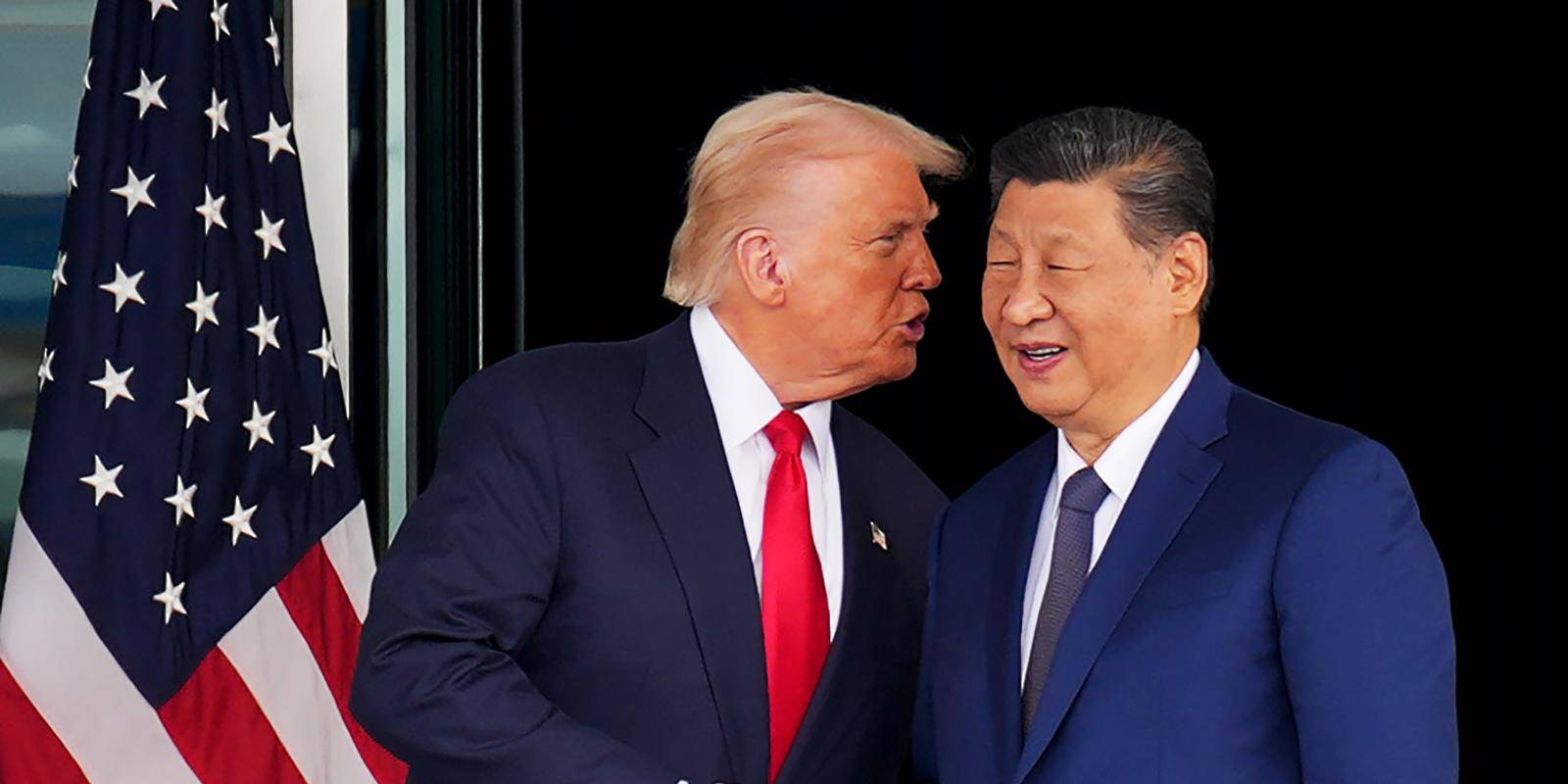
That is why the welcome matters. Ceremonial politics can look superficial from a distance, but in high-stakes statecraft, every image is part of the message. When Xi Jinping publicly welcomes Donald Trump ahead of a major meeting, the goal is not just hospitality. It is leverage, audience management, and strategic framing before the real negotiations even begin.
- The Trump Xi meeting is as much about political theater as policy substance.
- Trade tensions, security competition, and technology controls likely dominate the agenda.
- Both sides need to project strength at home while avoiding a destabilizing rupture abroad.
- Markets and multinational firms will watch for signals on tariffs, supply chains, and diplomatic tone.
- The outcome may shape the next phase of US-China relations more than any single formal agreement.
Why the Trump Xi meeting matters beyond the handshake
The United States and China are no longer merely large trading partners with occasional disputes. They are strategic competitors locked in a contest over industrial power, military influence, data infrastructure, semiconductor leadership, and the rules governing the global economy. That makes any top-level engagement between their leaders uniquely important.
The immediate temptation is to focus on whether the two sides produce a concrete deal. That matters, but it is not the only metric. High-level meetings often serve three purposes at once: lowering the temperature, testing red lines, and creating space for bureaucracies on both sides to move. Even if no sweeping breakthrough emerges, the tone and sequencing can still affect global decision-making.
This is especially true for businesses operating across borders. Companies have spent years adjusting to a world where tariffs, export restrictions, sanctions risk, and industrial policy can change investment logic almost overnight. A warmer tone between Washington and Beijing could briefly calm those fears. A colder one could accelerate decoupling in everything from advanced manufacturing to consumer electronics.
In modern geopolitics, ceremony is not decoration. It is negotiation by other means.
Reading the ceremony as strategy
Official welcomes are designed to communicate multiple messages simultaneously. To domestic audiences, they project control, status, and confidence. To international observers, they signal whether the host sees value in engagement or wants to underscore hierarchy. To the guest, they establish the emotional and political setting before private talks begin.
Xi Jinping’s decision to welcome Donald Trump with ceremony suggests Beijing wants the optics of disciplined statecraft. China often uses pageantry to reinforce continuity and national stature. In this context, the visual message is clear: Beijing is prepared, patient, and central to any serious global conversation.
For Trump, the optics work differently. He has long leaned into leader-to-leader diplomacy, where personal chemistry and theatrical moments can create the appearance of momentum. A ceremonial welcome offers him the chance to project relevance, toughness, and deal-making credibility. That does not mean the two sides are aligned. It means both see value in the stage.
Optics are policy signals in compressed form
Analysts often dismiss visuals as secondary, but that misses how political signaling actually works. A formal greeting can imply that neither side wants immediate escalation. It can also suggest that both governments understand the costs of miscalculation, especially when military and economic tensions are already elevated.
Watch for what is absent as much as what is visible. If public remarks stay broad and avoid direct confrontation, that usually indicates a desire to preserve negotiating room. If either side injects unusually sharp rhetoric, it can signal that domestic positioning is taking priority over diplomatic flexibility.
Trade is still central, but no longer the whole story
Any serious Trump Xi meeting inevitably revives the trade question. Tariffs remain politically useful and economically disruptive. They function as both bargaining chips and public proof of resolve. But the old model of trade conflict as a narrow dispute over deficits and market access is outdated.
Today, trade is fused with national security. Semiconductor controls, battery supply chains, rare earth access, port infrastructure, cloud computing, and AI capabilities all sit inside a larger strategic competition. That means even a modest tariff compromise would not necessarily produce broad normalization.
There are several likely pressure points:
- Tariffs and market access: whether either side hints at relief, exemptions, or phased adjustments.
- Export controls: especially around advanced chips, manufacturing tools, and dual-use technologies.
- Supply chain resilience: whether both countries continue pushing domestic alternatives to foreign dependence.
- Investment screening: tighter scrutiny over cross-border capital in sensitive sectors.
The strategic takeaway is blunt: economic interdependence has not disappeared, but it has become politicized. Every trade concession now carries a security interpretation. Every security measure creates a commercial shockwave.
Technology competition sits just beneath the surface
Even if public statements emphasize diplomacy and stability, technology will hover over the talks. The US-China relationship is increasingly shaped by competition over who controls the next generation of computing, communications, and industrial automation. That means discussions about trade and security cannot be separated from debates over chips, 5G, cloud infrastructure, and AI governance.
This is where the meeting becomes bigger than politics. Global tech firms, manufacturers, and investors are trying to understand whether the future is one partially integrated digital economy or two rival technology spheres with separate standards, suppliers, and compliance rules.
The business risk is policy fragmentation
For companies, the hardest scenario is not outright rupture. It is prolonged uncertainty. Executives can adapt to clear restrictions. What disrupts strategy is a slow-motion policy split where rules differ by sector, geography, and political cycle.
That is why even a vague commitment to continued dialogue could matter. It might not reverse restrictions, but it could reduce the risk of sudden policy shocks. On the other hand, if the rhetoric hardens, companies should expect more pressure to localize production, duplicate supply chains, and treat geopolitical exposure as a board-level issue rather than a compliance footnote.
The real contest is no longer just about goods crossing borders. It is about which systems, standards, and technologies shape the next global order.
Security tensions will shadow every conversation
Trade may get the headlines, but security concerns are the deeper structural problem. US-China tensions now intersect with military activity, alliance politics, regional deterrence, and strategic signaling in Asia. Even if those issues are not front and center in the ceremonial phase, they are impossible to separate from the meeting’s larger meaning.
High-level diplomacy can help prevent accidental escalation. It can clarify intent, reinforce communication channels, and reduce the risk that a tactical confrontation spirals into something larger. That is one reason these meetings matter even when the public outcomes seem modest.
Still, no one should confuse contact with trust. Dialogue can manage rivalry, but it does not dissolve it. The baseline reality remains one of competition, suspicion, and diverging political systems. The best-case outcome may not be reconciliation. It may simply be a temporary framework for coexistence.
Why this matters for markets, allies, and everyone else
The effects of the Trump Xi meeting will extend far beyond Washington and Beijing. US allies in Europe and Asia are watching for clues about strategic coordination, trade exposure, and crisis stability. Emerging economies are looking for signs that they will not be forced into sharper alignment choices. Financial markets want reassurance that the largest bilateral relationship in the world will not produce another round of sudden disruption.
For multinational companies, the implications are immediate:
- Reassess sourcing concentration in politically sensitive sectors.
- Model tariff and export-control scenarios before they happen.
- Treat geopolitical signaling as operational intelligence, not background noise.
- Track sector-specific language around
semiconductors,energy, andcritical minerals.
Pro Tip for business leaders
If your exposure depends on a single assumption that US-China ties will eventually normalize, your risk model is outdated. A more realistic baseline is selective engagement combined with durable strategic competition.
What success would actually look like
Success in a meeting like this is often misunderstood. It does not have to mean a grand bargain. More often, success means avoiding a public breakdown, preserving communication, and identifying narrow areas where practical cooperation remains possible.
That could include stabilizing commercial expectations, reducing inflammatory rhetoric, or signaling that future talks will continue. In geopolitical terms, those are not small achievements. They buy time, lower volatility, and keep options open.
Failure, by contrast, would be visible quickly. A confrontational tone, contradictory readouts, or visible hardening on tariffs and technology restrictions would reinforce the view that the relationship is sliding into a more entrenched and more costly phase.
The bigger picture after the ceremony
Once the cameras move on, the core question will remain: can the US and China build a relationship that is competitive without becoming unmanageable? The answer is not likely to emerge from a single summit. But moments like this help define the trajectory.
That is why the ceremonial welcome is worth taking seriously. It is not a sideshow to the meeting. It is part of the meeting. It sets expectations, frames leverage, and tells the world how each side wants the encounter understood before any detailed agreement is signed or rejected.
The deeper truth is that both countries need something from this engagement. China wants to project steadiness and centrality. Trump wants to project strength and negotiating relevance. Neither side can afford to look weak. Neither side can fully ignore the costs of escalation. That tension is exactly what makes the meeting consequential.
For everyone else, the lesson is clear: the relationship between Washington and Beijing is not returning to an easier era. It is entering a more structured, more performative, and more strategic phase. The ceremony may be polished. The stakes are not.
The information provided in this article is for general informational purposes only. While we strive for accuracy, we make no guarantees about the completeness or reliability of the content. Always verify important information through official or multiple sources before making decisions.