Trump Xi Thaw Reprices China Credit
Trump Xi Thaw Reprices China Credit
China credit geopolitical discount is suddenly the phrase investors cannot ignore. A Trump Xi summit that signals even a partial easing in US China tensions would not magically fix China’s property slump, weak confidence, or uneven consumer demand. But markets do not need perfection to reprice risk. They need a credible reduction in worst-case outcomes. For global investors, the pain point is simple: Chinese assets have looked cheap for years, yet stayed cheap because politics kept overpowering valuation. If the diplomatic temperature drops, that discount can narrow fast. The bigger question is whether this is a durable reset or just another tradable thaw in a relationship still defined by export controls, tariffs, technology rivalry, and strategic distrust.
- A Trump Xi summit could compress China’s
geopolitical discountby reducing the perceived risk of escalation. - Credit markets may react before equities because
credit spreadsdirectly price default risk, policy risk, and liquidity stress. - The opportunity is real but uneven, with stronger implications for quality issuers than distressed property names.
- Investors should watch policy delivery, not just summit language, because diplomacy can fade faster than market rallies.
Why the China credit geopolitical discount is shrinking
The core market story is not that China’s economy has suddenly healed. It has not. The story is that the probability of a more hostile policy path may be falling. In credit markets, that matters enormously. A lower geopolitical discount can push investors to accept tighter credit spreads, lower risk premium, and higher prices for corporate bonds tied to China’s growth cycle.
For years, foreign investors have treated Chinese assets with a penalty that goes beyond balance sheets. The penalty reflects sanctions risk, tariff uncertainty, restrictions on technology flows, capital market fragmentation, and fear that politics could trap money in a low-liquidity corner. Even profitable companies and state-linked borrowers have faced skepticism because the macro backdrop came with a geopolitical overhang.
The market does not need friendship between Washington and Beijing. It needs predictability. If investors believe the rules of engagement are becoming less chaotic, risk assets can re-rate.
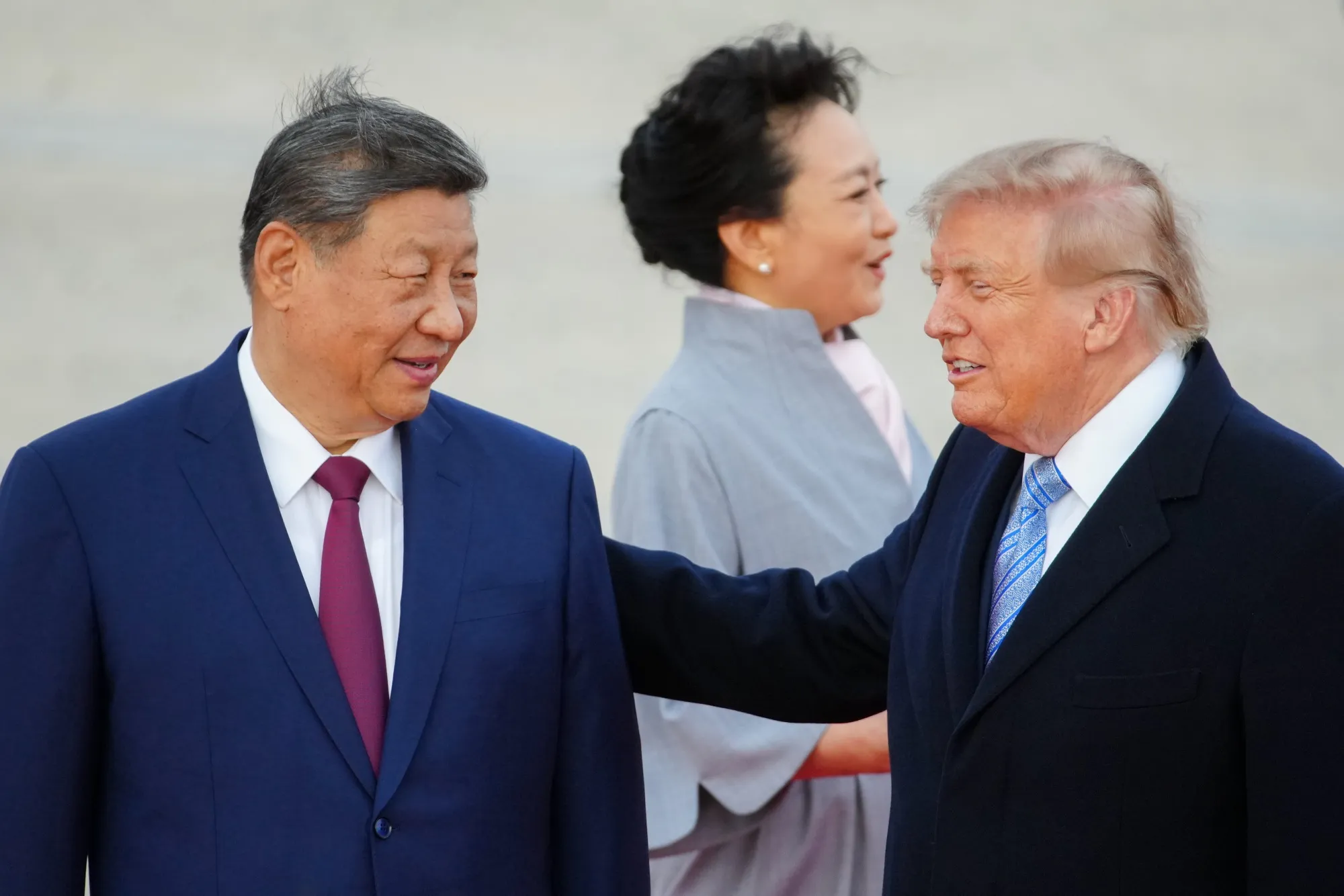
That is why a summit matters. Leaders meeting face to face can create channels for crisis management, stabilize expectations, and give investors a reason to revisit positions that were abandoned during periods of maximum tension. The effect is psychological, but in markets psychology quickly becomes pricing.
China credit geopolitical discount hits the bond market first
Credit often moves before broader public narratives catch up. Unlike equities, bonds are less interested in heroic growth stories and more focused on whether borrowers can refinance, service debt, and avoid a sudden policy shock. If tensions ease, the most immediate beneficiaries could be investment grade issuers, selected SOE borrowers, high-quality financials, and companies with overseas funding needs.
Why credit spreads matter more than headlines
A credit spread is the extra yield investors demand to hold a bond instead of a safer benchmark. When fear rises, spreads widen. When confidence improves, spreads tighten. China-linked borrowers have often carried a spread premium because investors priced in more than corporate risk. They priced in the possibility that geopolitical conflict could disrupt funding access, investor demand, or cross-border operations.
If a Trump Xi meeting narrows that perceived tail risk, the spread compression can be meaningful. This is especially true for names that were not fundamentally distressed but were swept into a broader China-risk bucket. In practical terms, a bond that looked stuck because global funds avoided the region can rally once the macro label changes from uninvestable to selectively investable.
The property sector remains the exception
The thaw does not erase China’s property crisis. Developers with weak cash flow, unfinished projects, or fragile restructuring plans still face hard fundamentals. A diplomatic easing may improve sentiment, but it cannot instantly repair leverage, presales, or consumer confidence. The market should separate duration trades and spread compression in stronger issuers from speculative bets on distressed real estate debt.
Pro tip: Investors should avoid treating all China credit as one trade. The gap between a policy-supported issuer and a troubled developer can be enormous, even when both rally on the same headline.
The bigger signal for global capital
China’s challenge is not simply attracting money. It is convincing long-term capital that policy risk is measurable. Global asset managers can tolerate slow growth. They can tolerate currency volatility. They can tolerate lower returns if valuations are attractive. What they struggle with is uncertainty that cannot be modeled.
A warmer diplomatic tone could help reduce that uncertainty. It may encourage funds to revisit allocations to Chinese bonds and equities, especially after years of underweight positioning. When positioning is light, even modest good news can have an outsized impact. The first wave is usually tactical: hedge funds, credit desks, and fast-moving allocators. The second wave, if it comes, is more important: pensions, insurers, sovereign funds, and long-only managers.
That second wave requires more than optics. It needs evidence that trade friction is not intensifying, that technology restrictions are not expanding unpredictably, and that Beijing is willing to support private-sector confidence. The summit can open the door, but domestic policy still has to walk through it.
Why this matters for the US too
It is tempting to frame a China credit rally as a China-only event. That misses the point. US companies, commodity producers, Asian exporters, semiconductor supply chains, and emerging-market currencies all sit inside the same risk web. When the US China relationship deteriorates, markets price in slower trade, higher compliance costs, and more fragmented supply chains. When tensions cool, the global growth impulse can improve.
This is especially important for sectors tied to manufacturing demand, logistics, industrial metals, luxury goods, and consumer electronics. A narrower China discount can support not only Chinese bonds but also assets that depend on Chinese demand or regional stability. The signal effect can be broad even if the actual policy changes are narrow.
The renminbi factor
The currency is another key channel. A more stable US China relationship can reduce depreciation pressure on the renminbi, particularly if capital outflow concerns ease. A steadier currency helps foreign bond investors because returns are not immediately diluted by foreign exchange losses. That matters for any fund considering local-currency exposure.
Still, the currency path depends on rate differentials, domestic growth, and central bank tolerance. Diplomacy can help sentiment, but it does not override monetary math.
What could widen the China credit geopolitical discount again
The skeptical view is necessary here. US China relations have produced many false dawns. A summit can narrow the geopolitical discount, but the discount can widen again if the follow-through disappoints. Investors should watch for three risks.
- Trade policy reversals: New tariffs or enforcement actions could quickly undermine the mood shift.
- Technology restrictions: Expanded controls on chips, software, or AI-related supply chains would keep strategic rivalry front and center.
- Taiwan and security tensions: Military incidents or aggressive rhetoric could reprice risk faster than any economic data release.
- Domestic policy disappointment: Weak stimulus, property stress, or poor consumer confidence could cap the rally.
The point is not that investors should ignore the opportunity. The point is that the opportunity is conditional. China credit can rally on reduced geopolitical fear, but it still needs economic stabilization to sustain the move.
How investors should read the thaw
The smartest interpretation is neither euphoria nor dismissal. A Trump Xi thaw is a repricing catalyst, not a full investment thesis by itself. It lowers one part of the risk stack. It does not remove structural concerns around demographics, debt, property, local government finances, or the long-term US China technology split.
For credit investors, the cleanest approach is to focus on quality first: issuers with strong cash flow, policy relevance, manageable maturities, and access to refinancing. For equity investors, the read-through is more selective: platforms, exporters, consumer names, and industrial companies may benefit if sentiment improves, but earnings delivery still matters.
The rally worth trusting is not the one built on a handshake. It is the one confirmed by funding access, tighter spreads, stronger issuance, and policy action that investors can verify.
That distinction is crucial. Markets are excellent at front-running better conditions. They are less forgiving when those conditions fail to arrive. If the summit leads to practical steps – clearer trade channels, fewer surprise escalations, more predictable negotiations – then the discount can compress further. If it produces only language, the move may be sharp but shallow.
The bottom line on China credit geopolitical discount
The Trump Xi summit matters because it attacks one of the biggest invisible taxes on Chinese assets: the geopolitical discount. For years, investors have demanded extra compensation for risks that sat outside company fundamentals. A credible thaw can reduce that compensation, lift bond prices, support the renminbi, and reopen conversations about China exposure.
But this is not a return to the old China trade. The era of automatic optimism is over. Investors now want proof, not promises. The summit can narrow the discount, but sustained performance will depend on whether diplomacy turns into policy stability and whether China’s domestic economy can regain enough momentum to justify the re-rating. The opportunity is real. So is the trap.
The information provided in this article is for general informational purposes only. While we strive for accuracy, we make no guarantees about the completeness or reliability of the content. Always verify important information through official or multiple sources before making decisions.