Tyre Evacuation Signals a Dangerous New Phase

Tyre Evacuation Signals a Dangerous New Phase
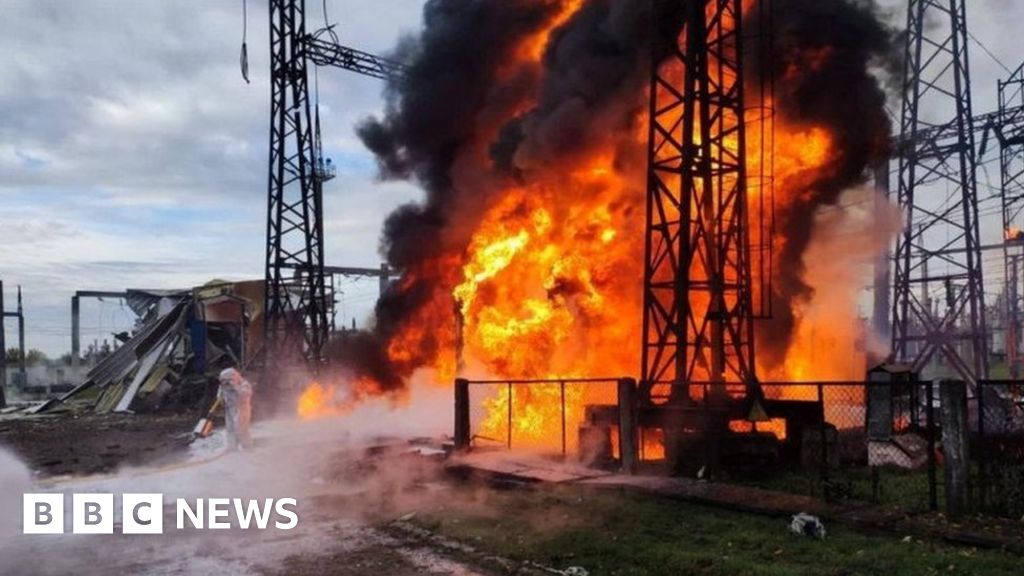
The Tyre evacuation order is the kind of development that instantly changes the stakes. When a major Lebanese coastal city is told to clear out amid active bombardment, this is no longer a contained border exchange or another grim headline in a long-running conflict. It signals pressure, intent, and the possibility of a broader military campaign with civilians trapped at the center. For residents, the problem is brutally immediate: move fast, find safety, survive the next strike. For the region, the implications are larger and harder to ignore. An evacuation warning in a city like Tyre suggests operational escalation, deeper insecurity in southern Lebanon, and a fresh test of how modern warfare treats urban populations. That is why this moment matters beyond a single day of fighting.
- The Tyre evacuation order suggests a meaningful military escalation in southern Lebanon, not just routine cross-border pressure.
- Civilians face impossible choices when evacuation orders arrive during bombardment, especially in dense urban areas with damaged infrastructure.
- Tyre’s location and symbolic weight matter: this is a key coastal city, not a remote frontline outpost.
- The humanitarian and political fallout could be severe, especially if displacement expands and strikes intensify.
- Regional actors will read this as a strategic signal about the trajectory of the conflict in Lebanon.
Why the Tyre evacuation order matters now
Evacuation orders are never neutral. In military terms, they can serve several functions: warning civilians, shaping the battlefield, reducing legal and political blowback, and telegraphing the likely expansion of strikes. In practical terms, they often create chaos. Roads jam. Families separate. Hospitals strain. Communications degrade. The gap between warning and safe escape can collapse in minutes.
That is what makes the Tyre evacuation order so significant. Tyre is not just another dot on a map. It is one of Lebanon’s best-known southern cities, a dense urban area with residential neighborhoods, commercial activity, and deep historical significance. Ordering civilians out of Tyre amid bombardment means the operational focus is reaching into a place with both strategic and symbolic value.
When an evacuation order targets a city like Tyre, the message is clear: the battlefield is widening, and civilians are being forced to absorb the speed of that shift in real time.
The strategic logic behind targeting Tyre
Military planners do not issue large-scale urban evacuation warnings casually. A city like Tyre offers geography, access, visibility, and infrastructure that can matter in a conflict stretching along Lebanon’s south. Its coastal position makes it important not only for local movement, but also for the optics and signaling of military operations in a highly scrutinized environment.
Urban warfare is about more than front lines
Modern conflict rarely stays neat. Once hostilities intensify around cities, traditional front lines blur into overlapping zones of surveillance, strikes, movement restrictions, and displacement. In that context, an evacuation warning can indicate that an area is being recast from civilian space into an active operational grid.
That does not necessarily reveal the full military plan, but it does tell observers something crucial: the risk tolerance is changing. If bombardment continues after warnings are issued, then the city is no longer being treated primarily as a place to preserve normal life. It is being treated as terrain.
Warnings do not equal safety
One of the most uncomfortable truths in modern warfare is that warnings can coexist with extreme danger. On paper, an evacuation order may look like a humanitarian measure. On the ground, it can be nearly impossible to execute safely. Residents may lack transport, fuel, money, trusted routes, or a secure place to go. Older adults, children, people with disabilities, and hospital patients face the highest risk.
That is especially true during bombardment. A city under attack is not a city capable of orderly movement. Traffic systems break down. Mobile networks become unreliable. Rumors spread faster than verified instructions. Even when people want to leave, they may not know where safety actually exists.
What civilians in Tyre are up against
The phrase evacuation order can sound administrative. In reality, it describes one of the harshest decisions civilians can face in wartime. Leave quickly with limited belongings and no guaranteed shelter, or stay and risk being caught in the next wave of strikes.
For many families, evacuation is not a single event but a chain reaction. First comes immediate escape. Then comes temporary shelter. Then comes the uncertainty of how long displacement will last and whether home, school, work, and community networks will survive. In repeated conflicts, this can become a cycle that strips away resilience with each new move.
- Transport pressure: private vehicles may be unavailable or roads may be unsafe.
- Shelter scarcity: neighboring areas may already be strained by earlier displacement.
- Medical disruption: clinics, pharmacies, and emergency care can become inaccessible.
- Information gaps: people often receive fragmented or contradictory guidance.
- Psychological trauma: children and vulnerable residents carry the longest-lasting burden.
This is where the gap between military intent and civilian reality becomes impossible to ignore. An order may assume mobility. War often destroys it.
Why Tyre changes the political picture
The Tyre evacuation order is not just a tactical development. It is a political signal to multiple audiences at once: Lebanese authorities, armed groups operating in the south, regional powers, and international observers watching for signs of a wider war. Escalatory decisions in prominent cities alter diplomatic calculations because they suggest the conflict may be entering a less containable phase.
Pressure on Lebanon’s internal balance
Lebanon’s internal political and security environment is already fragile. Any expansion of strikes around major southern cities can intensify domestic pressure on institutions that are often overstretched even in calmer periods. Displacement from Tyre would not remain a local issue for long. It would ripple through nearby communities, public services, and national politics.
That matters because urban displacement is not only a humanitarian problem. It can quickly become a governance problem, a legitimacy problem, and a stability problem.
Regional signaling is part of the story
Every major move in southern Lebanon is read regionally. Evacuation orders, strike patterns, and targeting choices can all be interpreted as signals about military posture and escalation thresholds. If Tyre is now part of the active pressure map, neighboring actors will likely assume that prior red lines are being tested or revised.
The political meaning of an evacuation order is often larger than the military meaning: it tells the region what kind of conflict may be coming next.
The information war around the Tyre evacuation order
Conflicts like this are fought on two tracks at once: the physical battlefield and the information battlefield. An evacuation order does both practical and narrative work. It warns. It justifies. It shapes public interpretation before the next military step unfolds.
That makes verification and clarity especially important. Short video clips, emergency graphics, social posts, and secondhand accounts can move faster than official details. In high-stress conditions, civilians often act on the first credible signal they receive, not the most complete one. That creates a dangerous environment where confusion can itself become a weapon of war.
Observers should be skeptical of overly tidy narratives. Urban warfare is messy, and the real conditions on the ground often diverge sharply from how events are framed by military or political actors. The existence of a warning does not settle the legal, moral, or strategic questions. It raises them.
What comes next after a citywide warning
Historically, large-scale evacuation orders in active conflict zones can precede several possible outcomes. None are reassuring.
Scenario one: expanded bombardment
The most immediate possibility is intensified strikes against designated areas. In this scenario, the warning is used to clear space before broader or deeper military action.
Scenario two: psychological pressure without full ground expansion
Sometimes evacuation orders are part of coercive pressure designed to disrupt local routines, force displacement, and alter the operating environment without an immediate all-out assault. Even then, the civilian cost remains severe.
Scenario three: broader operational shift in southern Lebanon
The most consequential interpretation is that Tyre marks the beginning of a wider reconfiguration of the conflict map. If that is the case, the city is not an isolated flashpoint. It is an indicator.
For analysts and policymakers, the key question is whether this remains a concentrated episode or becomes a template for further urban warnings elsewhere in Lebanon. If similar orders spread, then the strategic picture darkens fast.
Why this matters beyond Lebanon
It is easy for international audiences to treat a single evacuation warning as one more tragic but familiar development. That would be a mistake. The Tyre evacuation order matters because it compresses several of the defining features of modern conflict into one event: urban vulnerability, military signaling, information warfare, civilian displacement, and regional escalation risk.
It also forces a difficult question that keeps resurfacing in 21st-century warfare: what does meaningful civilian protection look like when battles move into cities and warnings are issued under fire? The answer, too often, is that protection becomes more theoretical than real.
That is why Tyre deserves close attention. This is not only about one coastal city under threat. It is about the methods and consequences of escalation in places where civilians have the least room to maneuver. Once evacuation becomes the language of policy, normal life has already collapsed.
The bottom line on the Tyre evacuation order
The Tyre evacuation order is a warning in every sense of the word. It warns residents to flee. It warns Lebanon that southern urban centers may face greater danger. And it warns the wider region that the conflict may be entering a sharper, more volatile stage.
What makes this moment so alarming is not just the bombardment itself, but the logic behind it. When a city like Tyre is told to empty under fire, the strategic, humanitarian, and political costs start rising together. That is usually how conflicts become harder to contain and far harder to reverse.
For now, the essential reality is stark: civilians are again being asked to absorb the shock of escalation first. The rest of the region may feel the consequences soon after.
The information provided in this article is for general informational purposes only. While we strive for accuracy, we make no guarantees about the completeness or reliability of the content. Always verify important information through official or multiple sources before making decisions.