UK Age Checks Reshape the Web
UK Age Checks Reshape the Web
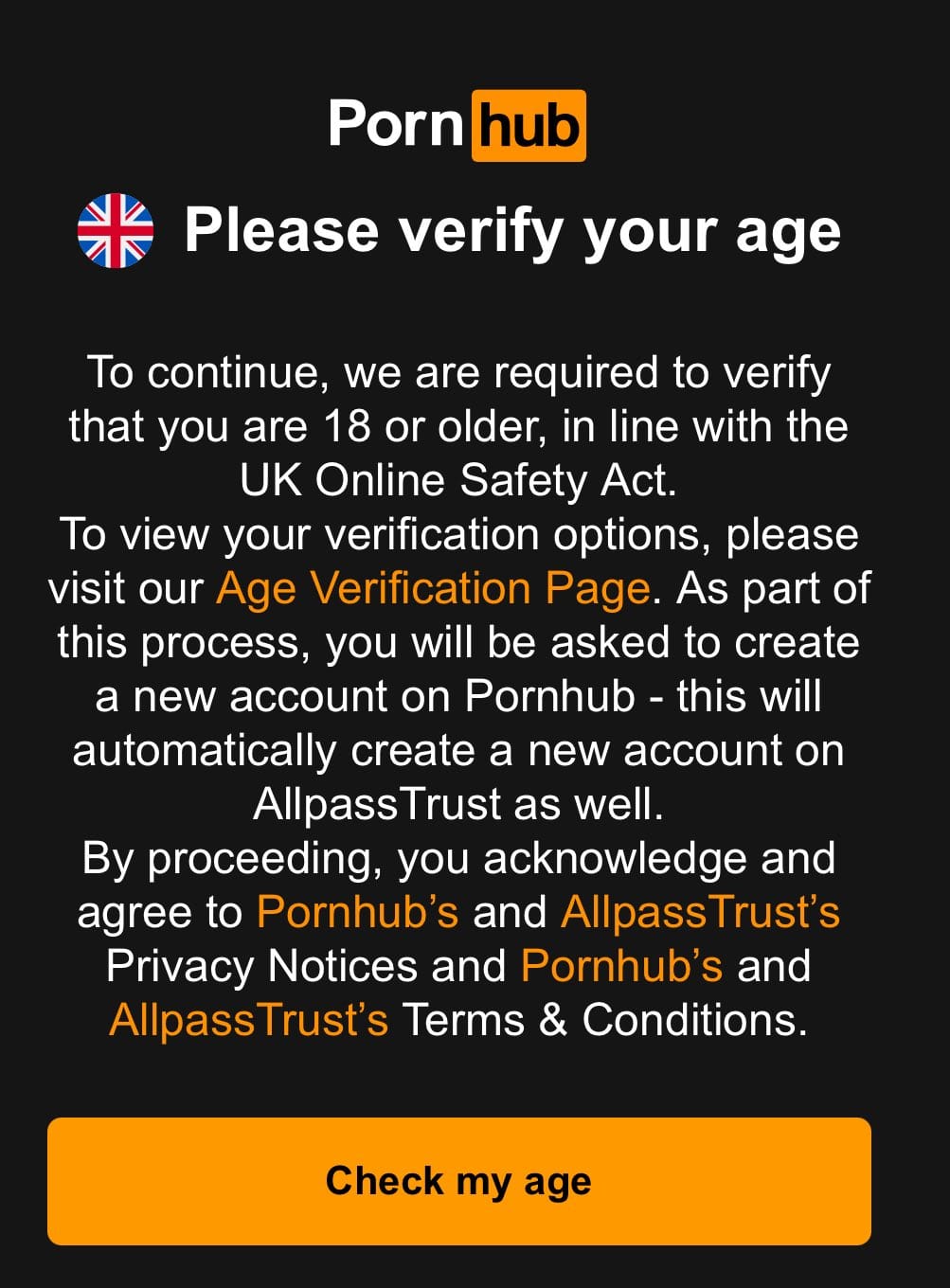
The internet is entering its proof-of-age era, and the shift is bigger than a pop-up asking for your birthday. UK age checks are now forcing platforms, publishers, app makers, and social networks to confront a problem they spent years routing around: how to protect children without building a surveillance layer over everyday browsing. The pain point is obvious for users, who do not want to hand over passports just to scroll. It is equally sharp for companies, which must balance compliance, trust, conversion rates, and technical risk. The BBC report underscores a turning point in digital regulation: online safety is no longer a policy slogan. It is becoming product architecture, user experience, and board-level risk management.
- UK age checks are moving from niche adult sites to mainstream digital services.
- Platforms must prove they can protect minors while minimizing data collection.
- Privacy-preserving tools such as
age assuranceandtoken-based verificationwill become competitive differentiators. - Bad implementation could push users toward
VPNworkarounds and less accountable platforms. - The next battleground is not whether age checks arrive, but who controls the identity layer behind them.
Why UK age checks matter now
For years, the web relied on a polite fiction: users clicked a box saying they were old enough, and platforms called it compliance. That model is collapsing. Regulators want stronger proof that children are not being exposed to harmful, addictive, or age-restricted material. Parents want accountability. Tech companies want clarity, but not at the cost of killing growth or storing sensitive identity documents.
The strategic tension is simple. Age verification can protect minors, but it can also create new privacy risks. If a platform asks for a scan of a driving licence, who stores it? For how long? Can it be linked to browsing history? What happens in a breach? These are not abstract questions. They define whether age checks become a safety upgrade or a trust disaster.
Key insight: The winning model will not be the most aggressive age gate. It will be the one that proves eligibility while revealing the least possible personal data.
UK age checks and the privacy trade-off
The core challenge is that age is both simple and sensitive. A service may only need to know whether someone is over 13, 16, or 18. It does not need their full name, home address, face scan, or document number. Yet many verification flows collect far more than the minimum because legacy identity systems were built for banking, hiring, or travel, not casual web access.
This is where data minimisation becomes more than a compliance phrase. A responsible age-checking system should answer one narrow question: does this user meet the age threshold? The answer should ideally be returned as a yes-or-no claim, not as a bundle of identity attributes.
What a better verification flow looks like
- Step one: The user verifies age with a trusted provider, app store, mobile carrier, bank, or government-backed credential.
- Step two: The provider issues a reusable
age tokenor claim confirming the threshold. - Step three: The platform receives only the necessary signal, such as
over_18=true. - Step four: The platform avoids storing identity documents, selfies, or unnecessary biometric data.
That model is not frictionless, but it is far better than every site becoming its own miniature passport office. It also reduces breach impact. If attackers compromise a platform, they should not find a database of documents tied to sensitive viewing habits.
The business risk behind UK age checks
Compliance is only one part of the equation. The bigger business risk is user abandonment. Every extra screen in a sign-up or access flow creates drop-off. If a user is asked to upload an ID, wait for approval, or complete a glitchy face scan, many will leave. Some will turn to competitors. Others will use a VPN, fake credentials, or offshore platforms that ignore local rules.
That means product teams cannot treat age checks as a legal bolt-on. They are now part of the customer journey. The difference between a three-second verification and a three-minute identity process could be the difference between compliance and commercial damage.
Pro tip for product teams
Run age assurance like a payments funnel. Measure completion rate, error rate, device compatibility, user support tickets, retry behavior, and abandonment. If your age verification tool breaks on older phones, poor lighting, shared devices, or accessibility settings, it is not production-ready.
The technical stack will decide who users trust
Age checks sound like a policy problem, but implementation lives in infrastructure. Companies will need to decide whether to build, buy, or integrate with third-party providers through an API or SDK. That choice affects liability, performance, privacy, and user trust.
Several approaches are competing for dominance. Document verification uses passports, driving licences, or national IDs. Facial age estimation attempts to estimate age from a selfie. Mobile network verification may rely on account information from carriers. Digital wallet credentials could let users prove age without repeatedly submitting documents. More advanced approaches, including zero-knowledge proof systems, aim to confirm eligibility without exposing underlying personal data.
Each option has weaknesses. Document checks can exclude people without IDs. Facial estimation can raise bias and biometric concerns. Carrier checks may fail for children using family plans or Wi-Fi-only devices. Wallet credentials require ecosystem adoption. The likely future is not one universal method, but a layered model where platforms offer multiple routes based on risk and user context.
What platforms should do before enforcement tightens
Companies should start with a risk map, not a vendor demo. The first question is not which tool looks most polished. It is where minors are likely to encounter harm, what content or features trigger legal duties, and what level of assurance is proportionate.
- Audit access points: Identify pages, feeds, search results, recommendations, chat features, and uploads that may require age-based controls.
- Classify risk: Separate low-risk content from adult, harmful, addictive, or user-generated areas.
- Minimize data: Avoid storing raw identity documents unless there is a compelling legal reason.
- Demand vendor transparency: Review accuracy, bias testing, retention policies, breach procedures, and appeal mechanisms.
- Plan for appeals: Users need a way to challenge false rejections or incorrect age estimates.
- Document decisions: Keep records of your
DPIA, vendor due diligence, and product risk assessments.
The smartest teams will treat this as a governance problem across legal, security, engineering, policy, and design. The weakest teams will paste in a verification widget and hope regulators do not ask hard questions.
The unintended consequences are already visible
Age checks can backfire if they are clumsy. Users who feel over-surveilled may migrate to less regulated spaces, encrypted groups, mirror sites, or platforms outside the regulator’s practical reach. That does not improve child safety. It may make risky behavior harder to monitor and harder to moderate.
There is also a competition problem. Large platforms can absorb compliance costs, negotiate with vendors, and build sophisticated trust systems. Smaller forums, indie publishers, gaming communities, and start-ups may struggle. Regulation that is designed to restrain Big Tech can accidentally deepen its moat if implementation costs are too high.
Why this matters: Online safety rules should not create a web where only the biggest companies can afford to ask whether a user is old enough.
The next fight is the identity layer
The deeper story is not just about children accessing restricted content. It is about the future of digital identity. Once age checks become normal, the same infrastructure could be used for gambling, alcohol delivery, social media, dating apps, gaming loot boxes, financial promotions, and political advertising controls.
That raises a strategic question: who should own the proof-of-age layer? Governments may push digital credentials. App stores could become gatekeepers. Banks and mobile carriers may see a new market. Specialist verification vendors will argue they can do it faster and with better privacy controls. Platforms may prefer to keep the experience in-house.
The danger is centralization. If a handful of identity providers become mandatory checkpoints for web access, they gain enormous visibility and leverage. The opportunity is interoperability. A user should be able to prove age once, safely, and reuse that proof across services without creating a universal tracking ID.
UK age checks are a product test for the entire internet
The next phase of online safety will be judged by implementation, not intention. If UK age checks are accurate, privacy-preserving, accessible, and proportionate, they could become a template for other markets. If they are intrusive, brittle, or easily bypassed, they will train users to distrust verification prompts and dodge compliance altogether.
For tech leaders, the mandate is clear: build age assurance as a trust feature, not a punishment screen. For regulators, the challenge is equally sharp: enforce child protection without normalizing unnecessary identity collection. The companies that get this right will not merely avoid fines. They will shape the identity infrastructure of the next web.
The information provided in this article is for general informational purposes only. While we strive for accuracy, we make no guarantees about the completeness or reliability of the content. Always verify important information through official or multiple sources before making decisions.