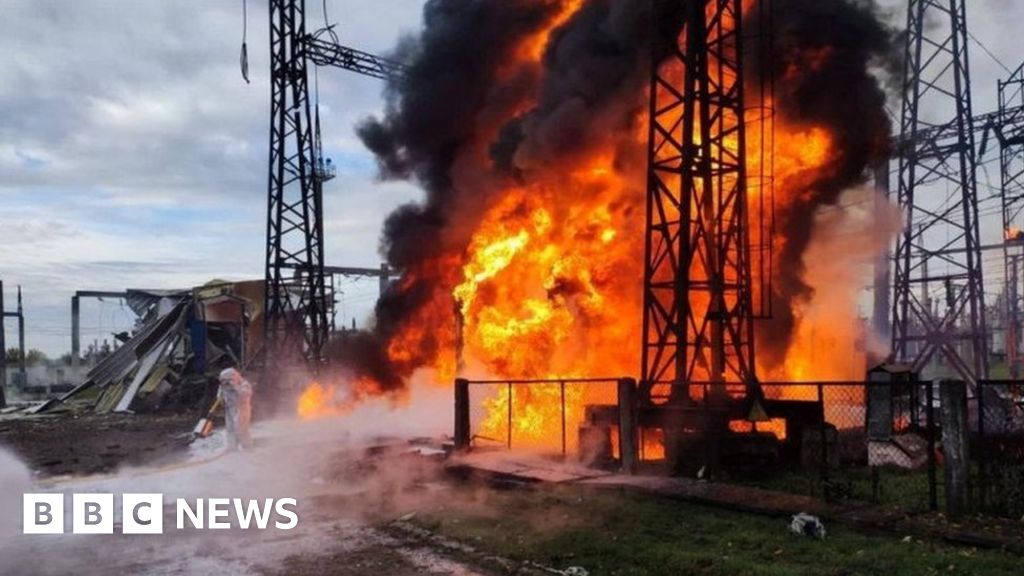
Ukraine Drones Redefine Modern Warfare
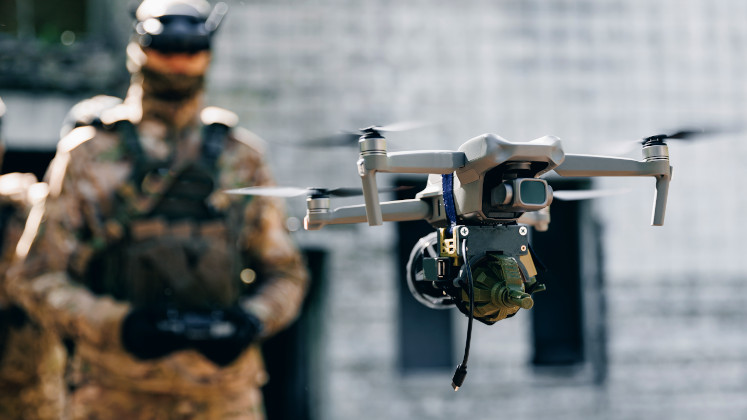
Ukraine Drones Redefine Modern Warfare
Military power used to be measured in tanks, artillery, and air superiority. That formula is breaking down fast. Ukraine drone warfare has become one of the clearest signals yet that low-cost, fast-adapting technology can upend expensive legacy systems and force militaries to rethink everything from procurement to battlefield tactics. What is happening is not just a regional story about one conflict. It is a live stress test for the future of war, where software updates, improvised manufacturing, electronic interference, and operator skill can matter as much as traditional firepower. For defense planners, investors, and anyone tracking geopolitical risk, the implications are immediate: the battlefield is becoming more networked, more transparent, and far more hostile to slow-moving institutions.
- Ukraine drone warfare is proving that cheap, adaptable systems can neutralize far more expensive military assets.
- Both attack and defense are evolving quickly, especially around
FPV drones, surveillance platforms, and electronic warfare. - The conflict is reshaping how governments think about defense procurement, manufacturing, and battlefield data.
- Commercial technology and rapid iteration are becoming central to military advantage.
- The lessons extend well beyond Ukraine and will influence global military doctrine.
Why Ukraine drone warfare matters far beyond the front
The most important shift is not just that drones are everywhere. It is that they have become integrated into the daily logic of combat. Small reconnaissance drones help units identify targets in real time. Loitering munitions compress the time between detection and strike. First-person-view systems, often referred to as FPV drones, have altered frontline engagement by offering relatively cheap precision against vehicles, fortifications, and personnel.
This matters because it changes the economic math of war. A platform that costs a few hundred or a few thousand dollars can threaten armored equipment worth millions. That imbalance does not automatically replace conventional forces, but it does undermine long-standing assumptions about survivability, mobility, and the cost of attrition.
The central lesson is brutal and simple: if a force can be seen, it can often be tracked, and if it can be tracked, a drone may be the fastest way to hit it.
That has pushed militaries into a new era where concealment, electronic protection, rapid adaptation, and decentralized innovation are no longer specialist concerns. They are core operating requirements.
How the battlefield changed so quickly
Several trends converged at once. Commercial drone technology matured. Components became easier to source. Camera systems improved. Batteries and control links became more reliable. At the same time, software, targeting workflows, and field improvisation advanced under combat pressure.
Ukraine has demonstrated how quickly a military can fuse civilian tech culture with operational necessity. Engineers, volunteers, soldiers, and private manufacturers have all played roles in pushing drones from useful accessory to central battlefield instrument. That kind of ecosystem matters. It allows rapid iteration instead of waiting years for a traditional defense acquisition cycle to produce results.
The rise of FPV drones
Among the most striking developments has been the spread of FPV drones. Originally associated with hobbyist communities, these systems have been adapted into effective strike tools. Their appeal is straightforward: low cost, flexibility, and the ability to guide them with high precision in complex environments.
They are not magic weapons. They can be disrupted, jammed, intercepted, or defeated by hardened defenses. But their operational value lies in scale and adaptability. When a force can deploy large numbers, iterate designs quickly, and train operators continuously, the systems become more than individual devices. They become part of an attritional and intelligence-driven campaign.
Reconnaissance is now constant
Persistent surveillance has altered the rhythm of movement. Units that once relied on terrain, darkness, or speed to reduce exposure now operate under the risk of near-continuous observation. Small drones can spot troop concentrations, identify artillery positions, and monitor logistics routes.
This creates a new kind of battlefield pressure. The challenge is not only avoiding direct fire. It is avoiding detection in the first place. Camouflage, dispersion, deception, and signal discipline now matter even more because the sky is crowded with affordable sensors.
Ukraine drone warfare and the new offense-defense loop
No military advantage lasts long in a contested environment. As drones became more effective, countermeasures accelerated. Electronic warfare systems try to jam control signals, sever video feeds, or interfere with navigation. Physical defenses, from netting to mobile anti-drone solutions, are evolving too. Units are constantly modifying tactics to reduce vulnerability.
This has created an arms race measured not just in weapons, but in update cycles. One side adjusts frequencies or payloads. The other side develops jamming responses. Operators switch flight profiles, launch positions, or target selection. The result is a battlefield where adaptation speed can be as decisive as raw inventory.
Modern combat is starting to look more like a software contest layered on top of an artillery war.
That dynamic should get the attention of every military bureaucracy still built around long procurement timelines. If systems cannot be upgraded quickly, field-tested rapidly, and replaced at scale, they risk becoming obsolete while the paperwork is still moving.
Electronic warfare is now central, not optional
For years, electronic warfare often sat in the background of public discussions about military capability. That is no longer possible. In a drone-heavy environment, the ability to disrupt links, degrade positioning, and reduce enemy situational awareness becomes essential.
At the same time, reliance on electronic systems creates fragility. Drones need communications resilience. Operators need backup workflows. Commanders need alternatives when networks degrade. The side that can preserve enough functionality under pressure gains a major advantage.
Pro tip for non-specialist readers: when analysts discuss electronic warfare in this conflict, they are often talking about the invisible fight over whether drones can see, navigate, transmit, and be trusted in real time.
What this means for defense budgets and industry
One of the biggest strategic effects of Ukraine drone warfare is economic. Governments are being pushed to ask uncomfortable questions about where money should go. Expensive platforms still matter, especially for deterrence, range, and combined-arms operations. But the conflict is exposing the need for a much broader mix: mass-producible drones, resilient communications, electronic warfare suites, distributed manufacturing, and faster replenishment pipelines.
That has implications for both incumbent defense contractors and newer technology firms. Traditional suppliers may need to move faster, work with commercial partners more often, and accept shorter iteration cycles. Startups, meanwhile, may find more room in defense ecosystems if they can offer practical, field-ready systems rather than polished demos.
Procurement can no longer move at peacetime speed
The old model of defining requirements years in advance and delivering finished systems on long timelines looks increasingly mismatched to high-intensity, tech-saturated conflict. Modern procurement needs room for continuous feedback, modular components, and rapid software or hardware revisions.
That does not mean discipline should disappear. It means acquisition structures must support operational learning. A system that works in testing but cannot survive jamming or frontline improvisation is not enough.
Priority stack:
Scale: Can it be built in meaningful volume?Adaptability: Can it be modified quickly under combat conditions?Resilience: Can it function in contested electronic environments?Affordability: Can losses be absorbed without strategic damage?
Why commanders and policymakers are paying attention
The significance of this conflict extends beyond any one front line because it reveals how modern militaries may be forced to fight in the future. Precision is becoming more distributed. Intelligence collection is becoming cheaper. The distinction between civilian and military technology ecosystems is narrowing. And survivability increasingly depends on whether a force can stay hidden, connected, and adaptive all at once.
Policymakers are also watching the strategic messaging. Drones are visible, recordable, and psychologically potent. Their footage shapes public perception, morale, and information campaigns. That means these systems do double duty: they influence tactical outcomes and strategic narratives.
The human layer still decides outcomes
It is tempting to frame drones as an autonomous revolution that makes everything else secondary. That would be a mistake. Operators require training. Units need maintenance support. Command structures must absorb real-time information without becoming overloaded. Logistics still determine endurance. And combined-arms coordination remains critical.
In other words, drones are not replacing the fundamentals of warfare. They are intensifying them. Better awareness does not help if a unit cannot act on it. Cheap strike capacity does not matter if supply chains fail. Technical edge still depends on organization, discipline, and adaptation.
The real disruption is not the drone by itself. It is the system around the drone: production, data, training, integration, and the willingness to change fast.
Where Ukraine drone warfare could go next
The next phase will likely revolve around autonomy, counter-countermeasures, better targeting integration, and even more localized production. Expect continued pressure to improve navigation in contested environments, reduce dependency on vulnerable links, and expand the usefulness of smaller systems.
There is also a strong chance that lessons from this war will move into military planning around the globe. Armies will study force dispersion. Air defense planners will revisit assumptions about low-altitude threats. Defense ministries will look harder at stockpiles, manufacturing agility, and the value of commercial partnerships.
For businesses outside defense, the implications are not abstract either. Supply chains, semiconductors, communications hardware, sensors, and software tooling all sit closer to national security conversations than they did a decade ago.
The bigger takeaway
Ukraine drone warfare is not a side story to modern conflict. It is one of the main stories. It shows how quickly technology can compress decision cycles, alter battlefield visibility, and punish forces that cannot adapt. It also shows that innovation does not always come from the biggest budgets or the most established institutions. Sometimes it comes from whoever can learn fastest under pressure.
That is the uncomfortable and electrifying reality now confronting militaries everywhere. The age of the drone-saturated battlefield is no longer theoretical. It is here, it is evolving in real time, and it is forcing a rewrite of military doctrine from the ground up.
The information provided in this article is for general informational purposes only. While we strive for accuracy, we make no guarantees about the completeness or reliability of the content. Always verify important information through official or multiple sources before making decisions.