US Pacific Drug Boat Strike Raises Hard Questions
US Pacific Drug Boat Strike Raises Hard Questions
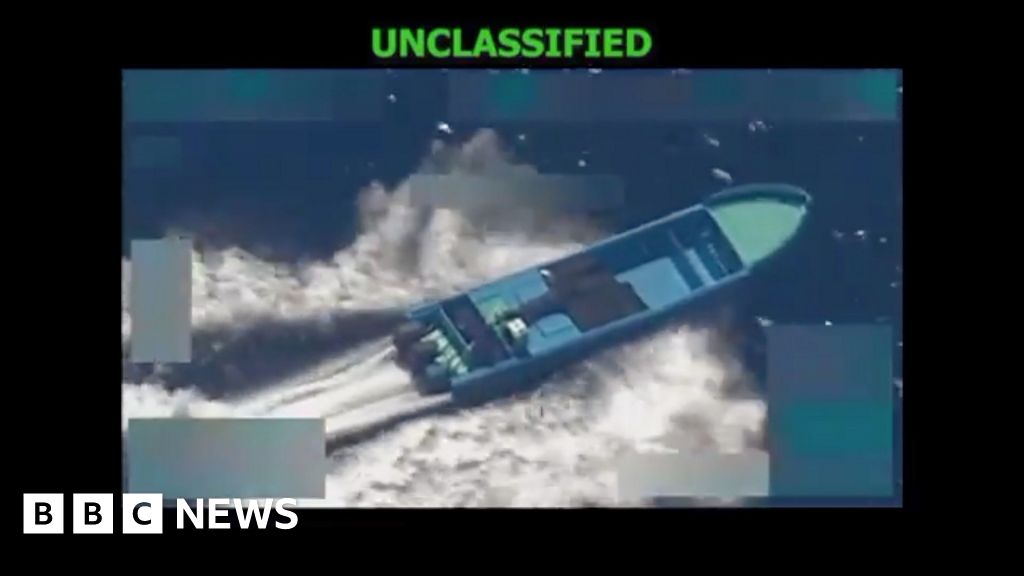
The US Pacific drug boat strike is more than a single interdiction gone lethal. It is a warning flare for how aggressively states are willing to police maritime trafficking routes, and how blurry the lines can get when law enforcement starts to look and sound like military action. One person is reported dead after a US strike on an alleged drug boat in the Pacific, a development that instantly turns a familiar counternarcotics story into something far more consequential: questions over rules of engagement, evidence thresholds, sovereignty, accountability, and what happens when a mission framed as interdiction ends with a body in the water. For policymakers, security analysts, and anyone tracking the collision of crime and geopolitics, this moment matters because it exposes a deeper shift. Maritime drug enforcement is no longer just about seizures. It is about power projection, legal risk, and the expanding use of force far from public scrutiny.
- The US Pacific drug boat strike signals a tougher and more militarized posture in maritime counternarcotics.
- The incident raises urgent questions about proportionality, legal authority, and verification before force is used.
- Pacific trafficking routes are strategically important because they intersect with trade, security, and regional diplomacy.
- Even when governments describe an operation as targeted, the political fallout can extend well beyond the vessel involved.
Why the US Pacific drug boat strike matters now
Drug trafficking by sea is not new. What is changing is the intensity of the response and the public sensitivity to any operation that crosses from interception into deadly force. A strike against an alleged smuggling vessel in the Pacific lands in a much broader debate: how states justify coercive action in international waters, how they identify threats in real time, and how much transparency the public gets after the fact.
That matters because maritime operations happen in an information vacuum. The public usually sees a short official statement, perhaps a blurry image, and a firm assertion that the target was linked to narcotics. But once an operation results in a fatality, the burden of explanation rises sharply. Was the vessel positively identified? What warnings were issued? What assets were involved? Under what legal authority was the strike ordered? Those are not technical footnotes. They define whether the action looks like legitimate enforcement or an overreach with dangerous precedent.
Key insight: When a counternarcotics mission turns lethal, the story is no longer just about smuggling. It becomes a test of state power, legal restraint, and public trust.
The bigger shift behind Pacific counternarcotics operations
The Pacific is not merely a transit zone. It is a contested operating environment where commerce, military presence, intelligence collection, and criminal trafficking increasingly overlap. For years, governments have treated maritime interdiction as a practical tool to disrupt supply chains before drugs hit consumer markets. But the playbook is evolving.
Instead of simple boarding and seizure operations, states now blend surveillance aircraft, naval platforms, radar fusion, electronic tracking, and intelligence-sharing across agencies. In practical terms, that means a suspected trafficker at sea can be monitored through a layered system that looks less like traditional policing and more like a battlefield targeting network.
That distinction is crucial. The more sophisticated the tracking stack becomes, the more likely officials are to trust remote assessments and compressed decision-making. Yet technical confidence is not the same thing as legal certainty. A vessel that appears suspicious through sensors and intelligence feeds still exists in a complex legal and human environment.
How interdiction turned into strategic signaling
Operations like the US Pacific drug boat strike can serve two audiences at once. The first is obvious: traffickers and the criminal networks moving product across maritime corridors. The second is geopolitical: allies, rivals, and regional governments watching how the US uses force in spaces that are legally open but politically sensitive.
A strike sends a message of capability and resolve. It says the US can detect, track, and neutralize a suspect vessel at distance. But that same message can create discomfort among partners if details are sparse or if the action appears unilateral. In security politics, effectiveness and legitimacy are not always the same thing.
The intelligence problem nobody can ignore
Everything depends on identification. Maritime interdiction is notoriously hard because traffickers adapt quickly. They may use low-profile craft, altered routes, transshipment tactics, and vessels that do not neatly fit a single risk profile. The challenge is that intelligence often arrives as probability, not certainty.
In other words, analysts may piece together signal fragments, route anomalies, observed behavior, and historical patterns. That can produce a compelling operational picture. But once force is applied, any remaining ambiguity becomes the center of the story. If evidence is not released or cannot be independently reviewed, skepticism grows fast.
Pro tip: When evaluating official accounts of maritime strikes, watch for four details: positive identification, warnings issued, legal basis, and post-action review. If those are missing, the accountability picture is incomplete.
What legal and policy questions come next
Deadly force at sea sits at the intersection of domestic law, international law, and operational doctrine. That alone makes post-incident analysis complicated. Governments may rely on a mix of counternarcotics authorities, maritime enforcement rules, self-defense standards, and agreements with partner states. But complexity does not erase the need for clarity.
The core question is simple: what threshold was met that justified a strike rather than a boarding, disabling maneuver, or continued surveillance? If the target posed an immediate threat, officials will likely argue necessity. If the target was fleeing or refusing commands, the proportionality of the response becomes central. If the operation happened in or near a sensitive jurisdictional space, sovereignty concerns quickly follow.
The policy risk is clear: a government may win a tactical victory against trafficking while losing strategic credibility if it cannot convincingly explain why lethal force was necessary.
Why transparency is not optional
Security agencies often resist releasing operational detail for understandable reasons. Methods, sensors, and intelligence sources can be compromised by over-disclosure. But there is a difference between protecting tradecraft and withholding basic accountability. In a lethal incident, a minimalist statement rarely satisfies the public, partner governments, or legal observers.
That is especially true in maritime operations, where there may be no civilian footage, no easy witness record, and no immediate independent access to the scene. The state often controls the narrative by default. That makes credibility even more precious.
The best post-incident communication usually includes a clear timeline, identification rationale, warnings given, the operational chain involved, and confirmation of whether a formal review is underway. Even limited transparency can reduce speculation if it is specific and timely.
The strategic guide to understanding the fallout
This story is not only about one vessel. It is a case study in how maritime security is changing. If you want to read the implications clearly, focus on three levels: tactical, institutional, and geopolitical.
Tactical level: what likely shaped the operation
- Detection: The vessel was likely identified through layered surveillance rather than a single sighting.
- Classification: Officials would have assessed behavior, route, profile, and intelligence indicators to determine trafficking risk.
- Decision point: The critical moment is whether commanders believed nonlethal interception was impossible, unsafe, or insufficient.
- Aftermath: Once a fatality occurs, the mission shifts from interdiction success to justification and review.
Institutional level: what agencies will care about
Inside government, incidents like this trigger more than public affairs management. They force internal scrutiny of doctrine, coordination, and command judgment. Agencies will want to know whether the operation followed standing rules, whether intelligence confidence was properly conveyed, and whether alternative options were available.
Expect pressure around operational documentation. In high-risk missions, the quality of records matters enormously. Audio logs, tracking data, targeting assessments, and authorization chains can become decisive in later reviews.
In technical terms, a robust review trail often depends on systems and procedures that look something like sensor-to-shooter logging, command authorization records, and rules-of-engagement compliance checks. Those phrases sound clinical, but they are often the difference between a defensible operation and a reputational disaster.
Geopolitical level: why regional actors are watching
Pacific governments do not view maritime enforcement in a vacuum. They are balancing domestic security needs, bilateral ties, economic dependencies, and concerns over great-power behavior. A US operation that appears decisive in Washington can look unsettling elsewhere if local stakeholders feel bypassed or insufficiently informed.
That does not mean regional partners oppose aggressive counternarcotics efforts. Many want them. But support tends to depend on process, consultation, and confidence that force is being used within a clearly articulated framework. The more opaque the operation, the more room there is for diplomatic friction.
Why this matters beyond drug enforcement
The long-term importance of the US Pacific drug boat strike is that it highlights the normalization of remote, high-tempo enforcement in gray-zone spaces. That has implications far beyond narcotics. The same surveillance architectures, command systems, and rapid targeting practices can influence migration enforcement, anti-piracy missions, sanctions monitoring, and broader maritime security doctrine.
Once states become comfortable applying force through these systems in one domain, the institutional logic can spread. What begins as a narrow counternarcotics response can shape expectations for other maritime missions where facts are murky and legal lines are contested.
This is where skepticism is healthy. Better technology can improve interdiction accuracy, but it can also create overconfidence. Data fusion, pattern analysis, and persistent surveillance are powerful tools. They are not substitutes for clear legal standards or prudent operational restraint.
Bottom line: capability is not the same as legitimacy. A state can prove it can strike at sea. The harder task is proving it should have.
What to watch next after the US Pacific drug boat strike
The next phase will be shaped by information. If officials release more details, analysts will look for consistency between the operational timeline and the stated legal rationale. If details remain thin, expect the vacuum to be filled by political criticism and competing narratives.
- Whether a formal investigation or internal review is announced.
- How officials describe the vessel’s threat profile and the sequence of warnings.
- Whether partner governments publicly support or distance themselves from the action.
- How future maritime interdictions are framed: as routine enforcement or as part of a harder-edged deterrence strategy.
There is also a practical question hanging over future operations. Will this incident lead to tighter procedural controls, or will it be treated as evidence that tougher action works? That answer could quietly shape rules and behavior across the Pacific for years.
The real test is not the strike but the standard
One alleged smuggling vessel, one fatal strike, one official narrative: on paper, that can look contained. It is not. The real significance lies in the standard being set for maritime force. If states can target suspected traffickers at sea with limited public explanation, the threshold for lethal interdiction may drift in ways that are hard to reverse.
That is why this moment deserves more than reactive headlines. It deserves scrutiny equal to the power being exercised. Counternarcotics operations are politically easy to defend, which is exactly why the standards around them must be hard to weaken. The public should expect proof, process, and accountability – not because trafficking is trivial, but because the use of force never is.
The information provided in this article is for general informational purposes only. While we strive for accuracy, we make no guarantees about the completeness or reliability of the content. Always verify important information through official or multiple sources before making decisions.