US Strikes Southern Iran Raise Global Stakes
US Strikes Southern Iran Raise Global Stakes
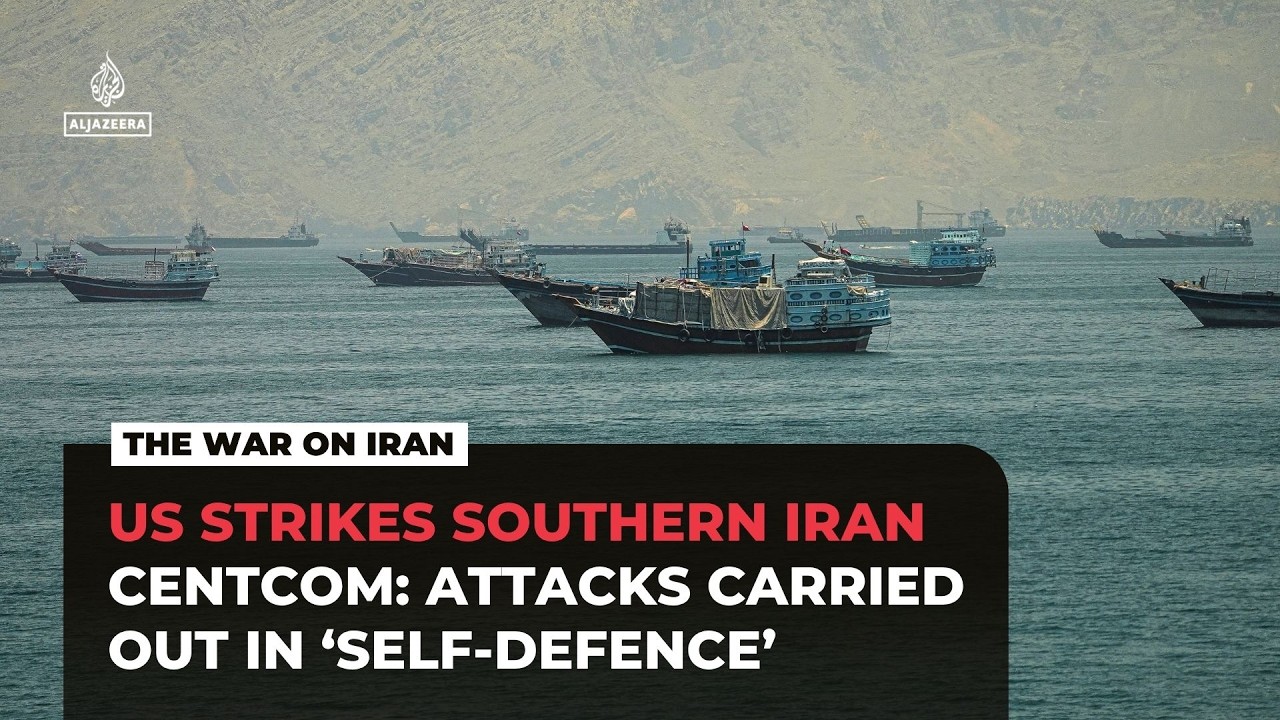
The reported US strikes southern Iran development is the kind of headline that instantly resets the geopolitical mood. Markets get jumpy. Militaries move into higher readiness. Diplomats start choosing every word carefully. And for anyone tracking the Middle East, the immediate question is not just what happened, but what happens next.
If these reports hold, this is more than a tactical military episode. It signals a potentially dangerous shift in how Washington defines self-defence, how Tehran calibrates retaliation, and how quickly a localized exchange can become a regional crisis. The pain point for governments, businesses, and ordinary observers is simple: uncertainty. When facts arrive in fragments and narratives harden fast, the risk of miscalculation climbs.
- Reported US strikes southern Iran could mark a major escalation in direct confrontation.
- The phrase
self-defencewill be central to the political and legal battle over legitimacy. - Regional spillover risks include proxy retaliation, shipping disruptions, and market volatility.
- What matters now is verification, intent, and whether escalation control still exists.
Why the reported US strikes southern Iran matter immediately
Military actions between the US and Iran are never isolated events. They sit inside a larger architecture of deterrence, proxy conflict, sanctions pressure, and strategic signaling. A reported strike in southern Iran raises the stakes because geography matters. Southern Iran is linked to critical energy infrastructure, maritime access, and the wider Gulf security environment.
That means even a limited operation can trigger oversized consequences. Insurance costs for shipping may rise. Energy traders may start pricing in instability. Regional partners may press Washington for reassurance while also preparing their own defences. The operational event may be tactical, but the consequences are strategic.
When states invoke
self-defence, they are rarely speaking only to an immediate military threat. They are also shaping the diplomatic battlefield that follows.
What we know and what remains unclear
At this stage, the most important editorial discipline is separating reported action from confirmed fact. Early accounts in fast-moving security incidents are often incomplete. Initial descriptions may blur the distinction between a warning strike, a retaliatory operation, a targeted hit on military assets, or a broader message intended for multiple audiences.
Key unknowns include the scale of the strike, the target type, the presence of casualties, and whether the action was designed as a one-off response or part of a wider campaign. Also unresolved is the trigger: what specific threat or incident was cited under the umbrella of self-defence?
The significance of the self-defence claim
The term self-defence is not rhetorical decoration. It is the legal and political core of the story. Washington may frame the action as necessary and proportionate to deter imminent threats or respond to attacks on US personnel, assets, or partners. Tehran, unsurprisingly, would be expected to challenge that framing and present the operation as aggression.
This matters because international reactions often hinge less on whether force was used and more on whether the justification appears credible, constrained, and evidence-based. Allies may tolerate a limited action if they believe it prevented a larger attack. They may become far less supportive if the strike looks open-ended or escalatory.
Why southern Iran is strategically sensitive
Southern Iran is not just another location on the map. It connects to the Gulf, maritime trade routes, and a dense network of strategic assets. Any military activity there naturally raises questions about escalation near critical shipping lanes and energy corridors. Even without direct damage to commercial infrastructure, the perception of risk can ripple outward quickly.
For policymakers, this creates a familiar problem: how do you execute a military signal strong enough to deter, but limited enough to avoid a chain reaction?
The broader strategic picture
The US and Iran have spent years operating in the dangerous space between open war and unstable restraint. That gray zone includes proxy forces, covert activity, cyber operations, sanctions, missile threats, and selective military responses. A reported strike on Iranian territory potentially shifts the pattern from indirect confrontation to a more explicit and visible contest.
That shift matters because deterrence is easiest to manage when red lines are understood. It becomes much harder when both sides are testing each other in public, under political pressure, with incomplete information and a global audience watching in real time.
Deterrence vs escalation
Supporters of a strike may argue that visible force restores deterrence. The theory is straightforward: if threats or attacks go unanswered, adversaries become bolder. Critics will counter that every such action narrows diplomatic space and increases the chance of retaliation through direct or proxy channels.
Both arguments can be true at once. A strike can temporarily restore deterrence while simultaneously increasing medium-term instability. That tension is exactly why these events are so hard to evaluate in the first 24 hours.
Pro Tip: Watch official language closely. If statements emphasize words like
limited,proportionate, anddefensive, leaders are usually trying to build an off-ramp as much as they are justifying the strike.
Regional actors are not passive spectators
Another reason this story matters is that the US and Iran are not the only decision-makers in the room. Gulf states, Israel, Iraq, and non-state armed groups all interpret military events through their own security interests. A strike may reassure some partners while forcing others to brace for blowback.
That creates a layered escalation environment. Even if Washington and Tehran both want to avoid a broader war, a third party, proxy force, or accidental clash can scramble those intentions fast.
What happens next
The next phase usually unfolds across three tracks at once: military posture, political messaging, and economic reaction. None of them are independent.
- Military posture: Expect force protection measures, repositioning, surveillance increases, and visible readiness signals.
- Political messaging: Statements will be crafted to reassure domestic audiences, deter adversaries, and keep allies aligned.
- Economic reaction: Oil, shipping, and risk-sensitive sectors may respond before full facts are available.
The central question is whether either side leaves room for de-escalation. That often depends on whether leaders can claim they have sent the necessary message without being pulled into proving toughness again.
Signals to watch over the next 48 hours
If you are trying to judge whether this becomes a contained incident or a larger crisis, a few indicators matter more than the headline alone.
- Did the strike hit a symbolic target or a capability-heavy military asset?
- Do official statements describe the action as complete, or do they hint at follow-on operations?
- Is Iran signaling direct retaliation, proxy action, or strategic patience?
- Are regional militaries increasing alert levels in visible ways?
- Do markets treat the event as a shock or as a temporary scare?
Why this matters beyond the battlefield
The significance of the reported US strikes southern Iran story extends beyond military analysis. This is also about how the modern information environment amplifies risk. Video clips, partial statements, and competing claims move faster than verification. Leaders are increasingly forced to respond to public momentum before intelligence has fully settled.
That compresses decision time and raises the odds of overreaction. For media consumers, the challenge is resisting certainty too early. For policymakers, it is maintaining credibility while avoiding statements that lock them into escalatory positions.
Business and energy implications
Even a short-lived incident can affect energy sentiment, logistics planning, and investor confidence. Companies exposed to shipping routes, fuel costs, regional operations, or defense supply chains will be watching closely. In periods like this, the market often reacts first to perceived vulnerability and only later to verified damage.
Executives do not need a full-scale war to feel the impact. They just need enough instability to alter pricing, insurance, routing, or consumer confidence.
The diplomacy test
Diplomacy after a strike is often less about immediate reconciliation and more about constructing boundaries. Backchannel communication, allied coordination, and carefully calibrated public statements can all help prevent an incident from becoming a campaign. The problem is that diplomacy is least visible when it matters most, which makes it easy to underestimate its role.
The real measure of statecraft after a military strike is not whether leaders sound strong on camera. It is whether they can keep the next move from becoming inevitable.
The bottom line on reported US strikes southern Iran
This moment looks volatile because it is volatile. A reported US strike in southern Iran combines all the ingredients that make crises hard to contain: strategic symbolism, legal contestation, regional entanglement, information fog, and domestic political pressure on all sides.
There is still a meaningful difference between a limited action and an uncontrolled escalation. But that difference depends on choices made after the strike, not only the strike itself. If the messaging stays narrow, channels remain open, and retaliation is calibrated or delayed, the crisis may remain bounded. If not, this could become one of those inflection points that analysts reference for years.
For now, the most credible posture is serious attention without premature certainty. The facts matter. The framing matters. And the next signal may matter even more than the first blast.
The information provided in this article is for general informational purposes only. While we strive for accuracy, we make no guarantees about the completeness or reliability of the content. Always verify important information through official or multiple sources before making decisions.