Why Gaza aid access is collapsing
Why Gaza aid access is collapsing
The fight over Gaza aid access is no longer a secondary storyline to the war – it is the story that defines whether civilians eat, hospitals function, and basic survival remains possible. When aid corridors shrink, delays multiply, and security risks spike, the gap between diplomatic statements and conditions on the ground becomes brutally obvious. What looks from afar like a logistics problem is, in practice, a compound crisis driven by conflict, damaged infrastructure, inspection bottlenecks, and deep political mistrust. For readers trying to make sense of the headlines, the central issue is simple: getting assistance into Gaza is not just about trucks crossing a border. It is about whether a war zone can support any reliable humanitarian system at all. That is why Gaza aid access has become one of the most urgent tests of international credibility.
- Gaza aid access is constrained by security threats, damaged roads, inspections, and political disputes.
- Humanitarian delivery fails when border approvals do not match distribution capacity inside a war zone.
- Hospitals, food systems, and water networks suffer first when aid routes become unpredictable.
- The core challenge is not only volume – it is consistency, safety, and last-mile delivery.
- What happens next will shape regional politics, humanitarian norms, and civilian survival.
The deeper problem behind Gaza aid access
At a glance, the debate often centers on numbers: how many trucks entered, how many parcels were distributed, how much medicine was approved. Those figures matter, but they can also obscure the more important question: Can aid move through Gaza in a stable, repeatable way?
In active conflict zones, humanitarian systems depend on several layers working at once. Supplies must be approved for entry. Routes must remain physically passable. Warehouses must stay intact. Aid workers must be able to move without becoming targets. Civilians must be able to reach distribution points safely. If any one of those breaks down, the whole chain weakens. In Gaza, multiple links have been under extreme strain at the same time.
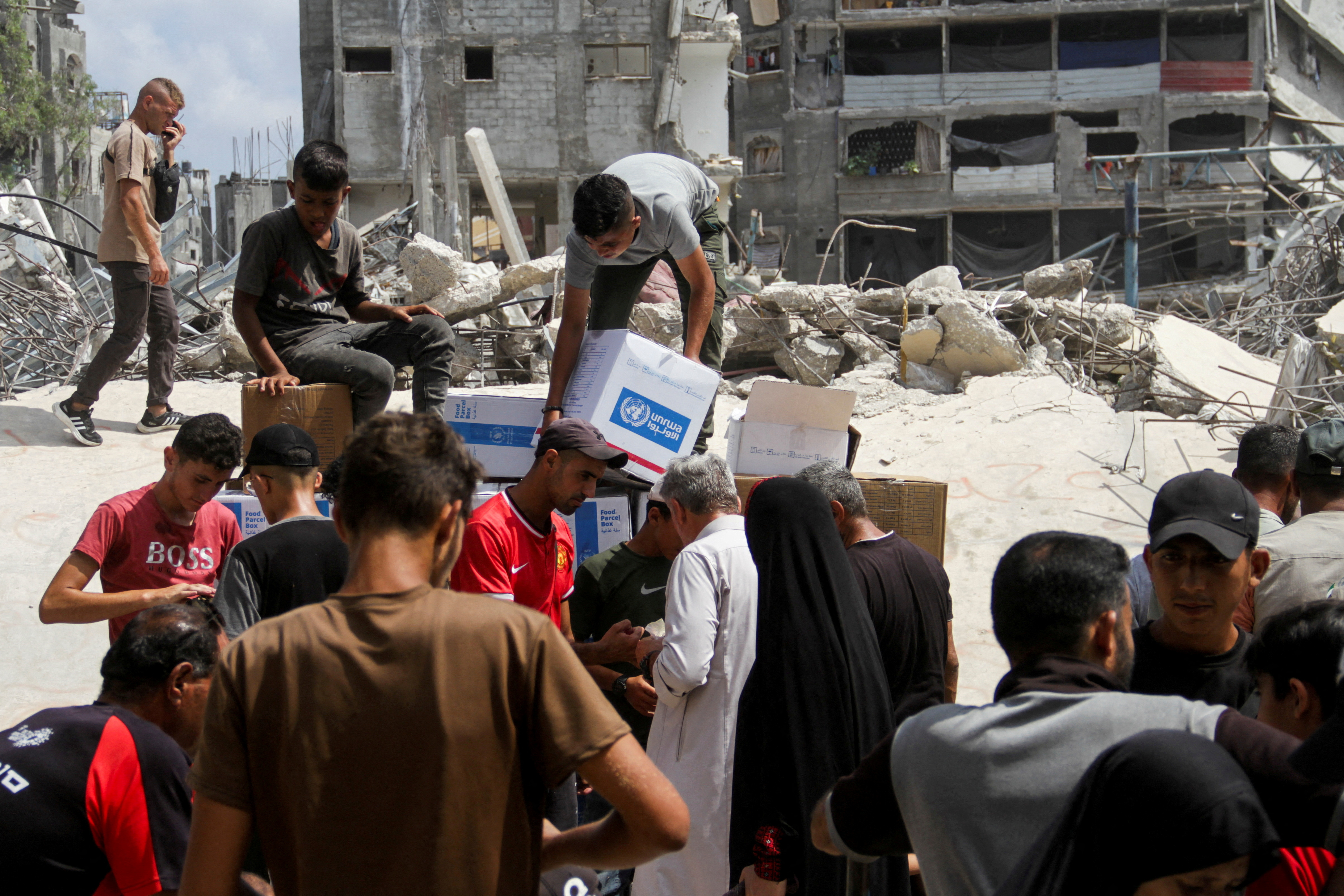
That is why claims about increased shipments can sound reassuring while conditions on the ground remain catastrophic. More trucks at a crossing do not automatically mean more food on family tables. Aid has to survive the last mile, and in war that last mile is usually the hardest part.
Humanitarian access is not measured only at the border. It is measured by whether assistance reaches people consistently, safely, and at scale.
Why aid delivery breaks down in war
Security risk changes everything
The most immediate obstacle is security. Convoys in conflict areas require coordination, deconfliction, and a predictable operating environment. When active fighting continues, routes can become unusable with almost no warning. Even if aid is cleared to enter, drivers and relief teams may not be able to move it onward. For humanitarian organizations, an open crossing means little if the road beyond it is too dangerous.
This is where public perception often diverges from operational reality. People hear that aid has been allowed in and assume the system is functioning. But humanitarian logistics do not end at the checkpoint. They begin there.
Infrastructure damage slows every step
Destroyed roads, fuel shortages, broken communications, and damaged storage sites can cripple distribution. A relief system needs more than supplies – it needs the infrastructure to sort, transport, refrigerate, and secure them. Medical aid may require cold-chain handling with equipment that depends on electricity or fuel. Water systems need spare parts, pumps, and maintenance access. Food distribution requires vehicles, staff, and safe public gathering points.
In Gaza, where essential infrastructure has faced severe damage, aid can arrive into an environment that is structurally unable to absorb it efficiently. This turns emergency relief into a stop-start process with high waste and low predictability.
Inspections and restrictions create friction
Inspections are a standard feature of conflict-zone aid operations, especially where dual-use concerns exist. Items such as generators, communications tools, construction materials, and fuel can become politically sensitive because they have both civilian and potential military applications. The problem is not only whether inspections happen, but whether they happen quickly, transparently, and in volumes that match urgent needs.
When the approval process becomes inconsistent, humanitarian planning starts to fail. Relief agencies cannot build dependable schedules around uncertainty. A shipment delayed by hours can be inconvenient. A shipment delayed by days can be deadly.
Why Gaza aid access matters beyond Gaza
This crisis has become a stress test for the modern humanitarian model. International institutions are built around the assumption that civilians in war must retain some protected access to food, medicine, shelter, and water. If those guarantees erode in one of the world’s most intensely watched conflict zones, the implications extend far beyond a single territory.
There are three reasons this matters globally.
- First, it shapes the credibility of international law and humanitarian diplomacy.
- Second, it influences how future conflicts treat civilian relief corridors.
- Third, it affects regional stability, public opinion, and diplomatic alignments far outside the immediate battlefield.
When images of scarcity and displacement dominate global coverage, the political costs spread rapidly. Governments face pressure from voters, allies, and aid agencies. Regional actors recalibrate. International organizations are forced to defend systems that look increasingly unable to deliver basic outcomes.
When humanitarian access becomes irregular, the consequences are never purely logistical. They are political, legal, and moral all at once.
What civilians experience when aid access fails
Policy debates can make this issue sound abstract. It is not. The practical effects of reduced access appear fast and cascade across daily life.
Food insecurity escalates first
When supply chains become unreliable, markets distort quickly. Essentials disappear, prices spike, and families are forced into impossible tradeoffs. Reduced meal frequency, poor nutrition, and dependence on intermittent distributions become common features of survival.
Hospitals move into crisis mode
Medical systems in conflict zones are uniquely vulnerable. They rely on sterile supplies, medicines, electricity, fuel, and specialized equipment. If aid arrives unevenly, hospitals begin triaging not just patients but resources. That means postponed treatment, reduced surgical capacity, medicine rationing, and more preventable deaths.
Water and sanitation risks surge
Water infrastructure often fails quietly before it fails catastrophically. Lack of fuel for pumps, damage to pipes, or shortages of purification materials can leave large populations exposed to unsafe water. Once sanitation systems degrade, disease risk rises, especially in overcrowded shelters and displacement sites.
Pro Tip: When assessing any humanitarian crisis, look beyond aid volume headlines. The more revealing indicators are distribution continuity, fuel access, hospital functionality, and water system uptime.
The politics driving Gaza aid access
No serious analysis of Gaza aid access can ignore politics. Humanitarian corridors in war are always political instruments, whether governments admit it or not. Access points, inspection rules, coordination windows, and fuel permissions all sit inside larger strategic calculations. Every concession can be framed as leverage. Every delay can be justified in security terms. Every public statement is aimed at multiple audiences at once.
That creates a brutal mismatch between humanitarian urgency and political timing. Civilians need immediate continuity. Political actors often operate through pressure, signaling, and conditional bargaining. The result is that aid systems become entangled in the very conflict dynamics they are supposed to soften.
There is also a narrative war surrounding access. Each side has incentives to shape perceptions about responsibility, sufficiency, and obstruction. That makes independent verification harder and public trust weaker. For audiences following the story, skepticism is warranted: official claims about access frequently describe permission on paper, not delivery in practice.
What a functional aid system would actually require
If the goal is to make Gaza aid access materially better, the benchmark cannot be occasional surges or symbolic openings. A functioning system would require several conditions operating together.
- Reliable entry approvals at meaningful scale.
- Protected humanitarian routes inside Gaza.
- Consistent fuel access for transport, hospitals, and water systems.
- Clear coordination channels between military and aid actors.
- Distribution sites that civilians can reach without extreme risk.
That list sounds straightforward. In practice, each point is contested. Fuel can be treated as a security issue. Routes can change with military activity. Coordination can break down under pressure. Civilians can be displaced faster than distribution maps can be updated. This is why the crisis persists even when diplomacy produces partial openings.
The strategic question policymakers cannot dodge
The central strategic issue is whether humanitarian relief is being treated as an operational necessity or a diplomatic afterthought. If aid access remains reactive, improvised, and politically conditional, the civilian toll will continue to rise regardless of how many emergency announcements are made.
For policymakers, that means moving from episodic permission to sustained system design. The difference matters. Episodic permission generates headlines. Sustained system design saves lives.
It also means accepting an uncomfortable truth: in high-intensity conflicts, humanitarian success rarely comes from goodwill alone. It comes from enforceable mechanisms, monitored routes, transparent clearance procedures, and enough political pressure to keep the system from collapsing every time fighting intensifies.
The real measure of progress is not whether aid can enter once. It is whether aid can keep moving when the battlefield shifts.
What to watch next on Gaza aid access
Over the coming weeks, the most important signals will not be rhetorical. They will be operational. Watch for changes in truck throughput, fuel availability, route security, hospital operating capacity, and distribution consistency. Those indicators reveal whether access is stabilizing or merely being managed from one short-term emergency to the next.
There is also a broader reputational question hanging over every development. If the international system cannot maintain basic civilian relief under this level of scrutiny, confidence in humanitarian enforcement elsewhere will weaken. That may be the most lasting consequence of all.
For now, the hard conclusion is this: Gaza aid access is collapsing not because one shipment failed or one crossing slowed, but because the entire relief architecture is under pressure from war, damage, distrust, and political calculation. Until those pressures are reduced together, aid will remain fragile, civilians will remain exposed, and every temporary improvement will risk being overwhelmed by the next escalation.
The information provided in this article is for general informational purposes only. While we strive for accuracy, we make no guarantees about the completeness or reliability of the content. Always verify important information through official or multiple sources before making decisions.