Why Min Aung Hlaing’s India Visit Matters
Why Min Aung Hlaing’s India Visit Matters
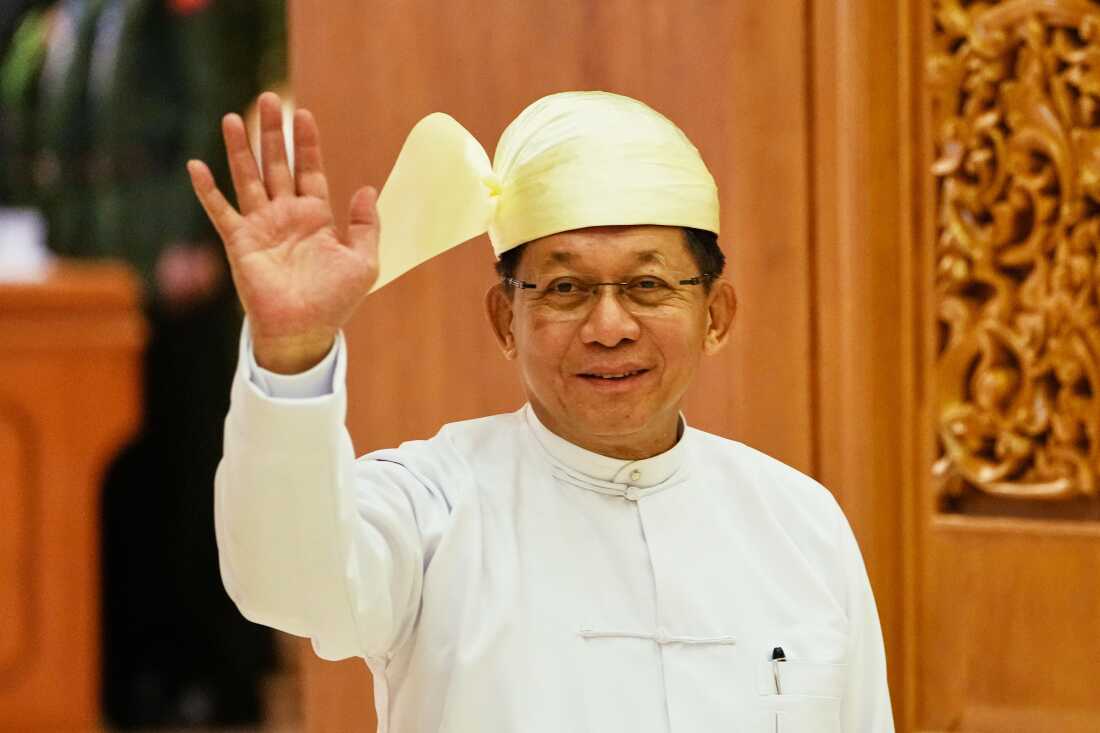
Min Aung Hlaing’s India visit is not just another awkward diplomatic photo-op. It lands at a moment when Myanmar is fractured, India is recalibrating its regional strategy, and every handshake with the junta carries political cost. For New Delhi, this is the kind of engagement that looks transactional from afar but strategic up close. For Myanmar’s military leadership, it is something even more valuable: visibility, recognition, and the suggestion that isolation has limits. That is why this trip matters beyond protocol. It touches border security, refugee pressures, insurgent spillover, regional trade routes, and the broader contest over who gets to shape South and Southeast Asia’s political future. When a sanctioned, widely condemned military ruler is received by a major democracy next door, the message is never confined to the meeting room.
- Min Aung Hlaing’s India visit is as much about legitimacy as diplomacy.
- India is balancing democratic values against hard security interests along its sensitive northeastern border.
- Myanmar’s civil war, refugee flows, and armed groups make disengagement costly for New Delhi.
- The trip highlights how regional powers increasingly favor pragmatic contact over public moral clarity.
Min Aung Hlaing’s India visit and the politics of legitimacy
For Myanmar’s military leadership, international access is currency. Since the coup, the junta has struggled to gain broad acceptance abroad, even as it has tried to project strength at home. A visit to India helps puncture the image of total diplomatic isolation. It does not erase condemnation, but it gives the junta a useful talking point: a neighboring power still sees engagement as necessary.
That distinction matters. Diplomacy is often less about endorsement than about optics, and optics can be strategically decisive. A meeting, a public appearance, or even routine protocol can be repackaged domestically as proof that the regime remains a valid interlocutor.
Key insight: When a contested ruler travels, the symbolic value of being received can rival the substance of the talks themselves.
For India, that creates an uncomfortable tension. New Delhi can insist the engagement is functional, limited, and security-driven. Critics, however, will still read the visit as conferring a measure of legitimacy on a military ruler accused of brutal repression. Both interpretations can be true at once.
Why India is willing to engage anyway
India’s Myanmar policy has long been shaped by geography more than ideology. The two countries share a long, porous border, and instability in Myanmar does not stay neatly on one side of the map. Insurgent movements, arms flows, refugee arrivals, and smuggling routes all create immediate pressure for India’s northeastern states. That means New Delhi has practical reasons to maintain communication with whoever controls levers of force across the frontier.
Border security comes first
Indian policymakers do not have the luxury of treating Myanmar as a distant moral problem. Armed conflict in Myanmar has direct spillover effects. If the junta loses control in some zones but remains influential in others, India still needs channels to manage local security coordination, intelligence sharing, and cross-border movement.
This is where realpolitik usually overwhelms rhetoric. Governments can condemn violence publicly while still maintaining back-channel or formal contact to prevent worse instability.
India’s northeast changes the equation
The states bordering Myanmar are central to India’s security and connectivity strategy. For years, New Delhi has viewed stronger links to Southeast Asia as a strategic priority, and Myanmar is the land bridge that makes those ambitions plausible. Roads, trade corridors, and transit networks all depend on at least some working relationship with authorities across the border.
If that relationship collapses, India risks losing both security leverage and economic access. From New Delhi’s perspective, engagement may look unpleasant, but strategic absence could be even worse.
China is always in the background
No serious reading of this trip can ignore Beijing. India’s regional strategy is shaped by competition with China, and Myanmar is one of the places where influence is fluid. If India pulls back entirely, it creates room for China to deepen its role with fewer constraints.
That does not mean every Indian move is anti-China by design. But it does mean policymakers are likely evaluating the costs of ceding diplomatic ground. In contested neighborhoods, disengagement is rarely neutral.
The moral and political risk for New Delhi
There is a reason this visit will make many observers uneasy. India is the world’s largest democracy, and its global image is built in part on support for representative institutions and rule-based politics. Hosting or engaging too visibly with Myanmar’s military ruler cuts against that branding.
The contradiction is obvious: India wants to be seen as a democratic anchor in the Indo-Pacific, yet it also needs to operate in a region where democratic collapse next door creates immediate security problems. That is not a tidy diplomatic problem with a clean answer.
The uncomfortable truth: States often preach values globally and practice triage locally.
This is where the visit becomes more than a bilateral matter. It tests how far India is willing to separate principle from proximity. Western governments, regional activists, and Myanmar’s democratic opposition will all scrutinize whether India frames this contact as tactical necessity or allows it to drift into normalization.
What Myanmar’s internal crisis means for India
Myanmar is not experiencing routine political instability. It is locked in a violent, fragmented conflict involving the military, resistance groups, ethnic armed organizations, and civilian populations trapped between them. Any neighboring country dealing with that level of volatility is likely to prioritize damage control.
Refugees and humanitarian strain
Conflict drives displacement, and border communities often absorb the first shock. For India, refugee inflows are not just a humanitarian issue. They also become administrative, political, and security challenges, especially in already sensitive frontier regions.
A government facing that reality may conclude that limited engagement with Myanmar’s rulers is necessary to reduce escalation, even if such engagement is politically distasteful.
Insurgent ecosystems do not respect borders
One of the oldest lessons in South Asian security is that peripheral conflicts can feed each other. Militants, traffickers, and armed networks exploit weak governance and difficult terrain. If Myanmar’s conflict worsens, India’s own security agencies have reason to worry about sanctuaries, supply chains, and localized instability.
That concern helps explain why New Delhi might keep lines open even when doing so invites criticism from human rights advocates and democracy supporters.
What this trip signals to the region
Min Aung Hlaing’s India visit is also a regional signal. It suggests that neighboring powers are settling into a more pragmatic posture toward Myanmar’s military authorities, even if they stop short of full acceptance. That trend matters because regional diplomacy often operates on accumulation: one meeting may be defended as practical, but repeated engagement can slowly harden into de facto normalization.
For Southeast Asia and South Asia alike, the question is not whether governments approve of the junta. It is whether they have decided that the costs of isolating it exceed the benefits.
Why this matters: Once normalization begins through routine contact, reversing it becomes much harder. Diplomatic habits create political facts.
The strategic guide to reading Min Aung Hlaing’s India visit
If you want to understand what this trip really means, ignore the ceremonial layer and watch the strategic signals underneath.
- Track the language: If officials emphasize
security,border management, orstability, that points to transactional engagement rather than broad political support. - Watch the level of protocol: The more formal and visible the reception, the stronger the legitimacy boost for the junta.
- Look for follow-through: Meetings matter less than whether they lead to new coordination, trade movement, or public commitments.
- Measure regional reaction: Responses from Myanmar’s opposition, civil society, and neighboring governments will reveal how costly the visit becomes diplomatically.
Pro tip for policy watchers
Do not confuse access with alignment. States often maintain contact with regimes they neither trust nor admire. The harder question is whether engagement stays narrow or expands into political rehabilitation.
Could this reshape India’s Myanmar policy?
Possibly, but probably not through dramatic public shifts. More likely, this visit reflects an existing logic becoming more visible: India wants flexibility. It wants to preserve leverage with the junta, avoid complete strategic drift toward China, protect its border regions, and keep infrastructure ambitions alive where possible.
That is not the same thing as fully embracing Myanmar’s military rulers. But from the outside, the distinction can blur fast.
If the conflict in Myanmar deepens further, India may find that limited engagement produces diminishing returns. A junta that cannot restore order may still be useful as a contact point, but less useful as a governing partner. That is the strategic trap: you may need to engage an actor who is both problematic and increasingly ineffective.
Why Min Aung Hlaing’s India visit matters beyond one trip
The deeper significance of Min Aung Hlaing’s India visit is that it exposes the gap between values-based diplomacy and border-state reality. Democracies often prefer to frame foreign policy as a contest of principles. Geography rarely allows that luxury. India is dealing with a collapsing neighborhood where moral clarity and strategic necessity do not line up cleanly.
For Myanmar’s military ruler, the benefits are immediate: visibility, symbolic recognition, and proof that neighboring powers still have to deal with him. For India, the benefits are narrower and harder to defend publicly: access, coordination, and a hedge against deeper instability.
The risk for both sides is that tactical engagement becomes interpreted as strategic endorsement. That is why every detail matters: the tone, the framing, the optics, and what happens next. In a region where fragile states and ambitious powers increasingly collide, one visit can reveal far more than an official agenda ever will.
The information provided in this article is for general informational purposes only. While we strive for accuracy, we make no guarantees about the completeness or reliability of the content. Always verify important information through official or multiple sources before making decisions.