AI Chip Boom Reshapes the Market
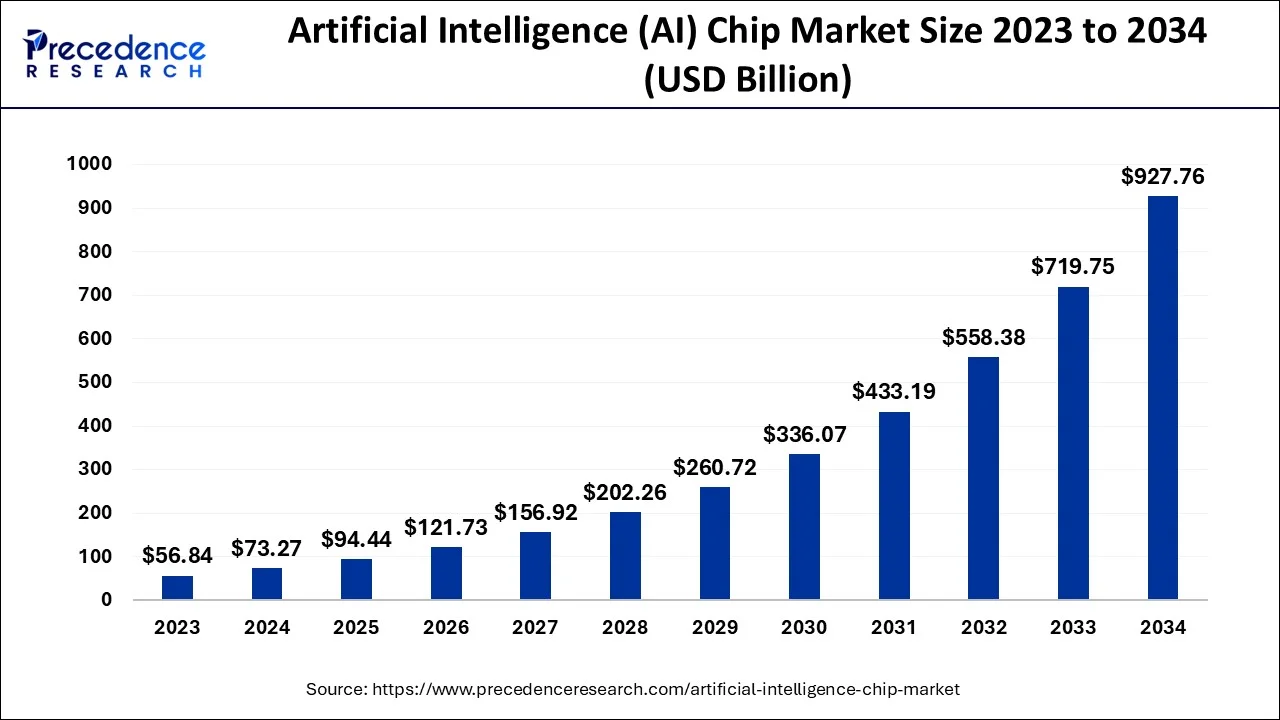
AI Chip Boom Reshapes the Market
The AI chip market is no longer a niche hardware race – it is becoming the backbone of digital infrastructure, and the stakes keep rising. Every major player wants faster model training, lower inference costs, and tighter control over supply. That has turned chips into a strategic asset, not just a component on a bill of materials. For cloud providers, startups, and enterprise buyers, the pressure is immediate: move too slowly and you pay more, wait longer, and fall behind competitors who can deploy AI at scale. What makes this moment so important is not only the raw demand for compute, but the way it is reshaping who gets leverage in technology. The companies that control silicon now influence software roadmaps, pricing, and even the pace of product launches.
- AI chips are becoming a strategic advantage, not just a hardware upgrade.
- Cloud providers and enterprises are under pressure to secure compute capacity early.
- Supply chain constraints continue to shape pricing, access, and deployment timelines.
- Competition is spreading beyond one dominant vendor as buyers hunt for efficiency.
- The next phase of AI growth will be defined by cost, power, and availability as much as performance.
Why the AI chip market matters now
The phrase AI chip market sounds technical, but the implications are straightforward: whoever gets affordable, reliable compute gets to move faster. That matters because modern AI is hungry. Training large models burns staggering amounts of power, while inference at scale can quietly become one of the biggest line items in a company’s cloud budget. For many organizations, the question is no longer whether to adopt AI, but whether they can afford to run it efficiently.
This is also where the market gets strategically interesting. The old assumption was that one category of GPU would dominate for years. Instead, buyers are comparing specialized accelerators, custom silicon, and hybrid deployments. That shift is creating room for competition, but it is also introducing complexity. Teams now have to think about performance per watt, software compatibility, procurement lead times, and long-term vendor dependence.
The real race is not just for faster chips. It is for control over the economics of AI deployment.
The forces driving the AI chip market
There are three big engines behind the current surge: demand, efficiency, and sovereignty. Demand is obvious. AI models are getting larger, more capable, and more deeply embedded in consumer and enterprise products. Efficiency is the second force, and it is arguably more important. As companies deploy AI into search, copilots, image generation, and automated workflows, they discover that training is only part of the cost. Running those systems millions of times a day is where margins can evaporate.
The third force is geopolitical. Governments and large institutions increasingly want more control over their compute stacks. That means local supply, diversified vendors, and reduced dependency on a single source of advanced silicon. The result is a broader, more fragmented market where hardware roadmaps are becoming inseparable from national policy and industrial strategy.
Training versus inference changes the buying logic
Not all AI workloads are equal. Training needs huge bursts of power and memory bandwidth. Inference needs efficiency, scale, and predictable unit economics. That difference is pushing buyers to adopt a more layered strategy. A company may train frontier models on expensive high-end accelerators, then serve them on lower-cost inference hardware tuned for throughput.
This is where the AI chip market becomes less about bragging rights and more about architecture. The winners are not necessarily the chips with the highest benchmark numbers. They are the chips that fit real workloads, integrate cleanly with software stacks, and keep operating costs under control.
Why the AI chip market is forcing a reset in strategy
For years, many companies treated compute as an abundant utility. That assumption is breaking. If you cannot source enough chips, your AI roadmap slows. If your vendor prices jump, your margins compress. If your workloads are not optimized, you can end up paying premium rates for performance you do not fully use.
That is why procurement teams are getting more involved earlier in the product cycle. Engineering leaders now have to coordinate with finance, operations, and cloud architecture before launching new AI features. Hardware choice has become a board-level issue because it affects speed to market, customer experience, and overall profitability.
Pro tip: If your organization is planning an AI rollout, model costs in two stages: development and production. Many teams only budget for experimentation, then get surprised when inference traffic scales.
What buyers should watch next in the AI chip market
The next phase of the AI chip market will likely be shaped by a handful of practical questions rather than flashy announcements. Can suppliers increase output fast enough? Will software ecosystems remain portable across chips? Can lower-power accelerators achieve enough performance to move serious workloads out of the most expensive tier?
For buyers, the smart move is to think beyond a single vendor relationship. Diversification is becoming a risk-management strategy. That can mean multi-cloud deployments, support for more than one accelerator family, or building workloads with abstraction layers that reduce lock-in. It also means paying close attention to developer tools, compiler support, and model optimization frameworks.
Key evaluation factors for enterprises
- Performance per watt: raw speed matters, but energy costs can define the economics.
- Software compatibility: a chip is only as useful as the tools that run on it.
- Supply availability: lead times can make or break launch plans.
- Total cost of ownership: include cooling, power, support, and engineering effort.
- Scalability: the right chip should work for a pilot and a production fleet.
These checks are especially important for startups. A young company may be tempted to chase the most powerful hardware available, but that can be the fastest way to burn cash. More disciplined teams will benchmark several options, profile workloads carefully, and optimize model size before scaling infrastructure.
How the AI chip market could evolve from here
The most likely near-term outcome is not a single winner, but a more segmented market. High-end chips will remain essential for frontier training, while custom silicon and lower-cost accelerators will take a bigger share of inference and specialized deployments. That split could create a healthier ecosystem, but only if software catches up.
Expect to see more emphasis on model efficiency, quantization, sparsity, and task-specific optimization. Those techniques reduce the amount of compute required, which in turn eases pressure on hardware supply. In practical terms, software teams will be asked to do more with less – and that could become the real competitive moat.
If the last wave of computing was about cloud adoption, the next one is about compute discipline.
Why this matters beyond the server room
The ripple effects go far beyond data centers. Consumer device makers, automakers, healthcare companies, and media platforms are all being pulled into the same compute economy. When AI hardware gets scarce or expensive, product plans change. Features ship later. Margins shrink. Some products never launch at all.
That is why the AI chip market matters to almost every sector now. It is not only about building better models. It is about deciding which businesses can afford to operationalize those models at scale. The companies that understand that distinction will make better bets, avoid expensive surprises, and stay more resilient as the market continues to tighten.
The bottom line on the AI chip market
The AI boom has turned chips into the most strategically important layer of the stack. The companies that master supply, software optimization, and cost control will have an edge that extends far beyond hardware. For everyone else, the message is blunt: AI is becoming more capable, but it is also becoming more expensive to run badly. The winners in this market will be the ones who treat compute like a competitive resource, not a commodity.
Bottom line: the AI chip market is not just scaling. It is reorganizing the economics of technology itself.
The information provided in this article is for general informational purposes only. While we strive for accuracy, we make no guarantees about the completeness or reliability of the content. Always verify important information through official or multiple sources before making decisions.