AI Energy Costs Are Reshaping the Cloud
AI Energy Costs Are Reshaping the Cloud
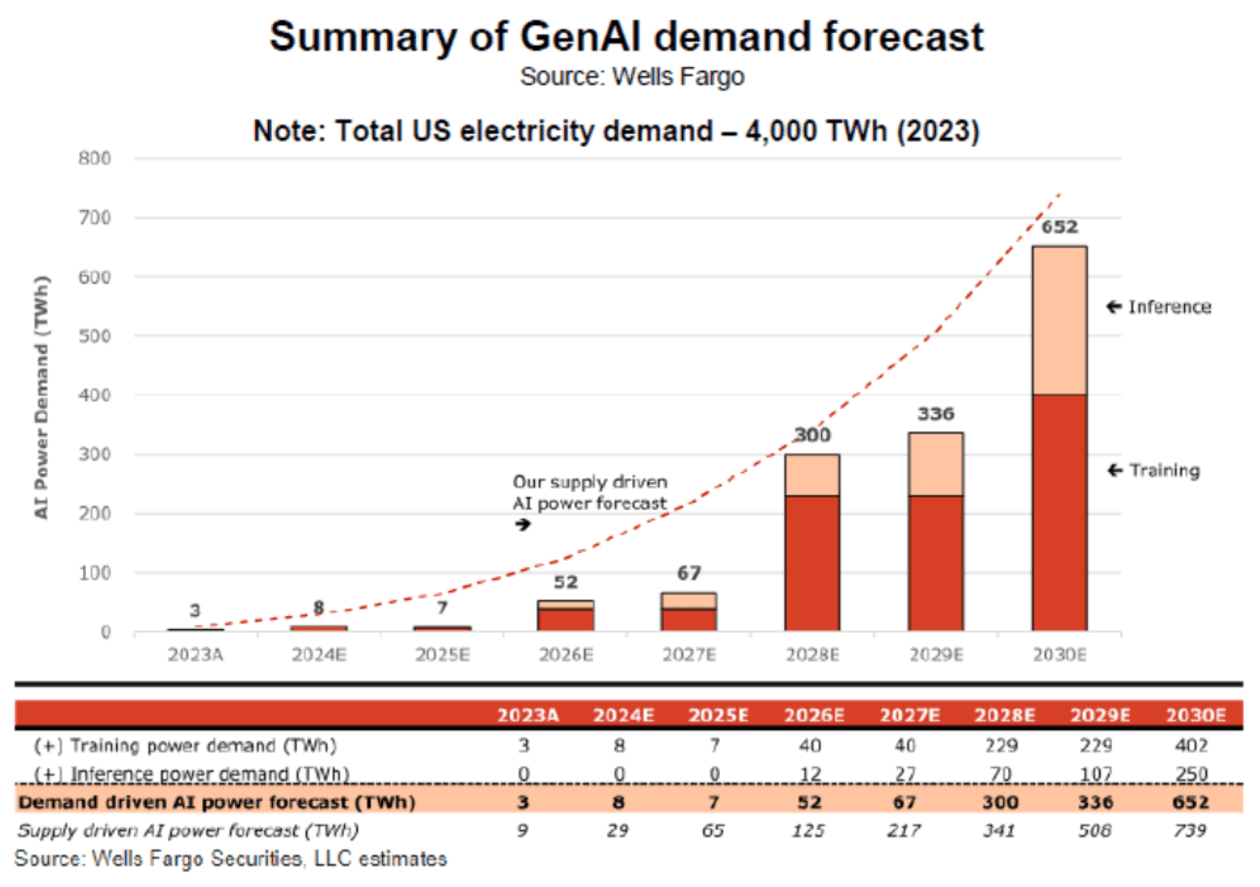
AI is no longer just a software story. It is an electricity story, a grid story, and increasingly a business model story. Every model trained, every prompt processed, and every inference delivered adds pressure to the data centers powering the modern internet. That matters because the cloud economy was built on the promise of limitless scale, but AI energy costs are forcing companies to confront a far less glamorous reality: power is now a strategic constraint. For developers, executives, and policymakers alike, the question is no longer whether AI will grow. It is whether the infrastructure underneath it can keep up without breaking budgets, timelines, or climate commitments.
- AI workloads are turning electricity into one of the cloud’s biggest strategic bottlenecks.
- Data center operators must balance performance, cost, and sustainability at the same time.
- Cooling, chip efficiency, and workload scheduling are becoming competitive advantages.
- The companies that manage AI energy costs best will shape the next phase of cloud leadership.
- Expect more pressure on grid capacity, carbon reporting, and infrastructure transparency.
Why AI Energy Costs Matter Now
The rise of generative AI has changed the economics of computing. Traditional cloud workloads often scaled predictably, with costs tied to storage, bandwidth, and instance usage. AI workloads are more punishing. Training large models can consume enormous amounts of electricity over short bursts, while inference at scale can create relentless, always-on demand. That combination is why AI energy costs are moving from an operational line item to a board-level concern.
For cloud providers, energy is no longer just overhead. It is a capacity limit. If there is not enough power available, a data center cannot simply add more GPUs and call it a day. It needs substations, cooling systems, grid interconnects, and often years of planning. That lag creates a dangerous mismatch between software demand and physical supply.
The Cloud Is Hitting a Physical Wall
The tech industry spent years speaking about the cloud as if it were weightless. It is not. It runs on servers, transformers, cooling loops, land, and water. AI has made that fact impossible to ignore. Hyperscalers are now racing to secure long-term energy contracts, expand facilities in power-rich regions, and redesign data centers for denser, hotter hardware.
The brutal truth: the fastest way to ship a smarter model may now be to own cheaper electrons.
Chip demand is only part of the story
Advanced chips get the headlines, but the real cost picture is wider. High-end accelerators draw far more power than conventional CPUs, and they generate more heat. That heat increases the need for sophisticated cooling, which adds more energy use. The result is a compounding effect: the more ambitious the model stack, the more every supporting system gets stressed.
Cooling has become a competitive battleground
Air cooling is often not enough for dense AI clusters. Operators are leaning harder on liquid cooling, rear-door heat exchangers, and facility designs built specifically for high-wattage racks. These are not cosmetic upgrades. They are what separates a scalable AI platform from a stranded asset.
Energy efficiency is no longer a sustainability bonus. It is a product requirement.
AI Energy Costs Are Changing Business Strategy
When AI energy costs rise, the effect ripples outward. Cloud margins get squeezed. Capital spending rises. Customers face higher pricing or stricter usage limits. Startups building on top of APIs and hosted models can discover that their unit economics deteriorate faster than their user growth improves.
That is why many companies are rethinking where and how they deploy AI. Some are optimizing smaller models for specific tasks rather than defaulting to giant general-purpose systems. Others are shifting workloads to off-peak windows, regional data centers, or specialized hardware that delivers better performance per watt.
The companies that survive this transition will not simply be the ones with the biggest models. They will be the ones with the best operating discipline.
What smart operators are doing
- Measuring inference efficiency instead of only chasing benchmark scores.
- Using model routing to send simple queries to smaller, cheaper systems.
- Compressing and distilling models to reduce compute load without killing quality.
- Scheduling training jobs around energy pricing and grid availability.
- Choosing regions with lower-carbon or more stable power supplies.
Why This Matters for the Next Wave of AI
The AI boom has been sold as a software revolution, but its long-term winners may be determined by logistics. Data center geography, power procurement, thermal design, and hardware efficiency are becoming central to innovation. That is a major shift from the old cloud playbook, where software abstraction hid much of the physical complexity.
This shift has serious implications. Governments are already paying closer attention to electricity demand from digital infrastructure. Utilities are facing renewed pressure to modernize grids. Communities near data centers are asking harder questions about water usage, land use, and local reliability. The age of invisible computing is ending.
Pro tip: any company deploying AI at scale should treat energy as a product metric, not just an accounting metric.
What to Watch Next in the AI Energy Costs Debate
The next phase will likely be defined by three pressures: efficiency, transparency, and regulation. Efficiency will come from better chips, smarter software, and more advanced cooling. Transparency will come from customers demanding to know how much power their AI usage actually consumes. Regulation may follow if grid stress, emissions growth, or water demands become politically explosive.
There is also a market opportunity hiding inside the problem. Vendors that can prove lower energy intensity may win enterprise trust faster than those relying on vague claims of performance. That could reshape procurement. A company evaluating AI providers may soon ask not only, “How accurate is the model?” but also, “How expensive is it to run, and what is it costing the planet?”
In the next phase of AI, the cheapest model may not be the weakest. It may be the smartest buy.
How Businesses Should Respond
For leaders trying to stay ahead of this shift, the answer is not to slow down AI adoption. It is to make adoption more intentional. That means demanding better reporting from vendors, testing smaller models first, and planning infrastructure around power constraints rather than assuming they will disappear.
Teams should also rethink success metrics. Raw throughput is not enough. A strong AI stack should be judged on latency, accuracy, resilience, and energy per task. Those metrics reveal whether a system is truly ready for production at scale.
Companies that move early will gain an edge. They will avoid surprise cost spikes, reduce exposure to grid bottlenecks, and make their sustainability claims more credible. The ones that delay may find themselves trapped in a familiar tech trap: rapid adoption followed by expensive cleanup.
A practical checklist for operators
- Audit current AI workloads for energy intensity.
- Test smaller or domain-specific models for routine tasks.
- Track power usage alongside latency and uptime.
- Negotiate cloud contracts with energy transparency in mind.
- Build flexibility into deployment plans so workloads can shift when power becomes constrained.
The Bigger Picture
AI energy costs are not a side effect of progress. They are a signal that the industry is entering adulthood. The hype phase said intelligence could be scaled like an app. Reality says intelligence behaves more like industrial infrastructure. It requires capital, planning, and tradeoffs.
That does not mean the AI story is slowing down. If anything, it is becoming more serious. The next winners will be the organizations that can pair ambition with discipline, and speed with efficiency. In other words, the future belongs to companies that can build smarter systems without pretending electricity is free.
That is the new cloud era: less magical, more expensive, and a lot more real.
The information provided in this article is for general informational purposes only. While we strive for accuracy, we make no guarantees about the completeness or reliability of the content. Always verify important information through official or multiple sources before making decisions.