Archaeologists Rethink Ithaca and the Odyssey
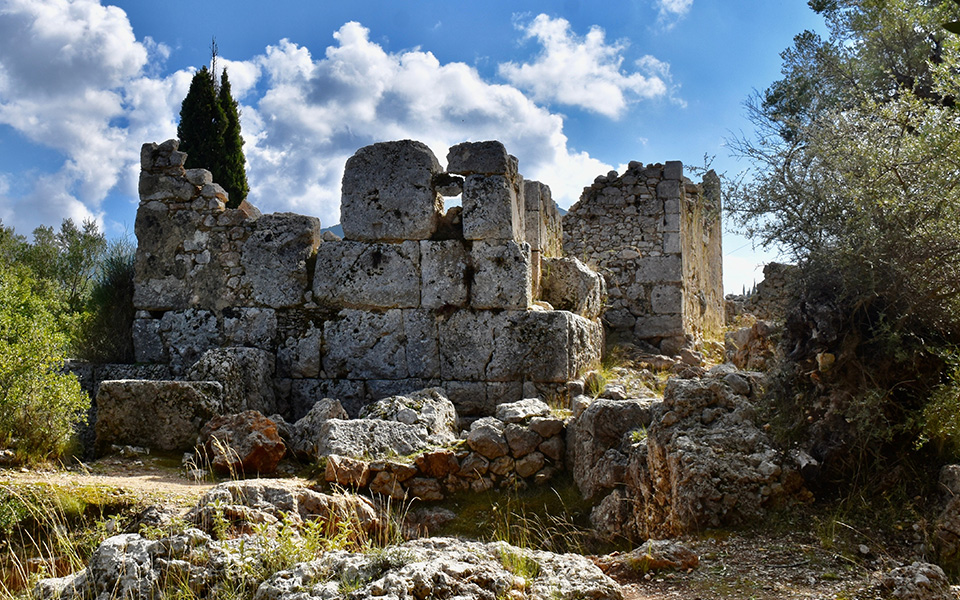
Archaeologists Rethink Ithaca and the Odyssey
The Odyssey has always lived in the gap between myth and map, but a new wave of archaeological interpretation is making that gap feel a lot smaller. If the landscape of Homer’s Ithaca has been misread, then one of Western literature’s most familiar settings may need to be redrawn from the ground up. That matters far beyond classicists and excavation teams. It changes how we think about ancient memory, trade routes, political geography, and the stubborn way stories survive when evidence is fragmentary. The latest findings do not just ask whether a site matches a poem. They ask whether we have been looking at the island, the port, and the royal stronghold through the wrong lens for decades. And if that is true, the implications are huge.
- The archaeology of
Ithacais challenging long-held assumptions about Homeric geography. - New readings of the site suggest the
Odysseymay preserve more real-world detail than skeptics assumed. - Landscape, not just artifacts, is becoming the key evidence in the debate.
- The story is bigger than Homer: it shows how archaeology rewrites cultural memory.
The Odyssey problem is bigger than a literary puzzle
For generations, scholars have treated the question of Odyssey geography as a kind of academic sport: where exactly did Homer place Odysseus, and how much of it was invention? That framing undersells what is at stake. If ancient poets were drawing from a real landscape, then place names, route descriptions, and political references may encode historical memory, not just poetic flourish. The debate over Ithaca has become a test case for a larger argument in archaeology: how much can we reconstruct from texts that were written to entertain, preserve identity, and elevate heroes at the same time?
The temptation has always been to flatten the debate into a binary: either the poem is literal or it is myth. Archaeology rarely works that neatly. The more interesting possibility is that Homeric tradition blended lived geography with exaggeration, creating a story that is both literary and anchored in a real Aegean world. That is why even a modest shift in interpretation can be disruptive. It does not merely update a map. It changes the evidence hierarchy.
Why the archaeology of Ithaca keeps drawing attention
At the center of the discussion is a simple but stubborn question: does the island associated with Odysseus actually match the topography described in the Odyssey? For a long time, scholars have argued over coastline shapes, harbor possibilities, hilltop visibility, and the location of a palace complex. Those are not cosmetic details. In the ancient world, geography defined power. A stronghold needed access to water, defensive elevation, and control over movement between sea and interior. If the text preserves those features accurately, the poem may be preserving political reality too.
What makes the archaeology of Ithaca compelling now is not a single artifact flashing in a museum case. It is the cumulative pressure of terrain analysis, site layout, and reinterpretations of older excavations. Modern archaeological work increasingly relies on multi-layered evidence: topographic surveys, ceramic analysis, stratigraphy, and comparisons with other Bronze Age sites. The strongest cases are rarely dramatic. They are built from patterns. And in this case, the pattern seems to be forcing researchers to take Homer’s setting seriously as a historical landscape rather than a purely symbolic stage.
When archaeology starts to align with a literary text, the text stops looking like fantasy and starts looking like a memory system.
What changed in the reading of the site
The most important shift is methodological. Archaeologists are no longer asking only, “Does this ruin match a palace?” They are asking, “Does the entire landscape behave like a Bronze Age center of power?” That is a very different and much stronger question. A royal site is not just a building. It is a network of access routes, agricultural hinterlands, and defensive logic. The surrounding slopes, sightlines, and approach paths matter as much as the stones themselves.
That broader view has made some previously overlooked features suddenly relevant. Terraces that once seemed incidental can look strategic. Caves and high ground that once appeared peripheral can become central to a reading of sacred or royal space. Even the absence of expected evidence can be informative. If a place has the right terrain but the wrong assumptions attached to it, the old model may be less scientific than convenient.
Landscape is now the evidence
One reason this debate has gained traction is that archaeology has become better at reading landscapes as systems. A site is no longer judged only by what can be excavated in a trench. Instead, researchers examine how humans would have lived there: where they would have landed boats, stored goods, moved livestock, and defended themselves. The geology, visibility, and natural barriers become part of the argument.
That matters because the Odyssey is full of spatial intelligence. Homer does not just name places. He stages movements, delays, reversals, and concealments. If the poem preserves a coherent mental map, then it may be reflecting the logic of an actual kingdom that once had to function in the real world. The archaeological challenge is to test whether the landscape can support that reading without forcing the evidence into place.
Why this matters beyond classical studies
This is not just a debate for philologists and excavation directors. It speaks to a wider problem in science and historical research: how to evaluate stories when the archive is incomplete. The ancient world almost never gives us clean documentation. Instead, we get objects, ruins, later retellings, and texts written with agenda, artistry, and memory all tangled together. Archaeology’s job is not to prove a myth true. It is to determine which parts of a myth may have grown from experience.
That distinction is critical. A culture does not need to remember a place perfectly to remember it meaningfully. Myths can preserve real trade corridors, political rivalries, and environmental conditions even when the narrative is supernatural or heroic. The stakes go far beyond Homer. Similar questions shape work on ancient cities, migration stories, and the origins of national identity. Once a community believes a story is tied to a place, the place becomes evidence and symbol at the same time.
Pro tip for reading archaeological breakthroughs
When a discovery sounds like it has “solved” an ancient mystery, look for the method beneath the headline. The strongest claims usually rest on a stack of small converging clues, not one blockbuster find. In practice, that means paying attention to stratigraphy, site orientation, ceramic chronology, and landscape fit before accepting a dramatic conclusion.
The risk of overclaiming the Odyssey
Still, skepticism is healthy here. Archaeology is full of sites that looked world-changing until later work scaled the claim back. The danger with Homer is that the poem is so culturally magnetic that every stone can start to feel like destiny. That is bad science. A compelling correlation is not proof. A palace-like layout does not automatically make a site Odysseus’s home, just as a harbor does not confirm a named character.
The best researchers know this. They are careful not to turn every alignment into certainty. Instead, they weigh probability. Does the site fit the broader Bronze Age picture? Do the proposed identifications explain more features than rival theories? Do they reduce contradictions or introduce new ones? Those questions keep the field honest. They also make the eventual conclusions more durable.
Good archaeology does not chase legend. It tests whether legend preserved a usable trace of the past.
What could happen next
If this line of research continues to gain support, the conversation around Ithaca may shift from “Is this the exact island?” to “How much of Homer’s geography can we recover with confidence?” That would be a major intellectual pivot. It would encourage more integrated studies of text, terrain, and settlement patterns across the eastern Mediterranean. It could also prompt a re-examination of other Homeric locations that have long been treated as symbolic rather than historical.
For museums, educators, and cultural institutions, the implications are practical too. The way ancient history is presented to the public often depends on simplified certainties. But the real story is messier and more interesting. A site can be both debated and important. A poem can be both mythic and geographically informed. And an island can become a centerpiece of civilization not because the answer is final, but because the questions keep getting better.
The bigger lesson from the archaeology of Ithaca
The renewed focus on the archaeology of Ithaca is a reminder that the past is not fixed just because a story is famous. New methods, better comparisons, and a willingness to revisit assumptions can redraw entire historical landscapes. That is the real power of archaeology at its best. It does not simply unearth objects. It revises the frame through which we understand memory, authorship, and place.
Homer may never yield a perfect coordinate. But if the terrain, settlement patterns, and textual clues increasingly point in the same direction, then the old divide between myth and history starts to look less like a wall and more like a porous border. That does not diminish the Odyssey. It makes it more fascinating. The poem may endure not because it escaped reality, but because it remembered enough of it to survive.
The information provided in this article is for general informational purposes only. While we strive for accuracy, we make no guarantees about the completeness or reliability of the content. Always verify important information through official or multiple sources before making decisions.