Planet Habitability Gets a Reality Check
Planet Habitability Gets a Reality Check
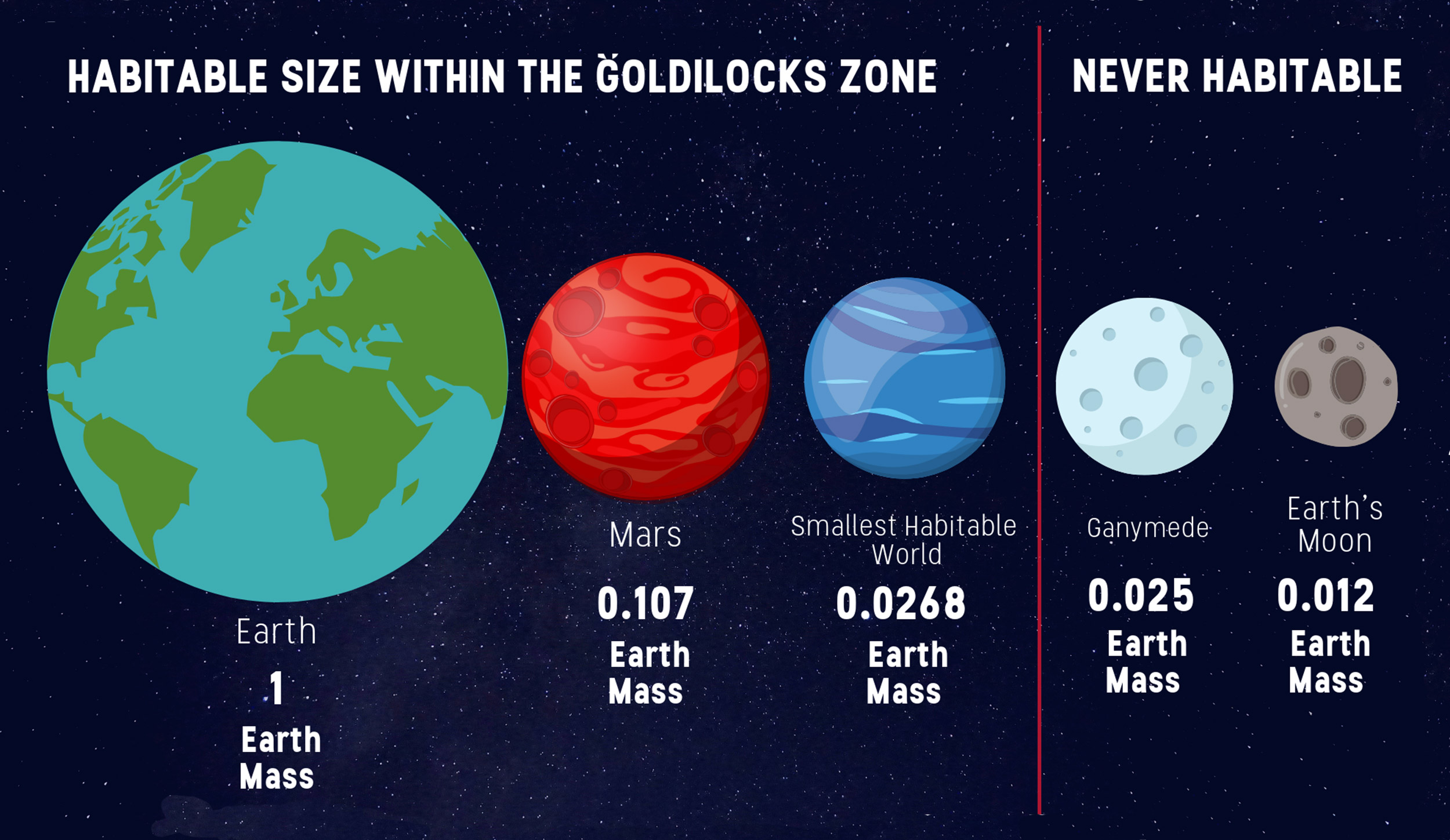
The search for life is colliding with a harder truth: planet habitability is not as simple as finding a rocky world in the right orbital lane. For decades, the public imagination has treated the solar system like a lineup of winners and losers: Earth thrives, Mars failed, Venus burned, and the icy moons sit in the cosmic waiting room. But modern planetary science is making that picture look too neat, too human-centered, and maybe too narrow. The real question is no longer whether another world looks like Earth. It is whether chemistry, energy, liquid environments, and time can align long enough for biology to get a foothold. That shift matters because it changes where scientists point spacecraft, how agencies spend billions, and what we should expect when the next generation of missions starts returning data.
- Planet habitability now depends on more than distance from the sun or surface temperature.
- Worlds once dismissed as dead or hostile may still host meaningful chemical or subsurface environments.
- NASA and planetary scientists are increasingly focused on oceans, ice shells, atmospheres, and geologic activity.
- The best targets for life may not be the most Earth-like planets, but the most chemically dynamic ones.
- This shift will shape future missions to Mars, Venus, Europa, Enceladus, Titan, and beyond.
Planet Habitability Is No Longer an Earth Clone Contest
The old habitability model was elegant, marketable, and incomplete. If a planet orbited in the so-called habitable zone, where liquid water could exist on the surface, it became a candidate for life. That framework helped astronomers sort through planets and moons quickly, especially as exoplanet discoveries exploded. But inside our own solar system, it has always had a glaring problem: most interesting places do not fit the poster.
Mars is cold and dry today, yet it preserves evidence of ancient rivers, lakes, and perhaps long-lived groundwater. Venus is a furnace at the surface, but its clouds have long invited speculation about unusual chemistry. Europa and Enceladus orbit far from the sun, but both appear to hide salty global oceans beneath ice. Titan is frigid, yet chemically rich, with lakes of methane and ethane and a thick atmosphere that behaves almost like an alien laboratory.
Habitability is shifting from a location-based idea to a systems-based one: not simply where a world sits, but how it moves energy and chemistry through rock, water, ice, and air.
That reframing is not semantic. It is a strategic correction. A planet can sit in the right orbital zone and still be sterile if it lacks a stable atmosphere, active chemistry, or environmental continuity. A moon can sit outside the classic zone and still maintain liquid water through tidal heating. The solar system is forcing scientists to broaden the checklist.
Why Planet Habitability Depends on Energy, Chemistry, and Time
Life as we know it needs more than water. It needs usable energy, the right chemical ingredients, and enough time for complex processes to unfold. Earth checks those boxes through sunlight, plate tectonics, volcanism, oceans, and a protective atmosphere. But other worlds may assemble different versions of the same toolkit.
Water Is Necessary, But It Is Not a Magic Switch
The phrase follow the water became a powerful organizing principle for Mars exploration. It worked because water leaves fingerprints: minerals, carved channels, sediment layers, and chemical gradients. But the presence of water does not automatically mean the presence of life. The water may have been too acidic, too salty, too brief, too cold, or too isolated from energy sources.
That is why Mars remains tantalizing but frustrating. It had liquid water in the past, and perhaps still has brines or buried ice today. But scientists must determine whether those environments were persistent and chemically favorable enough to matter. A puddle is not a biosphere. A lake that lasts millions of years is a much more serious candidate.
Energy May Be the Real Gatekeeper
On Earth, sunlight powers much of the surface biosphere. But deep-sea ecosystems thrive without sunlight, using chemical energy from hydrothermal vents. That matters enormously for icy moons. If Europa or Enceladus has water interacting with rock beneath the seafloor, chemical reactions could produce energy sources microbes might exploit.
Enceladus has already changed the conversation because its geysers spray material from its subsurface ocean into space. A spacecraft does not have to drill through miles of ice to sample the moon’s interior environment. That makes it one of the most compelling astrobiology targets in the solar system.
Stability Is the Underrated Ingredient
Even promising environments can fail if they do not last. Habitability requires duration. A world that briefly warms during impacts or volcanic episodes may generate liquid water, but life probably needs a more reliable stage. This is where planetary history becomes as important as planetary snapshots.
Venus, for example, may once have had more temperate conditions before a runaway greenhouse transformed it. If that history is correct, Venus becomes not just a cautionary climate tale, but a lost habitability case study. Understanding when and why Venus changed could help scientists judge how fragile habitable conditions really are.
The Solar System’s Most Interesting Habitability Candidates
The new map of habitability is messier than the old one, but also more exciting. It distributes possibility across environments that look radically different from Earth.
- Mars: The best place to study ancient surface habitability and the long-term loss of atmosphere and water.
- Venus: A laboratory for climate extremes, atmospheric chemistry, and the limits of surface habitability.
- Europa: A prime candidate for a subsurface ocean with tidal heating and possible water-rock interaction.
- Enceladus: A rare world that exports ocean material into space through plumes, making sampling more accessible.
- Titan: A chemically rich moon where exotic surface liquids and possible internal water create a strange dual-environment world.
None of these worlds is a second Earth. That is the point. The next era of exploration is not about finding familiar scenery. It is about learning whether life can emerge under conditions that are only partly Earth-like.
What Mars Still Teaches Us About Planet Habitability
Mars remains central because it is the solar system’s most accessible record of a once potentially habitable world. Rovers, orbiters, and landers have shown that ancient Mars had rivers, deltas, lake beds, clay minerals, and organic molecules. Those are not proof of life, but they are proof that Mars once hosted environments worth investigating.
The hardest question is whether Mars crossed the threshold from habitable to inhabited. That difference is huge. A habitable environment is a stage. Life is the actor. Scientists can identify the stage through geology and chemistry, but proving the actor ever appeared requires extraordinary evidence.
Pro Tip: When evaluating Mars headlines, separate three claims: water existed, conditions were habitable, and life existed. Those are not interchangeable, and the evidence standard rises sharply at each step.
Future sample analysis will be critical. Instruments on Mars are powerful, but laboratories on Earth can do far more precise work. Returned samples could reveal whether organic compounds are biological, geological, or delivered by meteorites. That distinction will define the Mars debate for years.
Venus Forces a More Skeptical Habitability Debate
Venus is the solar system’s warning label. It is nearly Earth’s size and composition, yet its surface is hot enough to melt lead, with crushing pressure and clouds of sulfuric acid. For a long time, that made Venus feel like a dead end for habitability. Now it is returning to scientific prominence because it may explain how Earth-like planets fail.
If Venus once had oceans, its transformation could reveal how stellar radiation, atmospheric loss, volcanic resurfacing, and greenhouse feedbacks interact. That knowledge matters beyond the solar system. Astronomers are finding rocky exoplanets around other stars, but without understanding Venus, they may misread which ones are genuinely habitable.
Venus may not be the place we expect to find life today, but it could be the place that teaches us how habitability dies.
The controversial discussion around possible unusual chemistry in Venus’s clouds also highlights a broader lesson: extraordinary environments require extraordinary caution. The scientific process is doing what it should: testing signals, challenging assumptions, and demanding better measurements.
Icy Moons May Redefine the Search for Life
Europa and Enceladus represent the most radical expansion of habitability thinking. They are cold, distant, and dark at the surface. Yet beneath their ice, they may contain more liquid water than Earth. Their habitability is not powered primarily by sunlight, but by gravitational squeezing from giant planets and possible geochemical reactions below their oceans.
This is why missions targeting icy moons are so important. They are not just sightseeing tours. They are tests of an alternative biological architecture: life sustained by internal oceans, tidal heat, minerals, and chemical gradients.
The engineering challenge is brutal. Ice shells are thick. Radiation around Jupiter is intense. Sampling without contamination is difficult. But the payoff is enormous. If life exists in an ocean world independent of Earth’s surface conditions, it would suggest biology may be more common than the old habitable-zone model implied.
Titan Is the Weirdest Habitability Experiment Nearby
Titan complicates everything in the best possible way. It has a thick nitrogen-rich atmosphere, complex organic chemistry, dunes, weather, and surface lakes made not of water, but of liquid methane and ethane. At the same time, it may also hide a subsurface water ocean.
That gives Titan two habitability questions. Could exotic chemistry in hydrocarbon liquids support something radically unfamiliar? And could its internal ocean support more familiar water-based chemistry? The first question is speculative. The second fits more comfortably within current astrobiology. Together, they make Titan one of the most intellectually disruptive worlds in the solar system.
NASA’s future rotorcraft-style exploration of Titan could transform this debate by allowing scientists to move between sites, sample diverse terrain, and analyze organic chemistry in context. Mobility matters because habitability is rarely uniform. On Earth, life clusters around gradients: shorelines, vents, sediments, cracks, and interfaces. Alien worlds may be no different.
Why This Matters for Space Strategy and Public Expectations
Habitability is not just a scientific concept. It is a funding filter. Missions cost billions, compete for political support, and take decades from proposal to data. If scientists define habitability too narrowly, they may miss the most promising targets. If they define it too loosely, they risk chasing ambiguity.
The smarter approach is layered. First, identify environments with liquid or past liquid reservoirs. Second, assess energy sources. Third, examine chemistry. Fourth, evaluate duration and preservation. Finally, design missions that can distinguish biological signals from non-biological processes.
- For NASA and space agencies: Broader habitability models justify diverse missions instead of a single Mars-centric strategy.
- For scientists: The key challenge is building instruments that can detect subtle biosignatures without overclaiming.
- For the public: The next big discovery may not be a fossil or microbe, but a stronger case that a hidden ocean is chemically alive.
- For exoplanet research: Lessons from Venus, Mars, and icy moons will improve how distant worlds are interpreted.
The Future of Planet Habitability Research Is Comparative
The most powerful insight may come not from one world, but from comparison. Earth, Mars, Venus, Europa, Enceladus, and Titan are a planetary experiment set. They show how size, atmosphere, geology, orbital position, moons, ice, volcanism, and time can push environments toward or away from habitability.
That comparative approach is how scientists will avoid simplistic answers. Earth is not merely the template. It is one data point with a known outcome. Mars shows partial failure or lost opportunity. Venus shows runaway transformation. Icy moons show hidden persistence. Titan shows chemical abundance under extreme cold.
The next decade will likely make the habitability conversation both richer and more contentious. Better instruments will sharpen old debates and create new ones. Some worlds may become less promising after closer inspection. Others may suddenly look more alive in the chemical sense, even if no organism is ever found.
The Bottom Line on Planet Habitability
The search for life in the solar system has matured. The question is no longer, Where is another Earth? It is, Where can nature assemble the conditions that make life plausible? That is a more difficult question, but also a better one.
Planet habitability now means thinking in systems: oceans beneath ice, atmospheres under stress, ancient lakes preserved in rock, chemistry moving through cracks, and energy leaking from planetary interiors. The solar system is not a simple hierarchy from habitable to dead. It is a set of worlds that preserve different chapters of the same cosmic problem.
The exciting part is that this reframing makes the search broader without making it careless. The skeptical part is that habitability is still not life. The next great discovery may not be a living organism, but a world that proves our old definition of a life-friendly planet was far too small.
The information provided in this article is for general informational purposes only. While we strive for accuracy, we make no guarantees about the completeness or reliability of the content. Always verify important information through official or multiple sources before making decisions.