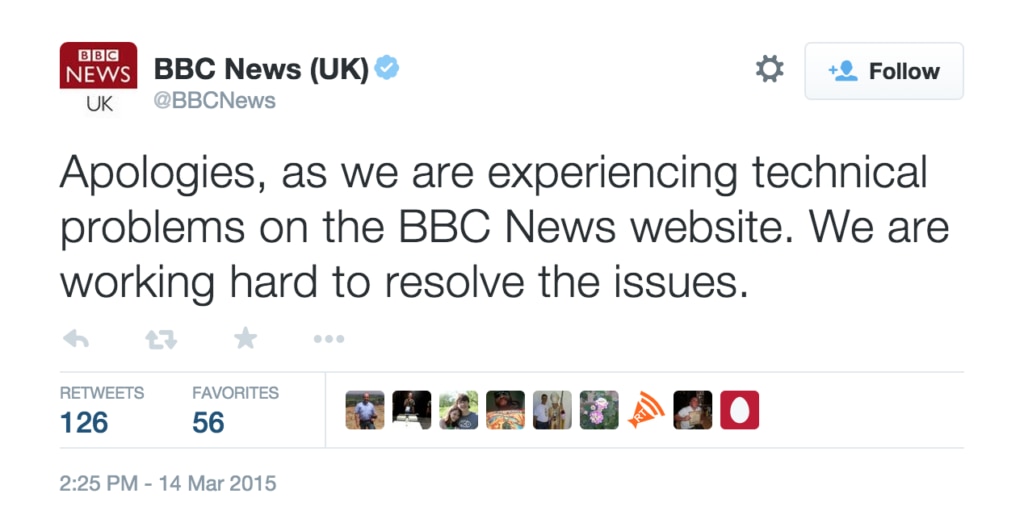
BBC News RSS Feed Reshapes Discovery
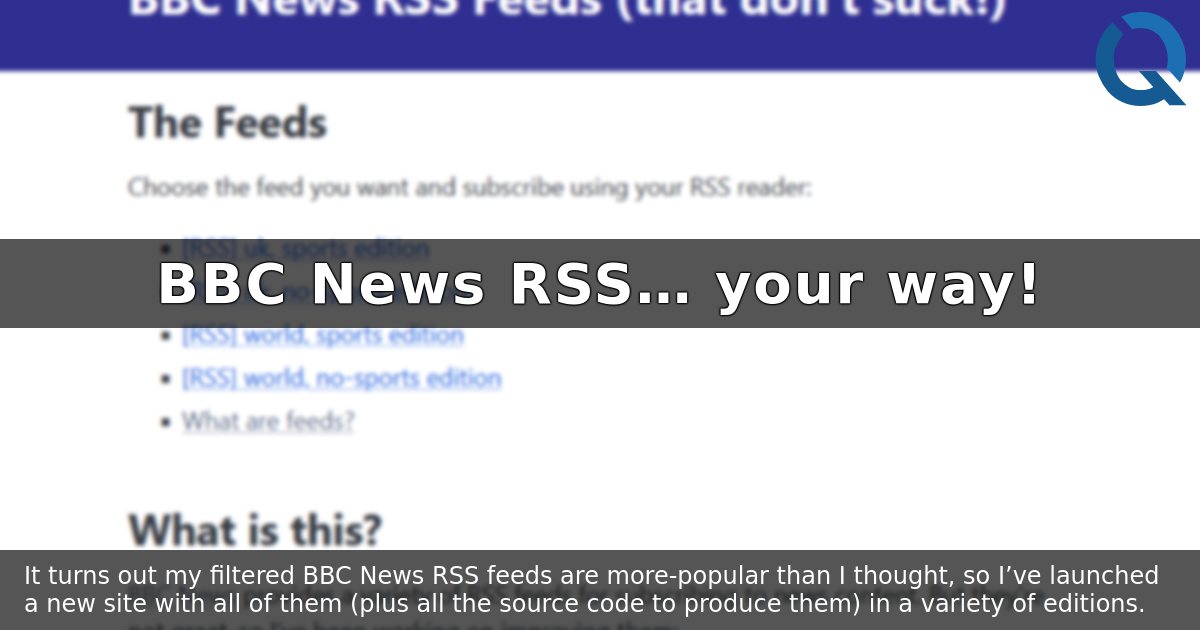
BBC News RSS Feed Reshapes Discovery
The quiet power of an RSS feed is easy to miss until a major publisher changes the rules. Then the ripple effects show up everywhere: fewer dependable shortcuts for readers, more friction for aggregators, and another reminder that the internet still depends on infrastructure most people never see. The BBC’s latest move around its news distribution is more than a format tweak. It is a signal that the old promise of open, machine-readable publishing is under pressure, just as audiences demand faster access and platforms tighten control. If you rely on feeds to track breaking news, build editorial workflows, or surface stories before they hit social timelines, this shift matters immediately. The question is no longer whether RSS is useful. It is whether publishers and readers can keep using it on their own terms.
- The BBC’s RSS feed changes highlight how fragile open news distribution has become.
- Readers and publishers who rely on feed-based workflows may need backup discovery channels.
RSSremains important for power users, despite being sidelined by apps and algorithms.- The move reflects a broader struggle over control, reach, and ownership in digital media.
Why the BBC RSS feed still matters
For casual readers, RSS can feel like a relic from a quieter internet. For editors, analysts, and power users, it is still one of the cleanest ways to monitor what a publisher is saying without algorithmic distortion. The BBC’s feed has long served as a reliable, structured stream of headlines that could be parsed, monitored, and redistributed with minimal friction. That makes any disruption feel larger than it looks on the surface.
The reason is simple: feeds are not just delivery mechanisms. They are an information layer. They let apps aggregate news, let researchers track narratives, and let newsroom tools automate alerts. When a major publisher adjusts that layer, it affects everyone downstream, from individual readers to media companies building their own products on top of public content.
The real issue is not whether RSS is old. It is whether open distribution still has a future in a platform-dominated media ecosystem.
What this shift tells us about modern news distribution
News distribution has become more centralized over the last decade. Readers increasingly discover stories through search, social media, notifications, and platform-owned apps rather than direct subscriptions to feeds. That has made publishers more dependent on intermediaries and less able to control how stories surface. The BBC’s move reflects this reality: a publisher may still value reach, but it also wants tighter governance over how, where, and when content appears.
That tension explains why RSS feeds remain both beloved and vulnerable. They are clean, open, and easy to automate, which is exactly why publishers sometimes view them as too permissive. If content is too easy to consume, it is also too easy to scrape, repurpose, or use as a raw input for other services. As AI tools, content aggregators, and news apps multiply, the pressure on publishers to control distribution has only intensified.
The business logic behind the change
From a publisher’s perspective, every channel has a tradeoff. Open feeds maximize accessibility, but they also dilute leverage. If users can read everything in a feed reader, they may never visit the site, see the ads, or engage with the branded experience the publisher is trying to build. That is especially relevant in a climate where traffic is volatile and referral sources can disappear overnight.
For a large newsroom, this is not a minor technical decision. It is a strategic one. Limiting or reshaping RSS distribution can help protect editorial products, strengthen first-party relationships, and reduce the chance that third-party services become the primary destination for the content.
Why readers feel the impact first
Readers often discover these changes only after their usual workflow breaks. A feed reader stops updating. A custom alert misses a headline. A newsletter workflow that depended on parsing XML from a public feed suddenly needs to be rewritten. The inconvenience is real, but it also exposes how much of the modern information stack is built on assumptions of openness.
That is what makes the BBC’s change significant: it does not just alter one distribution route. It forces readers to reconsider how they keep up with breaking news. If your system depends on a publisher’s feed remaining stable forever, you are already exposed. The smartest approach is to treat feeds as one signal among several, not the only source of truth.
Pro tip for power users
Build redundancy into your news intake. Pair RSS monitoring with alerts from apps, email newsletters, and direct publisher pages. If you run automation, make sure your pipeline can fall back to alternate sources when a feed endpoint changes or disappears.
The technical side of RSS and why it keeps surviving
At a protocol level, RSS is boring in the best possible way. It is structured, lightweight, and broadly readable across tools. That simplicity is why it has survived cycles of hype around social media, recommendation engines, and app ecosystems. It does not try to predict what you want. It just publishes what exists.
That is also why it remains useful for serious workflows. Developers can script against it. Researchers can archive it. Editors can scan it for story changes. A feed is stable in a way a social timeline rarely is. There are no engagement rankings, no opaque boosts, and no hidden design choices nudging attention.
Still, stability is not immunity. If publishers begin throttling feeds, changing formats, or removing them entirely, the protocol’s advantages shrink fast. The BBC’s move serves as a reminder that technical elegance does not guarantee business protection.
Common workflow pattern
Many teams use a simple pipeline like this:
- Pull headlines from
RSSevery few minutes. - Filter items by topic, source, or keyword.
- Send alerts into
Slack, email, or internal dashboards. - Archive the original item for later verification.
That pattern is straightforward, but it depends on publishers maintaining predictable feeds. Once that predictability weakens, the whole chain becomes less reliable.
Why this matters for the media industry
The bigger story is not just about one BBC RSS feed. It is about the shrinking space for open web standards in a media economy increasingly optimized for platform control. Publishers want audience growth, but they also want ownership. Users want convenience, but they also want independence from platform algorithms. Those goals often conflict.
For competitors, the BBC’s move may be a warning. If a major public broadcaster revises its distribution strategy, smaller publishers may follow. That could make it harder for readers to compare coverage across outlets, harder for startups to build useful aggregation tools, and harder for journalists to monitor the broader information landscape efficiently.
When a trusted feed changes, it is rarely just a product update. It is usually a clue that the distribution bargain is being rewritten.
The future of news discovery after RSS
Do not expect RSS to vanish overnight. Too many professionals still depend on it, and too many workflows are built around it. But its role is clearly shifting. Instead of being the default public layer for news distribution, it is becoming a specialist tool for advanced users, automation, and niche monitoring.
That future has consequences. More discovery will happen inside closed ecosystems. More publishers will try to steer readers toward owned channels. More readers will rely on alerts and apps that decide what matters for them. The cost is obvious: less transparency, less portability, and fewer ways to independently track the news.
The opportunity is also obvious: for those who still value control, RSS remains one of the few mechanisms that lets the user, not the platform, decide what gets read first.
How to adapt if your workflow depends on the BBC’s feed
If you use the BBC’s distribution tools as part of your daily routine, the best response is not panic. It is preparation. Audit where the feed is used, identify what breaks if it changes, and replace brittle dependencies with layered alternatives. That is standard operational hygiene in software, and it applies just as much to editorial workflows.
- Map every tool that consumes the feed.
- Document the exact
URLor endpoint in use. - Add monitoring so you know when updates stop.
- Store important items locally for reference.
- Test a fallback source before you need it.
That approach will not prevent publisher-side changes, but it will reduce surprise. In a media environment shaped by shifting contracts and platform dependency, resilience is becoming a competitive advantage.
The bottom line
The BBC’s RSS move is not a niche technical story. It is a snapshot of where digital publishing is headed: less open by default, more controlled by design, and increasingly shaped by the economics of attention. For readers, that means adapting how news is tracked and trusted. For publishers, it means balancing reach against control. For the rest of the ecosystem, it is another warning that the tools holding the open web together are only as durable as the institutions willing to maintain them.
MainKeyword: BBC RSS feed. The phrase may sound small, but the implications are not. When a feed changes, the media stack shifts with it.
The information provided in this article is for general informational purposes only. While we strive for accuracy, we make no guarantees about the completeness or reliability of the content. Always verify important information through official or multiple sources before making decisions.