BBC News site outage exposes brittle digital publishing
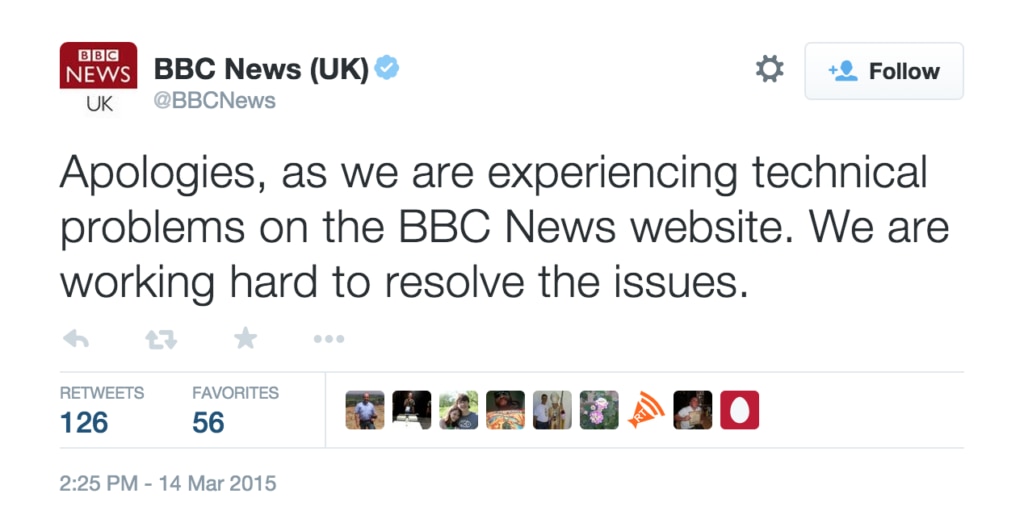
BBC News site outage exposes brittle digital publishing
The BBC News site outage is a reminder that even the most trusted publishers can be brought low by a single digital failure. For audiences, the pain is immediate: pages fail to load, live updates disappear, and the assumption that “always on” media is suddenly exposed as wishful thinking. For the industry, the stakes are bigger. News organizations are no longer just media brands – they are real-time software businesses running on complex stacks of cloud services, content delivery networks, databases, and operational tooling. When one link snaps, the entire trust chain wobbles. That is why this BBC News site outage matters beyond one frustrating morning. It is a case study in resilience, reputational risk, and the growing expectation that publishers deliver reliability with the same discipline as any mission-critical tech platform.
- The BBC News site outage highlights how fragile modern publishing infrastructure can be.
- Reliability is now part of editorial trust, not just an engineering concern.
- Redundancy, failover, and observability are no longer optional for major publishers.
- Audience expectations for instant, always-on access keep rising across every platform.
Why the BBC News site outage matters
At face value, a BBC News site outage looks like a temporary technical hiccup. But for a high-traffic publisher, downtime is never just downtime. Every failed request is a broken reader relationship, a missed ad impression, and a signal that the organization may not be fully in control of its own distribution. The BBC carries a particular burden because it serves as a default source of news for millions of users. When access fails, the impact is amplified by the brand’s public-service role and global reach.
This is also a timely reminder that the modern newsroom is inseparable from its infrastructure. Editorial teams can move at the speed of breaking news, but only if their publishing systems, authentication layers, and delivery networks can keep pace. The BBC News site outage puts a spotlight on an uncomfortable truth: reliability is now a product feature, and audiences notice when it disappears.
Trust is built in the seconds when a site loads correctly under pressure. Fail there, and the audience remembers.
The brittle stack behind modern publishing
News sites today are far more complicated than static pages served from a single server. A typical large publisher may depend on a mix of content management system infrastructure, cloud hosting, CDN caching, identity services, analytics scripts, ad tech, and third-party embeds. Each layer improves flexibility, but each also introduces another possible failure point.
When one dependency cascades
Small issues often turn into visible outages when systems are tightly coupled. A failing database can block article rendering. A misconfigured DNS entry can make the site appear offline even when origin servers are healthy. A broken deployment can send bad code across multiple regions in minutes. And because modern sites are optimized for performance, they often rely heavily on caching and automation, which can accelerate failure just as quickly as they accelerate delivery.
That is why outages at major publishers feel strangely disproportionate. The problem may start as a narrow technical issue, but the audience experiences it as total absence. The BBC News site outage underscores how unforgiving that dynamic has become.
BBC News site outage and the trust economy
There is a reason users become unusually emotional about news downtime. News is not entertainment background noise. People check it during emergencies, market swings, elections, weather events, and moments of uncertainty. If the site fails exactly when people need it most, the damage goes beyond inconvenience.
For publishers, trust now extends into operational reliability. A strong newsroom cannot rely on brand equity alone. If the user thinks, “I cannot count on this site,” then the editorial promise weakens. That matters for homepage traffic, app engagement, newsletter signups, and even search visibility over time. The BBC News site outage is a blunt reminder that audience trust is operationally earned, not just editorially claimed.
What a resilient news platform should look like
There is no magic switch that prevents every outage, but top-tier publishers can reduce the blast radius with disciplined architecture. The goal is not perfection. The goal is graceful degradation: if one layer fails, the rest keeps enough of the service alive for users to get the essentials.
Core practices that separate the durable from the fragile
- Multi-region failover: Keep traffic flowing if one data center or cloud region fails.
- Edge caching: Serve cached pages from
CDNnodes close to the user. - Dependency minimization: Reduce reliance on third-party scripts that can break page load.
- Feature flags: Disable risky modules without redeploying the whole site.
- Observability: Track latency, error rates, and saturation before users are locked out.
These are not exotic techniques. They are table stakes for any publisher that expects traffic spikes. The BBC News site outage suggests that even mature organizations must continuously pressure-test the assumptions baked into their stack.
How newsroom operations change after an outage
When a news site goes down, the work does not stop. Editorial teams must redirect readers to social channels, app alerts, radio, TV, or alternate landing pages. Engineers have to diagnose the failure while communications teams decide how much to acknowledge publicly. In a publisher like the BBC, the response matrix itself becomes part of the product.
That is where incident planning becomes essential. A newsroom cannot improvise its way through a major outage and expect consistency. The best organizations rehearse failure: who speaks, where updates are posted, which systems get prioritized, and what gets shut off first if the platform starts melting under load.
Pro tip: if your outage plan only exists in a document nobody has practiced, you do not have an outage plan. You have a wish.
What readers actually notice
From the outside, users rarely care whether the issue came from load balancer congestion, a bad deploy, or a database lock. They care about whether the story is accessible. That means publishers need to think like product companies. A homepage that fails to render during a breaking event is not merely a technical incident – it is a degraded editorial experience.
And readers are less forgiving than they used to be. They will switch to another outlet, refresh social feeds, or ask AI tools for a summary. That behavior is a warning sign for publishers: the moment you lose the user, you may never get the click back. The BBC News site outage reinforces how thin the margin is between being a primary source and being one tab among many.
Why this matters for the wider media industry
This outage is not just a BBC story. It is a preview of the reliability problem facing all digital-first media. The industry has spent years optimizing for speed, personalization, and monetization. Those goals are valid, but they often come at the cost of system simplicity. More scripts mean more risk. More automation means more ways to break things at scale. More personalization means more moving parts that have to work together in real time.
For business leaders, the lesson is straightforward: downtime has become a strategic issue. It affects user retention, subscription confidence, ad delivery, and internal morale. It also exposes whether engineering is treated as a core business function or as support staff waiting in the wings.
The future of publisher reliability
Expect more news organizations to invest in resilience engineering, not because it is fashionable, but because audience tolerance is shrinking. As publishers distribute content across web, apps, smart devices, newsletters, and social platforms, the central website remains the most visible proof of competence. It is the place where trust gets tested first.
In the years ahead, the most competitive media companies will likely treat uptime as a public metric, not an internal one. They will build more robust fallback experiences, simplify delivery pipelines, and use automation to catch problems before readers do. The BBC News site outage will not be the last high-profile failure. But it may be one more nudge pushing the industry toward a more honest standard: if your journalism is critical infrastructure, your infrastructure should act like it.
That is the uncomfortable lesson here. Editorial excellence still matters, but it no longer stands alone. In a digital media economy, trust is a blend of reporting quality, delivery speed, and operational durability. The publishers that understand that are the ones most likely to keep their audience when the next inevitable failure hits.
The information provided in this article is for general informational purposes only. While we strive for accuracy, we make no guarantees about the completeness or reliability of the content. Always verify important information through official or multiple sources before making decisions.