Beirut Cease Fire Exposes the Dahiya Doctrine
Beirut Cease Fire Exposes the Dahiya Doctrine
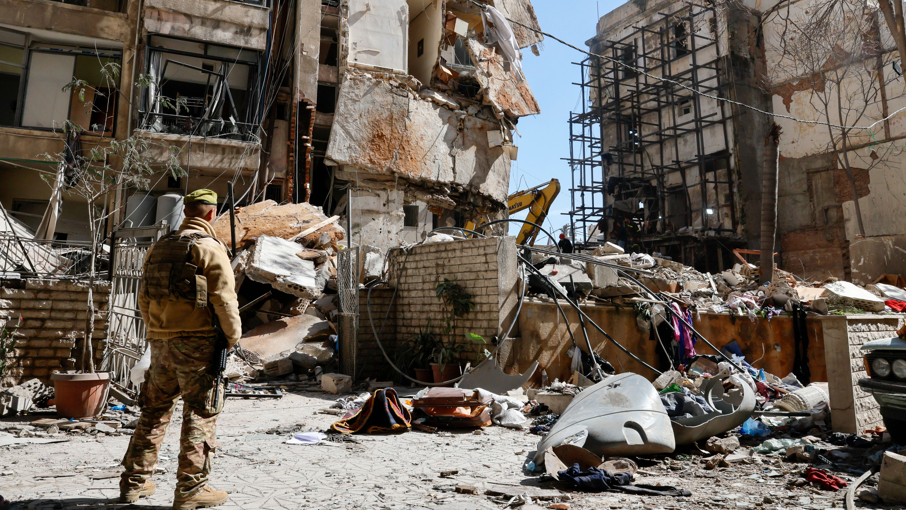
The Beirut cease fire may read like a pause in a brutal cycle, but that is exactly why it matters. Temporary quiet in southern Lebanon and the capital does not mean strategic calm. It means every actor is recalibrating, counting damage, and deciding whether the next escalation will be political theater or a full-scale rewrite of deterrence. For Lebanon, the cost is immediate: shattered neighborhoods, fragile institutions, and a public exhausted by rounds of destruction that never seem to produce security. For Israel, the calculation is colder: how to restore deterrence without inviting a wider war that no one can fully control. And for the region, the message is blunt. The doctrine shaping conflict here is not about precision alone. It is about power, punishment, and the belief that urban pain can force political outcomes. That is why the Beirut cease fire is bigger than a pause in hostilities. It is a stress test for the entire architecture of Middle East deterrence.
- The Beirut cease fire signals a pause, not a resolution.
- The Dahiya doctrine remains central to how force is applied and interpreted.
- Urban destruction is being used as a strategic message, not just battlefield damage.
- Lebanon’s political weakness makes recovery harder and escalation easier.
- Future conflict will likely hinge on deterrence, not diplomacy alone.
Why the Beirut cease fire is not a real reset
Cease fires often create a misleading sense of closure. Shelling slows, headlines soften, and diplomats declare progress. But the deeper story in Beirut is that none of the underlying incentives have changed. Armed groups still see resistance as leverage. Israeli planners still view border threats through the lens of preemption and overwhelming retaliation. Lebanese civilians are still left absorbing the consequences of a conflict they do not control.
That is the strategic trap. A cease fire can stop missiles without stopping the logic that launched them. The current pause may reduce immediate casualties, but it does not erase the military lesson both sides are drawing. If anything, it reinforces the belief that future wars will be short, brutal, and urban. The result is a dangerous kind of stability: one where no side trusts the peace, yet all sides depend on it.
The Dahiya doctrine still defines the battlefield
The Dahiya doctrine, named after the heavily damaged Beirut suburb of Dahiya, is more than a military theory. It is a warning system built around disproportionate force. The idea is simple, if chilling: hit infrastructure hard enough that the cost of sheltering armed groups becomes politically unbearable. In practice, that means civilian neighborhoods, roads, electrical systems, and communication networks can become strategic targets because they support the environment in which armed actors operate.
That doctrine matters because it changes the definition of victory. Victory is not necessarily occupation or territorial gain. It is coercion. It is creating such severe disruption that the other side concludes continued resistance is too expensive. For policymakers, that raises an uncomfortable question: if destruction is the message, what happens when the target audience cannot or will not comply?
When deterrence relies on punishment, every bomb becomes part of a political argument. The battlefield is not just where wars are fought – it is where governments try to rewrite the cost of defiance.
How deterrence becomes urban strategy
Urban warfare is especially suited to doctrines like this because cities concentrate both military assets and civilian life. That makes escalation faster and accountability harder. A command post may sit near apartments. A weapons cache may be hidden under a building. A road closure can isolate an entire district. The strategic effect is outsized even when the tactical target is narrow.
That is why the Beirut cease fire should be read through a broader lens. It is not only about one conflict or one border. It is about a regional trend in which cities are treated as pressure points, and civilian resilience becomes part of the military equation.
Lebanon’s weakness makes every cease fire fragile
Lebanon is not negotiating from strength. Its state institutions are depleted, its economy has been battered for years, and its ability to rebuild at scale is severely constrained. That matters because cease fires do not hold on goodwill alone. They hold when there is some combination of enforcement, reconstruction, and political legitimacy. Lebanon is short on all three.
When a state is weak, armed groups often become the only actors with operational credibility. That creates a vicious cycle. The state cannot fully disarm militias, but the presence of militias gives outside actors a justification for continued strikes. Ordinary residents then become trapped between a sovereign government that cannot protect them and a military logic that treats their neighborhoods as extensions of a battlefield.
For the international community, the problem is predictable but hard to solve. Humanitarian aid can stabilize immediate suffering. It cannot, by itself, rewrite the security balance. Reconstruction can rebuild homes. It cannot guarantee that the same streets will not be hit again. The result is a country stuck in strategic limbo.
Why the Beirut cease fire matters for Israel too
It is easy to frame cease fires as concessions or pauses imposed under pressure. But from Israel’s perspective, a cease fire also serves a tactical purpose: it tests whether military pressure has changed the behavior of its adversaries. If deterrence works, the border quiets. If it fails, the next round may be even more destructive.
That is the problem with doctrines built on punishment. They can produce short-term compliance while generating long-term resentment and adaptation. Groups that survive heavy strikes often disperse, harden their infrastructure, and invest in redundancy. In other words, what looks like deterrence today can become the blueprint for a more resilient adversary tomorrow.
The risk of a deterrence trap
Deterrence traps emerge when each side believes more force will restore control, while the other side interprets that force as proof that survival requires deeper preparation. This dynamic is especially volatile in Lebanon because geography compresses the conflict. There is no clean front line, no broad buffer, and no easy way to isolate fighters from civilians. Every strike carries a political echo.
That is why the current pause should not be mistaken for strategic victory. The question is not whether violence stopped. It is whether either side has changed the equation that made violence seem rational in the first place.
What the region should learn from the Beirut cease fire
The lesson here is not that force never matters. It clearly does. But force without a political endpoint tends to produce cycles rather than solutions. The Middle East has seen this pattern repeatedly: rapid escalation, devastated neighborhoods, hurried diplomacy, then a lull that lasts until the next trigger appears. Each round leaves the political landscape more brittle.
There are three reasons this cycle keeps repeating:
- Ambiguous goals: military campaigns often promise security but define success too loosely.
- Weak institutions: when states cannot enforce agreements, armed actors fill the vacuum.
- Urban exposure: dense cities magnify both tactical gains and humanitarian costs.
For regional policymakers, the implication is sobering. If the only available strategy is escalation followed by cease fire, then the system itself is failing. Real stability requires more than pauses in violence. It requires credible governance, reconstruction, and security arrangements that do not depend on the next bombardment.
What happens next after the cease fire
The near-term outlook is likely to follow a familiar pattern: assessment, repair, and suspense. Officials will tally damage. Aid groups will push for access. Families will return to neighborhoods that may or may not be safe. Meanwhile, military planners will study the exchange for signs of deterrence, vulnerability, and political exhaustion.
That is where the next danger lives. Cease fires often encourage both sides to prepare for the next round under the assumption that the pause itself is proof of leverage. But if everyone is preparing for a future fight, the cease fire becomes less a bridge to peace than a reset button for the same conflict.
Pro Tip: Watch not only whether the guns go silent, but whether reconstruction begins, border channels reopen, and political actors gain enough legitimacy to enforce restraint.
If those pieces do not move together, the truce will remain brittle. And brittle truce is just another way to describe deferred war.
Why this matters beyond Lebanon
The significance of the Beirut cease fire extends far beyond one city or one frontier. It is a preview of how modern conflicts may be fought: through targeted destruction, contested narratives, and the strategic use of civilian infrastructure as leverage. It also shows how difficult it is to separate military success from political failure. A strike campaign can be effective in narrow terms and catastrophic in broader ones.
For readers tracking global security, the key takeaway is this: the future of deterrence is increasingly urban, political, and asymmetric. States are not just fighting armies. They are trying to shape behavior under conditions where civilian life is inseparable from the battlefield. That makes every cease fire a temporary verdict, not a final one.
And that is the uneasy truth behind Beirut. The cease fire is real. The peace is not.
The information provided in this article is for general informational purposes only. While we strive for accuracy, we make no guarantees about the completeness or reliability of the content. Always verify important information through official or multiple sources before making decisions.