Russia Ukraine Energy Strikes Escalate
Russia Ukraine Energy Strikes Escalate
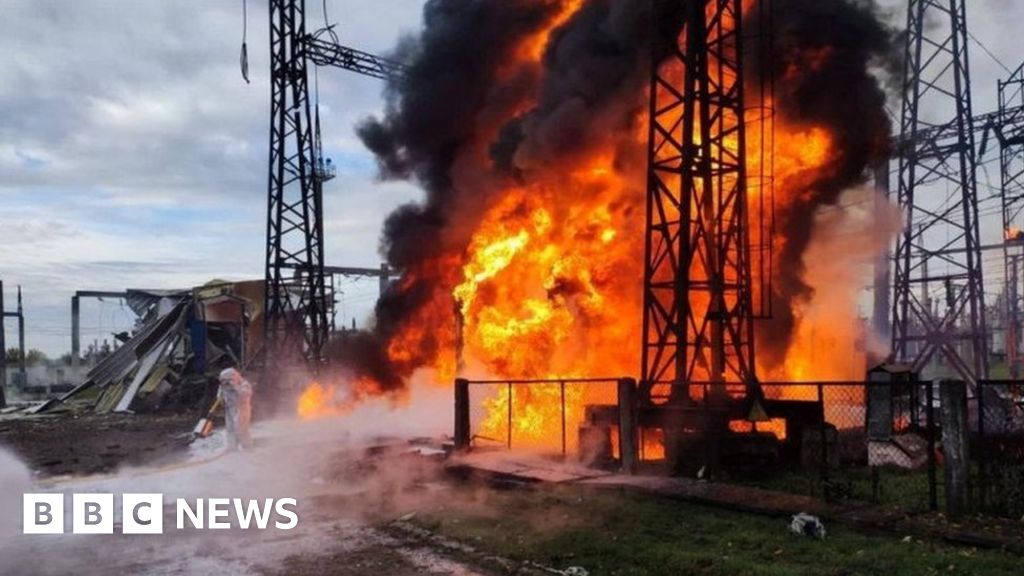
The war is moving back into the wires, pipes, depots, and transformers that keep a country alive. Russia Ukraine energy strikes are no longer just battlefield headlines – they are a winter pressure campaign aimed at civilians, budgets, morale, and political endurance. As both sides trade attacks on energy infrastructure, the question is not simply who can hit harder. It is who can repair faster, defend smarter, and survive longer under a war of attrition that now targets electricity, fuel, heating, and confidence. For Ukraine, every damaged substation risks another city facing darkness. For Russia, attacks on refineries and fuel logistics expose the vulnerability of a giant energy state fighting a modern drone war. The stakes are brutal: energy security has become both a weapon and a scoreboard.
- Russia and Ukraine are intensifying strikes on energy-linked targets as winter approaches.
- Ukraine faces renewed pressure on its
power grid, heating systems, and emergency repair capacity. - Russia is increasingly vulnerable to long-range attacks on refineries, fuel depots, and logistics nodes.
- The energy war has strategic consequences for battlefield momentum, civilian morale, and European energy anxiety.
- The next phase may be defined less by territory and more by resilience, air defence depth, and industrial repair speed.
Why Russia Ukraine Energy Strikes Matter Now
The timing is the story. Energy attacks become more powerful as temperatures fall, daylight shrinks, and demand for heating rises. A strike that causes inconvenience in summer can become a public safety crisis in winter. That is why the latest exchange of attacks carries more weight than a routine escalation. It signals a renewed effort to make energy scarcity part of the war plan.
For Moscow, targeting Ukraine’s power grid has a clear strategic logic. It can strain air defences, force Ukraine to divert resources from the front, exhaust repair crews, and create pressure on the government in Kyiv. If civilians face rolling blackouts, disrupted water pumping, or unreliable heating, the Kremlin hopes political fatigue will deepen.
For Kyiv, striking Russian energy assets is also strategic. Refineries, fuel storage sites, and transport hubs feed the war machine. Even limited disruptions can create logistical friction, raise domestic costs, and show Russian citizens that distance no longer guarantees safety. Ukraine does not need to destroy Russia’s energy sector to create pressure. It only needs to make the system less predictable.
The energy front is not a side theater. It is where military pressure, economic pain, and psychological warfare overlap.
The Russia Ukraine Energy Strikes Are Becoming a Systems War
Modern energy infrastructure is not one target. It is a chain. Generation plants, transformers, substations, transmission lines, gas storage, pumping stations, refineries, rail links, and fuel depots all depend on each other. Damage one part of the chain and the effects can ripple outward.
This is why attacks on substations and transformers are so consequential. They are difficult to replace quickly, often custom-built, and essential for moving electricity across regions. Ukraine has spent years hardening, decentralizing, and repairing its grid under fire, but resilience does not mean invulnerability. It means absorbing damage without total collapse.
Ukraine’s challenge is repair speed
Ukraine’s energy operators have become wartime first responders. Crews often move quickly after strikes to reroute power, patch equipment, and restore service. That experience matters. But speed depends on spare parts, security conditions, weather, and whether follow-up attacks hit the same facilities again.
Pro Tip: When assessing energy strike claims, watch for three signals: the duration of outages, whether emergency load shedding is imposed, and whether repairs require imported high-voltage equipment. Casualty numbers matter, but grid recovery time tells a deeper story about strategic damage.
Russia’s challenge is exposure
Russia has depth, scale, and massive energy reserves. But that does not make every refinery, storage depot, or pipeline node easy to defend. Long-range drones have changed the cost equation. A relatively cheap unmanned system can force expensive air defence deployments, disrupt production, or trigger insurance and logistics complications.
Ukraine’s strikes on Russian energy-linked sites also create a political message: the war cannot be contained inside Ukraine’s borders. That message matters because Russia has relied heavily on the perception of strategic immunity at home.
Air Defence Is Now Energy Policy
In this phase of the war, air defence is not just a military asset. It is an energy policy tool. Every interceptor battery positioned around a city, power plant, or industrial zone becomes part of the national survival system. The problem is scarcity. Ukraine must protect frontline troops, command centers, cities, ports, and energy assets at the same time.
Russia exploits that scarcity by mixing attack types. Waves of Shahed-type drones, ballistic missiles, and cruise missiles can force defenders to make painful choices. Cheap drones may be used to overwhelm sensors or drain interceptors, while more advanced missiles target harder infrastructure. The tactical goal is simple: make defence more expensive than attack.
Ukraine is trying to reverse that equation through mobile fire groups, electronic warfare, better detection, and layered defences. But the economics remain harsh. If a low-cost drone forces the use of a costly missile interceptor, the attacker gains even when the target survives.
What Doubt Over Energy Really Means
The phrase doubt over energy sounds abstract. On the ground, it means households wondering whether heating will work, hospitals planning backup generation, businesses pricing in outages, and governments preparing emergency imports. Energy doubt is a form of instability. It makes planning harder for everyone.
For Europe, the renewed strike pattern is a reminder that the war’s energy effects did not end with the early gas crisis. Ukraine’s grid stability matters to regional security. Russian refinery disruptions matter to fuel markets. Attacks around ports, storage sites, or transmission corridors can revive fears of price spikes even when supply fundamentals look manageable.
Markets hate uncertainty, and energy markets hate wartime uncertainty even more. A single strike rarely changes the whole market. A sustained campaign can.
The civilian toll is the strategic pressure point
Energy attacks are designed to radiate harm beyond the immediate blast site. When electricity fails, elevators stop, water systems falter, mobile networks weaken, and businesses pause operations. The impact is cumulative. People can endure one blackout. Repeated outages during winter become a test of social resilience.
That is why Ukraine’s winter preparations matter as much as battlefield maps. Backup generators, distributed heating, spare transformers, fuel reserves, and local repair teams are now part of national defence. Resilience is not glamorous, but it may decide how much leverage Russia gains from each strike.
The Battlefield Logic Behind the Energy War
The energy campaign is connected to the battlefield even when targets are far from the front. Fuel powers tanks, trucks, aircraft, and logistics convoys. Electricity supports factories, railways, communications, and command systems. Heating protects soldiers and civilians alike. A weakened energy system slows a state’s ability to fight.
Russia wants Ukraine to spend attention and money away from offensive operations. Ukraine wants Russia to feel the war in its industrial base and logistics networks. Both strategies are forms of attrition. Neither requires a dramatic breakthrough to be effective.
This creates a grim feedback loop. If one side escalates strikes on energy targets, the other has incentives to respond in kind. That does not mean both campaigns are identical in scale or effect, but it does mean energy infrastructure will remain a central target set unless diplomacy or deterrence changes the cost calculus.
What To Watch Next in Russia Ukraine Energy Strikes
The next several weeks will be revealing. If attacks intensify, watch whether Ukraine can keep outages localized and short. Watch whether Russia’s refinery disruptions remain isolated incidents or become a broader operational pattern. Watch whether Western support shifts toward more air defence, spare grid equipment, and energy repair financing.
- Grid recovery time: Fast restoration suggests resilience; prolonged outages suggest deeper structural damage.
- Target selection: Strikes on
transformers, refineries, and fuel depots indicate a focus on systemic disruption. - Interceptor supply: Ukraine’s ability to defend energy sites depends heavily on sustained ammunition and system support.
- Winter demand: Colder weather will magnify the impact of even limited energy disruption.
- Russian domestic effects: Fuel shortages, refinery downtime, or regional restrictions would signal pressure inside Russia’s own system.
The Bottom Line on Russia Ukraine Energy Strikes
The latest exchange of attacks shows a war entering another hard winter with energy at the center of strategy. Russia is betting that pressure on Ukraine’s grid can weaken morale and stretch defences. Ukraine is betting that long-range strikes can raise the cost of Russia’s invasion and expose vulnerabilities in its energy machine.
Neither side is treating energy infrastructure as background. It is now a primary front – one measured in megawatts, repair crews, fuel flows, interceptor stocks, and civilian endurance. The danger is that this front rewards escalation. The more energy becomes a tool of leverage, the more both societies are pulled into the machinery of war.
Why this matters: the outcome may not be decided by a single dramatic strike. It may be decided by whether people can keep the lights on, whether fuel keeps moving, and whether each side can absorb the next hit without breaking.
The information provided in this article is for general informational purposes only. While we strive for accuracy, we make no guarantees about the completeness or reliability of the content. Always verify important information through official or multiple sources before making decisions.