Betelgeuse Images Rewrite the Giant Star Story
Betelgeuse Images Rewrite the Giant Star Story
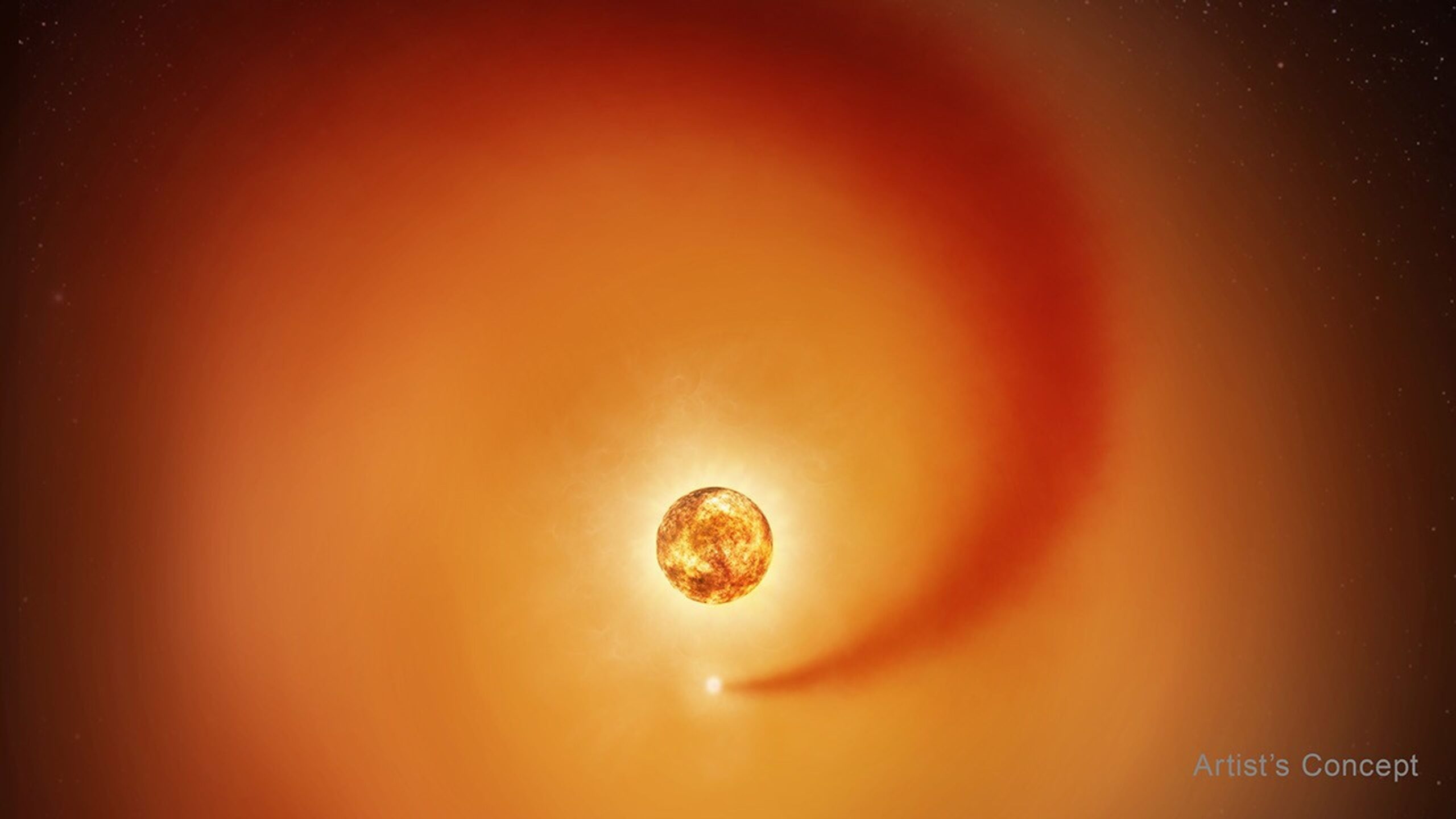
Betelgeuse is not just bright. It is a cosmic warning light. For years, the red supergiant has teased astronomers with dimming events, strange surface behavior, and the tantalizing possibility that it could explode sometime soon – on astronomical timescales, anyway. Now, fresh Betelgeuse images are giving scientists a much sharper look at one of the galaxy’s most famous unstable stars, and the results matter far beyond a single headline-grabbing celebrity in Orion. These observations are helping researchers probe how massive stars shed material, how their outer layers churn, and what the final months and years before a supernova might actually look like. That is a big deal, because stellar death is not just an ending. It is a factory for the elements that make planets, oceans, and life possible.
- The newest
Betelgeuse imagesoffer a clearer view of a star that is actively changing, not quietly sitting still. - Scientists are using the data to understand mass loss, surface convection, and the pre-supernova behavior of red supergiants.
- Betelgeuse remains unpredictable, but the new imaging tightens the odds on what could happen next.
- The findings matter because massive stars are key to how galaxies recycle matter into future generations of stars and planets.
Why Betelgeuse images matter now
Betelgeuse has always been a problem for neat astrophysical models. It is enormous, swollen, cool by stellar standards, and visibly unstable. But the latest Betelgeuse images push the conversation forward by showing structure and change in more detail than older observations could manage. That helps astronomers move from broad speculation to tighter physical explanations.
The key issue is simple: red supergiants do not fail gracefully. They lose mass, pulse, convect, and occasionally dim in ways that can look dramatic even when no explosion is imminent. If researchers can map how Betelgeuse behaves now, they can compare it with models of stars in their final evolutionary phases. That makes this an essential test case for understanding not just one star, but a whole class of cosmic giants.
Betelgeuse is a laboratory for stellar death
Betelgeuse sits in a short and chaotic stage of life. It is far more massive than the Sun and burning through its fuel much faster. That accelerated pace makes the star unstable in ways smaller stars simply are not. Its outer layers are loosely bound, its surface is turbulent, and its atmosphere can throw off material into space with little warning.
That is why astronomers keep watching it. A red supergiant like Betelgeuse offers a live demonstration of how nature prepares a star for collapse. The new imaging helps answer questions that have been frustratingly hard to pin down:
- How much material is the star shedding?
- Is the surface changing because of convection cells or deeper interior processes?
- Do bright and dark patches reveal large-scale motion in the atmosphere?
- How close is the star to the end of its life, really?
Those are not academic curiosities. They sit at the center of modern stellar physics. If astronomers can decode Betelgeuse, they gain a reference point for interpreting other red supergiants across the Milky Way and beyond.
What the new imaging adds
The real value of the new Betelgeuse images is not that they show a pretty star. It is that they sharpen the geometry of the problem. Previous observations could hint at irregular brightness patterns and surface asymmetry. Better imaging can separate one kind of change from another, which is crucial when a star’s appearance is influenced by both its own atmosphere and surrounding dust or gas.
That distinction matters because Betelgeuse has long been at the center of a debate about why it dimmed so dramatically in 2019 and 2020. Was it the prelude to an explosion? Not quite. The prevailing explanation points to a dust cloud, likely linked to a surface ejection or mass-loss event, that temporarily blocked some of the star’s light. Newer imaging gives researchers more leverage to test that story and refine it.
Betelgeuse is valuable precisely because it refuses to behave like a textbook example. Every odd light curve and every new image is a clue about how giant stars actually live – and die.
The role of surface convection
One of the biggest takeaways from modern Betelgeuse work is that its surface is probably shaped by giant convection cells. On the Sun, convection looks granular at relatively small scales. On a supergiant, the cells can be so large that a few of them may cover much of the visible surface. That creates patchiness, uneven brightness, and potentially huge localized flows of gas.
With better Betelgeuse images, astronomers can look for signatures consistent with those giant convective structures. If that interpretation holds, it reinforces the idea that the star’s atmosphere is dynamically active enough to eject material in bursts, feeding dust formation and altering how the star appears from Earth.
Dust is not a side note
Dust around red supergiants is more than cosmetic. It changes how much light escapes, it affects temperature measurements, and it influences what telescopes think they are seeing. A fresh image that resolves the star and its environment more cleanly can help untangle the star itself from the veiling effects of its own shed material.
That is especially important because a star like Betelgeuse can be misread if observers do not account for what is happening just above its surface. A dimming episode might look like a major internal shift when it is actually an atmospheric event. Better imaging does not eliminate ambiguity, but it reduces the noise in the system.
Why this matters for supernova science
There is a temptation to treat Betelgeuse as a countdown clock for a nearby stellar explosion. That framing is dramatic, but it is also misleading. Nobody can responsibly promise when Betelgeuse will explode. Still, the odds that it eventually will are not in doubt. The more interesting question is what the star looks like before that happens.
That is where the latest observations become powerful. If scientists can identify repeated patterns in Betelgeuse images – shifts in surface brightness, localized outflows, or changing dust behavior – they may be able to improve early warning models for supernova precursors. That could help astronomers decide what to watch in other massive stars that are closer to collapse.
The broader payoff is huge. Supernovae seed galaxies with heavier elements and drive energetic feedback into surrounding space. Understanding the lead-up to a supernova is one of the most important unsolved problems in stellar evolution. Betelgeuse is not the whole answer, but it is one of the best clues we have.
The skeptical read on the hype
It is easy to oversell a new image set. Astronomy headlines often imply a breakthrough when the reality is a more incremental advance. That skepticism is healthy here. New Betelgeuse images do not mean an explosion is imminent, and they do not magically solve the mysteries of red supergiants overnight.
What they do offer is something more useful: better constraints. In science, better constraints can be more valuable than flashy certainty. They narrow the range of plausible explanations and force theories to survive contact with real data. That is how a messy object like Betelgeuse becomes scientifically productive.
The most important question is not whether Betelgeuse will explode tomorrow. It is whether we can finally understand the physical machinery that makes a star this unstable in the first place.
What happens next
Expect astronomers to keep combining high-resolution imaging with spectroscopy, monitoring, and modeling. No single observation can capture the full life cycle of a red supergiant. But repeated looks can reveal whether a star is evolving steadily, cycling through phases, or undergoing erratic bursts of activity.
For readers, the pro tip is to ignore the explosion clickbait and pay attention to the pattern. When researchers release new Betelgeuse images, the important part is rarely just the photo. It is the comparison to earlier data, the interpretation of surface changes, and the way those findings fit into a longer arc of stellar evolution.
That longer arc is where the real story lives. Betelgeuse is not simply a bright point in the night sky. It is a giant, unstable engine of matter and energy, shedding clues about how the universe turns old stars into the raw material for new worlds. The latest images do not close the case. They make the case more interesting.
And that, for astronomy, is usually how progress begins.
The information provided in this article is for general informational purposes only. While we strive for accuracy, we make no guarantees about the completeness or reliability of the content. Always verify important information through official or multiple sources before making decisions.