Wildfire Extremes Reshape North America
Wildfire Extremes Reshape North America
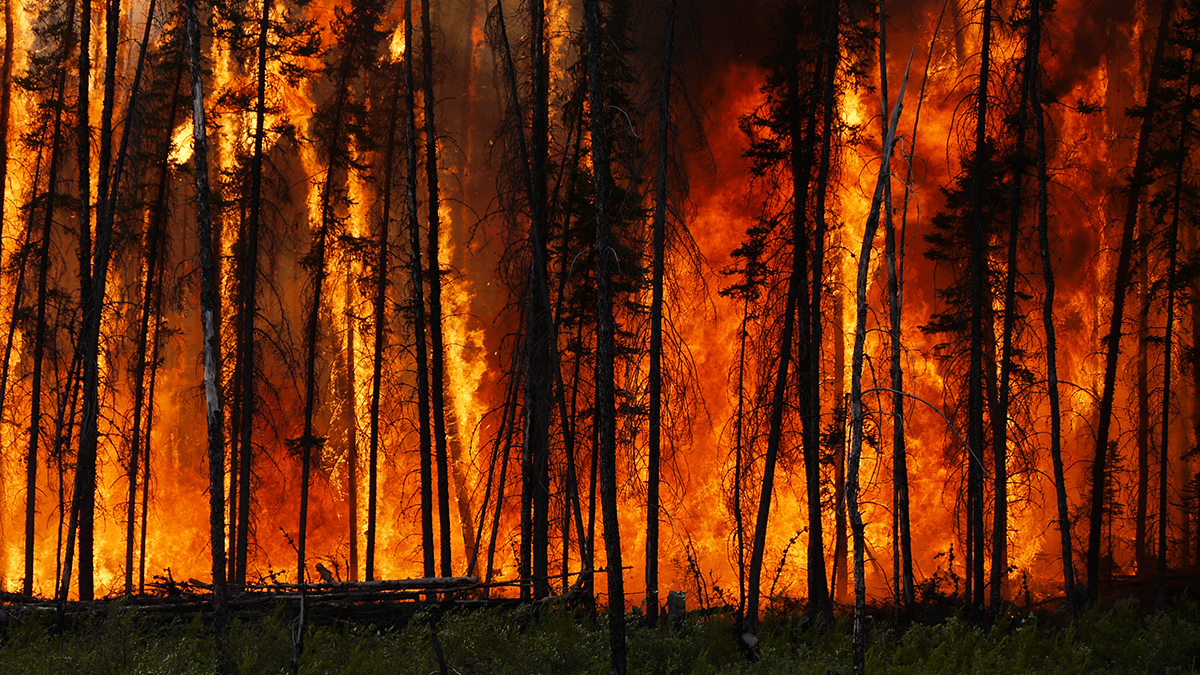
Canada and the U.S. West are no longer dealing with wildfire seasons so much as wildfire systems. Heat, drought, and wind are colliding with forests that are increasingly primed to burn, turning once-seasonal emergencies into recurring infrastructure, health, and economic crises. For communities on the front line, the problem is no longer whether smoke will arrive, but how often, how long, and how far it will spread. That shift is forcing governments, utilities, insurers, and homeowners to confront a brutal reality: climate extremes are not a future threat. They are already dictating what gets built, where people can live safely, and how much resilience actually costs. The old playbook of reactive firefighting is looking outdated fast, and the stakes keep rising.
- Wildfire risk is being amplified by hotter temperatures, prolonged drought, and erratic wind patterns.
- Canada and the U.S. West are seeing longer, more destructive fire seasons with wider smoke impacts.
- Adaptation now means more than firefighting: it includes land management, building codes, and grid hardening.
- Health and economic costs are spreading far beyond burn zones, especially through smoke exposure and disruption.
- Climate extremes are turning wildfire response into a strategic planning problem, not just an emergency response problem.
Climate extremes are rewriting wildfire risk
The headline risk is obvious: hotter conditions dry out vegetation faster, while drought stretches the window in which ignition can become a major blaze. But the deeper issue is compounding stress. Forests weakened by heat and pests become more flammable. Communities built deeper into the wildland-urban interface face more exposure. And extreme wind events can turn a manageable fire into a fast-moving disaster in hours.
Wildfire extremes are no longer isolated events. They are part of a broader climate pattern that pushes landscapes toward repeated ignition, faster spread, and harder suppression. That changes everything from the timing of fire season to the amount of water, personnel, and aircraft required to keep up.
“The uncomfortable truth is that firefighting is being asked to solve a problem that is increasingly created before the first spark even lands.”
That is why the conversation has shifted from simple suppression to long-term resilience. If weather patterns continue to push conditions toward higher fire danger, then the question becomes how much risk society is willing to absorb before adapting the built environment, land use policy, and emergency planning.
Canada and the U.S. West are facing a shared wildfire crisis
Canada and the U.S. West may differ in politics and geography, but the fire problem is converging. Both regions are dealing with larger burn scars, longer smoke seasons, and growing pressure on evacuation systems. What was once treated as a regional emergency is now a continental one, with smoke routinely crossing borders and affecting air quality far from the flames.
Why the scope keeps expanding
Several forces are driving the expansion:
- Longer dry periods make ignition more likely and suppression more difficult.
- Warmer nights reduce the natural recovery time forests once had between hot days.
- Wind volatility increases the speed and unpredictability of spread.
- Fuel buildup in overgrown forests can intensify fire behavior once ignition starts.
The result is a more volatile fire environment. A single lightning strike or human-caused spark can now cascade into a regional emergency, especially when multiple fires compete for limited resources.
Why wildfire response needs a new operating model
Traditional wildfire response is built around the idea that fires can be found, contained, and suppressed quickly enough to prevent catastrophe. That model still matters, but it is no longer sufficient. Modern wildfire management must operate like a layered defense strategy, combining prevention, mitigation, detection, infrastructure planning, and public health readiness.
Prevention is becoming as important as suppression
Proactive work matters more when the background conditions are so favorable to ignition. That includes prescribed burns, mechanical thinning, fuel breaks, and better land management around communities. These steps are not flashy, and they can be politically controversial, but they are among the few tools that actually reduce the intensity of future fires.
For property owners, the same logic applies at a smaller scale. Roof materials, defensible space, vent screens, and ember-resistant construction can dramatically affect whether a home survives a fire front or becomes another casualty. The lesson is simple: resilience is built before the smoke arrives.
The grid and communications network are part of the story
Wildfires do not just threaten trees and houses. They threaten the systems that keep a region functioning. Power lines can spark fires. Smoke and heat can disrupt transmission. Cell networks can fail under stress. When those systems degrade, evacuation, coordination, and recovery get harder.
This is why wildfire planning is now a technology and infrastructure challenge. Utilities need better vegetation management, stronger equipment standards, and faster shutdown decision-making. Emergency teams need reliable communications, mapping, and real-time alerting. Communities need backup power and redundant systems before the next event, not after it.
The health impact is bigger than the burn perimeter
Wildfire smoke has become one of the most visible ways climate extremes reach people who live nowhere near the flames. Fine particulate pollution can travel hundreds or even thousands of miles, degrading air quality across cities and states. That means asthma sufferers, children, older adults, and outdoor workers can be affected even when their homes are not directly threatened.
There is a dangerous tendency to treat smoke as a temporary annoyance. It is not. Repeated exposure can exacerbate respiratory and cardiovascular issues, interrupt school and work, and strain emergency rooms during peak smoke events. As wildfire seasons lengthen, health systems need to prepare for a new kind of seasonal burden.
“Smoke is the invisible infrastructure failure of wildfire season. It reaches farther than flames and lingers long after the headlines move on.”
Public health planning now needs to include clean air shelters, filtration guidance, early warning systems, and clear messaging about when to limit outdoor activity. The people most exposed are often the least able to adapt quickly.
What businesses and local governments should do next
The economics of wildfire extremes are increasingly unforgiving. Insurers are re-pricing risk, local governments are absorbing higher emergency costs, and businesses face disruptions from evacuations, lost labor, and supply chain delays. The old assumption that wildfires are a seasonal inconvenience is giving way to a more sobering calculation: extreme fire risk can affect investment decisions, operating costs, and regional growth.
Priority moves for adaptation
- Audit exposure by mapping facilities, staff, and suppliers against fire and smoke risk.
- Upgrade building resilience with ember-resistant materials, backup power, and better ventilation.
- Harden operations with remote work plans, evacuation protocols, and continuity drills.
- Invest in monitoring using weather alerts, air-quality sensors, and GIS-based risk tools.
- Coordinate locally with fire agencies, utilities, and public health teams before peak season.
For local governments, the question is not just how to respond but where to place limited dollars. Spending on prevention and resilience can look expensive until it is compared with the cumulative cost of repeated evacuations, rebuilding, and health impacts. That is the hard math now facing counties, provinces, and states across North America.
MainKeyword context and why it matters
The mainKeyword here, wildfire extremes, captures more than a sensational headline. It reflects a structural change in risk. We are no longer talking about a few severe seasons at the edges of normal. We are talking about a new baseline where extreme heat and prolonged dryness are altering what fire means for communities, ecosystems, and economies.
Why this matters is straightforward: if wildfire extremes continue to intensify, adaptation will become a competitive advantage. Regions that invest early in resilient infrastructure, land management, and public health systems will recover faster and lose less. Regions that wait will pay more, rebuild slower, and live with greater uncertainty.
What could change next
The next phase of wildfire response will likely be defined by better forecasting, faster detection, and more aggressive prevention. Expect more use of satellite data, AI-assisted smoke modeling, and sensor networks to identify fire risks earlier. Expect utilities to keep investing in line hardening and shutoff protocols. Expect insurers to keep pushing property owners toward mitigation or out of high-risk areas altogether.
But technology alone will not solve this. The central challenge is political and structural: deciding how much risk a society is willing to tolerate in places where climate extremes are making life more dangerous and expensive. That means confronting zoning rules, development incentives, forest policy, and emergency funding all at once.
The future of wildfire management will be judged by what gets prevented, not just what gets extinguished. That is the shift Canada and the U.S. West are now living through.
For readers, the takeaway is sobering but actionable. Wildfire extremes are no longer a niche environmental story. They are a systems story. And systems stories tend to end one of two ways: with costly improvisation, or with hard-earned adaptation.
The information provided in this article is for general informational purposes only. While we strive for accuracy, we make no guarantees about the completeness or reliability of the content. Always verify important information through official or multiple sources before making decisions.