Border Wall Fight Hits Big Bend
Border Wall Fight Hits Big Bend
The next big test for America’s border strategy is not happening in a crowded port of entry or a sprawling desert city. It is unfolding near Big Bend, where the border wall debate collides with some of the most remote, fragile, and politically charged land in Texas. For communities along the Rio Grande, this is not an abstract fight over campaign slogans. It is about property lines, floodplains, wildlife corridors, tourism, security, and whether Washington can solve a modern migration crisis with a physical barrier built through terrain that resists simple answers. The stakes are bigger than one stretch of fencing. Big Bend has become a national stress test for how far border enforcement can go before it starts reshaping the very places it claims to protect.
- The border wall debate near Big Bend highlights the clash between national security goals and local environmental realities.
- Remote terrain, private land, river dynamics, and protected habitats make construction far more complex than campaign rhetoric suggests.
- Landowners, conservationists, border agents, and local officials often define border security in sharply different ways.
- The fight could shape future infrastructure decisions along the Rio Grande and beyond.
Why the Border Wall Battle in Big Bend Is Different
Not every mile of the southern border is the same. That sounds obvious, but border policy often flattens geography into a single talking point. Big Bend is a rebuttal to that simplification. The region is defined by steep canyons, desert basins, river bends, ranchland, protected wilderness, and communities that have long lived with the border as both boundary and bridge.
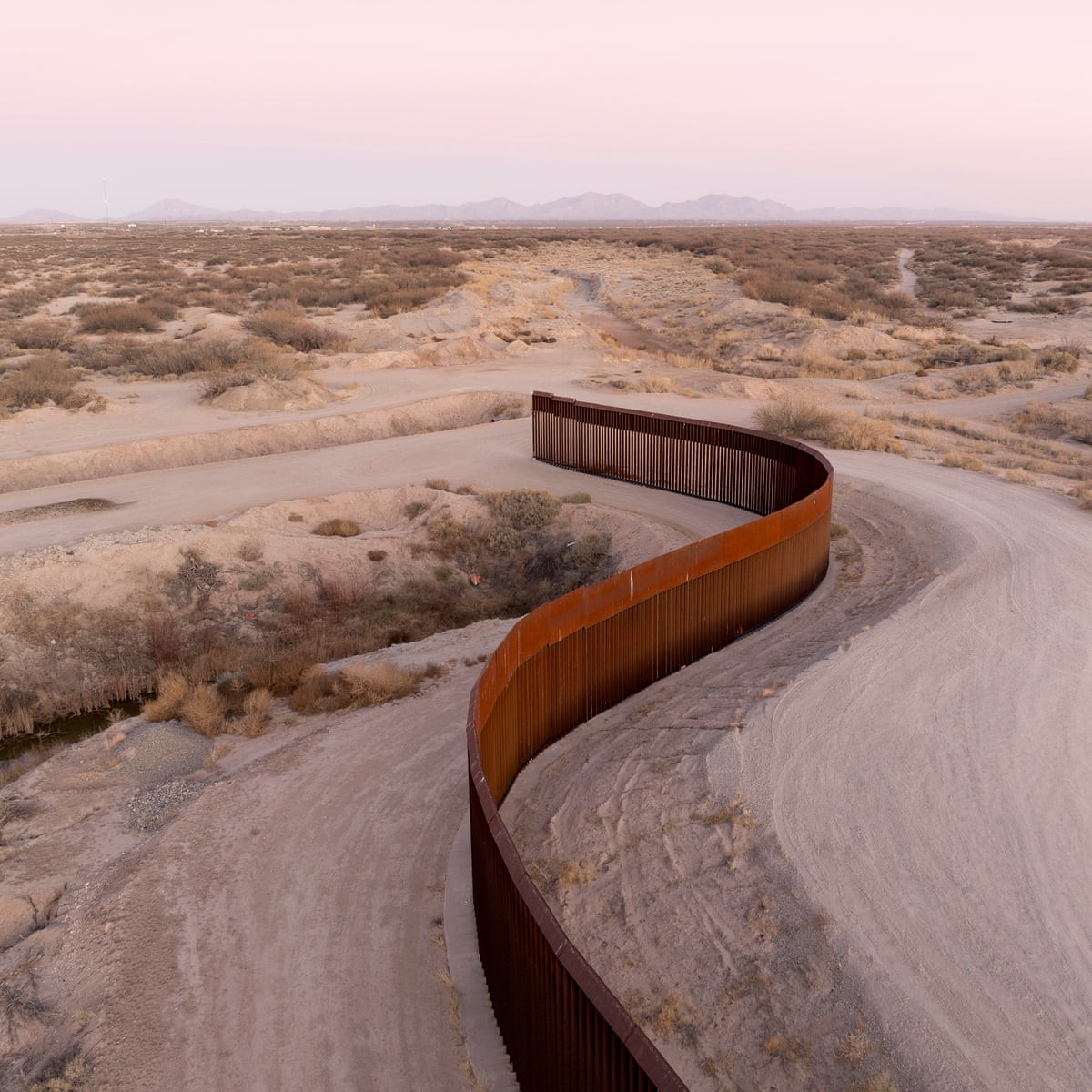
Unlike urban border zones where fencing can be tied into roads, lighting, surveillance towers, and fast-response routes, Big Bend presents a harder equation. The Rio Grande twists through rugged terrain. Access roads are limited. Seasonal flooding can rearrange riverbanks. Wildlife moves across invisible political lines. And much of the land is privately owned, culturally significant, or ecologically sensitive.
Key insight: The question is not simply whether a wall can be built. It is whether building one in this landscape produces more security than disruption.
That is why the Big Bend dispute matters nationally. It forces policymakers to confront an uncomfortable truth: a border wall is not one policy. It is thousands of individual engineering, legal, ecological, and human decisions stitched together mile by mile.
The Border Wall Meets a Brutal Geography
Big Bend is not an empty backdrop. It is a technical challenge hiding in plain sight. Any barrier system in the area must contend with topography that complicates construction, maintenance, and enforcement.
Rivers Do Not Behave Like Property Lines
The Rio Grande is the international boundary, but rivers are dynamic systems. They flood, erode, shift sediment, and reshape banks. Building hardened infrastructure near a river can create drainage issues, redirect water, or intensify flood damage if not designed with extreme care.
That matters because border barriers are not just vertical fencing. They often require access roads, levee modifications, gates, lighting systems, sensors, and maintenance corridors. Each addition expands the footprint and raises the risk of unintended consequences.
Remote Land Makes Enforcement Harder
A wall without rapid response is mostly a delay mechanism. In remote sections, delay may help agents intercept crossings, but only if patrol units can reach the area quickly. Big Bend’s scale and sparse infrastructure complicate that model. A barrier may slow movement, but the enforcement value depends on roads, staffing, communications, and surveillance coverage.
This is where the politics of the wall often outpace the operational reality. Physical barriers can be useful in some locations, especially where agents can respond quickly. In isolated terrain, the return on investment is less obvious and more dependent on a layered strategy.
Landowners Are at the Center of the Border Wall Fight
The border debate is frequently framed as federal power versus unauthorized migration. In Texas, it is also a fight over land. Much of the riverfront is not federally owned, which means new construction can trigger surveys, negotiations, access disputes, and potential condemnation proceedings.
For ranchers and property owners, the issue is immediate. A wall or enforcement road can cut off access to river pastures, alter drainage, interfere with livestock operations, and place government infrastructure on land held by families for generations. Even when officials promise gates or compensation, locals often worry about long-term control.
- Property access: Barriers can separate owners from parts of their land near the river.
- Operational disruption: Ranching, tourism, and conservation work may be affected by construction corridors.
- Legal uncertainty: Federal border projects can involve complex land acquisition processes.
- Trust issues: Local communities may doubt that distant agencies understand the terrain or local economy.
Pro Tip for policymakers: If the goal is durable security, community buy-in is not optional. Border infrastructure that alienates landowners can create years of litigation, resistance, and maintenance headaches.
Environmental Stakes Are Higher Than the Wall Itself
Big Bend is one of the most ecologically distinctive regions in the United States. The desert may look sparse to outsiders, but it supports a web of species adapted to heat, drought, seasonal water, and long-distance movement. A continuous barrier can disrupt that movement, particularly for mammals, reptiles, and other wildlife that depend on access to water and habitat on both sides of the river.
The environmental concern is not just the fence line. It is the entire construction and enforcement ecosystem around it. Heavy equipment, cleared vegetation, road building, erosion control, lighting, and human traffic can fragment habitat. Night lighting can affect nocturnal species. Roads can accelerate invasive plant spread and increase mortality for animals crossing the landscape.
Why this matters: In a region like Big Bend, the wall is not a line on a map. It is an ecological intervention across a living corridor.
Supporters of expanded barriers argue that national security must come first and that modern engineering can reduce environmental impact. Critics counter that waivers and accelerated construction can weaken the review process precisely where scrutiny is most needed. The tension is not likely to disappear, because both sides are arguing from values that resonate with different parts of the public: sovereignty and stewardship.
Border Wall Politics Are Shifting From Symbol to System
The wall became one of the most powerful symbols in American politics because it offered something rare in immigration policy: a simple image. But the Big Bend conflict shows how that symbol becomes far more complicated when translated into concrete, steel, contracts, and land surveys.
Republicans who support additional wall construction often frame it as a necessary correction after years of inconsistent enforcement. They argue that physical barriers reduce illegal crossings, channel movement toward controlled areas, and give border agents a tactical advantage. For them, Big Bend may represent unfinished business in a broader campaign to harden the border.
Democrats and many local opponents often argue that walls are expensive, environmentally damaging, and poorly matched to the realities of asylum, visa overstays, labor demand, and cartel smuggling. They tend to favor more staffing at ports, immigration court capacity, surveillance, and regional migration agreements.
The sharpest version of the debate is not wall versus no wall. It is whether the U.S. should keep investing in static infrastructure when migration patterns, smuggling tactics, and humanitarian pressures are constantly changing.
The Smarter Border Security Question
A serious border strategy has to move beyond slogans. The practical question is whether a particular segment of barrier improves outcomes compared with alternatives. In Big Bend, that comparison is especially important because construction costs and trade-offs may be unusually high.
What a Layered Strategy Could Look Like
A more targeted approach might combine selective barriers with technology and staffing rather than defaulting to continuous wall construction. That could include ground sensors, mobile surveillance towers, drones, river patrols, license plate readers, and improved radio communications. But technology is not magic. Sensors need maintenance. Drones require operators. Surveillance data needs agents who can act on it.
The best model is likely a layered one: barriers where they clearly work, technology where visibility is limited, roads where response is realistic, and legal infrastructure that processes cases faster. Big Bend makes the case for precision, not autopilot.
What Success Should Actually Measure
Too often, border debates measure success by miles built. That is a politically convenient metric, but it is not a security metric. Better measures would include response times, interdiction rates, migrant deaths, environmental impacts, property disputes resolved, and changes in smuggling routes.
- Security effectiveness: Does the project reduce unlawful crossings or merely move them?
- Human impact: Does it increase risk for migrants by pushing routes deeper into dangerous terrain?
- Environmental cost: Can habitat disruption be minimized and monitored?
- Local legitimacy: Are landowners and local governments meaningfully consulted?
- Long-term maintenance: Is funding available after the ribbon-cutting?
Why the Big Bend Fight Could Set a National Precedent
The outcome near Big Bend could influence how future administrations approach difficult border segments. If the federal government pushes ahead aggressively, it may signal that environmental sensitivity and local resistance will not block national enforcement priorities. If construction is narrowed, delayed, or redesigned, it may show that place-specific constraints still matter.
Either path carries political risk. Moving forward may energize supporters who want visible enforcement but inflame landowners, environmental groups, and border communities. Pulling back may satisfy conservation concerns but invite accusations of weakness on border security.
For the public, the important takeaway is that border policy is entering a more complex phase. The easy miles have largely been debated, built, blocked, or litigated. What remains are places where the cost-benefit analysis is harder, the land is more contested, and the consequences are more durable.
The Bottom Line on the Border Wall in Big Bend
Big Bend exposes the limits of one-size-fits-all border politics. A wall may be useful in some places, ineffective in others, and actively harmful if built without regard for terrain, water, wildlife, and local life. That does not mean the border should be unmanaged. It means management has to be smarter than symbolism.
The future of border security will likely be decided in places like this: remote, beautiful, inconvenient, and resistant to easy answers. If Washington treats Big Bend as just another gap to close, it may miss the real lesson. The strongest border strategy is not the one that builds the most visible structure. It is the one that proves it can balance enforcement, accountability, property rights, and the landscape itself.
The information provided in this article is for general informational purposes only. While we strive for accuracy, we make no guarantees about the completeness or reliability of the content. Always verify important information through official or multiple sources before making decisions.