Brazil Peru Border Crisis Exposes Armed Gangs
Brazil Peru Border Crisis Exposes Armed Gangs
The Brazil Peru border crisis is no longer a distant Amazon story that can be filed under “remote and unresolved.” Indigenous leaders say armed gangs are effectively taking villages hostage, turning isolated communities into pressure points inside a wider criminal economy built on land, timber, drugs, and fear. That matters far beyond the forest line. When criminal groups start controlling access to rivers, roads, food, and movement, the state does not just look absent – it becomes irrelevant in daily life.
For governments already stretched by porous frontiers and weak outposts, this is the kind of escalation that can metastasize fast. The warning from Indigenous leaders is blunt: the border zone is becoming a battleground where local people are trapped between violence, abandonment, and extractive interests. The result is not just insecurity. It is a test of whether Brazil and Peru can still govern one of the planet’s most strategically important regions.
- Armed groups are reportedly asserting control over villages along the Brazil-Peru frontier.
- Indigenous communities are caught between intimidation, displacement, and state neglect.
- The crisis reflects a broader Amazon security problem tied to illegal economies.
- Weak border governance is giving criminal networks room to expand.
- How Brazil and Peru respond may shape the future of the region’s social and environmental stability.
Why the Brazil Peru border crisis is escalating now
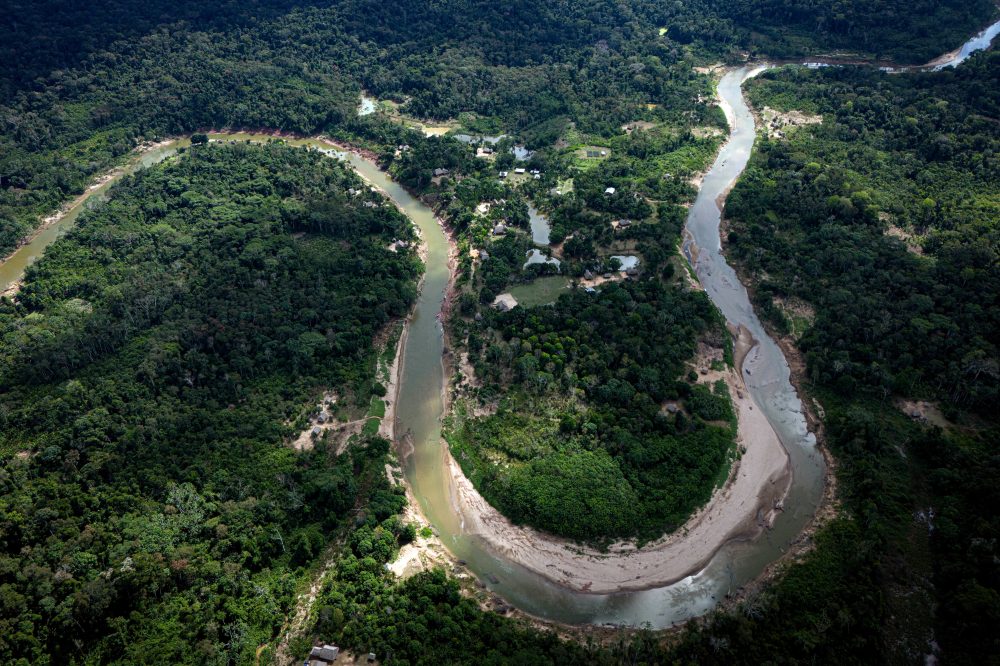
The Amazon borderlands have always been hard to police, but the current moment is different. Criminal groups are more organized, better financed, and more willing to exploit vacuum zones where state presence is thin. The terrain itself helps them. Dense forest, river networks, and minimal infrastructure make it easy to move people and contraband while making it difficult for authorities to respond quickly.
This is not just about random violence. It is about control. In fragile frontier regions, gangs and other armed actors often seek to dominate the same choke points that governments ignore: boat routes, food supply chains, landing strips, logging corridors, and crossings that are not really crossings at all. Once they own those routes, they can tax movement, threaten families, and dictate who can stay and who must leave.
That pattern is why the Brazil Peru border crisis should be read as a governance failure as much as a security story. When communities say they are being held hostage, they are describing a total-system problem: intimidation, forced dependency, and the slow disappearance of public authority.
The Amazon border economy is the real battleground
The criminal logic behind this crisis is brutally practical. Armed groups do not need to control the whole Amazon to profit from it. They only need to control the routes. Timber can be laundered through informal transport chains. Drugs can move along rivers that are impossible to monitor every hour. Illegal mining and land grabbing create additional streams of money and influence. Each activity reinforces the others.
Pro Tip: When analyzing frontier violence, do not focus only on firefights or headline arrests. Track the logistics. The group that controls fuel, boats, radios, and river access usually controls the territory.
That is what makes the situation along the Brazil-Peru frontier so alarming. Indigenous villages are not merely adjacent to illicit markets. They may be embedded inside them. In that environment, criminal power becomes social power. It can determine whether a community gets medicine, whether children can travel, and whether leaders can speak without retaliation.
“In border zones like this, criminal groups win by making daily life feel negotiable only on their terms.”
Why Indigenous communities are the first to feel it
Indigenous communities are often the earliest warning system for frontier breakdown because they live closest to the terrain and most directly outside the reach of state protection. They also tend to be the least equipped to absorb sustained intimidation. If a village loses access to a river route or is threatened by armed men, there may be no nearby police post, no reliable telecoms, and no rapid extraction plan.
That vulnerability is compounded by historical neglect. Too often, border governance treats Indigenous territories as blank space on the map rather than as living political communities with rights, security needs, and local knowledge. That mindset is not only wrong. It is dangerous. It allows external actors to frame these regions as empty, then occupy them socially and economically.
Leaders in these communities are signaling something broader than local fear. They are describing a collapse in the basic contract between residents and the state. Once that contract breaks, residents begin to self-protect, migrate, or negotiate with armed groups. None of those outcomes produces long-term stability.
Brazil Peru border crisis and the limits of state response
The hardest question is whether Brazil and Peru can respond fast enough to matter. Border enforcement in the Amazon is expensive, logistically punishing, and politically awkward. It requires coordination across environmental agencies, police, military units, Indigenous affairs offices, and prosecutors. Yet those institutions often operate in silos, with different mandates and weak information sharing.
There is also a credibility problem. If communities have reported threats before and seen little follow-through, more patrols alone will not rebuild trust. Security operations can clear a route for a day, but they do not necessarily hold it. And when armed groups return, the costs to residents are even worse because they have been seen cooperating with authorities.
This is where policy gets messy. Heavy-handed enforcement can backfire if it ignores local realities. But doing too little is its own failure. The right response is not just a military one. It is a multi-layered strategy that combines protection, intelligence, territorial monitoring, and support for Indigenous governance.
What an effective response would actually look like
- Persistent presence: Not just raids, but sustained posts and river patrols in known pressure points.
- Community protection: Safe reporting channels, emergency evacuation routes, and witness safeguards.
- Joint operations: Brazil and Peru sharing intelligence and targeting the same networks, not just the same headlines.
- Local authority support: Funding Indigenous guards, communication tools, and territorial surveillance.
- Financial disruption: Following the money behind timber, mining, drugs, and land laundering.
Without those layers, the frontier remains a revolving door. The gangs adapt. The villagers absorb the cost.
Why this matters beyond the border
The Brazil Peru border crisis is not a localized security incident. It is a preview of what happens when climate stress, weak institutions, and organized crime collide in one of the world’s most important ecological zones. If criminal groups gain deeper control over Amazon villages, the impact will not stop at community boundaries. It will affect deforestation, migration, biodiversity, and cross-border stability.
That has direct consequences for the business of governing the Amazon. Companies operating near frontier regions face rising reputational and operational risk. Governments face a credibility test. Environmental policy becomes harder to enforce when armed actors determine the terms of access. And the longer the impunity lasts, the more normalized it becomes.
Why this matters: the Amazon is increasingly shaped not only by environmental change, but by the infrastructure of illicit power. That is a far more durable threat than a single conflict flare-up.
The key shift is not that violence exists in the Amazon. It is that violence is becoming an organizing principle for land control.
The likely next phase for the Brazil Peru border crisis
If history is any guide, the next phase will depend on whether the two governments treat this as a criminal nuisance or a territorial emergency. If they move slowly, armed groups will keep consolidating influence, and Indigenous communities will face more displacement and coercion. If they overreact without local partnership, they may win a headline and lose the region.
The most realistic near-term outcome is a tense mix of partial interventions and ongoing insecurity. That means more reports from the ground, more calls for protection, and more pressure on both capitals to stop treating the frontier as a peripheral issue. It is not peripheral. It is a strategic frontier where public authority is being challenged village by village.
The deeper lesson is simple: when states leave borderlands under-governed for too long, someone else eventually moves in. In the Amazon, that someone is increasingly organized, armed, and willing to make civilians pay the price.
The Brazil Peru border crisis is a warning shot. Whether it becomes a larger regional collapse will depend on how quickly the state can prove that its reach is still stronger than the gangs trying to replace it.
The information provided in this article is for general informational purposes only. While we strive for accuracy, we make no guarantees about the completeness or reliability of the content. Always verify important information through official or multiple sources before making decisions.