Canada Beluga Deal Sparks Marine Ethics Reckoning
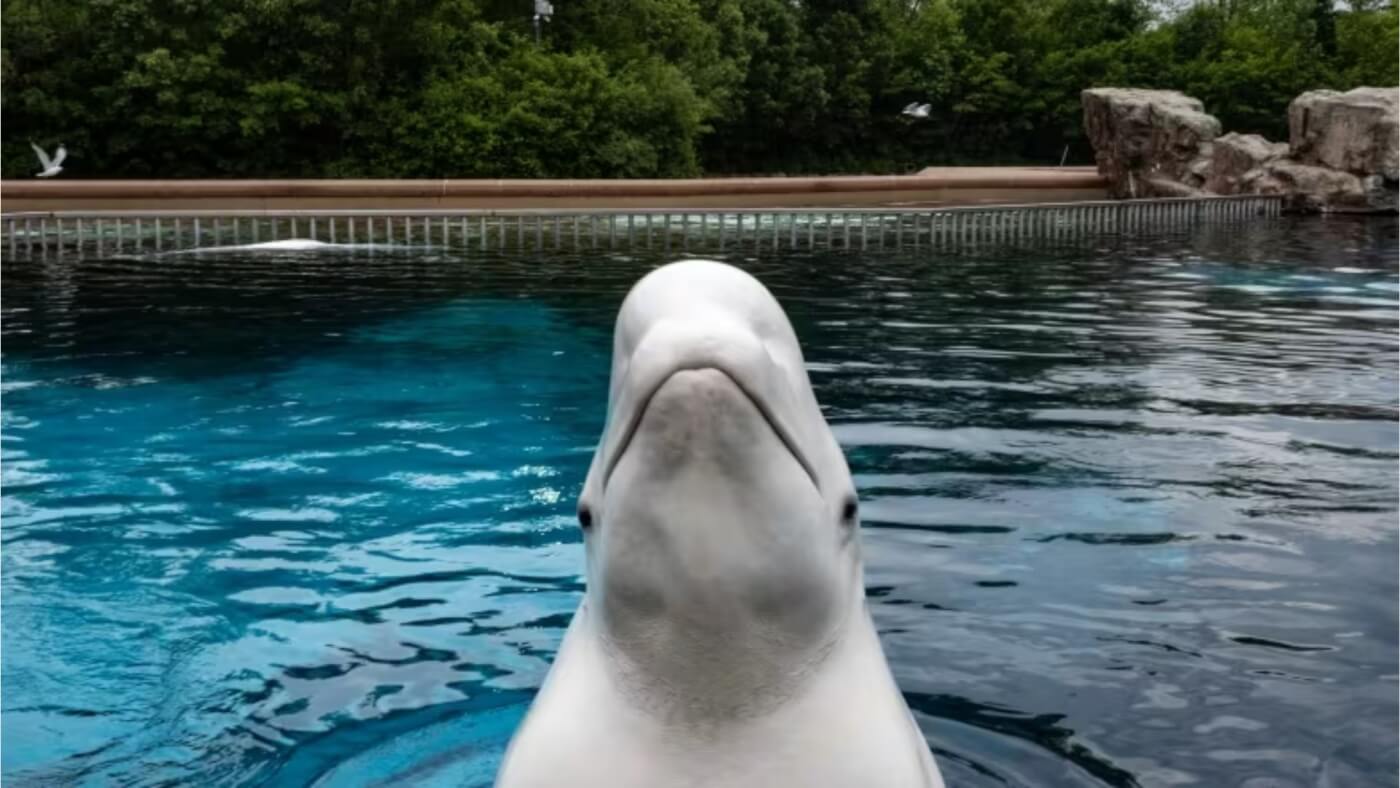
Canada Beluga Deal Sparks Marine Ethics Reckoning
The Canada beluga whale deal is not just another animal transfer story. It lands at a moment when public patience with captive marine mammals is wearing thin, regulators are under sharper scrutiny, and operators can no longer hide behind old entertainment-era assumptions. When a facility tied to years of criticism becomes part of a new arrangement involving belugas, the real question is bigger than logistics. It is about whether the system around captive cetaceans has actually changed – or whether the branding has changed faster than the rules. For readers tracking wildlife policy, conservation ethics, and the business of marine attractions, this is the kind of case that exposes the gap between legal compliance and public legitimacy. That gap is becoming impossible to ignore.
- The Canada beluga whale deal raises major questions about transparency, welfare oversight, and public trust.
- Beluga transfers are never simple: they involve animal health, facility standards, transport stress, and regulatory interpretation.
- Marine parks face a new reality where ethical scrutiny can be as consequential as formal law.
- The broader impact could reshape how captive cetaceans are managed, retired, or phased out in North America.
Why the Canada beluga whale deal matters beyond one facility
Belugas occupy a uniquely sensitive place in the public imagination. They are intelligent, social, acoustically complex animals, and for years they have been central to debates over whether highly sentient marine mammals belong in tanks at all. That means any reported deal, transfer, or ownership arrangement involving belugas is automatically more than an operational update.
At stake is a collision between three forces: animal welfare law, commercial survival, and public ethics. Even if a transaction or transfer clears procedural hurdles, that does not settle whether it aligns with evolving standards for humane treatment. Increasingly, it is not enough for operators to say a move is legal. They also need to show it is necessary, transparent, and defensible.
Key insight: In the cetacean debate, legality is the floor. Public legitimacy is the ceiling, and many operators are discovering how far apart those two things can be.
This is why the story resonates well beyond Canada. Around the world, marine parks and aquariums are being pushed to explain what captivity is for in an era when educational and conservation claims are examined far more aggressively than they were a decade ago.
The deeper issue behind marine mammal transfers
A beluga transfer or deal tends to be framed as paperwork, but the practical reality is much more complicated. These are animals with complex physiological and social needs. Moving them between facilities can affect stress levels, immune response, social bonding, and long-term adaptation.
Animal welfare is not a box-checking exercise
Belugas are not interchangeable inventory. Any transfer should prompt questions about enclosure quality, water systems, veterinary capacity, acoustic environment, social group compatibility, and long-term care planning. A receiving facility may satisfy baseline requirements while still falling short of what critics, scientists, or a concerned public would consider appropriate.
That matters because welfare outcomes often live in the gray area between what can be measured and what can be observed. A facility might report compliance, but outside experts may still question whether the environment supports natural behavior, mental stimulation, and durable social stability.
Transparency is now part of welfare
One of the biggest shifts in this sector is that transparency itself has become a welfare issue. If the public cannot clearly understand who controls the animals, where they are going, under what legal authority, and under what care standards, suspicion grows fast. And once suspicion takes hold, every official statement gets read as damage control.
That is why modern marine animal management requires more than internal assurances. It requires a coherent public explanation of the rationale, oversight process, and expected welfare benefits.
What this says about the post-entertainment marine park model
The old marine park pitch was simple: spectacle, family appeal, and a vague promise of education. That model has weakened dramatically. Audiences are less willing to accept captivity as entertainment, especially for cetaceans. As a result, facilities are trying to reposition themselves around rescue, conservation, and rehabilitation language.
The problem is that not every institution can make that transition convincingly.
If a controversial operator or partner remains linked to transactions involving belugas, the public is likely to ask whether this is true reform or strategic rebranding. That distinction matters. A rescue-first institution and a legacy attraction business may use similar language, but they are judged very differently.
The central editorial question: Is the current system moving animals toward better lives, or simply moving the controversy to a new address?
Reputation risk has become a business risk
Facilities dealing with marine mammals are now subject to a kind of dual accounting. One ledger tracks permits, operations, and compliance. The other tracks public perception, donor confidence, activist pressure, and political attention. If the second ledger turns negative, it can destabilize the first.
That is especially true for any institution hoping to attract visitors, partnerships, philanthropic support, or municipal goodwill. A single deal involving belugas can become a referendum on the entire organization.
How regulators are being tested by the Canada beluga whale deal
Regulators are often caught in an uncomfortable position. If they approve a transfer, they risk accusations of enabling a flawed system. If they block it, they may be accused of limiting options for animals already in captivity. There are no easy wins here, only tradeoffs.
Still, this is exactly why robust regulatory frameworks matter. A credible oversight process should answer several practical questions clearly:
- Who holds legal responsibility for each animal?
- What standards must the destination facility meet?
- What veterinary and transport protocols are required?
- How is long-term welfare monitored after the transfer?
- What public reporting obligations apply?
When those answers are vague, the process looks fragile. And in a case involving belugas, fragility quickly becomes controversy.
Policy language is struggling to catch up
Many wildlife and animal welfare rules were not written for an era in which social media scrutiny, investigative reporting, and ethics-driven consumer behavior shape policy outcomes in real time. The law may define ownership, transfer authority, or care obligations in narrow terms, while the public expects broader moral accountability.
That mismatch is why cases like this become flashpoints. They reveal where the formal framework still treats highly intelligent marine mammals as manageable assets, while the public increasingly sees them as beings whose captivity demands extraordinary justification.
The science and ethics problem marine parks can no longer dodge
Defenders of captive cetaceans often point to veterinary care, longevity debates, educational programming, or species awareness. Critics counter that these benefits do not outweigh the constraints of confinement for animals evolved for vast, dynamic environments.
With belugas, the ethical tension is particularly stark. Their natural lives involve social complexity, movement across large ranges, and sensory engagement that enclosed systems can only partially reproduce. No matter how advanced the filtration, veterinary staffing, or enrichment schedule, a tank is still an engineered compromise.
That does not mean every animal can simply be released. Many cannot. But it does mean every decision about housing and transfer should be judged against a hard standard: does this improve the animal’s lived reality in a meaningful way?
Why sanctuaries keep entering the conversation
Whenever a deal involving captive belugas surfaces, sanctuary models come up for good reason. They represent a possible middle path between full captivity and impossible release: more naturalistic conditions, lower performance pressure, and a welfare-first narrative.
But sanctuaries are not a magic command like deploy sanctuary. They require coastal geography, long-term funding, veterinary infrastructure, permitting, environmental safeguards, and careful animal selection. They are difficult, expensive, and slow to build.
Even so, each controversial transfer strengthens the case that governments and institutions need a more credible endgame for cetaceans already in human care.
What readers should watch next in the Canada beluga whale deal
This story will likely turn on specifics, not slogans. The most important developments are likely to involve disclosure, oversight, and enforceable commitments rather than emotional statements from either side.
- Ownership clarity: Who ultimately controls the animals and under what terms?
- Destination standards: What is known about the receiving environment and its welfare capacity?
- Regulatory rationale: Have officials explained why the arrangement meets legal and ethical thresholds?
- Independent scrutiny: Are outside experts, veterinarians, or advocates able to evaluate the move?
- Long-term plan: Is this a permanent solution or a transitional one?
If those answers remain incomplete, criticism will persist regardless of how carefully the transaction is worded.
Why this matters for the future of captive cetaceans
The Canada beluga whale deal may end up being remembered less for its immediate details than for what it symbolizes: a sector running out of room to operate by old assumptions. Marine mammal captivity is entering a phase where every transfer, every permit decision, and every welfare claim is judged inside a larger cultural shift.
That shift is straightforward. People want proof that institutions holding intelligent animals are acting with necessity, not convenience. They want less secrecy, fewer legacy loopholes, and stronger evidence that welfare outcomes are actually improving. For operators, that means communications strategy alone will not solve the problem. The underlying model has to change.
Bottom line: The future of marine mammal care will be decided not by who can defend the old system most effectively, but by who can build a more credible replacement.
For policymakers, the lesson is equally sharp. If governments do not create clearer pathways for oversight, relocation, sanctuary development, and public transparency, these controversies will keep repeating. And each repetition further erodes confidence that the current framework is fit for purpose.
The result is that this is no longer just an animal welfare story. It is a governance story, a reputation story, and a test of whether institutions can keep pace with society’s changing ethical baseline. That is why the Canada beluga whale deal matters so much. It is not simply about where a group of whales may go next. It is about whether the system around them is finally being forced to evolve.
The information provided in this article is for general informational purposes only. While we strive for accuracy, we make no guarantees about the completeness or reliability of the content. Always verify important information through official or multiple sources before making decisions.