Canada Must Confront the Broken Machinery of Immigration Detention
Canada Must Confront the Broken Machinery of Immigration Detention
The release of Tania Warner and her daughter from Canadian immigration detention should feel like closure, yet it lands as a siren. The case thrusts Canadian immigration detention back under a spotlight Canada would rather keep dim: a system that holds families in carceral settings while officials cite process and policy. In a country that markets itself as rights-forward, two months behind razor wire for a mother fleeing instability shows the dissonance between reputation and practice. The stakes are not abstract – they are measured in missed school days, panic attacks in concrete rooms, and the uneasy precedent that bureaucratic delays can override basic dignity. This is not a one-off mishap; it is a stress test Canada is failing.
- Family detention exposes the gap between Canada’s humanitarian brand and operational reality.
- Children endure clinical harms that policy memos rarely acknowledge.
- Alternatives like community-based case management cost less and work better.
- Opaque oversight allows preventable crises to repeat across provinces.
Opinionated Review: Freedom won, trust lost
Warner’s release is a relief, but celebration rings hollow when viewed against the architecture that put her there. The dominant narrative in Canada paints detention as rare and humane. The facts: families are held in facilities built for enforcement, run on carceral logic, and justified by administrative caution. Her case is a human ledger entry that exposes how far reality trails rhetoric.
“If this is the system at its best, we should all worry about what happens when no one is watching.”
Canada’s immigration agency defends detention as a last resort. Yet the threshold for locking up a parent and child remains elastic: identity verification, perceived flight risk, or pending paperwork are all enough to close a cell door. The harm is baked in. Medical groups warn that even brief detention triggers developmental and psychological damage for kids. Those warnings rarely penetrate operational decisions made in regional offices.
How a bureaucratic precaution became a family crisis
According to advocates, Warner sought safety, not special treatment. Yet an incomplete documentation trail and risk assessments landed her in a provincial facility. Officials will note that policy requires periodic reviews. That is small comfort to a child sleeping under fluorescent lights. The system treated delay as neutral; for the detainees, every day was a compounding injury.
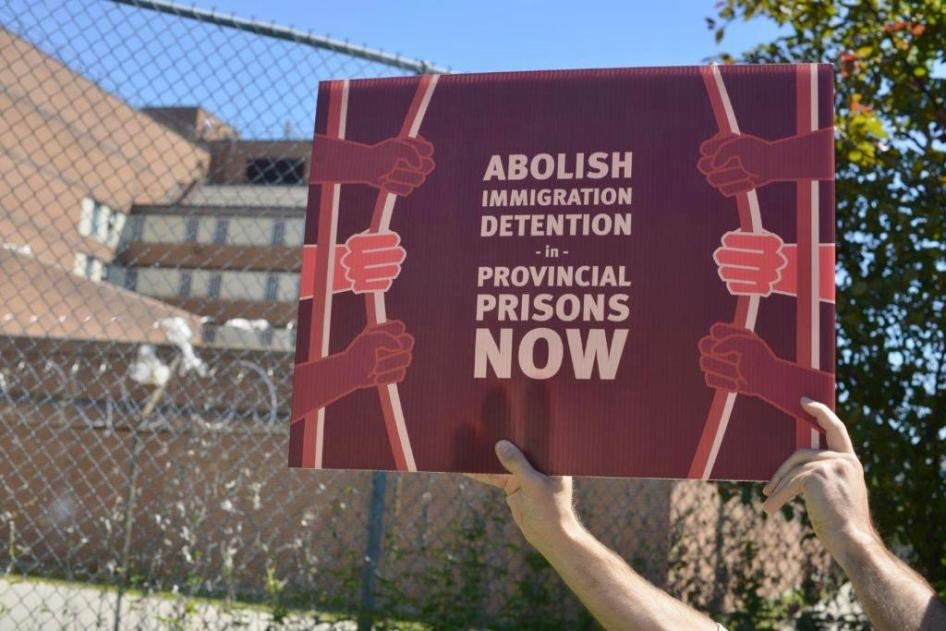
Oversight mechanisms, while present on paper, remain fragmented. Provincial jails sometimes host immigration detainees when dedicated centers are full, introducing a harsher environment. Accountability diffuses across agencies: border services, health providers, provincial corrections. That diffusion shields everyone and serves no one.
Headers built to include the main keyword
Canadian immigration detention as an avoidable policy choice
It is tempting to frame Warner’s ordeal as an aberration. It is not. Reports of children in detention have surfaced for years, pushing Canada’s global image into an uncomfortable light. Alternatives exist. Community-based case management programs in other countries demonstrate higher compliance at a fraction of the cost. The decision to detain is not a necessity; it is a policy preference.
Canadian immigration detention needs data, not platitudes
Transparency would expose patterns: who gets detained, for how long, and under what conditions. Today, the public sees sanitized averages and limited audit findings. Without granular data, it is impossible to design humane thresholds or measure whether new directives reduce harm. The absence of clear metrics keeps the status quo intact.
Why this matters beyond one family
A rights-forward democracy cannot claim moral authority abroad while practicing quiet carceral habits at home. Every high-profile detention case reverberates through communities deciding whether to seek asylum. Fear of a cold cell deters people from lawful entry and pushes them toward riskier channels. That undermines both humanitarian goals and border integrity.
Politically, the optics are corrosive. Canada positions itself as an alternative to hardline approaches elsewhere. Stories like Warner’s puncture that narrative, giving critics ammunition and allies pause. The longer the system leans on detention, the more it normalizes a practice that is out of step with the country’s self-image.
Pro tips for policymakers and advocates
- Codify detention as a true last resort: Require written exhaustion of community alternatives before any family detention order is signed.
- Mandate independent medical reviews: Clinicians should assess child welfare before and during custody, with authority to trigger immediate release.
- Publish quarterly transparency dashboards: Release disaggregated data on lengths of stay, ages, and facility types to inform public debate.
- Invest in community support: Fund housing, legal aid, and case management that keep families stable while claims proceed.
- Set hard caps on duration: No child should remain in detention beyond a short, judicially reviewable window.
Industry context: a global pivot on detention norms
Other nations are pulling back from family detention. Several European states have implemented reception models that prioritize community placement and rapid processing. These models reduce absconding rates by pairing migrants with legal counsel and social workers. Canada’s lag is not due to lack of options but lack of urgency.
Technology offers alternatives too. Case-tracking apps, scheduled check-ins, and digital document portals reduce the paperwork delays that often trigger detention. When combined with legal orientation programs, compliance improves without cages. The cost per case drops, and the reputational dividend is significant.
Why reforms stall
Institutional inertia is powerful. Agencies fear being blamed for rare absconding incidents, so they default to confinement. Political calculus favors caution over compassion, especially in charged border debates. Budget structures also play a role: funding streams earmarked for detention facilities incentivize their use. Without restructured appropriations, officials will keep filling the beds they are paid to maintain.
Public awareness is another barrier. Detention often happens out of sight, in remote facilities. Without sustained media attention, reform drops down the priority list. Warner’s case breaks through because it involves a child and a compelling advocate network. The risk is that once the headlines fade, policy snaps back to normal.
What better could look like
Imagine a system where a mother and child encounter a reception center, not a cell. They receive a clear timeline, a case manager, and immediate legal triage. Their identity documents are processed with digital tools rather than paper chains. If risk is assessed as low – as it often is for families – they are placed in community housing with regular check-ins. Detention becomes genuinely rare, reserved for cases where credible threats or repeated noncompliance make it unavoidable.
This model is not utopian. It is operational today in cities that piloted community case management. Compliance rates exceed 90 percent, costs are lower, and human outcomes are markedly better. Scaling such programs in Canada would align practice with principle.
The accountability reset
Reform requires teeth. Independent oversight bodies should have unannounced access to facilities, authority to publish findings, and power to compel corrective action. Complaint mechanisms must be accessible in multiple languages, with protections against retaliation. Families need avenues to challenge detention decisions quickly, with courts mandated to review within days, not weeks.
Metrics matter. Set targets to reduce average family detention stays to near zero and publicly report progress. Tie executive performance evaluations to these outcomes. Cultural change follows when leaders are measured and rewarded for reducing harm.
Voices from the ground
“Detention is a policy choice, not a border requirement,” says one frontline advocate. “When we fund community options, families show up. When we default to cells, we traumatize the people we claim to protect.”
Former detainees describe the toll in detail: children developing anxiety, parents losing sleep over missed court updates, and the constant fear of transfer to harsher facilities. Their testimonies are data points policymakers too often ignore. Centering these voices is key to designing humane systems.
Economic and reputational costs
Detention is expensive. Operating secured facilities, staffing them, and managing healthcare inside is costlier than community solutions. Every dollar spent on detention is a dollar not spent on faster adjudication or integration support. The reputational cost is harder to quantify but no less real. Canada risks eroding its soft power when its practices mirror the punitive models it critiques elsewhere.
Future implications
If Canada continues on its current path, expect more stories like Warner’s, more legal challenges, and growing skepticism among would-be newcomers. Conversely, a pivot to humane, data-driven alternatives could position Canada as a model for rights-respecting border management. The choice will signal whether the country’s values are marketing copy or operational mandate.
Closing stance
Tania Warner and her daughter are free, but freedom after unnecessary detention is not a win – it is a reminder of systemic failure. The moral calculus is simple: a country that prides itself on welcome cannot justify placing children in cells because paperwork lags. Canada has the tools to end family detention. The only missing ingredient is the political will to match its ideals with its procedures.
The information provided in this article is for general informational purposes only. While we strive for accuracy, we make no guarantees about the completeness or reliability of the content. Always verify important information through official or multiple sources before making decisions.