Cape Town Baboons Force a Reckoning
Cape Town Baboons Force a Reckoning
Cape Town baboons have turned a local wildlife management dispute into a test of what modern cities owe to the animals they have boxed in. The fight is not just about nuisance raids, broken windows, or frightened residents. It is about whether a fast-growing city can claim to value biodiversity while treating intelligent, adaptable primates as a problem to be removed. For residents on the peninsula, the stakes feel immediate: safety, property, food security, and daily stress. For conservationists, the danger is bigger: normalize removal today and you may erase one of the world’s most visible urban wildlife populations tomorrow. Cape Town is being forced to answer a question many cities are avoiding: when people and wild animals collide, who gets to stay?
- Cape Town baboons sit at the center of a heated debate over removal, relocation, and long-term coexistence.
- The conflict reflects deeper failures in urban planning, waste control, food access, and habitat protection.
- Removal may offer political speed, but it risks ecological, ethical, and reputational costs.
- Smarter coexistence will require funding, enforcement, community buy-in, and science-led management.
Why Cape Town Baboons Became a Citywide Flashpoint
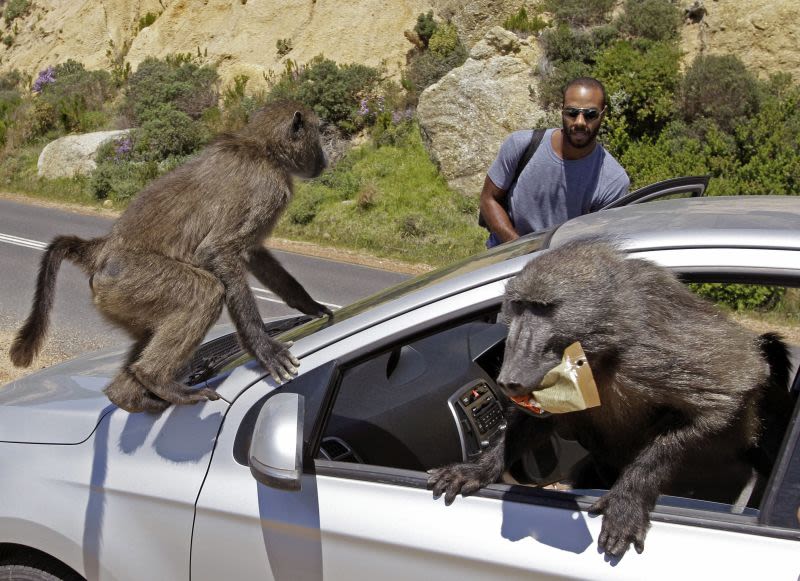
The baboons of the Cape Peninsula are not an abstract conservation issue. They are visible, clever, persistent, and often inconvenient. They move through suburbs, enter homes, raid bins, snatch food, and test every weak point in the human-built environment. That behavior is easy to frame as aggression, but it is also opportunism. Humans created a landscape where calories are abundant and access is often poorly controlled.
This is why the proposed removal of baboons has triggered such an emotional response. Residents who deal with raids are not inventing the stress. Living with a troop nearby can mean locking doors, monitoring children, replacing damaged property, and feeling as if the city has outsourced risk to households. But critics of removal argue that the animals are being punished for responding rationally to incentives humans created.
The uncomfortable truth is that baboons are not failing to adapt to the city. They may be adapting too well.
That is what makes the issue so difficult. A simple villain story does not work. The animals are not pests in the ordinary sense, and residents are not anti-nature for wanting safety. Cape Town is confronting a classic urban wildlife dilemma with unusually charismatic, intelligent animals at the center.
The Problem With Removing Cape Town Baboons
Removal sounds decisive. It gives officials a clean line to sell: fewer baboons in conflict zones, fewer raids, fewer angry calls. But wildlife policy rarely rewards blunt instruments. If the root causes remain – unsecured waste, easy food access, fragmented habitat, and inconsistent enforcement – removal can become a recurring cycle rather than a solution.
There are also biological limits. Baboons live in complex social groups. Disrupting troops can change dominance structures, increase stress, and trigger unpredictable movement. Relocation, where possible, is not as simple as moving a problem from one map coordinate to another. Suitable habitat must have food, water, low conflict risk, and ecological capacity. If those conditions are absent, relocation becomes a public relations maneuver dressed as conservation.
The ethical cost is not theoretical
Urban wildlife decisions often hide behind technical language such as population management, translocation, or conflict mitigation. Those terms matter, but they can also sanitize the moral stakes. If animals are removed because a city failed to secure bins, regulate feeding, or protect movement corridors, then policy is shifting the burden from human systems to animal bodies.
That is why the Cape Town debate has resonated beyond one peninsula. Cities everywhere are expanding into habitats once treated as separate from urban life. Monkeys, coyotes, boars, bears, elephants, and birds of prey are all being pulled into the same confrontation: wildlife is no longer outside the city. It is inside the operating system.
What Residents Are Right to Demand
Still, any serious critique of removal must acknowledge the lived reality of affected neighborhoods. It is easy to romanticize coexistence from a distance. It is harder when a baboon enters a kitchen, scares a child, or learns that one loose window latch equals a food reward. Residents have a legitimate claim to protection, and a city that asks people to coexist must provide tools that actually work.
That means more than pamphlets and moral appeals. It means baboon-proof waste systems, rapid-response ranger teams, consistent enforcement against feeding, and practical support for homes in high-conflict areas. It also means designing public spaces with wildlife pressure in mind. A loose bin in a baboon corridor is not a minor civic failure. It is an invitation.
Coexistence is not a vibe. It is infrastructure, staffing, enforcement, and money.
This is where many wildlife programs collapse. Officials celebrate coexistence as a value but underfund it as a service. Then, when conflict spikes, the same authorities declare coexistence unrealistic. That is not proof of failure. It is often proof that the strategy was never fully implemented.
How Cape Town Baboons Expose a Bigger Planning Failure
The Cape Peninsula is globally famous for natural beauty, but beauty can obscure pressure. Expensive homes, tourism, roads, and protected landscapes sit in close proximity. That creates a patchwork where baboons can move from wild areas into human zones quickly. The urban edge is not a wall. It is a porous boundary full of food, noise, pets, traffic, and conflict.
Modern wildlife management increasingly relies on tools such as GPS collars, geofencing, aversive conditioning, and data-driven ranger deployment. These tools can help, but they are not magic. A collar can show where a troop is moving. It cannot force a homeowner to secure food waste. A ranger can redirect animals. They cannot compensate for a city that permits attractants everywhere.
Pro tip for policymakers
Start with the attractant audit. Before debating removals, map the predictable food sources: open bins, restaurants, picnic areas, schools, tourist stops, compost heaps, fruiting trees, and informal feeding spots. If the city cannot control those, it is not managing baboons. It is managing symptoms.
The best urban wildlife programs treat human behavior as part of the ecosystem. That can be politically uncomfortable because it shifts scrutiny from animals to governance. But it is also where the leverage is. Baboons do not write waste contracts, approve developments, or design suburbs. People do.
The Science Case for Coexistence
Science does not say every animal must remain in every location at all costs. There may be cases where targeted intervention is necessary, especially when individual animals become dangerously habituated or when public safety risks escalate. But science does caution against broad, reactive measures that ignore ecology and behavior.
For Cape Town baboons, the smarter path is likely a layered approach: prevent access to human food, maintain trained field teams, protect habitat corridors where feasible, use data to anticipate troop movement, and reserve removal for clearly defined, independently reviewed cases. The goal should not be zero contact. In a shared landscape, that is fantasy. The goal should be reduced conflict, lower reward, and predictable response.
That also requires public honesty. If city leaders promise that removal will end the problem, they risk over-selling a fragile fix. If activists imply that all conflict can be solved with goodwill alone, they risk alienating residents who are already exhausted. A durable policy needs both compassion and operational discipline.
Why This Matters Beyond South Africa
The Cape Town dispute is a preview of a hotter, denser, more biologically entangled urban future. Climate stress, habitat fragmentation, and expanding cities will bring people and wildlife into more frequent contact. The question is whether governments respond with reactive removals or invest in coexistence as a core urban service.
There is also a reputational dimension. Cape Town sells itself partly through proximity to extraordinary nature. If that nature becomes acceptable only when it behaves politely and stays out of sight, the brand starts to look thin. The same city that benefits from wild landscapes must also carry the responsibility of living beside them.
A city cannot market biodiversity as an asset and treat inconvenient biodiversity as disposable.
That does not mean every baboon remains untouched. It means decisions should be transparent, evidence-led, proportionate, and honest about human responsibility. Removal should be the last page of the playbook, not the headline.
The Verdict on Cape Town Baboons
Cape Town is right to take resident safety seriously. It is wrong if removal becomes a substitute for the harder work of building a functioning coexistence system. The baboons are not merely intruders. They are indicators. They reveal weak waste policy, uneven enforcement, fragmented planning, and the limits of a city trying to sit between wilderness and urban expansion without fully paying the cost.
The most credible path is not sentimental or punitive. It is practical: reduce rewards, fund rangers, secure neighborhoods, protect habitat where possible, and use removal only under strict scientific and ethical review. Cape Town can still become a global model for urban primate coexistence. But that will require admitting the obvious first: the baboons did not create this conflict alone, and they should not be the only ones forced to move.
The information provided in this article is for general informational purposes only. While we strive for accuracy, we make no guarantees about the completeness or reliability of the content. Always verify important information through official or multiple sources before making decisions.