Ceasefire Deadline Puts Rafah On Edge

Ceasefire Deadline Puts Rafah On Edge
Rafah is staring at a ticking clock. The latest Gaza ceasefire plan promises a halt to bombardment, the return of hostages, and a path to reconstruction, but the window for agreement is closing while tanks idle at the edge of the enclave. Civilians have been pushed toward the crossing all year, only to find the gate sealed and the skies noisy. World leaders are pressing Israel and Hamas to accept the deal, yet both sides calculate leverage: Israel weighs its push into Rafah, Hamas bargains over prisoner releases, and mediators juggle regional red lines. The stakes are brutal: another ground assault could ignite a broader conflict while the ceasefire could reset diplomacy and aid flows.
- Rafah sits at the center of a proposed three-phase
Gaza ceasefire planthat swaps hostages for prisoners and pauses fighting. - Israel faces pressure to avoid a full Rafah offensive that could trigger famine warnings and diplomatic blowback.
- Hamas seeks guarantees on long-term reconstruction and security while testing how far mediators will push Israel.
- Regional actors from Egypt to the US fear a failed deal could widen the war and disrupt global energy routes.
Gaza Ceasefire Plan: What Is Really On The Table
Three Phases That Must Work In Sequence
The proposed Gaza ceasefire plan is structured in three linked phases: an initial halt to fire with hostage exchanges, a second stage that withdraws Israeli troops from dense urban pockets, and a third that launches long-term reconstruction. Each stage requires verification checkpoints to prevent backsliding. Negotiators reference UN Security Council Resolution 2728 as a legal anchor, but its language is intentionally elastic. That elasticity helps keep talks alive, yet it also invites divergent interpretations that could derail compliance. The plan’s success hinges on synchronized monitoring, likely a mix of satellite imagery, ground observers, and digital tracking of aid convoys to prove both sides are honoring commitments.
Why Israel Hesitates On Rafah
Israeli leadership argues that Hamas brigades still operate inside Rafah’s dense camps and along smuggling tunnels near the Egyptian border. Military planners say a final push is necessary to degrade command nodes and close the Philadelphi Corridor. Critics counter that urban warfare there could force over a million displaced people into a corner with nowhere safe to go. Domestic politics add friction: a hardline coalition resists concessions, while defense officials warn that an extended campaign risks international isolation and strains the Iron Dome supply chain if Hezbollah escalates from the north.
Hamas Calculus And Hostage Leverage
Hamas wants guarantees that a pause will evolve into a sustainable political settlement, not just a temporary lull before fighting resumes. Leaders seek sequencing that releases high-profile Palestinian prisoners early and ensures freedom of movement for officials during talks. The group also monitors public opinion across Gaza and the West Bank to avoid the optics of capitulation. By holding remaining hostages, Hamas attempts to balance concessions against its need for legitimacy and survival, aware that a misstep could fracture its internal command.
“Every hour without a deal deepens civilian peril and shrinks diplomatic options,” warned one regional envoy involved in the talks.
Rafah Offensive: Humanitarian Edge Of War
A City Built For 250,000 Now Hosts Over A Million
Rafah’s infrastructure is overwhelmed. The crossing built for controlled trade now hosts sprawling tent cities where sanitation, water, and electricity fail daily. Medical clinics ration fuel for generators and triage trauma cases that would normally require ICU-level care. Aid agencies push for a protected aid corridor from Al Arish through Rafah to Khan Younis, but convoys often stall amid inspections and security alerts. Any ground assault would complicate that pipeline, raising the risk of cholera, respiratory illness, and hunger in a population already scarred by displacement.
Egypt’s Red Lines And Border Anxiety
Egypt views a mass breach of the border as a strategic nightmare. Cairo has fortified its side with walls and sensors to prevent spillover while lobbying Washington and Brussels to pressure Israel away from a full-scale push. Egypt’s leverage is the Rafah gate itself: it can facilitate or throttle aid. An uncontrolled surge of civilians into Sinai would create a long-term refugee crisis and could attract militant cells exploiting chaos. That risk gives Egypt a decisive voice in sequencing any operation or pause.
Humanitarian Law And Accountability
Legal experts cite International Humanitarian Law requirements to protect civilians and critical infrastructure. Satellite imagery of flattened neighborhoods has already spurred calls for investigations by the International Criminal Court. Human rights groups argue that proportionality assessments must incorporate Rafah’s unusual density. Israel counters that Hamas embeds fighters in civilian zones, complicating target discrimination. Either way, any mishandled strike in Rafah could trigger broader legal and diplomatic consequences, including arms export reviews in Europe and North America.
Regional Domino Effects Of A Failed Deal
Hezbollah And The Northern Front
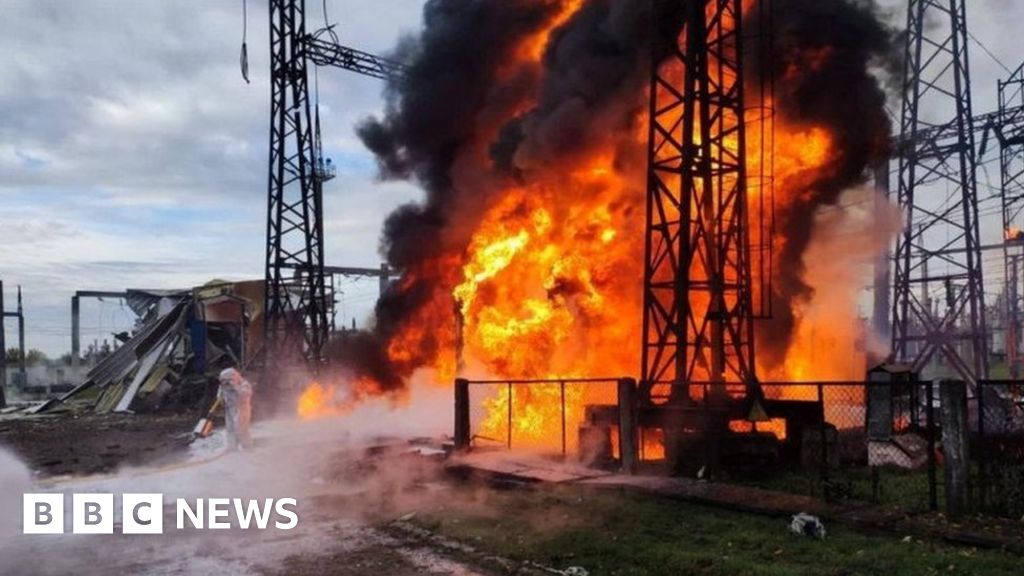
A collapse in Rafah talks could embolden Hezbollah to escalate along the Lebanese border. Analysts track daily rocket exchanges and the deployment of anti-tank ATGM systems that test Israeli air defenses. A simultaneous northern flare-up would stretch Israel’s logistics and could drag US naval assets deeper into deterrence operations. That scenario would also pressure European energy markets if maritime lanes in the Eastern Mediterranean become contested.
Red Sea Shipping And Global Prices
The Red Sea remains vulnerable to missile and drone harassment by militias sympathetic to Hamas. Any perception that Rafah is under siege can be exploited to justify attacks on commercial vessels. Insurance premiums for ships transiting the Bab el-Mandeb have already increased, pushing some carriers to reroute around the Cape of Good Hope, lengthening delivery times for energy, grain, and consumer goods. A prolonged disruption would ripple into inflation metrics just as central banks try to cool prices.
Diplomatic Credibility For Washington
The US framed the Gaza ceasefire plan as a test of its ability to manage partners and adversaries alike. Failure would erode American credibility in the Global South, where skepticism of US mediation is rising. It would also complicate election-year politics as images of Rafah circulate. Conversely, brokering a deal could reset relations with Arab states that paused normalization plans and provide a platform to relaunch discussions on a two-state pathway.
“If Rafah burns, the normalization track withers for years,” cautioned a Gulf official briefed on the talks.
Policy Playbook: What Leaders Should Do Now
Secure An Immediate Technical Pause
Mediators can propose a 72-hour technical pause to allow aid agencies to pre-position supplies, repair water networks, and set up additional field hospitals. Such a pause should include a verified withdrawal of heavy armor from designated humanitarian routes. Satellite data and open-source trackers can help confirm compliance, while a joint operations room in Cairo could coordinate convoy movements.
Guarantee Aid Access Through Clear Metrics
Any binding document should codify daily aid targets measured in truckloads, fuel liters, and medical evacuations. Publishing these figures creates transparency and accountability. A failure to meet metrics would trigger automatic consultations rather than unilateral escalations. Embedding observers from neutral states at the Kerem Shalom and Rafah gates would reduce disputes over inspections.
Lock In Reconstruction Financing
Gulf states and the EU could pledge conditional reconstruction funds released upon verified demilitarization benchmarks. This linkage incentivizes both Israel and Hamas to maintain calm. Funding should prioritize resilient infrastructure: underground water lines, microgrids, and modular housing that can be rapidly deployed. A monitored escrow mechanism would reassure donors that money does not fuel future conflict.
Plan For Governance And Security
The absence of a credible governance plan remains a glaring gap. Options include empowering a technocratic Palestinian authority contingent on anti-corruption audits and vetted security forces trained by multinational advisers. Any plan must define rules on border management, tax collection, and movement permits to avoid a power vacuum that could be exploited by rival factions.
Scenarios: After The Rafah Decision
If The Ceasefire Holds
A sustained pause would allow humanitarian corridors to stabilize, give hostages a path home, and open space for political talks on a transitional governance model. Israel could reposition troops, reducing casualty risks, while Hamas would face internal pressure to pivot from armed resistance to political survival. Regional capitals would likely revive investment and normalization discussions, though with stricter conditionality than before.
If Negotiations Collapse
A failed deal would likely trigger a high-intensity Rafah assault, mass displacement toward the Egyptian border, and renewed rocket fire from multiple fronts. Aid pipelines could fracture, pushing famine warnings into reality. Diplomatic fallout would accelerate calls for arms embargoes, and energy markets could react to perceived instability across the Eastern Mediterranean and Red Sea. The humanitarian cost would be severe and could shape regional politics for a generation.
The Rafah clock keeps ticking. Accepting the Gaza ceasefire plan would not solve every political argument, but it could prevent a devastating urban battle and open a corridor to longer-term security arrangements. Rejecting it risks a humanitarian catastrophe with strategic costs that would echo far beyond Gaza’s southern edge.
The information provided in this article is for general informational purposes only. While we strive for accuracy, we make no guarantees about the completeness or reliability of the content. Always verify important information through official or multiple sources before making decisions.