Ceuta Border Crisis Reshapes Europe

Ceuta Border Crisis Reshapes Europe
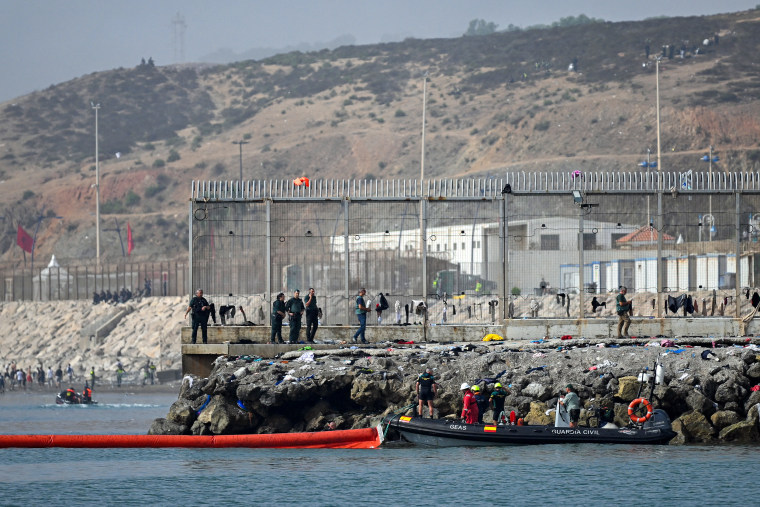
Ceuta has become a stress test for Europe’s border strategy, and the pressure is not easing. As migration routes shift, enforcement tightens, and political rhetoric hardens, this tiny Spanish enclave on the North African coast is once again revealing a bigger truth: border policy is no longer just a domestic issue. It is a diplomatic flashpoint, a technology problem, and a humanitarian emergency all at once. For governments in Madrid, Rabat, and Brussels, the stakes are immediate. For everyone else, Ceuta is a warning that migration management in 2026 is being shaped by surveillance tools, bilateral bargaining, and the limits of deterrence. The result is a system that can look controlled from a distance while remaining fragile on the ground.
- Ceuta is a frontline indicator of wider migration and security tensions between Europe and North Africa.
- Border enforcement is increasingly tied to diplomacy, not just patrols and fences.
- Technology may improve monitoring, but it cannot solve the political roots of migration pressure.
- The humanitarian cost remains high whenever deterrence becomes the dominant strategy.
- What happens in Ceuta can influence policy far beyond this small enclave.
Why Ceuta matters now
Ceuta is not just another border crossing. It is a geopolitical pressure valve where migration, sovereignty, and international bargaining collide. Because the enclave is Spanish territory on the African continent, it sits at the intersection of European Union border policy and Moroccan cooperation. That makes every surge in arrivals more than a local incident. It becomes a test of whether two neighboring governments can coordinate under strain without turning migration into a larger political confrontation.
The reason this story keeps resurfacing is simple: the incentives on each side rarely align for long. Spain wants predictability. Morocco wants leverage and stability. The EU wants to reduce irregular crossings without looking indifferent to human suffering. Migrants, meanwhile, respond to opportunity, rumor, and the reality that border regimes are never perfectly sealed. When one route closes, another opens.
Ceuta is where Europe’s hard line on migration meets the messy truth that deterrence rarely ends movement. It usually redirects it.
The Ceuta border crisis and the politics of pressure
The Ceuta border crisis has become a shorthand for a broader European dilemma: how to manage migration without normalizing emergency politics. Governments often frame these episodes as isolated surges, but the pattern is more structural than that. Economic inequality, regional instability, and climate stress continue to push people toward Europe. At the same time, Europe’s aging labor force and political fragmentation complicate any honest conversation about what migration policy should actually achieve.
That tension is especially visible in border enclaves like Ceuta. They are small enough to be defended, but symbolic enough that any breach resonates nationally. A single crossing can dominate headlines, shape parliamentary debate, and harden public opinion. The result is a policy cycle driven by optics as much as outcomes.
Why deterrence only goes so far
Deterrence works best when people have few alternatives. But migration is rarely so simple. When one route becomes dangerous or politically toxic, people often attempt more complicated paths, rely on smugglers, or wait for the next opening. In practice, stronger fences, more patrols, and faster expulsions may reduce visible arrivals in the short term while increasing risk elsewhere.
This is where the Ceuta border crisis becomes a useful case study. It shows how enforcement can suppress symptoms without resolving causes. The challenge for policymakers is that a truly durable solution requires more than security. It requires labor policy, development strategy, asylum coordination, and serious diplomacy. That is a much harder sale politically.
Technology is changing the border, but not the problem
Border management in 2026 looks increasingly digital. Thermal cameras, drones, biometric systems, and integrated monitoring platforms promise faster detection and better coordination. For governments under pressure, that sounds like progress. In reality, it is more complicated. Technology can make a border more visible, but visibility is not the same as control.
For one thing, surveillance systems are only as effective as the decision-making behind them. If authorities lack the political backing to process arrivals humanely or to negotiate stable migration channels, then better data simply means faster awareness of a problem they still cannot solve. The temptation is to treat technology as a substitute for policy. That rarely ends well.
There is also a governance issue. More sensors and more data often mean more questions about privacy, accountability, and the outsourcing of enforcement. When border systems become too opaque, the public gets security theater instead of transparency. And when automated tools are layered onto already tense migration settings, mistakes can have immediate human consequences.
Tech can tighten the perimeter, but it cannot manufacture legitimacy. Borders fail politically long before they fail technically.
What smarter border systems can actually do
That does not mean technology has no role. Properly used, it can improve rescue coordination, reduce response times, and help authorities distinguish between routine movement and genuine emergencies. But those gains depend on clear policy goals. A camera system designed to detect crossings is not the same as a system designed to save lives or process asylum claims fairly.
- Detection: Spot movement earlier and reduce blind spots along difficult terrain.
- Coordination: Improve handoffs between police, coast guards, and emergency responders.
- Documentation: Create records that can support oversight and accountability.
- Limits: Avoid treating automation as a replacement for legal process or diplomacy.
The Morocco Spain equation
Any analysis of Ceuta has to account for Morocco’s central role. The border does not function in a vacuum. It is shaped by bilateral ties, trade, security cooperation, and political signaling. That means migration is never just about migration. It can become a bargaining chip in wider negotiations around investment, recognition, or regional stability.
For Spain, maintaining workable relations with Morocco is essential. For Morocco, cooperation can bring economic and diplomatic benefits. But the relationship is inherently asymmetrical and therefore fragile. Whenever tensions rise, migration pressure can become an instrument of leverage, even if no side admits it openly.
This makes the Ceuta border crisis especially hard to solve through unilateral action. Spain can reinforce the perimeter, but it cannot fully control upstream dynamics. Morocco can help manage departures, but it cannot eliminate the forces that push people toward the coast. Both governments know the same thing: a border is only as stable as the relationship behind it.
Why this matters for Europe
Ceuta is small, but the political lessons are large. Europe has spent years trying to balance border security with human rights, deterrence with legal pathways, and national control with shared responsibility. That balance is getting harder to maintain. As migration becomes more entwined with climate stress, conflict spillovers, and regional inequality, border episodes like Ceuta will keep exposing how uneven Europe’s response still is.
The bigger issue is political credibility. If governments appear unable to manage border pressure, populists gain ammunition. If they lean too hard into force, humanitarian groups and courts push back. If they rely too much on partner states, they risk outsourcing responsibility to actors with different priorities. Ceuta sits in the middle of all those contradictions.
For the EU, the lesson is uncomfortable but clear: migration policy cannot be reduced to fence height or patrol budgets. It needs lawful pathways, faster asylum administration, smarter coordination, and a diplomatic framework that does not treat neighboring states as temporary fixes.
The future of the Ceuta border crisis
Looking ahead, the pattern is likely to continue unless the political logic changes. That means more investment in surveillance, more pressure on transit countries, and more public debate over whether Europe is building a coherent system or just reacting to the next emergency. The Ceuta border crisis is not a one-off headline. It is part of a recurring architecture of pressure that will keep returning until policymakers confront the mismatch between rhetoric and reality.
There is also a broader strategic implication. As migration routes evolve, border enclaves will become even more important as early-warning indicators. What happens in Ceuta can foreshadow developments elsewhere on Europe’s southern frontier. That makes it a local story with continental significance.
The hard truth is that no amount of technology or policing can fully erase mobility across a region shaped by inequality and proximity. The best systems do not pretend they can. They manage risk, preserve dignity, and keep diplomacy alive. That is a much less dramatic promise than total control, but it is the only one that has a chance of lasting.
Bottom line: Ceuta is not just a border problem. It is a mirror reflecting Europe’s unfinished migration strategy, and the image is getting harder to ignore.
The information provided in this article is for general informational purposes only. While we strive for accuracy, we make no guarantees about the completeness or reliability of the content. Always verify important information through official or multiple sources before making decisions.