Nationalism 3.0 Is Reshaping Power
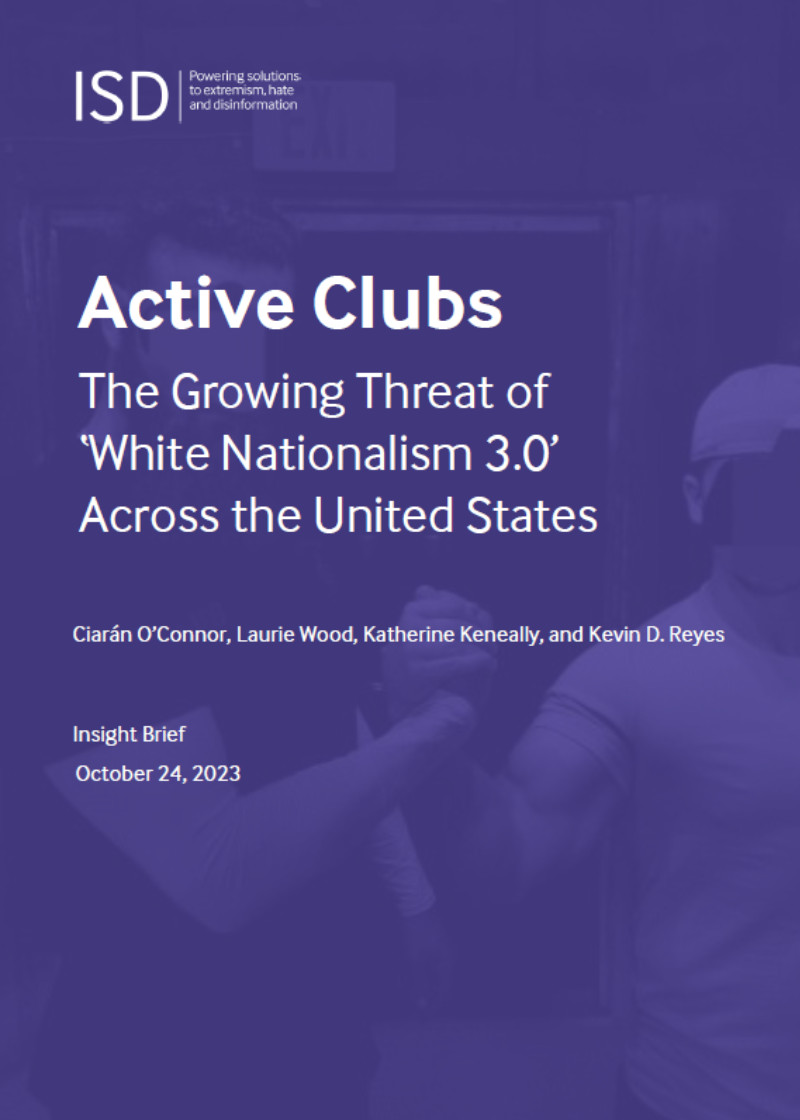
Nationalism 3.0 Is Reshaping Power
Nationalism is no longer just about flags, borders, and old-school rallies. It has evolved into a faster, more polished, and more networked force that is now shaping elections, media ecosystems, platform behavior, and the way governments talk about sovereignty. That shift matters because the new form of nationalism – often amplified online and packaged as cultural urgency – can redraw the rules of politics before institutions fully recognize what is happening. For readers trying to understand why public debate feels more brittle, why identity is being weaponized, and why digital platforms keep becoming political battlegrounds, nationalism 3.0 is the story underneath the noise.
- Nationalism has moved from street politics to always-on digital influence.
- Platforms now accelerate identity politics, not just reflect it.
- Governments are using nationalist language to consolidate power and control narratives.
- The next wave of nationalism is less ideological purity and more algorithmic packaging.
- Understanding this shift helps explain election strategy, media polarization, and policy drift.
Why nationalism 3.0 matters now
The old model of nationalism was easy to spot: flags, speeches, territorial claims, and a familiar us-versus-them script. The new model is more adaptive. It travels through short-form video, influencer politics, memetic language, and emotional framing that can be deployed in seconds. That makes it harder to challenge, because it rarely looks like a formal doctrine. Instead, it behaves like a content strategy.
This is why the term nationalism 3.0 is useful. It captures a political style that is built for the attention economy. It is designed to trigger instinct before analysis. It turns cultural anxiety into a political product, and political loyalty into something that feels personal, immediate, and socially reinforced.
Nationalism 3.0 is not just ideology. It is a distribution system for identity, grievance, and power.
How nationalism 3.0 changed the playbook
Traditional nationalism relied on institutions: parties, newspapers, rallies, speeches, and state media. Today, those channels still matter, but they are no longer sufficient. The digital layer has changed everything. Political messaging can now be micro-targeted, optimized, and reframed in real time based on audience response.
That means nationalist messaging can be sharpened for different groups without appearing inconsistent. One audience gets economic protectionism. Another gets cultural preservation. Another gets a warning that outsiders, elites, or global institutions are threatening national survival. The packaging changes, but the emotional payload stays the same.
The algorithmic edge
Algorithms reward content that provokes strong reactions. Nationalist narratives often do exactly that. They simplify complexity, assign blame, and create clear in-groups and out-groups. On social platforms, those traits are not bugs. They are growth mechanics.
That creates a feedback loop. The more a nationalist message spikes engagement, the more visibility it receives. The more visibility it receives, the more it can define the terms of public debate. Over time, the movement does not just win arguments. It reshapes the environment where arguments happen.
Nationalism 3.0 and the politics of belonging
At its core, nationalism is about belonging. The 3.0 version intensifies that instinct by making belonging feel threatened, urgent, and constantly under negotiation. That is politically powerful because people do not just vote with policy preferences. They vote with identity, fear, memory, and status.
This is where modern nationalist politics becomes especially effective. It can present itself as defense rather than aggression. It can frame exclusion as protection. It can describe limits on dissent as necessary stability. And because it often speaks in the language of culture instead of raw ideology, it can travel across different social classes and media ecosystems.
The smartest nationalist movements do not always promise greatness. They promise restoration.
Restoration is a stronger pitch than revolution
Restoration sounds safer. It implies that something valuable existed before and can be recovered. That is a potent political message because it lets leaders argue that they are not changing society, only repairing it. In practice, that can justify broad changes in law, education, migration policy, media regulation, and civic life.
The result is a paradox: a movement that claims to be preserving the nation can end up fundamentally altering what the nation means.
Why this matters for media and technology
Modern nationalism is inseparable from technology. News clips circulate as fragments. Commentary gets compressed into slogans. Political identity is reinforced through repetition and reaction. For media companies, this creates a hard problem: nationalist content often performs well, but it can also inflame tensions, distort coverage priorities, and drag editorial judgment toward spectacle.
For platforms, the challenge is even sharper. They are not neutral pipes. Their recommendation systems can elevate patriotic messaging, conspiracy-adjacent content, or anti-establishment narratives because those themes drive retention. That means the architecture of attention can quietly favor nationalist escalation.
For governments, the temptation is obvious. If nationalist language performs, use it. But that can create a ratchet effect. Once political legitimacy is tied to identity-based mobilization, compromise starts to look like betrayal.
The tech stack of political identity
- Recommendation systems amplify emotionally charged content.
- Microtargeting lets campaigns tailor nationalist messages by demographic and region.
- Encrypted channels and closed communities can intensify echo chambers.
- Generative tools make it easier to flood the feed with synthetic propaganda and persuasive visuals.
These tools do not create nationalism, but they supercharge it. That is why the phrase nationalism 3.0 is not just political shorthand. It is a description of a media environment where identity can be engineered at scale.
What experts and strategists should watch next
There are a few signals that nationalism 3.0 is deepening rather than fading. One is the normalization of emergency language. If leaders keep describing routine policy disputes as existential threats, that is a warning sign. Another is the rise of culture-first governance, where education, speech, migration, and public history become the main arenas of political conflict.
Watch, too, for coalition shifts. Nationalism 3.0 often works best when it borrows from multiple ideological camps. It can merge economic frustration, anti-elite resentment, social conservatism, and digital creator culture into one broad coalition. That flexibility makes it resilient.
When nationalism stops sounding like a doctrine and starts sounding like common sense, it becomes much harder to oppose.
Pro tips for reading the new nationalism
If you want to spot the difference between ordinary patriotic rhetoric and the more aggressive architecture of nationalism 3.0, focus on patterns rather than slogans.
- Look for repeated claims that the nation is under constant emergency.
- Notice when cultural disagreements are reframed as security threats.
- Watch for political messaging that treats dissent as disloyalty.
- Pay attention when social platforms amplify grievance faster than policy debate.
- Track whether leaders use restoration language to justify institutional control.
These cues matter because nationalism 3.0 rarely announces itself. It builds momentum by becoming the default frame through which every issue is interpreted.
The future implications are bigger than politics
The long-term risk is not just more polarized elections. It is a shift in how societies define legitimacy. If national identity becomes the primary lens for deciding who belongs, who speaks, and who gets protected, then every institution has to justify itself in cultural terms. Courts, universities, media outlets, civil servants, and even private companies can become targets.
That has economic consequences too. Foreign investment gets harder when policy becomes unpredictable. Talent mobility suffers when societies signal hostility to outsiders. Innovation slows when fear makes institutions more defensive than experimental. In that sense, nationalism 3.0 is not only a political phenomenon. It is a governance problem and a competitiveness problem.
The irony is that this style of politics often claims to strengthen the nation while quietly weakening the systems that make national power durable: trust, openness, institutional competence, and long-term planning.
The bottom line
Nationalism 3.0 is not a throwback. It is a modern political operating system built for fragmented media, anxious publics, and leaders who know that identity can be more mobilizing than policy. That makes it powerful, adaptable, and dangerous in equal measure.
The challenge for voters, journalists, and policymakers is to stop treating it like a mood and start treating it like a strategy. Because once nationalism becomes a content engine, it does not just reflect public sentiment. It manufactures it.
The information provided in this article is for general informational purposes only. While we strive for accuracy, we make no guarantees about the completeness or reliability of the content. Always verify important information through official or multiple sources before making decisions.