Ceuta Border Crossing Exposes Europe’s New Fault Line
Ceuta Border Crossing Exposes Europe’s New Fault Line
The Ceuta border crossing is no longer just a checkpoint on a map. It is a pressure valve for Europe’s migration politics, a stage for Spain and Morocco’s uneasy diplomacy, and a test of whether the EU can defend its borders without turning them into permanent crisis zones. The stakes are bigger than one enclave on the North African coast. Every delay, every tightening, every surge of arrivals ripples outward into domestic politics, border tech procurement, asylum policy, and the broader question of how much friction Europe can absorb before the system starts to crack.
- Ceuta is a border problem, but also a diplomatic one.
- Security tech and physical barriers are only part of the story.
- Migration pressure keeps exposing the limits of European coordination.
- What happens at this crossing could shape future EU border policy.
Why the Ceuta border crossing matters now
At first glance, the Ceuta border crossing looks like a local matter: a narrow passage between Spain’s North African enclave and Morocco. But that framing misses the point. Ceuta is where multiple systems collide at once: migration flows, labor dynamics, Spanish sovereignty, Moroccan leverage, and the EU’s obsession with keeping movement controlled without admitting how fragile that control really is.
This is why Ceuta keeps reappearing in Europe’s headlines. It is not simply a border. It is a stress test. When pressure rises here, the consequences are rarely isolated. They affect policing, asylum processing, trade logistics, and the political temperature in Madrid and Brussels. They also shape how other governments think about borders as a technology problem rather than a governance problem.
Ceuta is what happens when border policy becomes a permanent emergency response instead of a durable strategy.
The border is physical, political, and digital
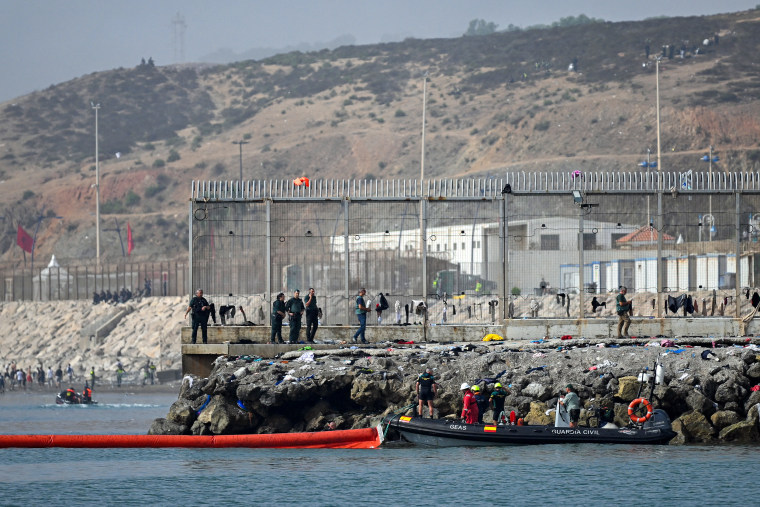
Modern border management is sold as a mix of walls, cameras, biometric systems, and faster coordination. But Ceuta shows the gap between the promise and the reality. Yes, the border crossing depends on fencing, surveillance, and checkpoint infrastructure. Yet the real contest is about who controls movement, who gets processed, and who can influence the pace of crossings.
That makes the Ceuta border crossing a hybrid space. It is physical infrastructure layered with digital monitoring, administrative bottlenecks, and political bargaining. Governments increasingly treat border technology as a substitute for policy. That is a mistake. Sensors can detect movement. They cannot resolve the underlying drivers of migration or the diplomatic tensions that shape enforcement.
What border tech can actually do
Border systems can:
- Identify patterns in movement and crowding.
- Support faster screening at checkpoints.
- Improve situational awareness for authorities.
- Document events for operational review.
But border systems cannot:
- Replace asylum policy.
- Prevent geopolitical pressure from being used as leverage.
- Resolve labor demand or economic pull factors.
- Eliminate humanitarian risk when people are already on the move.
Ceuta border crossing and the politics of leverage
Ceuta’s significance has always extended beyond the enclave itself. Spain controls the territory, but Morocco surrounds it, and that geography creates permanent strategic tension. Any crossing point here is not just about entry and exit. It can become a bargaining chip in a wider political relationship.
That dynamic matters because border pressure is rarely random. It is shaped by enforcement choices, diplomatic cooling or warming, and the willingness of one side to tolerate disruption as a means of signaling displeasure. For policymakers, this is the uncomfortable truth: border management is often entangled with statecraft.
The result is a recurring cycle. The border gets tightened, flows shift, pressure builds elsewhere, and politicians announce that the system is under control. Then reality reasserts itself. This is one reason the Ceuta border crossing remains so politically combustible. It is a place where sovereignty is performed under constant strain.
Why Europe keeps getting border strategy wrong
Europe often talks about borders as if they can be solved through more hardware and tougher rhetoric. But the evidence from Ceuta suggests otherwise. The continent’s border strategy has three recurring weaknesses: it is reactive, fragmented, and too dependent on crisis framing.
Reactive policy means governments move fast after a surge and slow down once the cameras leave. Fragmented policy means Spain, Morocco, and the EU do not always operate from the same incentive structure. Crisis framing means the border is discussed as an emergency even when the underlying dynamics are long-term and predictable.
That is bad governance. It also produces bad technology buying decisions. When a border is treated like a perpetual emergency, officials often overinvest in visible tools and underinvest in coordination, processing capacity, and legal clarity. The result is a system that looks firm but behaves brittle.
Border tech is useful. Border theater is expensive. Ceuta keeps reminding Europe how often the two get confused.
The hidden operational bottleneck
The real choke point is often not the fence or the camera. It is the administrative machinery behind them. If screening is slow, if appeals drag, if local authorities are overwhelmed, and if coordination is poor, even a heavily fortified border becomes vulnerable to overload.
This is where the Ceuta border crossing becomes instructive. It shows that resilience depends less on spectacle and more on boring capacity: staffing, legal process, data sharing, and contingency planning. That is not a glamorous answer, but it is the one that works.
What this means for migration policy
Ceuta is a reminder that migration policy cannot be reduced to deterrence. People move for complex reasons: conflict, economics, family ties, and perceived opportunity. When borders harden, movement does not always stop. It reroutes, delays, or becomes more dangerous.
That is why the Ceuta border crossing should be read as part of a broader policy failure. If governments focus only on stopping arrivals, they often miss the need for managed pathways, regional agreements, and faster processing systems. The end result is more tension, not less.
For policymakers, the lesson is clear:
- Deterrence alone is unstable.
- Processing capacity matters as much as enforcement.
- Diplomacy and border management are inseparable.
- Humanitarian planning is not optional.
Pro tips for understanding border crises like Ceuta
If you want to read border stories more accurately, look past the headline-grabbing visuals and ask three questions.
- Who controls the flow? Borders are often shaped by neighboring states as much as by the country on the receiving side.
- Where is the bottleneck? It may be at the checkpoint, in the asylum system, or in diplomatic coordination.
- What is the long game? The immediate surge matters, but the lasting issue is whether institutions can absorb repeated pressure.
Applied to Ceuta, these questions reveal why the crossing remains so difficult to stabilize. The issue is not a single failure. It is a system under cumulative stress.
The future of the Ceuta border crossing
The most likely future for Ceuta is not closure, but recurring friction. That is how many border hotspots evolve: not into neatly solved problems, but into managed instability. Authorities improve some controls, adapt to one kind of pressure, then face another. Migratory routes shift. Politics changes. Technology gets upgraded. The tension remains.
That should worry Europe. Because Ceuta is a preview of the border politics the continent may see more often: tighter control, more digital monitoring, more diplomatic bargaining, and less confidence that any single intervention will hold for long.
If Europe wants a more durable answer, it will need to stop treating border management as a narrow security question. It is also a labor question, an asylum question, a foreign policy question, and a legitimacy question. The Ceuta border crossing makes that brutally clear.
Why this matters beyond Spain and Morocco
Ceuta matters because it exposes a broader truth about modern borders. They are no longer just lines on a map. They are infrastructure, data systems, political symbols, and pressure points all at once. That makes them expensive to maintain and easy to politicize.
For the EU, the lesson is especially stark. The bloc cannot outsource the hard parts of border governance to optics, automation, or one-off deals. If it does, the same instability will keep returning under different names. Ceuta is not an anomaly. It is a warning.
And warnings, if ignored long enough, become the operating environment.
Main takeaway: the Ceuta border crossing is less a local crossing than a concentrated example of Europe’s border dilemma – security, sovereignty, diplomacy, and migration all colliding in one place.
The information provided in this article is for general informational purposes only. While we strive for accuracy, we make no guarantees about the completeness or reliability of the content. Always verify important information through official or multiple sources before making decisions.