China Beef Imports Squeeze Tariffs and Shake Markets
China Beef Imports Squeeze Tariffs and Shake Markets
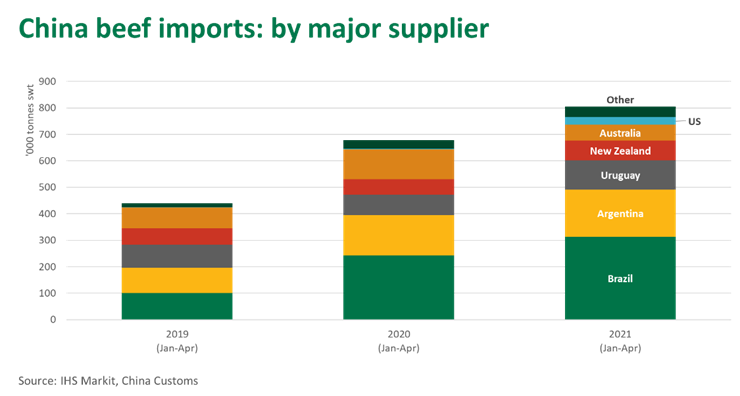
China’s beef import policy is no longer a niche trade dispute. It is now a pressure test for global food markets, exporter margins, and the credibility of tariff-era economics. When a country of more than a billion consumers tightens access to one of the world’s most politically sensitive proteins, the effects ripple fast: ranchers feel it, traders price it, and policymakers scramble to explain it. For U.S. producers and rivals from South America and Australia, the combination of china beef imports controls and tariff pressure is not just another headline. It is a signal that the next phase of food trade will be more fragmented, more strategic, and far less predictable than the old open-market playbook.
- China’s beef import squeeze is reshaping global meat trade routes and price expectations.
- Tariffs and import controls are changing who can profit from supplying the Chinese market.
- Exporters face a higher-risk, lower-margin environment with more policy uncertainty.
- Consumers may eventually see higher prices or tighter product selection across markets.
- The story is less about beef alone and more about the future of trade leverage in food systems.
Why china beef imports matters now
At first glance, beef is just another commodity. But that’s the wrong lens. Beef sits at the intersection of food security, domestic politics, inflation, and trade diplomacy. China is one of the world’s biggest import destinations for beef, which gives it unusual leverage over suppliers that have spent years building capacity around its demand. When Beijing moves to restrict, slow, or recalibrate imports, the consequences travel far beyond the docks and customs checkpoints. The shift can alter livestock prices in the United States, inventory planning in Australia, freight patterns in Latin America, and even restaurant menu strategy in Asia.
The stakes are especially high because beef is not easy to reroute. Unlike grains, which can often move in bulk across multiple buyers, higher-value beef cuts depend on specific quality standards, cold-chain logistics, and buyer relationships that take years to build. That makes tariff pressure and import restrictions a blunt but powerful tool. Once that tool is in use, everyone from ranchers to supermarket buyers has to rethink assumptions.
China’s beef policy is less about one meat market and more about who gets to define the terms of global trade.
How tariffs and import controls changed the playing field
Tariffs are often described as taxes on imports, but their real effect is broader. They can reprice an entire supply chain, reward some producers, and punish others without changing a single herd or shipment route overnight. In the case of china beef imports, the combination of tariffs and tighter import oversight effectively raises the cost of doing business for foreign suppliers while giving Chinese buyers and regulators more room to steer demand.
For exporters, that means three immediate headaches:
- Lower price competitiveness versus domestic or tariff-favored suppliers.
- Longer lead times as compliance and inspection requirements increase.
- Greater exposure to political decisions that can change faster than commercial contracts.
For China, the strategy can serve multiple goals at once. It can support domestic producers, cool import growth, and create negotiating leverage in unrelated trade talks. That is the core reason tariff policy persists even when economists argue it adds friction. Tariffs are not always designed for efficiency. Sometimes they are designed for leverage.
The supply chain ripple effect
Beef supply chains are already fragile because they depend on biology, weather, feed costs, labor, and transport. Add tariff uncertainty and the system becomes even harder to plan. A rancher in Texas, a processor in Brazil, and a shipping coordinator in New Zealand may all be reacting to the same policy shift, but each faces a different bottleneck. The result is a market that can look stable on paper while becoming volatile underneath.
Exporters must absorb more risk
When access to China becomes less predictable, exporters can no longer assume volume will scale neatly. That forces companies to diversify destination markets, lock in hedging strategies, or invest in product differentiation. Premium brands may try to survive on quality and traceability. Bulk suppliers may be forced to accept thinner margins or pivot to alternative buyers.
That is easier said than done. Building new trade relationships takes time, and the best alternative buyers are often already tied up in long-term sourcing relationships of their own. In other words, there is no instant substitute for a market as large and influential as China.
Domestic markets feel the shock too
When exports slow, some supply may return to domestic channels, which can temporarily pressure local prices. But that does not mean shoppers automatically win. If input costs, labor shortages, and transportation costs remain high, retail prices can still stay sticky. The system is too interconnected for one policy change to produce a simple consumer win. Instead, the effect often lands as instability: cheaper wholesale in one quarter, more expensive retail in the next.
What businesses should watch next in china beef imports
For food companies, traders, and investors, the biggest mistake is assuming this is a one-off event. It is more useful to treat china beef imports as a template for how future trade disputes may unfold: gradual tightening, selective enforcement, and strategic ambiguity. That pattern keeps suppliers guessing and gives policymakers room to adjust without announcing a full ban.
Businesses should watch a few signals closely:
- Inspection changes: more frequent checks often precede slower clearance and higher costs.
- Quota or licensing shifts: these can quietly reshape which suppliers retain access.
- Price spreads: widening gaps between export and domestic prices often reveal stress before headlines do.
- Trade diversification moves: exporters shifting toward Southeast Asia, the Middle East, or Europe may be bracing for prolonged uncertainty.
Pro tip: companies with heavy China exposure should stress-test revenue assumptions under multiple trade scenarios, not just a “status quo” case. The policy environment has already shown it can move faster than procurement cycles.
Why the beef fight is bigger than beef
The deeper story is about control. Food trade has become a strategic asset, and large importers are increasingly willing to use market access as a bargaining chip. That is not unique to China, but China’s scale makes the impact unusually visible. When a market that large shifts direction, it can encourage other countries to rethink their own dependence on single-destination exports.
This is why the current squeeze matters beyond agricultural economics. It reinforces a trend toward fragmented global trade, where supply chains are less optimized for efficiency and more optimized for resilience, diplomacy, and political insulation. That means higher costs in some places, slower growth in others, and more redundancy built into systems that used to prize just-in-time movement above all else.
For exporters, the new rule is simple: access is an asset, and policy can reprice it overnight.
What this could mean for prices and consumers
Consumers rarely connect trade policy to what they pay at the grocery store, but the link is real. If import flows tighten, processors may face higher sourcing costs or narrower options. Over time, that can feed into retail pricing, especially for premium cuts. Even if the impact is not immediate, the market tends to reprice expectations well before shelves change.
There is also a second-order effect. If exporters lose access to a major market, they may chase volume elsewhere, sometimes driving aggressive competition in alternative regions. That can create temporary discounts in one country and inflation in another. Global food markets are increasingly a game of displacement, not stability.
How companies can adapt
There is no perfect defense against trade uncertainty, but businesses can lower the odds of getting caught flat-footed. The most resilient operators will likely do five things well:
- Broaden export destinations so one market does not dominate revenue.
- Use contracts with flexible pricing and shipment terms.
- Invest in traceability and compliance to reduce clearance friction.
- Build inventory buffers for critical product categories.
- Track policy signals as closely as freight and weather data.
Best practice: treat policy intelligence like operational intelligence. If a company only reacts after tariffs hit, it is already behind.
The bigger trade lesson
china beef imports is not just a story about a single protein or a single country. It is a warning about the future of global commerce. Trade is becoming more conditional, more politicized, and more vulnerable to strategic bargaining. That does not mean international markets are collapsing. It means the old assumption that demand will always flow smoothly toward the cheapest supplier is being replaced by a more complex reality: demand now follows policy, politics, and power.
For investors, that means commodities deserve more geopolitical attention. For businesses, it means diversification is no longer optional. And for governments, it means food policy is now foreign policy by another name. The next major trade shock may not begin with a tariff fight over steel or chips. It could start with dinner.
That is why the pressure on China’s beef imports matters so much. It is a small window into a much larger transformation: a world where access, not just supply, determines who wins.
The information provided in this article is for general informational purposes only. While we strive for accuracy, we make no guarantees about the completeness or reliability of the content. Always verify important information through official or multiple sources before making decisions.