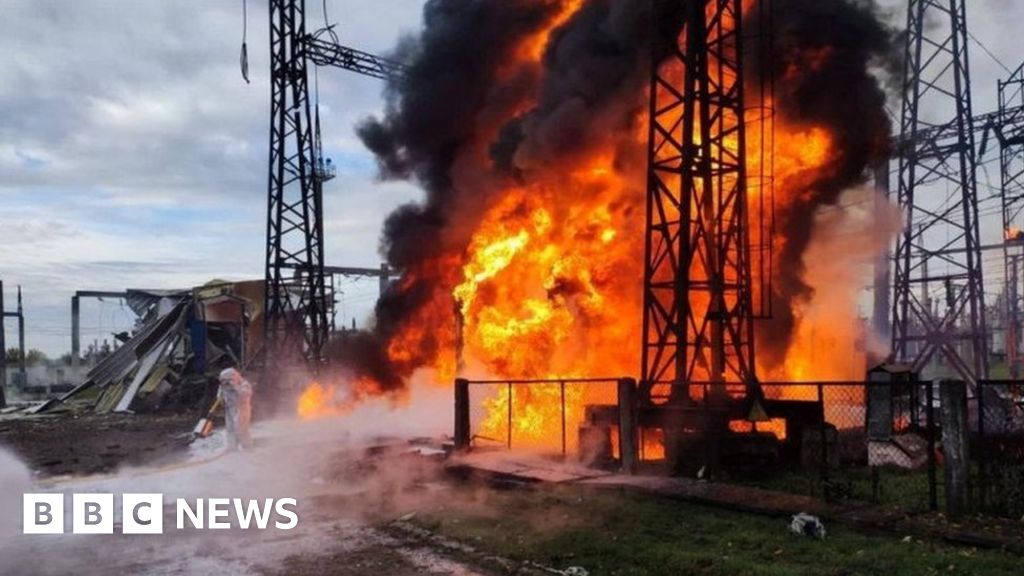
China Storm Crisis Exposes Climate Risks
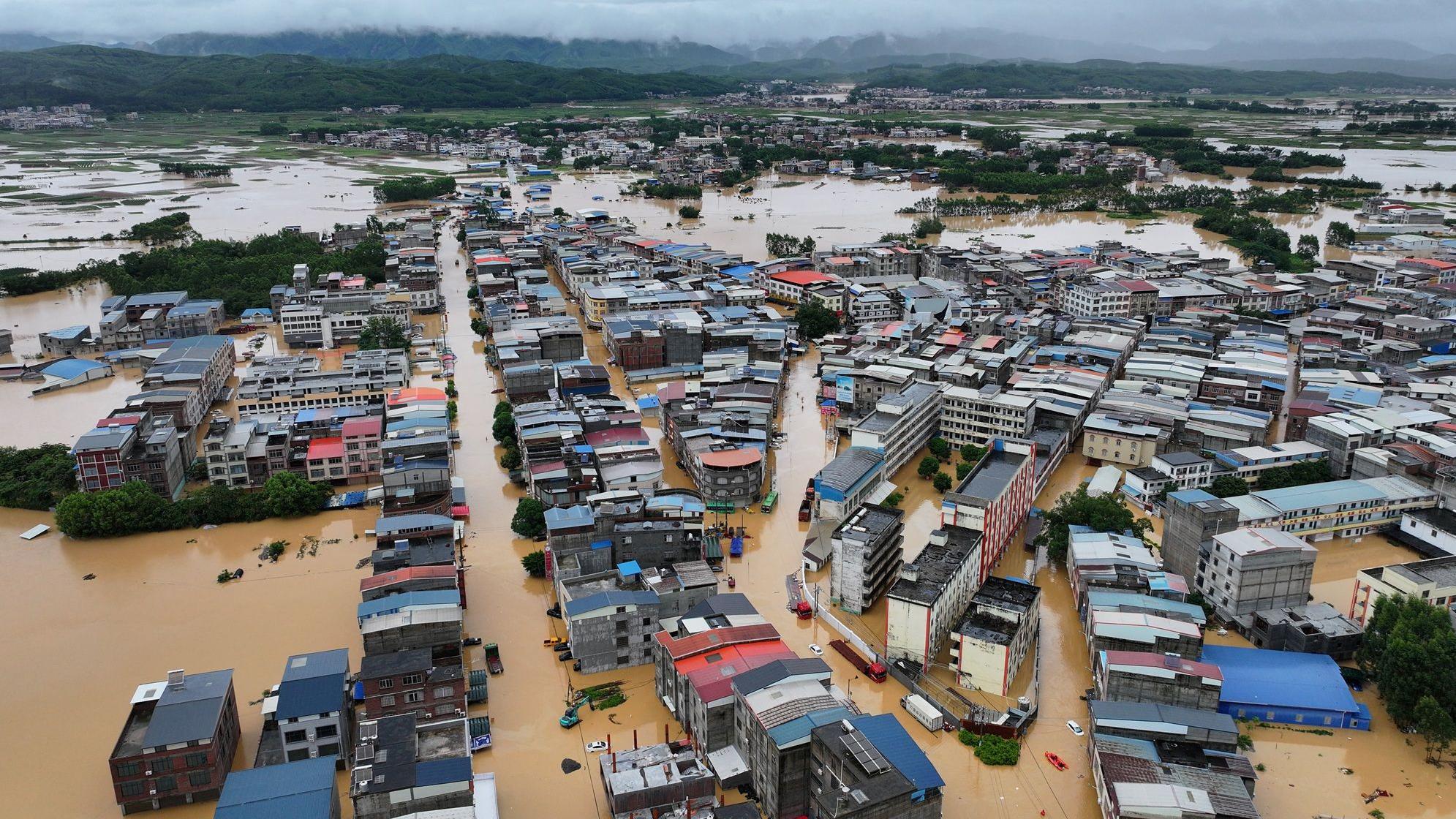
China Storm Crisis Exposes Climate Risks
China’s severe storms are not just another weather disaster. They are a warning shot. When landslides, tornadoes, flash flooding, and collapsing infrastructure converge at once, the real story is not only the death toll – it is the speed at which a modern state can be overwhelmed. The latest China severe storms crisis has forced a brutal question into the open: can the country’s emergency systems keep pace with a climate pattern that is getting more violent, more unpredictable, and more expensive to manage? For Beijing, the answer matters far beyond this week. The balance between disaster response, local governance, and long-term resilience is now under stress, and millions of people live in the path of that stress.
- China severe storms are testing rescue systems across multiple regions at once.
- Landslides and tornadoes show how extreme weather is becoming more complex, not just wetter.
- The crisis highlights the gap between rapid mobilization and long-term climate resilience.
- Infrastructure hardening, early warning systems, and local coordination are now central priorities.
- The biggest challenge is not one storm – it is managing a future of repeated shocks.
Why the China Severe Storms Crisis Matters Now
The immediate tragedy is obvious: people have died, communities have been cut off, and rescue teams are racing against rising waters and unstable hillsides. But the broader significance of the China severe storms event is harder to ignore. China has spent years building out one of the world’s most extensive infrastructure and emergency response networks. Yet storms like these expose the limits of scale. A country can have satellites, forecasts, and fast-moving official mobilization, and still struggle when weather events arrive in clusters rather than as isolated emergencies.
That is the real shift. Extreme weather is no longer behaving like a single-point failure. It is arriving as a systems failure.
What Makes This Storm Pattern So Dangerous
Severe storms are inherently destructive, but what makes this episode especially alarming is the mix of hazards. Heavy rainfall can trigger landslides in mountainous or saturated terrain. Strong convective systems can spin up tornadoes with little warning. Urban drainage networks can be overwhelmed in minutes. Rural roads can disappear under mud before help arrives. These risks do not operate independently. They stack.
Landslides amplify isolation
When a landslide blocks access roads, it does more than cut off traffic. It delays ambulances, interrupts power restoration, and can trap people in villages or hillside neighborhoods. In a fast-moving rescue effort, every blocked route becomes a multiplier for suffering.
Tornadoes add speed and surprise
Tornadoes are especially difficult for emergency systems because they compress destruction into a very short window. Even with improved forecasting, the response time can be razor thin. That means local readiness, public alerts, and shelter access matter almost as much as national coordination.
Flooding strains the everyday basics
Storm damage is not only about dramatic scenes of destruction. It is also about smaller failures that become dangerous quickly: power cuts, water contamination, communications outages, and the loss of mobility. When a storm hits all at once, the everyday systems people rely on become the first casualties.
Extreme weather is no longer a one-off event to be managed. It is becoming a recurring operational stress test for governments, utilities, and urban planners alike.
China Severe Storms and the Rescue Challenge
Rescue efforts during disasters like this are measured in hours, not headlines. Officials have to coordinate search teams, medical support, temporary shelter, food supplies, road clearance, and communication restoration, often across multiple affected areas. That sounds straightforward on paper. In practice, it is a logistical fight against time and terrain.
China has an advantage that many countries do not: the ability to mobilize resources quickly and direct them at scale. But that advantage is only useful if local conditions allow it. If roads are gone, if rivers have overflowed, if slopes remain unstable, then even the most capable rescue force faces hard limits. The storm response becomes a question of precision, not just power.
Speed matters, but so does local intelligence
Large-scale command can move assets fast, but local knowledge often determines whether those assets are used effectively. The difference between reaching a stranded neighborhood and arriving too late can come down to which roads are passable, which bridges are weakened, and where people are most likely to seek shelter.
Communication is part of rescue
During major storms, the public needs clear, consistent warnings. Confusion creates risk. If people do not know whether to evacuate, where to go, or whether rescue teams can reach them, the response effort loses one of its most important tools: trust.
What Xi Jinping’s Response Signals
When China’s leadership emphasizes rescue and disaster mitigation, it is doing more than managing a crisis narrative. It is signaling that climate resilience is now a governance issue at the highest level. That matters because disaster response in China is not just about short-term relief. It is tied to political accountability, infrastructure planning, and the public expectation that the state can absorb shocks without visible paralysis.
The focus on rescue efforts also reflects a familiar playbook: rapid mobilization, visible coordination, and a message that the government is in control. But the pressure point is obvious. Each severe storm raises the stakes for whether that control is real on the ground, especially in vulnerable inland regions where geography can turn bad weather into catastrophe.
Pro Tip: The most important metric after any disaster is not the number of announcements. It is how quickly water, power, transport, and medical access are restored in the hardest-hit communities.
China Severe Storms and the Climate Resilience Gap
Here is the uncomfortable part. Even aggressive disaster response does not eliminate climate exposure. It only reduces damage after the fact. The long game is resilience: stronger drainage systems, slope stabilization, better building standards, smarter land use, and more precise warning networks. Without that, emergency response becomes a recurring tax on the state, businesses, and families.
China has already been investing in climate adaptation, but severe storms expose how uneven that investment can be. Wealthy coastal megacities are often better protected than rural or mountainous areas. Dense urban cores may have advanced monitoring, but they also have huge populations and complex infrastructure dependencies. The result is a resilience map with major blind spots.
Urban design is now disaster policy
Drainage capacity, road elevation, slope control, and the placement of critical infrastructure are no longer just engineering details. They are policy decisions that shape how many lives a storm can upend. A city that cannot move water quickly is a city that will keep paying for it in outages, displacement, and repair bills.
Rural regions face the hardest trade-offs
Remote communities often have weaker infrastructure and longer response times. Hardening every hillside road or scattered settlement is expensive. That means officials have to prioritize the places where a storm can do the most human and economic damage. Those choices are rarely easy, and they often reveal who gets protected first.
What Businesses and Local Governments Should Take From This
For companies and local authorities, the lesson is straightforward: disaster planning cannot be a once-a-year checklist. Supply chains, warehouse locations, transport routes, and utility dependencies all need to be stress-tested against multi-hazard events. A flood that knocks out one road is annoying. A storm that disables a logistics corridor and local power grid at the same time can freeze operations.
- Audit critical dependencies, including power, water, transport, and telecoms.
- Map alternate routes for deliveries, evacuations, and emergency access.
- Build redundancy into storage, communications, and backup power systems.
- Use real-time weather and flood monitoring to trigger faster decisions.
- Train managers to act before conditions become unmanageable.
For local governments, the operational challenge is similar. The difference is that failure affects public safety first, not quarterly results. That means early warnings, evacuation protocols, shelter readiness, and drainage maintenance need to be treated as core civic infrastructure, not optional upgrades.
Why This Matters Beyond One Disaster
The China severe storms crisis matters because it fits a global pattern. Across the world, extreme weather is becoming harder to classify and harder to contain. The old model assumed separate risks: a flood here, a heat wave there, a storm over there. The new reality is more chaotic. Multiple hazards arrive together, and the systems meant to absorb them are often optimized for single failures.
That is why this story should not be read as a local tragedy alone. It is a preview of the next phase of climate disruption: compound events, cascading failures, and rising pressure on governments to demonstrate not just response capability, but resilience design. The countries that adapt fastest will not be the ones with the loudest emergency messaging. They will be the ones that quietly make themselves harder to break.
The Road Ahead for China Severe Storms Response
Expect more emphasis on emergency coordination, infrastructure reinforcement, and early warning systems in the aftermath of this storm cycle. Expect officials to push the message that rescue has been prioritized and that recovery is underway. But the deeper test will come later, when the headlines fade and the budget decisions begin. That is where resilience either gets built or postponed.
If there is a hard truth buried inside this disaster, it is that extreme weather is becoming a governance benchmark. Not just in China, but everywhere. The next major storm will not ask whether a country has a disaster plan. It will ask whether that plan can survive contact with reality.
The information provided in this article is for general informational purposes only. While we strive for accuracy, we make no guarantees about the completeness or reliability of the content. Always verify important information through official or multiple sources before making decisions.