China’s AI Chips Surge
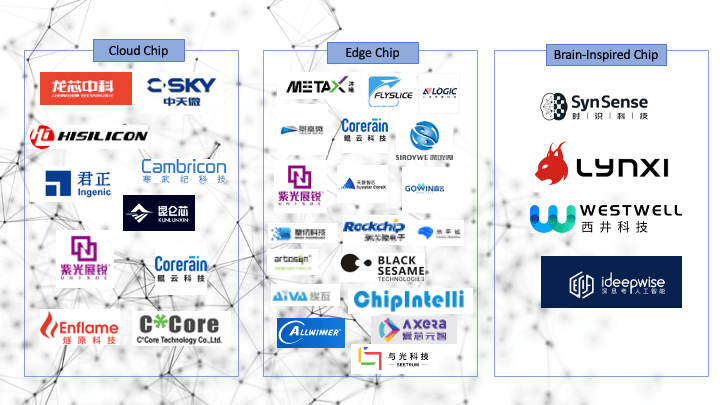
China’s AI Chips Surge
China’s AI chipmakers are getting a rare thing in today’s semiconductor market: a tailwind that is both political and commercial. Beijing’s latest tech push is not just a slogan or a funding announcement. It is a signal to every cloud provider, hyperscaler, and enterprise buyer in the country that domestic silicon matters now more than ever. That matters because the global AI race is no longer only about model quality or training scale. It is about who controls the chips, the supply chain, and the pace of deployment. For Chinese firms, the opportunity is obvious. For everyone else, the question is whether state support can turn local ambition into competitive hardware fast enough to matter.
- Beijing’s tech policy is creating demand for domestic
AIchips. - Chinese chipmakers may benefit from procurement shifts and supply chain pressure.
- The real test is not hype but performance, production scale, and ecosystem support.
- U.S. export controls are accelerating China’s push for chip self-sufficiency.
- The next phase of competition is likely to be fought in packaging, software, and inference efficiency.
China’s AI chipmakers get a policy-backed opening
Beijing’s strategy is straightforward: reduce dependence on foreign technology and build enough domestic capacity to support the country’s AI ambitions. That puts local chipmakers in a favorable position, at least on paper. When the state wants faster adoption of homegrown hardware, procurement tends to follow. So do subsidies, pilot deployments, and a more forgiving regulatory climate. The result is a market where domestic vendors can win business not only because of technical merit, but because buying local becomes strategically aligned with national priorities.
That does not mean Chinese chipmakers suddenly have a free pass. Semiconductor manufacturing is still a brutal business defined by yields, tooling, memory bandwidth, and software compatibility. But policy can buy time, and in the chip world, time is often the most valuable currency. It can fund more iterations, create guaranteed demand, and help firms close the gap between prototype performance and real-world deployment.
Why the timing matters now
The timing is especially important because global AI infrastructure is moving from a training-first mindset to one centered on inference, deployment, and cost control. That is a subtle but crucial shift. Training frontier models still demands elite GPUs and cutting-edge fabrication. But inference, the process of running models at scale, is where efficiency matters most. If Chinese chipmakers can deliver acceptable performance at lower cost and with fewer supply constraints, they can carve out a meaningful domestic market even without matching the absolute best U.S. accelerators.
“In chips, the first company to win the narrative is not always the one that wins the workload.”
That is especially true in China, where scale, policy, and local integration can outweigh benchmark bragging rights. Enterprises do not always need the fastest chip on the planet. They need enough performance, available supply, and a software stack that does not break every time a model updates.
The strategic shift behind China’s AI chip push
The bigger story is not merely about one industry segment getting a boost. It is about how Beijing is trying to rewire incentives across the technology economy. By emphasizing self-reliance in critical hardware, the government is effectively telling cloud providers, model developers, and systems integrators to plan around domestic semiconductors. That creates a cascading effect. If large customers start committing to local chips, startups get a path to revenue, suppliers get more orders, and engineering talent has a reason to stay in the domestic ecosystem.
This is where industrial policy becomes more than a talking point. China has spent years building capabilities in foundry operations, advanced packaging, memory, and AI software. None of those layers is easy to replicate. But together they form an ecosystem that can support a more resilient chip industry, especially if imported alternatives remain constrained by export rules or political friction.
What Chinese chipmakers still need to prove
Even with tailwinds, the road ahead is steep. The most important challenge is not building a chip that works in a lab. It is building one that works at scale across diverse workloads. That means better power efficiency, stronger interconnects, predictable thermals, and software tools that developers actually want to use.
They also need to solve the ecosystem problem. Modern AI hardware is only as useful as its frameworks, drivers, compilers, and model support. Nvidia did not win because of silicon alone. It won because it built a platform. Chinese competitors need to do the same, and fast.
- Performance consistency: A chip that spikes in benchmarks but falters under load will not win enterprise trust.
- Software maturity: Toolchains, libraries, and compiler support are as important as raw FLOPS.
- Supply reliability: Customers need predictable delivery, not just promising roadmaps.
- Integration readiness: Chips must fit into servers, racks, and cloud orchestration layers with minimal friction.
How export controls are reshaping the market
U.S. export controls have done something unusual in the semiconductor market: they have compressed the timeline for domestic substitution. Normally, building a credible chip stack takes years of patient iteration and customer trust. But when foreign supply becomes less dependable, buyers start looking for alternatives sooner. That gives local vendors a chance to enter accounts they might never have reached under normal competitive conditions.
For China’s chipmakers, that is both an opportunity and a trap. Opportunity, because urgency creates adoption. Trap, because urgency can also mask technical shortcomings. A policy-driven purchase is not the same as a durable market win. Once the immediate pressure eases, customers will still compare cost, performance, and reliability. If domestic chips cannot hold up, the momentum may stall.
Where the money is likely to go
Expect investment to concentrate in a few areas: AI accelerators for inference, advanced packaging, server integration, and software optimization. Training chips remain a prestige category, but inference is where volume lives. It is also where local procurement can have the fastest impact because enterprises can swap hardware in stages rather than rebuild entire AI clusters.
That makes the next wave of competition less about one dramatic breakthrough and more about a thousand practical improvements. Better memory access. Lower power draw. Cleaner compiler support. Faster deployment cycles. In other words: unglamorous engineering that compounds.
Why this matters beyond China
The implications extend far beyond domestic Chinese markets. If Chinese chipmakers gain share at home, they can build manufacturing momentum, attract talent, and refine products under real-world conditions. That can eventually influence pricing and competition across the global semiconductor industry. Even firms outside China should care, because more local alternatives in the world’s second-largest economy can shift bargaining power across the supply chain.
There is also a geopolitical angle. Semiconductor competition is no longer a side story to AI. It is the foundation of it. Countries that can secure reliable chip supply will have a clearer path to scaling generative AI, edge inference, robotics, and enterprise automation. Countries that cannot will spend more time negotiating access than building products.
“The real contest is not whether China can copy the West’s chip playbook. It is whether it can build a new one fast enough to matter.”
The near-term outlook for Chinese AI chipmakers
The near-term outlook is cautiously optimistic. Domestic chipmakers should see more attention, more pilot programs, and a better chance to land institutional customers. But the market will not hand them a permanent victory. To turn policy support into durable business, they will need to demonstrate three things: technical credibility, manufacturing scale, and software depth.
If they succeed, China could end up with a more self-sustaining AI hardware base than many skeptics expect. If they fail, the industry may still grow, but it will likely remain dependent on imported ideas, workarounds, and fragmented deployment strategies. That is the defining tension here. Beijing can set the direction. It cannot fully manufacture excellence by decree.
Pro tips for watching the next moves
Track not just chip announcements, but also server deployments, cloud partnerships, and developer tool updates. Those are the leading indicators that a chipmaker is moving from political favor to real market traction. Also watch packaging and memory partnerships closely, since the next bottleneck is often not the chip core itself but the surrounding system that makes it usable.
If you are an enterprise buyer or infrastructure planner, the smart move is to evaluate domestic Chinese AI chips on workload fit rather than headline specs alone. For inference-heavy use cases, the best chip may be the one that is available, affordable, and stable enough to ship now.
The bottom line on China’s AI chipmakers
China’s AI chipmakers are not just riding a policy wave. They are entering a phase where national strategy, market demand, and geopolitical pressure all point in the same direction. That alignment gives them a chance to close the gap with foreign rivals, especially in inference and deployment-focused workloads. But the industry still has to do the hard part: build chips people can trust, ecosystems developers can use, and supply chains that can survive the next shock.
That is why this moment matters. Not because it guarantees a new champion, but because it changes the odds. And in semiconductors, changed odds are often the first sign that the market is about to move.
The information provided in this article is for general informational purposes only. While we strive for accuracy, we make no guarantees about the completeness or reliability of the content. Always verify important information through official or multiple sources before making decisions.