UK AI Copyright Fight Escalates
UK AI Copyright Fight Escalates
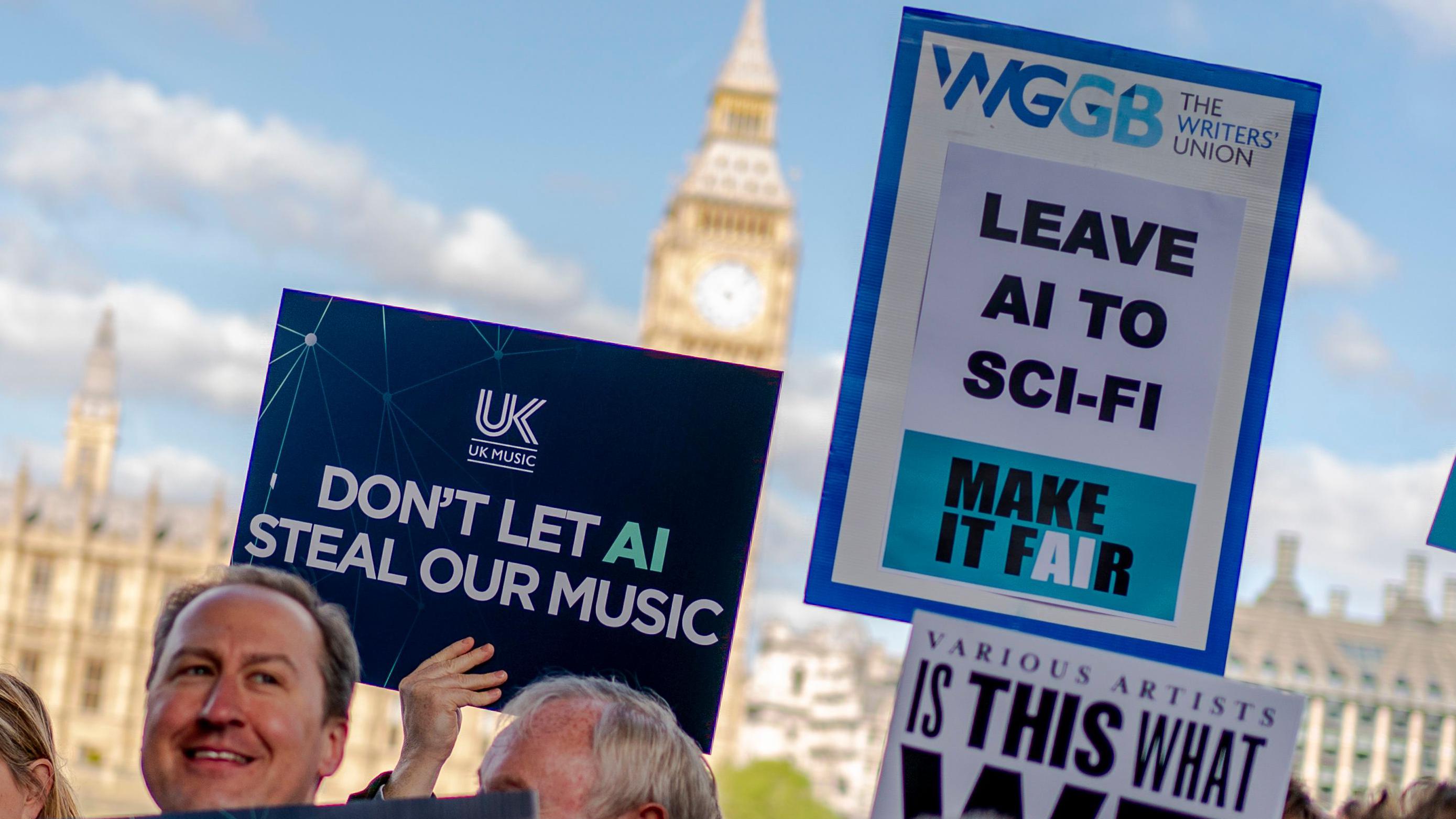
The UK AI copyright battle is no longer a niche policy skirmish. It is now a test of who gets to own the value created by modern machine intelligence: the people who make the work, or the systems that absorb it at scale. For publishers, musicians, photographers, and software developers, the issue is painfully familiar – AI products can feel like a demand engine wrapped in a black box, quietly extracting the raw material that powers creativity while offering little transparency in return. For startups and model builders, the counterargument is just as sharp: without broad access to data, the next wave of AI gets strangled before it can compete globally. That tension is shaping the UK’s regulatory identity, and the outcome will influence investment, innovation, and creative labor far beyond Westminster.
- The
UK AI copyrightdebate centers on whether creators should consent before their work is used for AI training. - Publishers and artists want transparency, control, and compensation, not vague promises.
- AI companies argue that restrictive rules could slow innovation and hand advantage to overseas rivals.
- The real policy prize is a workable balance between data access and creative rights.
- Whatever the UK decides could become a template for other markets watching the same collision.
Why the UK AI copyright debate matters now
The timing is crucial. Generative AI has moved from novelty to infrastructure, and that shift changes the stakes. What used to be a question for legal teams is now a board-level issue. If a model is trained on articles, images, music, or code, should the creator be paid? Should they even be asked? The UK’s answer will affect how AI companies source data, how content industries negotiate licensing, and how regulators define fairness in an age of automated imitation. This is not just about rights. It is about leverage. Whoever controls the training pipeline controls the economics of the next digital platform layer.
That is why the debate has become so heated. Creators see AI as a system that can replicate style without sharing revenue. Developers see copyright claims as a potentially expensive drag on research and deployment. The result is a clash between two legitimate priorities: protecting human work and keeping the country competitive in a race where speed matters.
The core problem with training data
AI models are built on large collections of text, images, audio, and code. That scale is what makes them useful, but it is also what makes them controversial. Training data is often gathered from the open web, which creates a blurry line between public accessibility and legal permission. Just because a file can be downloaded does not mean it can be repurposed for model training without consequence.
Creators argue that this ambiguity has allowed AI firms to treat the internet like a free warehouse. If a model learns from a journalist’s reporting, a photographer’s portfolio, or a writer’s prose, the value created by that work may be captured elsewhere. The creative labor remains visible, but the upside gets redirected into platform economics and subscription revenue.
Transparency is the pressure point. Without it, creators cannot know if their work has been used, much less negotiate around it.
What AI companies want
AI companies are not wrong to worry about fragmentation. Training large models requires enormous volumes of data, and rigid consent requirements could make it harder for startups to compete with the biggest labs. If every rightsholder can opt out individually, the operational burden can become unmanageable. That is especially true for smaller companies without armies of lawyers or licensing teams.
They also argue that broad data access supports innovation in fields beyond chatbots: search, accessibility, medical summarization, coding tools, and enterprise automation. In their view, overcorrecting on copyright could create a system where only the largest firms can afford compliance, entrenching the incumbents that policymakers claim to fear.
What a workable UK AI copyright framework would need
The UK’s challenge is not simply to choose a side. It is to build a framework that can survive real-world deployment. That means rules that are clear enough for companies to follow, but not so rigid that they freeze the ecosystem. A serious policy model would likely include transparency obligations, licensing pathways, and a credible mechanism for creators to assert control.
- Disclosure: AI firms should explain what categories of data were used.
- Consent: Creators should have a meaningful opt-in or opt-out path.
- Compensation: Licensing should make commercial use more equitable.
- Auditability: Independent checks should verify claims about training data.
- Enforcement: Rules need teeth, or they become symbolic theater.
That mix sounds simple, but implementation is hard. Data provenance at internet scale is messy. Models are trained on mixed datasets, duplicated copies, and constantly changing sources. If policymakers demand perfection, they may get paralysis instead. If they demand nothing, they reward extraction.
The hidden compliance challenge
One of the biggest technical headaches is provenance. It is easy to say that a dataset should be clean. It is much harder to prove it. AI developers often ingest data from multiple sources, transform it, filter it, deduplicate it, and remix it into training pipelines. That creates a chain of custody problem. If a creator asks whether their work was used, the answer may not be obvious even to the company itself.
This is where tooling matters. Dataset logging, permission registries, and machine-readable rights labels could help. But those systems only work if the industry adopts them widely. Otherwise, compliance becomes a patchwork of manual review and legal negotiation, which is expensive and slow.
Why creators are pushing back harder
Creators are not just asking for moral recognition. They are reacting to a market shock. AI tools can now produce text, images, and music at a quality good enough to substitute for some commercial work, especially at the lower end of the market. That puts pressure on freelancers, stock asset providers, and smaller production teams first. The fear is not abstract. It is about losing pricing power in industries already strained by platform consolidation.
The psychological issue matters too. Creative work has always been vulnerable to imitation, but AI changes the scale and speed of copying. A style that took years to build can now be simulated in seconds. Even if a model does not reproduce a work verbatim, it may still siphon demand from the original source.
If the UK wants a healthy creative economy, it cannot leave creators negotiating against a machine-sized advantage with human-sized tools.
What happens if the UK gets this wrong
A weak regime could trigger two bad outcomes at once. First, creators could lose trust in the digital economy and withhold work from online distribution, reducing the richness of future training data and making the ecosystem more adversarial. Second, serious AI companies might choose jurisdictions with clearer rules, turning the UK into a policy bystander instead of a leader.
A too-restrictive regime is risky in the opposite direction. It could push research offshore, slow product launches, and make the UK less attractive for AI investment. That would matter not only for startups but also for enterprises that want local expertise, local compliance, and local jobs.
The smart path is not maximum freedom or maximum restriction. It is calibrated friction. The UK can set expectations without making lawful innovation impossible.
How businesses should prepare now
Whether you are a publisher, a startup, or an enterprise buyer, the safest assumption is that AI data governance will get stricter, not looser. Companies should start preparing for a future where model training sources, licensing status, and content permissions are auditable business assets.
- Inventory your content assets and classify what can be licensed.
- Review contracts for AI training, reuse, and derivative rights.
- Build internal policies for
AI trainingdata approvals. - Track vendor claims about provenance and indemnity.
- Budget for licensing, not just deployment.
For creators, the practical move is equally clear: document ownership, standardize rights language, and treat content distribution as part of a broader licensing strategy. The companies that organize now will have more leverage later.
The next phase of the policy fight
Expect this debate to move from broad principle to operational detail. The political question is no longer whether AI should be regulated. It is how much disclosure, what kind of consent, and who pays. Those are much harder conversations because they affect margins, product timelines, and negotiating power.
There is also a geopolitical layer. The UK wants to remain a serious AI market without simply copying the most permissive or most restrictive model elsewhere. That means threading a difficult needle: pro-innovation, pro-creator, and enforceable. Few governments have managed that balance well so far.
Still, this is where the future is being built. The companies that can adapt to rights-aware AI systems will likely outperform those that keep betting on legal ambiguity. The creators who understand their leverage will do better than those who assume the rules will stay vague forever.
The bottom line on UK AI copyright
The UK AI copyright fight is really a fight over the operating system of digital creativity. If the UK gets it right, it could set a global standard for transparent, commercially viable AI development. If it gets it wrong, the country risks either hollowing out its creative economy or scaring off the innovators it wants to attract. That is why this debate matters far beyond legal theory. It will decide who gets paid, who gets access, and who gets to define the next generation of content machines.
For now, the safest read is simple: the era of free, unaccountable data extraction is ending. What replaces it will determine whether AI becomes a tool that expands creative markets or a platform that quietly replaces them.
The information provided in this article is for general informational purposes only. While we strive for accuracy, we make no guarantees about the completeness or reliability of the content. Always verify important information through official or multiple sources before making decisions.