Clancy Case Puts Therapist Confidentiality Under Fire
Clancy Case Puts Therapist Confidentiality Under Fire
The psychologist confidentiality case tied to Lindsay Clancy is more than a courtroom dispute. It is a stress test for the fragile contract between patients, clinicians, and the legal system. When treatment records, expert testimony, and public scrutiny collide, the result can reshape how mental health professionals document risk, how lawyers frame responsibility, and how patients understand what they can safely disclose. For anyone who has ever sat across from a therapist and wondered how private that conversation really is, this case lands with uncomfortable force. It also exposes a bigger problem: society wants better mental health care, but it is often uneasy with the rules that make that care work.
- The case spotlights the tension between
therapeutic confidentialityand courtroom demands. - It shows how a
psychologist‘s role can shift from caregiver to witness. - It raises questions about documentation, risk assessment, and clinical responsibility.
- It could influence how clinicians communicate boundaries with patients.
- It matters because trust is the foundation of mental health treatment.
Why the psychologist confidentiality case matters now
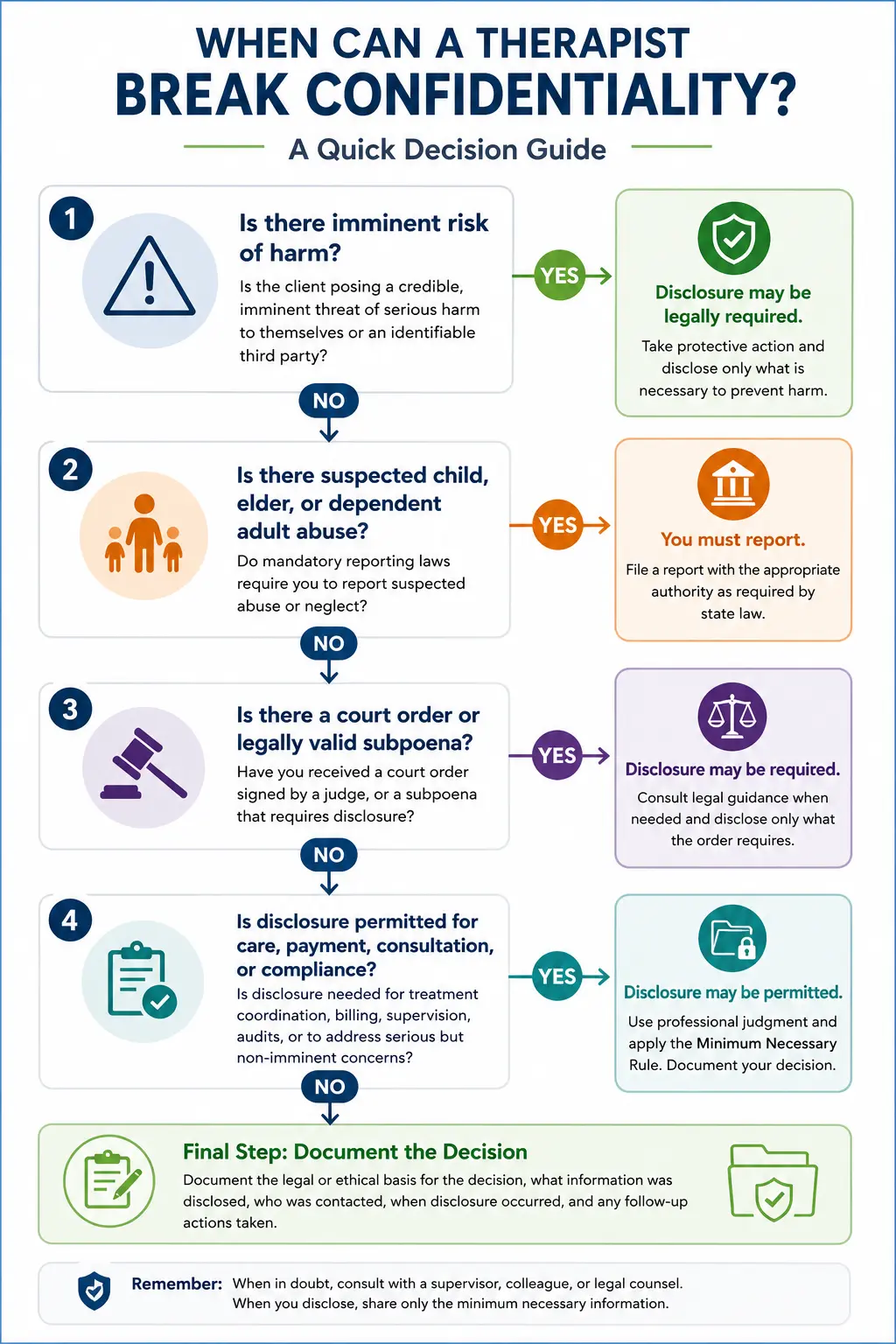
The public tends to view psychotherapy as private by default, but the law has never treated confidentiality as absolute. Exceptions exist for imminent danger, abuse reporting, court orders, and other narrow circumstances. The Clancy case pushes that tension into the spotlight because it sits at the intersection of an intense criminal proceeding and the highly sensitive work of mental health care. That is where things get messy fast. A clinician may believe they are helping a patient survive a crisis, while prosecutors and defense attorneys may see the same conversations as evidence, context, or liability. The result is a pressure cooker for everyone involved.
This is why the psychologist confidentiality case has become so resonant. It is not just about one expert or one defendant. It is about whether the mental health system can preserve trust while still operating inside a legal framework that demands accountability. That balance is hard in theory and even harder in a high-profile case.
What the case exposes about mental health care
At the center of this dispute is a basic but uncomfortable truth: therapy relies on candor, and candor relies on confidentiality. If patients believe every detail could later be dissected in public, they may self-censor. That weakens treatment, especially when clinicians are trying to assess self-harm, suicidal thinking, violent ideation, or severe postpartum mental health symptoms. The cost of that chilling effect is not abstract. It can mean delayed intervention, thinner documentation, and fewer chances to prevent tragedy.
In other words, confidentiality is not a luxury feature of therapy. It is the operating system.
At the same time, clinicians are not operating in a vacuum. Mental health professionals are trained to evaluate risk, recognize warning signs, and act when safety is threatened. That means they are constantly navigating a line between privacy and protection. When a case like this reaches court, that line gets redrawn in real time.
The clinician’s bind
A psychologist must often make fast, high-stakes judgments with incomplete information. Should a patient be hospitalized? Should family members be alerted? Does a statement reflect acute risk or a passing thought? These are not simple calls. They depend on training, context, and the quality of the therapeutic relationship. Once litigation begins, though, those judgments can be reframed as evidence of what should have happened, not what reasonably could have happened under pressure.
That is one reason the psychologist confidentiality case matters to practitioners. It forces a public conversation about how much clinicians should document, how they should phrase risk assessments, and how to protect patients without leaving themselves and their institutions exposed.
How courtroom testimony changes the story
When a psychologist takes the stand, the role changes dramatically. The therapist is no longer only a provider of care. They become a witness, often asked to interpret symptoms, behavior, and clinical decision-making for a judge or jury. That shift can be jarring for patients and dangerous for the profession if it is handled carelessly. Expert testimony can clarify the mental state of a defendant, but it can also flatten the complexity of psychiatric treatment into a few sound bites.
Courts love clarity. Mental health often resists it.
That mismatch is one of the core problems in the psychologist confidentiality case. Jurors may want a simple explanation for a profoundly complicated set of events. Clinicians, by contrast, are trained to think in probabilities, patterns, and uncertainty. The courtroom rarely rewards nuance. It rewards persuasion. That puts mental health experts in a difficult position: remain clinically careful, or risk sounding evasive; speak plainly, or risk oversimplifying a patient’s life into a legal narrative.
When psychotherapy enters the courtroom, confidentiality stops being an invisible assumption and becomes a contested boundary.
Why documentation now matters more than ever
The Clancy case also underscores a practical reality that many clinicians know but patients rarely consider: records matter. Progress notes, safety plans, referral decisions, and risk assessments can all become central when a case escalates. Good documentation is not just an administrative burden. It is part of the clinical record of why decisions were made, when they were made, and what alternatives were considered.
For mental health providers, the lesson is not to write more just for the sake of writing more. It is to write with precision. Vague notes can create confusion later. Overly detailed notes can expose sensitive patient information unnecessarily. The best documentation is thoughtful, structured, and purpose-driven. That is especially true in high-risk cases involving severe depression, psychosis, postpartum psychiatric emergencies, or prior threats of harm.
- Document the
risk assessmentclearly and consistently. - Record what the patient said, but separate it from clinical interpretation.
- Note why specific safety steps were taken or declined.
- Use language that is accurate, not sensational.
- Keep records aligned with the treatment plan and legal obligations.
What families and patients should take from this
For patients, the biggest takeaway is not fear. It is informed trust. Confidentiality is still real, but it is not limitless. Patients should know what disclosures may trigger intervention, what could be reported by law, and how clinicians handle emergencies. That does not make therapy less useful. It makes it more honest.
For families, the case is a reminder that mental health crises often unfold behind closed doors until they do not. Families may not always know how severe a loved one’s symptoms are, or how much a clinician has been told. When trust breaks down, people look for blame. But the better question is whether the system gave everyone the right tools to recognize danger sooner.
The most responsible mental health care is neither overly secretive nor recklessly public. It is transparent about limits from the start. That is where the profession can do better.
How providers can protect trust
Clinicians can reduce confusion by setting expectations early and revisiting them often. Patients should understand the boundaries of confidentiality, the meaning of informed consent, and the circumstances that may require disclosure. Providers should also explain why they ask certain questions, especially around suicidal thoughts, violent impulses, medication use, substance use, and family history. Transparency lowers anxiety and improves honesty.
This is where the psychologist confidentiality case may have a lasting effect. It may encourage therapists to be more explicit about the limits of privacy, to use more careful risk-management workflows, and to involve supervisors or multidisciplinary teams sooner when warning signs appear.
Why this case could reshape mental health practice
High-profile cases often do one of two things: they fade into the news cycle, or they become reference points for a field. This one has the ingredients to become the second kind. It sits at the intersection of postpartum mental health, forensic testimony, and the ethics of care. That combination is powerful because it speaks to real anxieties inside the profession: How do you care for a patient in crisis while preserving the integrity of the clinical relationship? How do you respond when a tragedy makes every decision look obvious in hindsight?
The answer is not to make therapists into legal shields or forensic prophets. It is to strengthen systems. Better supervision. Better training. Better crisis pathways. Better coordination between emergency responders, hospitals, and outpatient care. And yes, better public understanding of what confidentiality can and cannot do.
That is the real lesson here: the law can define boundaries, but trust is what keeps people inside them.
The bigger stakes beyond one case
The Clancy matter will not be the last time the legal system asks mental health professionals to explain their work under pressure. As public awareness of psychiatric illness grows, so does scrutiny of how clinicians assess danger and document decisions. That scrutiny is not inherently bad. Accountability matters. But if every difficult case becomes an indictment of therapy itself, then the system risks pushing clinicians toward defensive practice and patients toward silence.
That would be a bad trade. The better path is a more literate public, one that understands that mental health care is probabilistic, ethically constrained, and often imperfect in ways that reflect human complexity rather than professional failure. The psychologist confidentiality case is a stark reminder that mental health systems do not just manage symptoms. They manage trust. And once trust erodes, everything else gets harder.
For now, the case stands as a warning and a test. It asks whether courts, clinicians, and the public can hold two ideas at once: that privacy matters deeply, and that safety sometimes requires breaking it. That tension will never be easy. But pretending it does not exist is far more dangerous.
The information provided in this article is for general informational purposes only. While we strive for accuracy, we make no guarantees about the completeness or reliability of the content. Always verify important information through official or multiple sources before making decisions.