Climate Talks Could Force the Fossil Fuel Endgame
Climate Talks Could Force the Fossil Fuel Endgame
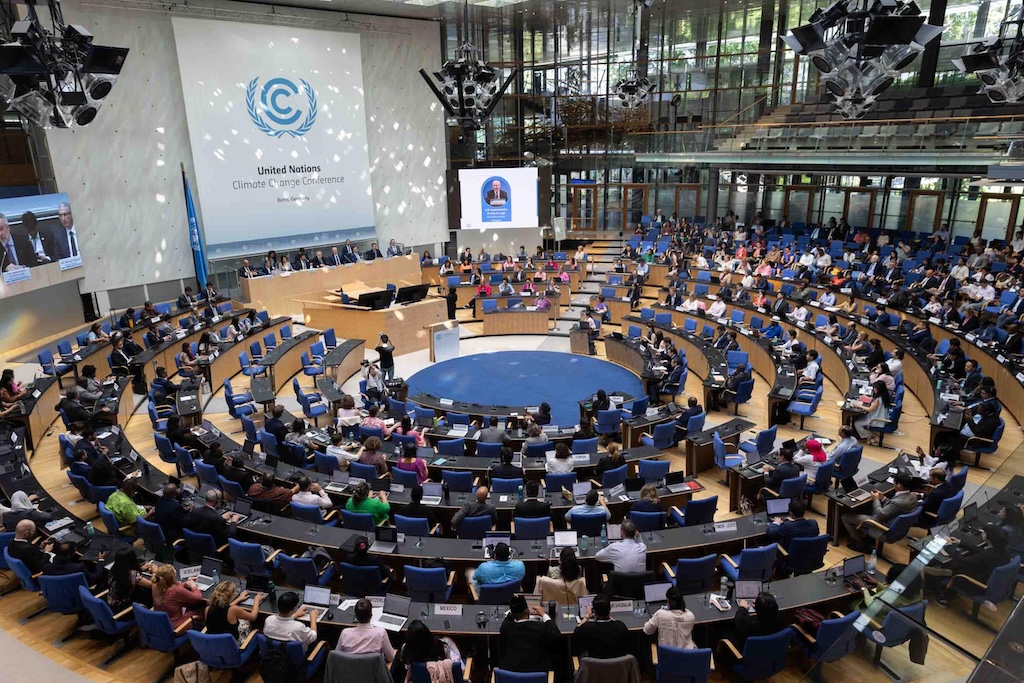
The next round of climate negotiations is shaping up as more than another diplomatic ritual. These climate talks arrive at a moment when the gap between climate science and political action is no longer abstract – it is showing up in heatwaves, insurance shocks, energy insecurity, and rising pressure on governments to stop approving the very fuels driving the crisis. What is at stake is not just another statement of intent. It is whether the global system can move from vague support for clean energy to a direct confrontation with coal, oil, and gas.
That is why these meetings matter far beyond negotiators and policy insiders. A serious shift on fossil fuels would ripple through trade, investment, industrial strategy, and geopolitics. A weak outcome, by contrast, would confirm what critics have long suspected: that governments still prefer climate rhetoric over structural change.
- These climate talks could become a defining test of whether governments will explicitly commit to moving away from fossil fuels.
- The real fight is political, not scientific: the evidence is settled, but the language of phaseout remains fiercely contested.
- Any final wording will shape markets, regulation, and the credibility of future climate targets.
- Developing economies need financing and fairness if fossil fuel transition plans are going to be durable.
- The outcome matters because energy policy is now economic policy, not just environmental diplomacy.
Why these climate talks feel different
Climate summits often produce two versions of reality. One is the public version: leaders deliver carefully polished speeches, reaffirm temperature goals, and celebrate incremental progress. The other is the material version: emissions keep rising, fossil fuel production remains deeply embedded in national growth models, and loopholes survive every negotiating round. This time, the pressure is harder to deflect.
The core issue is straightforward. Renewable deployment is accelerating, electric transport is scaling, and clean technology investment is rising. But none of that automatically guarantees a decline in fossil fuel expansion. Governments can praise the energy transition while still licensing new extraction, subsidizing consumption, or defending gas as a long-term bridge. That contradiction is now impossible to ignore.
The central question is no longer whether clean energy is viable. The question is whether political systems are willing to constrain fossil fuels directly.
This is what makes the current negotiations so consequential. If countries cannot agree on stronger language now, with climate impacts intensifying and low-carbon alternatives becoming more competitive, then the credibility of the broader process takes a real hit.
What the fossil fuel fight is really about
On paper, the debate may revolve around a few disputed phrases: phase out, phase down, unabated fossil fuels, or transition away. In practice, those words function like code for much larger strategic battles.
The language war is a power war
Countries that export large volumes of oil and gas have obvious reasons to resist explicit phaseout language. Their state revenues, labor markets, and geopolitical leverage are bound up with continued demand. For them, wording is not symbolic. It can influence investor expectations, legal narratives, and industrial planning.
Meanwhile, climate-vulnerable countries and many progressive negotiators see ambiguity as the oldest trick in the book. If agreements avoid naming fossil fuels clearly, governments gain room to overstate climate ambition while protecting the status quo. That is why stronger wording matters: it narrows the gap between headline promises and actual accountability.
Why unabated is such a loaded term
One of the most contested technical qualifiers is unabated. At first glance, it sounds practical. It implies that fossil fuel use could continue if emissions are captured or offset. But critics argue this framing can become a policy escape hatch.
Carbon capture technologies remain expensive, unevenly deployed, and highly uncertain at the scale implied by many fossil-friendly scenarios. Offsets face their own scrutiny around quality, permanence, and verification. So when negotiators lean too heavily on unabated, they risk giving political cover to long-lived fossil infrastructure on the assumption that future technology will clean up the problem later.
That is the trap: making today’s expansion sound compatible with tomorrow’s climate goals.
Why this matters to business and markets
Treating climate diplomacy as a niche environmental issue misses the larger point. These climate talks are increasingly a market signal. Investors, utilities, manufacturers, insurers, and commodity traders all watch the language because it influences policy direction and asset risk.
If the talks produce tougher commitments on fossil fuels, expect three immediate reactions. First, markets will read that as stronger long-term support for electrification, renewables, storage, and grid infrastructure. Second, fossil fuel projects with long payback periods may face greater scrutiny. Third, companies that still rely on vague net-zero narratives without credible transition planning will come under more pressure.
That does not mean one summit rewires the global economy overnight. It does mean the negotiating text can help define which sectors look future-proof and which start to look stranded.
Boards can no longer treat climate policy as background noise
For corporate decision-makers, the old habit of filing climate regulation under future uncertainty is becoming harder to defend. Energy prices, supply chains, insurance costs, physical climate risk, and disclosure rules are converging. Businesses now need to model transition scenarios with more realism.
- Energy-intensive sectors should stress-test exposure to carbon costs and fossil-dependent inputs.
- Exporters should watch for trade measures tied to emissions intensity.
- Infrastructure investors should reassess timelines for assets dependent on sustained fossil demand.
- Consumer brands should expect sharper scrutiny of supply-chain emissions claims.
The strategic takeaway is simple: climate diplomacy increasingly flows into capital allocation.
Why fairness will decide whether any deal sticks
There is a reason climate negotiations repeatedly collide with the issue of equity. Wealthier economies built much of their prosperity on fossil fuels and still retain far greater financial and technological capacity to transition. Many lower-income countries face a very different calculus: growing electricity demand, industrialization pressures, debt burdens, and legitimate expectations for development.
That means a credible fossil fuel transition cannot just be punitive. It has to be investable and politically survivable. Calls to stop using fossil fuels ring hollow if they are not paired with support for clean power, grid expansion, adaptation, and economic diversification.
No serious transition plan works without fairness. If countries are asked to leapfrog fossil dependence, financing has to move from slogan to system.
This is where previous climate commitments have often fallen short. Promises around climate finance have been delayed, diluted, or framed too narrowly. That weakens trust and gives reluctant states an easy argument: wealthy countries want ambition from others without paying their share of the transition.
So the success of these climate talks may depend less on rhetorical toughness alone and more on whether governments can pair fossil fuel language with practical support mechanisms.
What a strong outcome would actually look like
A meaningful result would not need to solve every problem in a single negotiating cycle. But it would need to move beyond euphemism. That means clearer recognition that limiting warming requires a managed decline in fossil fuel use, not just faster clean energy deployment on top of business as usual.
A strong package would likely include:
- Explicit language on transitioning away from fossil fuels in line with climate science.
- Tighter expectations around near-term emissions cuts, not only distant targets.
- More credible financing pathways for developing countries.
- Reduced reliance on speculative fixes that assume large-scale future carbon removal will compensate for present inaction.
Just as important, it would create political momentum. International agreements matter partly because they establish a new baseline. Once stronger fossil fuel language enters the diplomatic mainstream, it becomes harder for governments and companies to argue that continued expansion is fully aligned with climate goals.
What a weak outcome would signal
If negotiators settle for softened language, procedural delays, or another round of carefully balanced ambiguity, the implications will be bigger than one disappointing summit. It would suggest that even now – amid worsening climate impacts and mounting clean energy momentum – the international system still cannot directly challenge fossil fuel dependence.
That would have consequences. Activists would escalate pressure outside formal talks. Courts and regulators would face increasing demands to close the gap left by diplomacy. Investors would continue operating in a landscape defined by policy uncertainty rather than orderly transition planning. And vulnerable countries would have even more reason to question whether the process is designed to protect them at all.
In other words, a weak result would not freeze the transition. It would make the transition messier, more contested, and more expensive.
Why these climate talks are a political stress test
The most revealing feature of the current moment is that the barriers are no longer mainly technological. Solar, wind, batteries, heat pumps, electric vehicles, and efficiency tools are real, scalable, and increasingly cost-competitive. The bottlenecks are political coordination, incumbent power, financing structures, and state capacity.
That is why these climate talks deserve attention beyond the usual policy audience. They expose how governments behave when the required solution is clear but disruptive. Do leaders align public commitments with domestic policy? Do they protect vulnerable communities while confronting entrenched interests? Do they finance the transition internationally, or outsource the burden to those least able to absorb it?
This is the real test of climate governance: not whether leaders can endorse clean energy, but whether they can manage the decline of the old energy order.
The bottom line on the fossil fuel endgame
The future of climate diplomacy may hinge on whether this negotiating cycle becomes the point where the conversation finally matures. For years, the global process has been better at describing the destination than specifying what must end to get there. That gap is closing. A livable climate pathway requires more than optimism about innovation. It requires naming the central problem and building policy around it.
If these climate talks deliver that clarity, they could mark the beginning of a more honest era: one where fossil fuel dependence is treated as a system to be unwound, not a reality to be politely worked around. If they fail, the costs will not stay on paper. They will show up in economies, communities, and political systems already under strain.
The stakes, at this point, are brutally simple. Either global leaders start designing the fossil fuel endgame, or the climate will impose its own version.
The information provided in this article is for general informational purposes only. While we strive for accuracy, we make no guarantees about the completeness or reliability of the content. Always verify important information through official or multiple sources before making decisions.