Climbing Deaths Expose Everest Risk
Climbing Deaths Expose Everest Risk
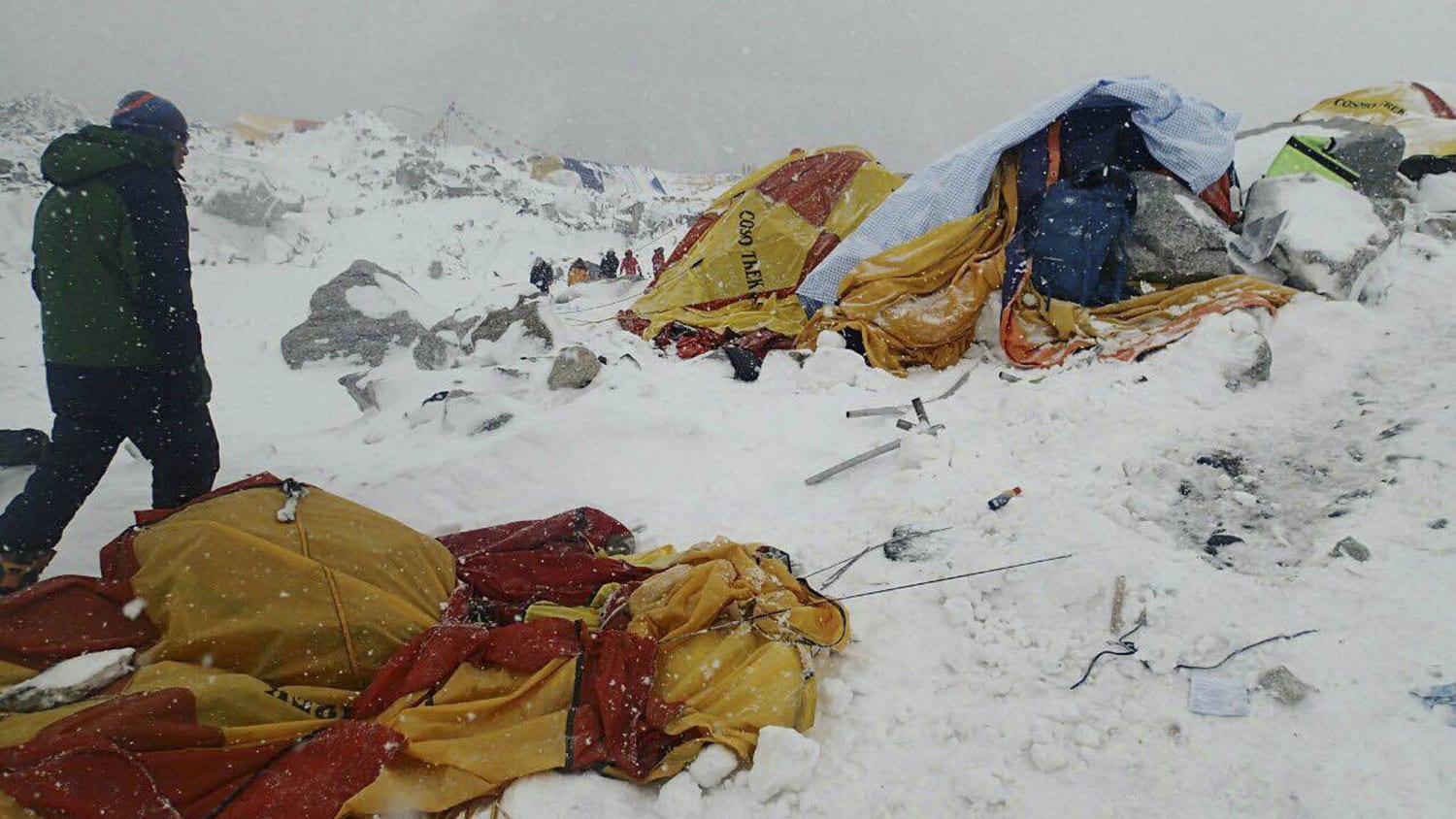
When a mountain sends a reminder this violent, everyone pays attention. The latest avalanche-linked deaths tied to a high-profile Himalayan climb are a brutal reset button for an industry that often sells suffering as triumph. For elite mountaineers, the story is never just about altitude. It is about logistics, weather windows, decision-making under pressure, and the uncomfortable fact that modern gear has not eliminated ancient danger. The Everest avalanche deaths case lands especially hard because it touches one of climbing’s biggest tensions: how far ambition can be pushed before the mountain pushes back. That question matters far beyond one route or one expedition team. It shapes how guides brief clients, how operators price risk, and how the public interprets achievement when the margin for error is measured in seconds.
- Elite climbing still runs on fragile margins, even with better forecasting and equipment.
- The Everest avalanche deaths underscore how quickly conditions can turn fatal at altitude.
- Guide decisions, route timing, and expedition culture all play a role in survival.
- The industry may face more scrutiny around safety, transparency, and accountability.
The Everest avalanche deaths reveal a hard truth
The instinct after a tragedy like this is to call it unavoidable. Mountains, after all, are dangerous by design. But that framing can become a shield for avoidable mistakes. The better question is not whether risk exists. It is whether the risk was understood, communicated, and managed with enough discipline.
At high altitude, the environment punishes small errors. A delayed departure, a poor weather call, a route bottleneck, or a weakening snowpack can turn a routine push into a recovery mission. When fatalities follow, the industry tends to split into two camps: those who treat the outcome as tragic but inherent, and those who see a systemic failure hiding inside a heroic narrative.
High-altitude climbing is often marketed as a test of courage, but the real test is operational discipline. Courage without restraint is just exposure.
Why Everest remains so unforgiving
Everest is not simply a tall mountain. It is a machine for amplifying human weakness. Oxygen deprivation blunts judgment. Cold slows reaction time. Wind strips heat from exposed skin. Snow stability can shift with little warning. And once an expedition is committed to a route, retreat becomes its own risk calculation.
That is why the phrase Everest avalanche deaths matters as more than a headline. It points to a recurring pattern in Himalayan climbing: the mountain rarely makes only one mistake. Instead, multiple small decisions accumulate until one weather shift or snow failure ends the chain.
Altitude changes the rules
Above the so-called death zone, the body is operating on borrowed time. Climbers rely on supplemental oxygen, fixed ropes, sherpas, guides, and carefully staged camps to extend survival. But those systems are only as strong as the people managing them. If a summit push starts too late or the descent takes too long, exhaustion becomes a liability that no amount of experience fully cancels out.
Weather windows are shrinking and harder to trust
Forecasting has improved, but prediction is not certainty. Himalayan weather still shifts faster than human teams can always adapt. As climate patterns become less stable, expedition planners face a more volatile operating environment. That increases pressure to move quickly, which can encourage the kind of rushed decisions that safety protocols are supposed to prevent.
The business behind the climb is part of the problem
Mountaineering is not just an adventure. It is a business with permits, logistics contracts, guiding fees, gear packages, and reputation on the line. That matters because commercial incentives can distort judgment. Operators compete on success rates. Clients pay for summit opportunities, not cautionary anecdotes. And guides must balance their responsibility to safety with customer expectations that are often shaped by polished social media storytelling.
When the economics of an expedition reward summit attempts more than conservative turnarounds, pressure builds quietly. A team may feel compelled to keep moving because the weather window is short, the permit is expensive, and the season is closing. That is how mountain risk becomes a management problem, not just an athletic one.
In commercial climbing, the invisible product is trust. The moment that trust cracks, the business model starts to wobble.
What teams can learn from the Everest avalanche deaths
The clearest lesson is not to stop climbing. That is unrealistic and misses the point. The lesson is to build systems that respect uncertainty instead of pretending to defeat it.
- Front-load conservative planning so teams have room to turn back without blowing the schedule.
- Use layered weather checks rather than depending on a single forecast source.
- Set turnaround times in advance and enforce them even when summit fever kicks in.
- Reduce route crowding by limiting exposure in bottleneck sections.
- Make descent the priority because most serious incidents happen after the summit is reached.
Those are not glamorous rules. They are survival rules. And survival is the foundation everything else depends on.
Pro tip for expedition operators
Build a decision tree before launch, not on the slope. If the plan depends on improvisation at 8,000 meters, the plan is already failing. Document fixed criteria for weather, snow stability, oxygen reserves, and team fatigue so guides are not forced to negotiate safety in the moment.
Why this matters beyond mountaineering
The reason this story resonates outside climbing circles is simple: it is about how humans behave under extreme pressure. The same pattern shows up in aviation, offshore drilling, emergency response, and even startup culture. People chase ambitious goals, normalize risk, and then trust that experience will save them. Sometimes it does. Sometimes it fails catastrophically.
The Everest avalanche deaths also reveal how public narratives can sanitize danger. Social feeds often turn expeditions into content pipelines, with summit photos standing in for context. But the mountain does not care about branding. It only responds to physics. That disconnect can encourage a false sense of control, especially among newer climbers who see elite ascents as proof that modern systems have made Himalayan risk manageable.
They have not. They have made it more organized. That is not the same thing.
The likely future of high-altitude expeditions
Expect more scrutiny, not less. Insurance costs are likely to remain a pressure point. Operators may adopt stricter pre-screening and more conservative summit policies. Some routes could see more technical oversight, especially if regulators or permit authorities respond to repeated incidents with tougher requirements.
At the same time, demand for elite climbs is unlikely to fade. If anything, high-profile tragedies often increase fascination because they highlight the stakes. That creates a strange feedback loop: the more dangerous the climb appears, the more meaningful the summit can seem to those determined to chase it.
For the industry, the challenge is to stop rewarding spectacle over discipline. That means better transparency around incident reporting, clearer safety standards, and less romantic language about suffering as proof of worth.
Mountains do not need better marketing. They need better judgment from the people who enter them.
The bigger lesson in the Everest avalanche deaths
Tragedies like this do not prove that climbing is foolish. They prove that nature still sets the terms. The smartest expeditions are the ones that treat the environment as an active force, not a backdrop for human achievement. That shift in mindset could save lives, improve accountability, and make the sport more honest about what it really asks of the people who pursue it.
The enduring appeal of Everest is not that it is safe. It is that it is not. But if the industry wants to keep sending people into that terrain, it has to stop pretending that heroism is a substitute for caution. The mountain already has enough power. The only thing humans control is how responsibly they respond to it.
The information provided in this article is for general informational purposes only. While we strive for accuracy, we make no guarantees about the completeness or reliability of the content. Always verify important information through official or multiple sources before making decisions.