Cows Burp Methane With Help From a Hidden Microbe Engine
Cows Burp Methane With Help From a Hidden Microbe Engine
Methane from cattle has long been framed as a blunt climate problem: cows eat, microbes ferment, gas escapes, planet warms. But that simple story just got a lot more interesting. Researchers studying the microbes inside cow guts have identified what appears to be a specialized internal structure – essentially a hidden biochemical engine – that may help power methane production. If that finding holds up, it could change how scientists think about livestock emissions and how the agriculture industry tries to cut them.
The stakes are bigger than barnyard trivia. Cow methane organelle research could open a new front in climate mitigation, one that targets microbial machinery instead of the animal itself. For an industry under pressure to reduce emissions without crushing productivity, that is a tantalizing possibility. It also shows, once again, that some of the most consequential climate technologies may begin not in a factory, but under a microscope.
- Researchers found a possible new organelle inside methane-producing microbes in cow guts.
- The discovery could reshape cattle emissions science by pinpointing where methane-making chemistry is organized.
- Livestock climate strategies may become more precise if scientists can disrupt this microbial structure safely.
- The finding matters beyond cows because it expands what biologists know about microbial cell architecture.
Why the cow methane organelle discovery matters now
Methane is a potent greenhouse gas, and cattle are among its most visible agricultural sources. The usual explanation is straightforward: microbes in the rumen, the first chamber of a cow’s stomach system, break down plant material and generate methane as a byproduct. That methane is then released, largely through burps rather than the source many people assume.
What makes this new work notable is that it points to a physical structure inside some of those microbes that may concentrate the chemistry needed to make methane. In other words, methane production might not just be a diffuse set of reactions floating around in a cell. It may be organized, compartmentalized, and potentially optimized by a dedicated internal feature.
That matters because biology is often easier to influence when you understand its architecture. It is one thing to know a microbe produces methane. It is another to identify the specific cellular setup that helps it do the job efficiently.
Climate science often advances through giant models and national targets. Sometimes it advances through tiny structures that reveal where the chemistry actually happens.
What scientists appear to have found inside gut microbes
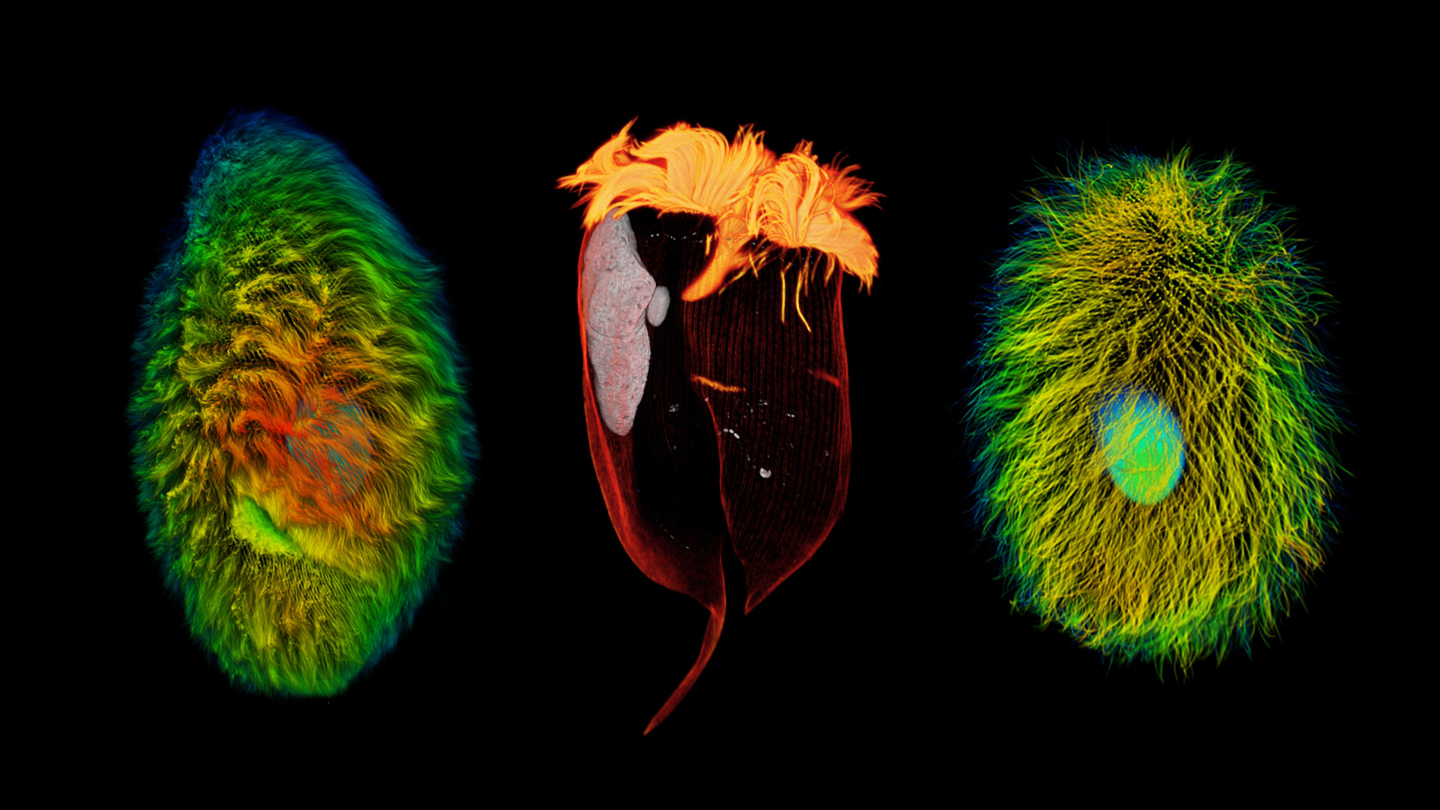
The headline-grabbing part of the research is the suggestion of a newfound organelle in methane-producing gut microbes. In broad terms, an organelle is a specialized structure within a cell that carries out a specific function. Many people associate organelles with more complex cells, but microbes can also contain highly organized internal compartments.
In this case, the structure appears linked to methanogens: microbes that generate methane through their metabolism. If the compartment is indeed helping coordinate methane production, that would make it more than a curiosity. It would be a functional machine, a kind of cellular micro-reactor dedicated to handling a difficult and important chemical pathway.
Why compartmentalization is a big deal
Cells organize reactions for a reason. Some chemical steps work better when enzymes, cofactors, and reactants are packed together in one place. Compartmentalization can improve speed, reduce interference from other processes, and protect the rest of the cell from unstable intermediate molecules.
For methanogens, that logic is especially compelling. Methane production involves specialized biochemistry and unusual enzymes. A dedicated compartment could help these microbes run that chemistry more efficiently, especially in the crowded and competitive ecosystem of the rumen.
What this could mean for microbial evolution
The discovery also adds to a broader scientific trend: microbes are turning out to be far more structurally sophisticated than old textbook sketches suggested. For decades, microorganisms were often portrayed as minimalistic bags of chemistry. Modern imaging and molecular tools keep overturning that assumption.
If a cow methane organelle is confirmed and characterized in detail, it would reinforce the idea that microbial cells have evolved intricate internal logistics to solve metabolic challenges. That is important not just for agriculture, but for microbiology as a whole.
How this changes the strategy for cutting cattle emissions
The livestock sector has already tested several approaches to reducing methane. Feed additives, selective breeding, vaccine concepts, and microbiome interventions have all been explored. The problem is that methane production in the rumen is deeply embedded in a complex ecological system. Push too hard on one part, and you can hurt digestion, animal health, or farm economics.
A more precise biological target could improve that equation.
From broad suppression to targeted intervention
Most anti-methane strategies today work like ecosystem nudges. They alter diet, shift microbial populations, or change fermentation patterns. Those methods can help, but they are often variable across herds, geographies, and feeding systems.
If researchers can identify a structure that is central to methane formation, future interventions might become more targeted. Instead of broadly trying to suppress methanogens, scientists could aim at the mechanisms that make methane synthesis efficient.
- Disrupt assembly of the organelle.
- Block key enzymes concentrated inside it.
- Interfere with transport of compounds into the compartment.
- Alter rumen conditions that make the structure effective.
That does not mean a commercial solution is around the corner. It does mean the roadmap could get sharper.
What a practical methane-reduction pipeline might look like
In biotech terms, the discovery could eventually support a workflow something like this:
identify structure -> map enzymes -> test inhibitors -> validate rumen safety -> measure methane reduction -> scale for feed systems
That sequence is still hypothetical, but it captures why this finding is strategically useful. Once science can map the machinery, applied research can start asking which parts are vulnerable, safe to influence, and commercially realistic.
Why farmers, climate policymakers, and food companies should care
This is where microbiology meets economics. Cattle methane is not just a scientific curiosity; it sits at the center of regulatory pressure, sustainability reporting, and food supply chain commitments. Companies selling meat and dairy increasingly need credible emissions reductions. Governments want agricultural climate gains without destabilizing food production. Farmers need tools that work in the real world, not just in lab conditions.
A discovery like this matters because it hints at interventions that could be more exact and potentially less disruptive. If methane can be reduced by targeting microbial architecture rather than radically changing animal management, the path to adoption gets more plausible.
The best climate solution for livestock is not necessarily the most dramatic one. It is the one that cuts emissions without breaking digestion, margins, or trust in the food system.
The scientific caution flags still matter
For all the excitement, this is not the moment to oversell. Early-stage biological discoveries often generate splashy headlines before the harder validation work begins. Scientists will need to confirm what the structure is, how universal it is across methanogens, and whether it truly plays a direct role in methane output under real rumen conditions.
Key questions that still need answers
- Is the organelle present in all major methane-producing gut microbes or only some?
- Does it directly increase methane production, or is it involved in a related metabolic function?
- Can it be targeted without harming the wider rumen microbiome?
- Will findings from imaging and laboratory analysis hold up in live animal systems?
Those questions are not a sign of weakness. They are exactly how strong science progresses. But they do separate meaningful discovery from near-term application.
What this reveals about the future of climate biology
The broader lesson here is that climate innovation is becoming more granular. Instead of treating emissions sources as monoliths, researchers are drilling down into the microscopic machinery behind them. That is true in soil carbon science, industrial fermentation, carbon capture microbes, and now livestock methane.
The hidden power of this approach is precision. When science identifies the actual structures and pathways doing the work, intervention becomes less guesswork and more engineering. Not easy engineering, but engineering nonetheless.
That is especially relevant for methane, where timing matters. Because methane has strong near-term warming effects, reducing it can deliver climate benefits faster than some carbon-focused measures. Cattle emissions are therefore an attractive target if solutions can be deployed without major trade-offs in food production.
Pro Tip for watching this field
Do not just track whether a study found a new structure. Watch for the next wave of evidence:
- high-resolution imaging that confirms the compartment consistently
- genetic studies linking the structure to methane metabolism
- animal trials showing measurable emissions impact
- feed or microbial products designed around that mechanism
Those are the signals that move a discovery from fascinating to actionable.
The bigger picture for cow methane organelle research
There is something almost poetic about this development. One of agriculture’s most politically charged climate problems may come down, in part, to a tiny compartment inside an even tinier organism living inside a cow. That is a reminder of how layered biological systems really are.
It is also a reminder that progress often starts by seeing what was previously invisible. Better imaging tools, sharper molecular methods, and cross-disciplinary research are making hidden structures visible across biology. Each one can become a lever for medicine, energy, agriculture, or climate action.
For now, the cow methane organelle is best understood as a compelling clue, not a finished answer. But it is the kind of clue that can reorient an entire field. If methane production in the rumen depends on organized microbial machinery, then future emissions solutions may come from targeting that machinery with far more finesse than today’s broad approaches.
And that is what makes this discovery feel bigger than a niche microbiology story. It is a preview of where climate science is heading: deeper into cells, closer to mechanisms, and more willing to solve planetary problems by understanding the smallest systems in extraordinary detail.
The information provided in this article is for general informational purposes only. While we strive for accuracy, we make no guarantees about the completeness or reliability of the content. Always verify important information through official or multiple sources before making decisions.