Decode the U.S.-Saudi Nuclear Deal
Decode the U.S.-Saudi Nuclear Deal
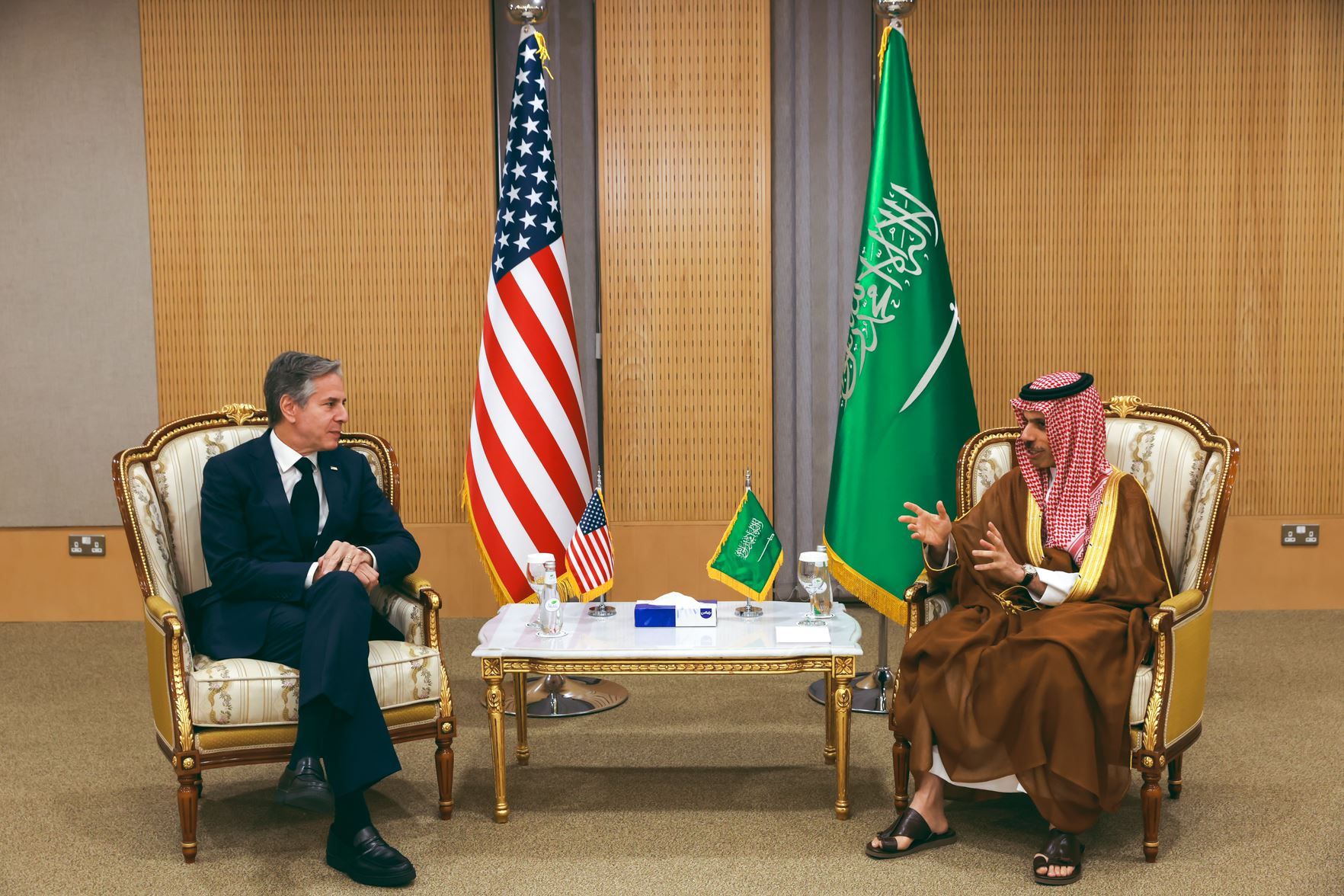
The U.S.-Saudi nuclear deal is not just another defense or energy agreement. It is a geopolitical stress test for Washington, Riyadh, and the wider Middle East. At stake is far more than electricity generation. The real question is whether the United States can support Saudi Arabia’s civilian nuclear ambitions without weakening nonproliferation norms, inflaming regional rivals, or handing China and Russia a diplomatic opening in the Gulf. For Saudi Arabia, the deal is about diversification, prestige, and leverage. For the U.S., it is about influence, restraint, and whether old alliance tools still work in a multipolar era.
- The U.S.-Saudi nuclear deal sits at the intersection of energy strategy, security policy, and great-power competition.
- Saudi Arabia wants nuclear power for diversification, desalination, and long-term economic positioning.
- Washington wants to shape the program while avoiding a precedent that weakens nonproliferation rules.
- The biggest flashpoint is whether Riyadh accepts strict limits on enrichment and reprocessing.
- The deal could redraw the diplomatic map of the Gulf if Iran, China, and Russia respond aggressively.
The U.S.-Saudi nuclear deal and the new Gulf order
The debate around the U.S.-Saudi nuclear deal is really a debate about who gets to define security in the Gulf. For decades, the region has been shaped by oil diplomacy, arms sales, and U.S. military guarantees. But that formula is under pressure. Saudi Arabia wants to move beyond hydrocarbons, lock in energy security, and show it can build advanced industrial capacity at home. Nuclear energy fits neatly into that ambition because it promises large-scale power generation, desalination support, and a symbolic leap into the ranks of technologically sophisticated states.
Washington, meanwhile, sees both opportunity and risk. A managed civilian nuclear partnership could keep Saudi Arabia closer to the U.S. strategic orbit. But a loose arrangement could normalize dangerous behavior, especially if it opens the door to domestic fuel-cycle capabilities that can be repurposed later. That tension is the core of the issue: the deal is either a tool of containment or a template for escalation.
Why Saudi Arabia wants nuclear power
Saudi Arabia’s interest in nuclear power is not a sudden obsession. It is a logical extension of the kingdom’s broader transformation agenda. The state wants to reduce dependence on crude oil for domestic electricity, preserve more oil for export, and diversify the economy. Nuclear energy can provide baseload power at scale, which matters in a country where demand is growing and climate conditions are punishing.
There is also the matter of desalination. Water security is not a side issue in the Gulf. It is the issue. Nuclear energy can support energy-intensive desalination systems, giving Saudi planners a more resilient pathway for meeting long-term urban and industrial demand. That makes the project not just about prestige, but about state capacity.
For Riyadh, nuclear power is less about uranium and more about leverage, industrial credibility, and future-proofing the kingdom’s energy system.
But the symbolism matters too. Saudi leaders do not want to look technologically dependent while rivals invest in advanced energy systems. A nuclear program signals that the kingdom is no longer merely a buyer of weapons and oil equipment. It wants to become a builder, operator, and agenda-setter.
Why the U.S. is cautious about the U.S.-Saudi nuclear deal
The United States has a long memory when it comes to nuclear proliferation. Every civilian nuclear deal carries the same uncomfortable question: can the technology stay civilian? That concern is sharper in Saudi Arabia because the kingdom has sometimes spoken in ambiguous terms about matching Iran if Tehran ever crosses a threshold. Those statements may be political signaling, but Washington cannot pretend they are irrelevant.
The U.S. also knows that nuclear cooperation is not just a commercial arrangement. It is a strategic endorsement. If Washington gives Riyadh too much flexibility, other allies will demand similar treatment. That would undermine the logic of 123 Agreement style constraints and weaken the global norm that civilian nuclear energy should not come with fuel-cycle sovereignty by default.
There is another layer: American credibility. U.S. officials have spent years insisting that civilian nuclear cooperation must come with safeguards. If the administration makes exceptions for a major Gulf partner, critics will argue that nonproliferation rules are negotiable when money and oil are involved. That would be a terrible message to send at a time when nuclear risk is already rising globally.
The enrichment question is the real battle
Every serious conversation about the U.S.-Saudi nuclear deal eventually lands on one issue: enrichment. Does Saudi Arabia get the right to enrich uranium on its own soil? Or does it import fuel under strict international oversight?
This is not a technical footnote. It is the central political fight. Enrichment is the most sensitive part of the fuel cycle because it can, in the wrong hands, shorten the path to weapons material. Reprocessing poses similar concerns. If Saudi Arabia insists on keeping those options open, the U.S. will have to decide whether to walk away, compromise, or accept a deal that is strategically expensive.
From Riyadh’s perspective, refusing enrichment rights can look like a sovereignty issue. From Washington’s perspective, granting them can look like a nonproliferation failure. That is why the negotiations are so hard. Both sides can claim they are being rational, and both can still be fundamentally incompatible.
What a strict deal would likely include
- Limits on
uranium enrichmentandreprocessing. - Full-scope safeguards with robust international inspection requirements.
- Fuel supply guarantees to reduce the case for domestic enrichment.
- Technical cooperation tied to civilian-only use.
- Clear penalties or suspension clauses if conditions are violated.
A strict framework would not eliminate risk, but it would reduce ambiguity. In nuclear diplomacy, ambiguity is where bad outcomes grow.
China, Russia, and the competitive shadow over the deal
The U.S.-Saudi nuclear deal also has to be understood in the context of intensifying competition with China and Russia. If Washington hesitates too long or demands terms Riyadh finds politically insulting, Saudi Arabia has other options. Beijing and Moscow are ready to offer infrastructure, nuclear technology, financing, and diplomatic flexibility with fewer lectures about governance or strategic restraint.
That does not mean their offers are risk-free or superior. It means leverage has shifted. Saudi Arabia can now shop its partnerships around. This is what makes the current moment different from older U.S.-Gulf negotiations. Riyadh is not trapped. It can bargain. And that changes the tone on both sides of the table.
China, in particular, benefits from any perception that the U.S. is too rigid or unreliable. It can position itself as the easier partner while accumulating influence in one of the world’s most strategically important energy corridors. Russia, despite its own constraints, can still exploit the optics of U.S. hesitation. In that sense, the nuclear talks are not only about reactors. They are about who gets to shape the future security architecture of the Gulf.
What this means for Iran and regional stability
No analysis of the U.S.-Saudi nuclear deal is complete without Iran. Tehran will read any Saudi nuclear progress through a security lens. Even if the program is purely civilian, the regional optics are combustible. Iran has long portrayed itself as a state under siege. A Saudi nuclear program, especially one backed by the U.S., will feed that narrative and potentially intensify the regional arms race mentality.
That does not automatically mean escalation. But it does mean every technical decision has strategic meaning. If the deal is structured with strong verification and transparent safeguards, it can help reassure neighbors. If it is opaque or overly flexible, it could sharpen suspicions and push regional actors toward hedging behavior.
The wrong nuclear bargain could deepen the Middle East’s security dilemma, where every move taken for defense is read as preparation for offense.
That is the nightmare scenario: civilian nuclear expansion becomes one more layer of mistrust in a region already overloaded with it.
Why this matters beyond the Gulf
This agreement is bigger than Saudi Arabia and the United States. It matters because it may become a model, warning, or excuse for other nuclear partnerships. If Washington proves it can combine cooperation with hard safeguards, it strengthens the case for disciplined diplomacy. If it caves on core norms, it invites other states to demand the same concessions.
It also matters because energy transition politics are changing. Countries do not view nuclear power the same way they did 20 years ago. As grids strain, demand rises, and climate targets tighten, nuclear energy is being reconsidered as a stable, low-carbon option. That makes the policy challenge more complex, not less. The question is no longer whether nuclear energy has a place. It is whether the institutional guardrails are strong enough to keep civilian ambitions from bleeding into strategic risk.
Pro tips for reading the deal like a strategist
- Watch whether Saudi officials mention
enrichmentas a red line or a bargaining chip. - Track whether the U.S. frames the agreement as commercial, strategic, or security-first.
- Pay attention to how Iran, Israel, China, and Russia publicly react, not just what they do privately.
- Look for signs that fuel supply and waste management are being used as leverage points.
- Assume the real deal is being negotiated in the gaps between public statements.
The likely path forward
The most realistic outcome is not a grand, all-encompassing nuclear partnership that solves everything. It is a layered deal with limits, inspections, and political ambiguity. Riyadh wants room to maneuver. Washington wants enough control to claim success without opening a proliferation loophole. That leaves plenty of room for friction.
If both sides are disciplined, the deal could give Saudi Arabia a civilian nuclear pathway while preserving the U.S. role as a gatekeeper. If either side overplays its hand, the talks could stall, and Riyadh could look elsewhere for partners. That would not just weaken U.S. influence. It would signal that Washington can no longer set the rules of nuclear engagement even with its closest regional partners.
That is why this moment matters. The U.S.-Saudi nuclear deal is a test of whether the United States can still trade access for restraint in a world where its partners have more alternatives than ever. The outcome will shape not only Gulf energy strategy, but the future credibility of nonproliferation diplomacy itself.
For now, the smartest reading is cautious optimism. The deal can still work. But only if policymakers stop treating it like a routine energy agreement and start treating it like what it really is: a high-stakes wager on the future balance of power in the Middle East.
The information provided in this article is for general informational purposes only. While we strive for accuracy, we make no guarantees about the completeness or reliability of the content. Always verify important information through official or multiple sources before making decisions.