Putin Xi Modi Redraw Power
Putin Xi Modi Redraw Power
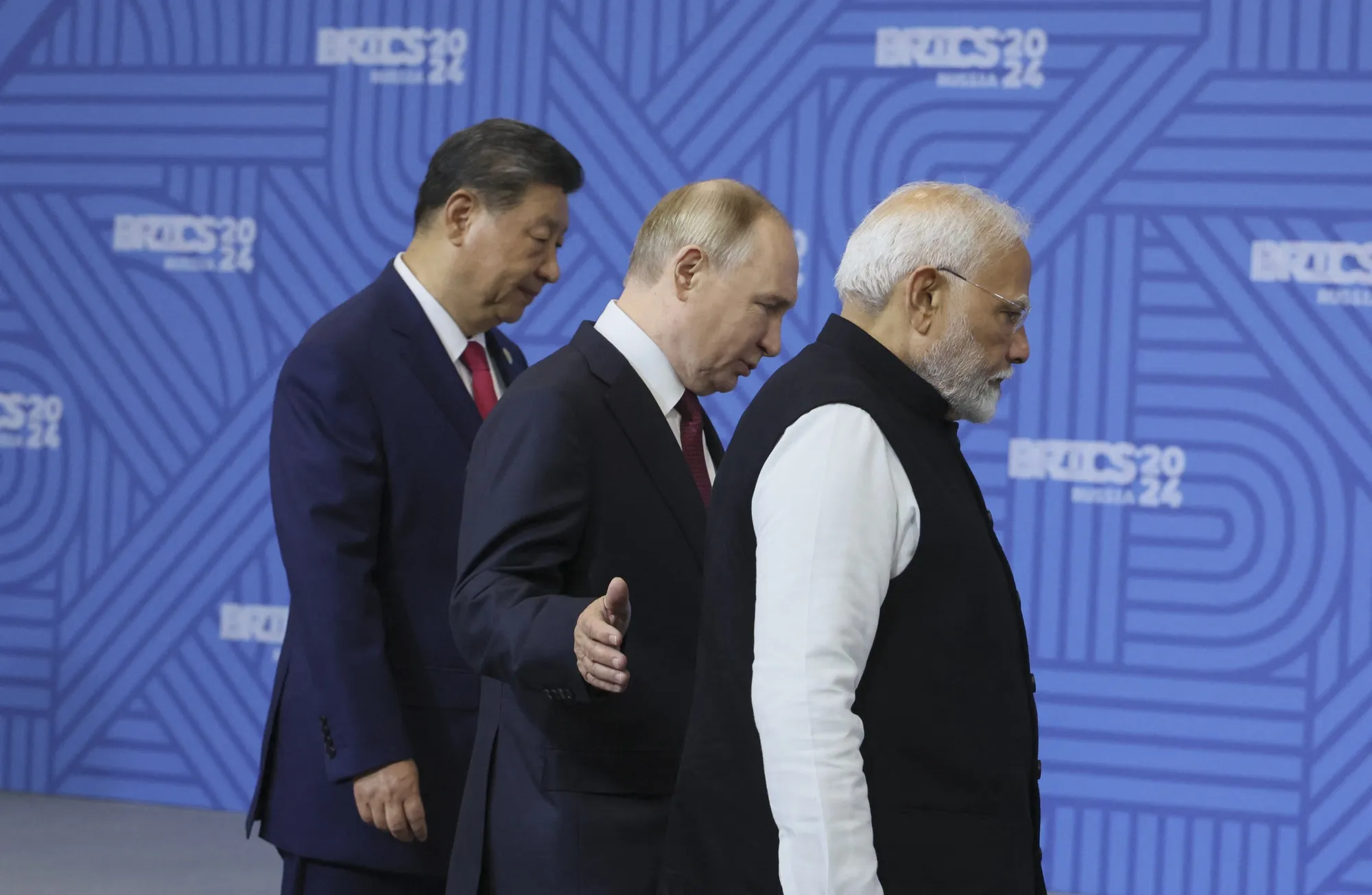
The diplomatic picture around Putin Xi Modi is no longer just about optics, handshakes, and summit-stage choreography. It is about leverage. As Moscow, Beijing, and New Delhi deepen coordination, the global system is being pushed toward a more fragmented order where energy, trade, sanctions, defense, and technology policy all collide at once. For businesses, governments, and investors, that matters because the old assumption of a relatively predictable global center of gravity is weakening fast. The result is not a clean split between East and West, but something messier: competing blocs, selective cooperation, and a constant test of who can bend the rules without breaking them.
- Putin Xi Modi signals a strategic realignment, not just a ceremonial summit.
- The three powers are using diplomacy to expand leverage against Western pressure.
- Trade, energy, sanctions, and technology are becoming inseparable fronts in the same contest.
- Global companies should prepare for more compliance risk and less policy predictability.
- The biggest shift may be structural: a world where multipolarity becomes the default.
Why the Putin Xi Modi alignment matters now
The significance of Putin Xi Modi lies in timing. Each leader brings a different strategic need to the table. Russia wants room to maneuver under sanctions and military isolation. China wants to shape a non-Western economic and security architecture that reduces dependency on U.S.-led systems. India wants strategic autonomy, which in practice means extracting value from both sides without being trapped in either camp. That makes the relationship less like a formal alliance and more like a pragmatic convergence of interests.
For the West, this is frustrating because it resists easy categorization. The temptation is to frame the trio as a unified anti-American front. That is too neat. Their interests overlap, but they also clash. India is wary of China. China is cautious about Russian instability. Russia needs China, but does not want to become junior partner permanently. Even so, the shared incentive to dilute Western pressure is enough to create meaningful cooperation.
The strategic logic behind the meeting
Summits like this are never just about the photo-op. They are signals sent to multiple audiences at once: domestic elites, neighboring states, allies, and adversaries. The message here is that the geopolitical center of gravity is shifting away from a unipolar model and toward one where power is negotiated across several overlapping networks.
Russia wants endurance
For Moscow, endurance is the goal. Sanctions have constrained access to capital, advanced manufacturing, and Western markets, but Russia remains deeply relevant as an energy, arms, and nuclear power. The country’s strategic play is to survive long enough to normalize exceptionalism. Tighter links with China and selective cooperation with India help Moscow argue that isolation is not absolute.
China wants optionality
Beijing is playing a longer game. It has the industrial base, the financing machinery, and the technology ambitions to shape global standards. But it also faces escalating friction with the U.S. and its allies. Keeping Russia close helps preserve continental depth and strategic distraction. Maintaining a working relationship with India reduces the risk of a hostile two-front dynamic in Asia.
India wants flexibility
India is the hardest to pigeonhole. It wants growth, defense modernization, and geopolitical independence. That means buying Russian energy when convenient, preserving ties with the U.S. when useful, and refusing to become a subordinate in any larger bloc. In practical terms, India is betting that a multipolar order gives it more room to rise than a rigid alliance system would.
What looks like alignment is often something more durable and more dangerous: a shared interest in weakening the leverage of Western institutions without fully replacing them.
How Putin Xi Modi reshapes trade and sanctions
The immediate economic implication of Putin Xi Modi is not a brand-new trade bloc. It is a series of workarounds, corridors, and bilateral deals that make sanctions harder to enforce and supply chains harder to map. That matters because sanctions only work when the target cannot easily find alternative buyers, payment rails, or logistics partners.
Russia has already shown how quickly discounted energy can be redirected. China remains a critical absorber of commodities and industrial inputs. India, meanwhile, has become a more pragmatic buyer of Russian crude when global prices and domestic inflation pressures align. Together, those decisions chip away at the idea that Washington or Brussels can set the terms of global commerce unilaterally.
For multinational firms, the takeaway is blunt: the compliance burden is rising while certainty is falling. Companies operating across Asia, Europe, and the Middle East must increasingly account for secondary sanctions risk, export controls, dual-use technology restrictions, and payment friction. A deal that looks clean in one jurisdiction can become toxic in another.
- Pro tip: Treat geopolitical exposure as a supply-chain variable, not just a legal issue.
- Pro tip: Review counterparties for sanctioned ownership, routing exposure, and re-export risk.
- Pro tip: Build contingency plans for
energy,payments, andlogisticsseparately, not as one umbrella scenario.
Technology is now part of the battlefield
Any serious analysis of Putin Xi Modi has to include technology because the next phase of global competition will not be won only with troops or tariffs. It will be won through semiconductor access, cloud infrastructure, artificial intelligence governance, satellite networks, telecom standards, and industrial software. That is where bloc formation becomes more consequential than a simple diplomatic thaw.
China is already pushing for greater technological self-reliance and alternative standards. Russia, cut off from much of the Western tech stack, is forced to adapt through substitution and deeper dependence on non-Western partners. India wants to grow its tech sector without ceding sovereignty to either camp. The tension is obvious: everyone wants access to advanced systems, but nobody wants to surrender control.
This creates a more fragmented digital landscape. Firms may need separate product strategies for different regulatory regimes. AI models may face different compliance requirements. Hardware supply chains may need to be redesigned around restricted components. Data governance, once a policy topic, becomes a strategic moat.
Why this matters for the U.S. and Europe
The West still has major advantages: deep capital markets, leading research institutions, alliance networks, and significant control over critical financial infrastructure. But the Putin Xi Modi dynamic exposes a vulnerability that is easy to underestimate. A coalition does not need to be perfectly unified to be effective. It only needs to coordinate enough to raise the cost of Western pressure.
That means U.S. and European policymakers face a harder problem than simple containment. Heavy-handed sanctions may push more actors toward pragmatic alignment with Russia and China. Overreach can accelerate the very realignment it aims to prevent. At the same time, underreaction invites the gradual normalization of parallel systems in trade, finance, and technology.
There is no easy reset. The more realistic path is selective engagement, sharper export control enforcement, and more credible economic statecraft. But that only works if allies stay aligned and domestic politics do not fragment the strategy.
The next phase is a test of limits
The big question is not whether Putin Xi Modi represents a permanent alliance. It probably does not. The real question is how far this coordination can go before the internal contradictions become too expensive. India will not want to be tethered to China. China will not want Russian volatility to contaminate its own ambitions. Russia will want autonomy it can no longer fully afford.
Still, even imperfect coordination can change the shape of the system. A looser, transactional bloc can still slow Western initiatives, complicate supply chains, and create enough ambiguity to weaken enforcement. That is how modern power works now: less like a grand alliance and more like a series of overlapping constraints.
The defining feature of this moment is not a new Cold War. It is a more fluid contest where states use ambiguity as a weapon and interdependence as leverage.
What companies should do next
Executives should stop treating geopolitics as background noise. The Putin Xi Modi shift suggests a world where political risk travels faster and touches more parts of the business model.
- Map exposure by country, not just by region.
- Stress test sourcing for sanctions, tariffs, and export controls.
- Reassess payment flows that touch multiple jurisdictions.
- Build scenario plans for sudden policy shifts in energy and defense-adjacent sectors.
- Track standards-setting efforts in
AI,telecom, andcloudinfrastructure.
That may sound like overkill. It is not. The companies that will outperform in the next decade are the ones that understand how power actually moves: through regulation, infrastructure, finance, and technical standards, not just headlines.
The bottom line
Putin Xi Modi is a shorthand for something bigger than diplomacy. It captures the emergence of a world where states are increasingly willing to coordinate just enough to resist Western pressure, while stopping short of full alignment. That ambiguity is the point. It gives each leader room to maneuver and makes the global system harder to police, harder to predict, and harder to stabilize.
For policymakers, that means the era of assumed dominance is over. For businesses, it means resilience has to become a core strategy. And for everyone else, it means the next geopolitical shock is less likely to arrive as a single dramatic rupture than as a slow, relentless rewiring of the rules.
The information provided in this article is for general informational purposes only. While we strive for accuracy, we make no guarantees about the completeness or reliability of the content. Always verify important information through official or multiple sources before making decisions.