Disability Integration Mandate Faces Reversal
Disability Integration Mandate Faces Reversal
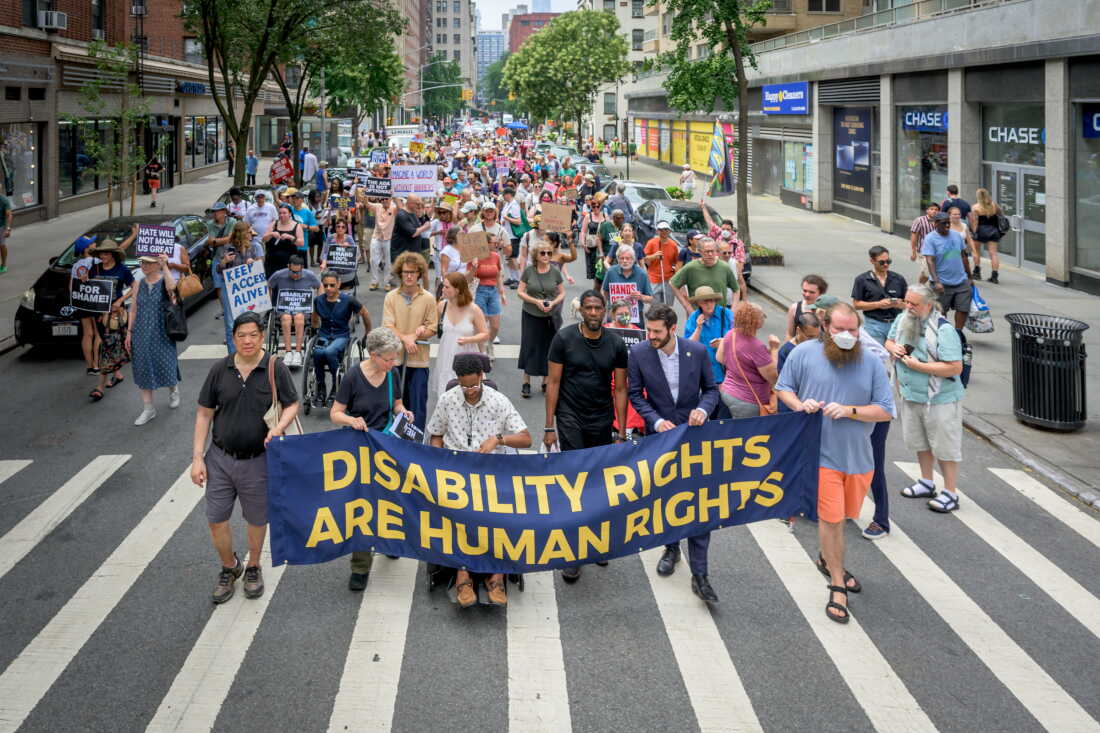
A quiet federal policy shift can decide whether someone lives in their own apartment, near family, with daily support – or inside an institution they never chose. That is the stakes of the disability integration mandate, a civil rights principle now facing rollback under the Trump administration. For disabled Americans, caregivers, states, and health systems, this is not an abstract legal fight. It is about whether public programs must prioritize community-based living or whether institutional care can regain ground as the default. The move signals a broader rethinking of how aggressively Washington will enforce disability rights under the Americans with Disabilities Act, especially when those rights collide with state budgets, staffing shortages, and political pressure to shrink federal oversight.
- The Trump administration is moving to reverse or weaken the
disability integration mandate, a key civil rights protection for disabled people. - The mandate is rooted in the
ADAand the landmarkOlmsteadprinciple that unnecessary institutionalization can be discrimination. - States could gain more flexibility, but disabled people may face longer waits for community services and greater risk of institutional placement.
- The shift could reshape
Medicaid, home care, disability litigation, and federal enforcement priorities for years.
Why the disability integration mandate matters
The disability integration mandate is deceptively simple: public entities should administer services in the most integrated setting appropriate to a person’s needs. In plain English, that means disabled people should not be forced into nursing homes, psychiatric facilities, or other institutions when they can live safely in the community with support.
This principle became a pillar of disability rights through the Olmstead decision, which interpreted the ADA as protecting people from unjustified segregation. The logic was radical in its clarity. If the government provides services, it cannot structure those services in a way that unnecessarily isolates disabled people from everyday life.
The core question is not whether care is available. It is whether the government can make institutional life easier to access than independent life.
That distinction matters because institutions often have more stable funding streams than home and community-based care. A person may qualify for a nursing facility bed faster than they can get reliable attendants, accessible transportation, or supported housing. The law’s integration mandate was designed to pressure states to fix that imbalance.
What reversing the disability integration mandate could change
If the federal government pulls back, the immediate effect may not look dramatic. There may be no sudden closure of home care programs or instant rewrite of every state disability plan. But the deeper consequences could be profound because civil rights enforcement often works through pressure, guidance, and the credible threat of litigation.
A weakened disability integration mandate could alter how the Department of Justice approaches investigations, consent decrees, and settlement agreements. It could also give states more room to argue that budget constraints or workforce shortages limit their obligations to provide community-based services.
States may gain flexibility while individuals lose leverage
Governors and state agencies have long argued that disability service systems are expensive, complex, and strained by workforce shortages. They are not wrong. Recruiting direct support professionals is difficult. Home care agencies struggle with turnover. Rural areas often have few providers. Waiting lists for home and community-based services can stretch for years.
But flexibility cuts both ways. For state officials, it can mean relief from federal scrutiny. For disabled people, it can mean fewer tools to challenge a system that says institutional care is available now, while community support might arrive someday.
- More discretion for states: Agencies may have broader authority to decide how quickly they expand community services.
- Less federal pressure: Enforcement actions tied to unnecessary institutionalization may slow.
- Longer waiting lists: Demand for
Medicaid HCBSmay keep rising without a stronger federal push. - Higher litigation burden: Individuals and advocacy groups may need to carry more of the legal fight themselves.
The politics behind the rollback
The Trump administration’s move fits a recognizable pattern: reduce federal oversight, narrow civil rights enforcement, and shift more responsibility to states. Supporters are likely to frame the reversal as a correction to bureaucratic overreach. They may argue that Washington should not dictate how states allocate scarce disability, health, and long-term care dollars.
That argument has political force because disability services are expensive and often hidden inside complicated Medicaid budgets. Lawmakers can talk about efficiency without saying they are reducing autonomy. They can talk about state flexibility without naming who loses bargaining power when federal enforcement recedes.
Critics see the reversal differently. To disability rights advocates, the integration mandate is not a luxury policy. It is the legal architecture that keeps disabled people from being warehoused because institutions are administratively convenient.
When community living becomes optional for the state, it can become unreachable for the person.
Why this is bigger than one rule
The fight over the disability integration mandate lands at a volatile moment for American care infrastructure. The population is aging. More families need long-term support. The direct care workforce is underpaid and overstretched. Housing costs are crushing people with fixed incomes. Meanwhile, hospitals and nursing facilities remain powerful players in local health economies.
That means a rollback could ripple beyond disability law. It could affect older adults trying to avoid nursing homes, people with mental health disabilities leaving institutions, and families who rely on paid aides to keep loved ones at home.
The Medicaid connection
Medicaid is the engine of long-term services and supports in the United States. It pays for nursing facility care and, through waivers and state plan options, many home and community-based services. But federal law has historically treated institutional care as more mandatory than many community-based supports.
That mismatch is the reason the integration mandate matters so much. Without strong civil rights enforcement, states can preserve systems where institutional care is guaranteed while community living depends on waiver slots, capped funding, or years of waiting.
Pro tip for families: If a loved one depends on community-based services, document every assessment, service denial, waiting list notice, and care gap. In a weaker enforcement environment, detailed records become even more important for appeals, advocacy, and legal review.
The human cost of policy abstraction
Policy debates often flatten disabled people into budget categories: waiver participant, nursing facility resident, high-cost beneficiary. But the integration mandate is about ordinary choices that many nondisabled people take for granted. Who decides when you wake up? Can you work? Can you see friends? Can you attend school? Can you choose what to eat, where to worship, or whether to go outside?
Institutional settings vary widely, and some people need intensive care. The strongest version of the integration mandate does not deny that. It says the government should not default to segregation when integrated support is appropriate and wanted.
That is why the rollback feels so consequential. It does not merely adjust administrative language. It challenges the presumption that disabled people belong in the center of civic life, not on its margins.
What happens next
The next phase will likely unfold across agencies, courts, and state capitols. Disability rights groups may challenge the reversal, arguing that the ADA and Olmstead still impose meaningful obligations regardless of an administration’s enforcement posture. States may revisit settlement agreements or slow community service expansions. Congress could face renewed pressure to clarify access to HCBS, though major legislation remains politically difficult.
Watch three signals. First, whether the DOJ continues opening investigations into unnecessary institutionalization. Second, whether states use the rollback to defend longer waiting lists or reduced service intensity. Third, whether courts treat the administration’s position as persuasive or as a departure from settled disability rights law.
The future of the disability integration mandate will not be decided by rhetoric alone. It will be decided in budget documents, care plans, waiver approvals, court filings, and the daily lives of people who need support to remain at home.
The bottom line
The Trump administration’s reversal is more than a technical shift in civil rights enforcement. It is a test of whether the country still treats community living as a right or merely as a program states can fund when convenient. The skeptical view is warranted: once federal pressure fades, vulnerable systems rarely become more generous on their own.
But the backlash may also sharpen the national conversation. Disability policy has often advanced when the stakes became impossible to ignore. If advocates, families, providers, and state leaders use this moment to expose the fragility of community care, the fight over the integration mandate could become a turning point rather than just a retreat.
The information provided in this article is for general informational purposes only. While we strive for accuracy, we make no guarantees about the completeness or reliability of the content. Always verify important information through official or multiple sources before making decisions.