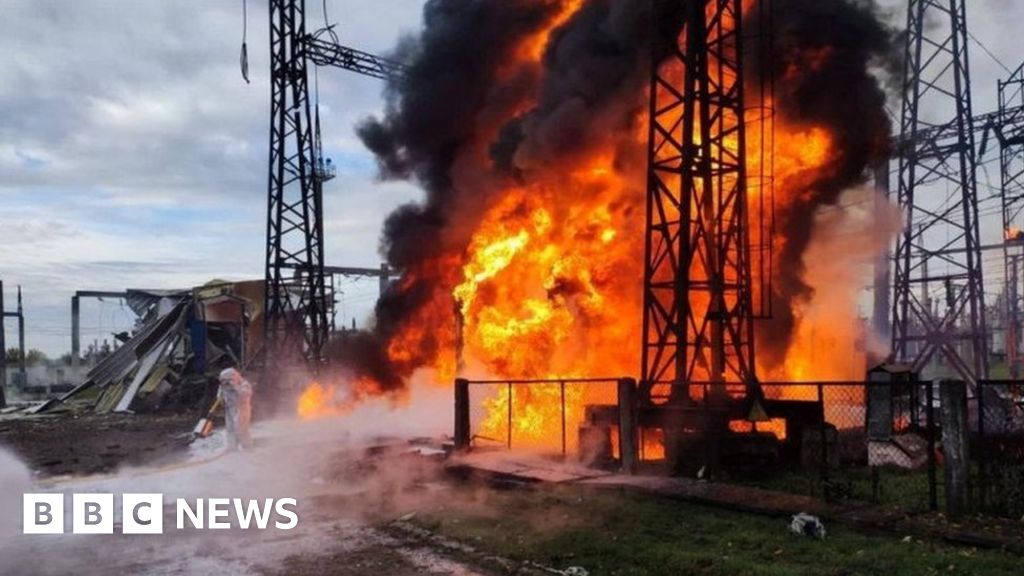
Drone Impact on Ukrainian Homes Shows the War’s Relentless Escalation
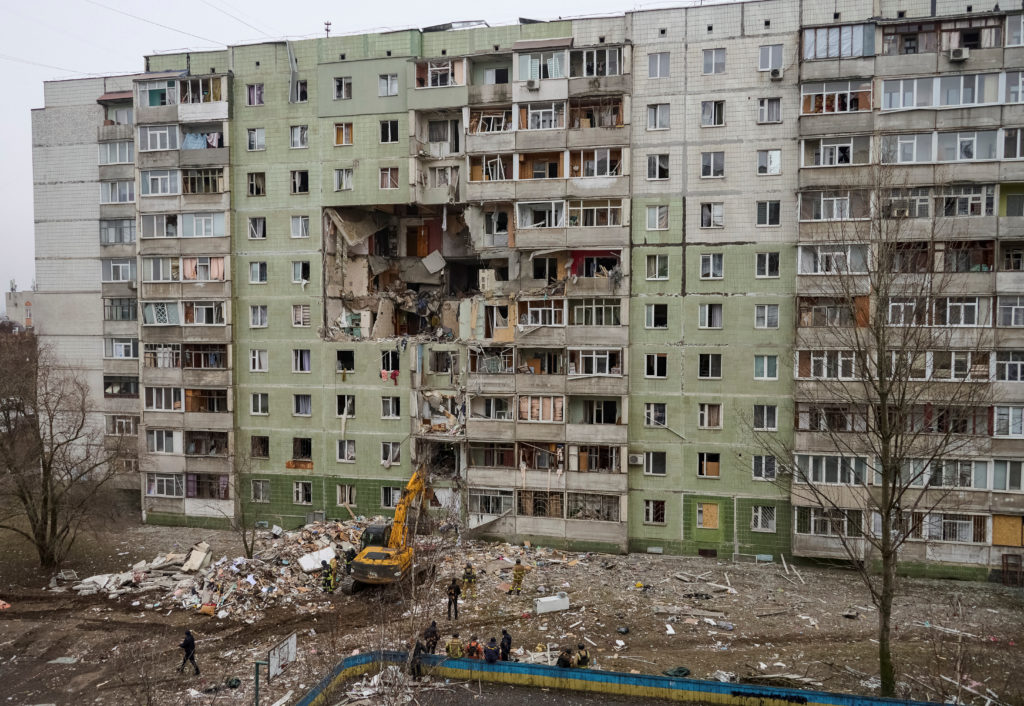
The sudden flash of a Russian drone strike punching into a Ukrainian apartment block captures a brutal reality: Russian drone strike Ukraine apartment incidents now mirror the scale of battlefield assaults. The footage is raw, but the strategic implications are even sharper. Civilians are once again the soft targets in a war defined by cheap, abundant loitering munitions and stretched air defenses. For residents, the front line is now their living room. For Europe, the nightmare is a widening risk corridor where civilian infrastructure and military logistics sit under the same crosshairs. The question is no longer whether urban areas are safe, but how quickly defensive doctrine can adapt before the next drone descends.
- Drone warfare is shifting from battlefield targets to dense urban housing, raising civilian risk.
- Ukraine’s layered defenses face saturation from low-cost, high-volume drones.
- European security policy must balance deterrence, debris management, and rapid warning systems.
- Proliferation of loitering munitions tests international norms and reconstruction plans.
Russian drone strike Ukraine apartment: what the footage really shows
The clip of a Russian drone hitting an apartment in Ukraine is short, but it delivers a dense set of signals. The platform appears to be a low-cost loitering munition, designed for endurance rather than speed. Its glide angle suggests a pre-programmed approach with minimal evasive maneuvering, exploiting the gap between radar coverage and rooftop altitude. This isn’t an isolated tactical choice – it reflects a doctrine that treats civilian high-rises as psychological and logistical targets. Apartments provide human shields, generate international outrage, and force Ukraine to expend valuable interceptors on low-value airframes.
Visual analysis hints at a standardized warhead, likely optimized for blast over penetration. The fireball erupts outward rather than downward, indicating a proximity or impact fuse tuned for facade-level detonation. That matters because it maximizes structural damage and secondary fires without requiring precise window entry. In other words, the drone is built to hurt the shell of the city more than any singular military asset inside it.
A playbook of saturation and timing
Russian forces increasingly time drone swarms with missile volleys to stretch Ukraine’s defenders. The apartment strike may have coincided with broader salvos aimed at energy nodes or rail junctions. By inserting a small drone into the mix, attackers create confusion in the air-defense C2 cycle: operators must decide whether a blip is a decoy or a lethal payload. Every second of hesitation risks impact. Every interceptor expended on a Shahed-class platform is one less ready for a Kalibr cruise missile.
This pacing also erodes civilian morale. Sirens blare more often, yet intercept rates vary by region. Residents grow numb, then complacent, and that complacency can be fatal when a drone skims at rooftop height. Urban landscapes become the testing ground for cheap autonomy and latency-sensitive guidance, stressing everything from radar horizon coverage to the placement of mobile MANPADS teams.
Russian drone strike Ukraine apartment: why civilians are now the front line
The strike underscores how urban density itself is weaponized. An apartment block concentrates people, heat signatures, and electromagnetic noise from routers and appliances. To a drone’s seeker suite, that cluster is a beacon. Civilians cannot simply harden their walls. They need layered solutions: acoustic alerts for low-altitude drones, rooftop netting where feasible, and municipal drills that teach residents where to shelter when the radar gap yawns open.
Another driver is cost asymmetry. A consumer-grade quadcopter modified with a warhead costs a fraction of a dedicated interceptor missile. That inverse relationship incentivizes attackers to keep throwing drones at cities until defenders run low on munitions or patience. It also pushes Ukraine to experiment with electronic warfare at city scale: jamming corridors, spoofing GPS, and creating RF-denied bubbles. Yet jamming risks spillover into hospitals and emergency services, demanding careful coordination.
Humanitarian corridors vs. aerial corridors
Humanitarian corridors assume ground control. Drone corridors ignore them. Apartment strikes blur the line between active combat zones and nominally safe areas. That complicates evacuation planning and aid delivery. Relief agencies now must assess vertical risk profiles – which floors are safest, which facades face the likely ingress vectors, whether stairwells can double as blast buffers. It’s a grim evolution of shelter-in-place guidance, rooted in a reality where windows are entry points and rooftops are radar blind spots.
Key insight: Civil defense is shifting from sirens and basements to integrated sensor webs and micro-interceptors perched on roofs.
How Ukraine’s defenses adapt under drone saturation
Ukraine has built a patchwork of NASAMS, IRIS-T, Gepard, and Patriot systems. Each excels at a slice of the threat spectrum. Drones complicate this by flying below many radar horizons and arriving in waves that blur target prioritization. The apartment strike demonstrates how a single missed intercept can create disproportionate damage and headlines. In response, Ukraine is accelerating three adaptations.
1. Layered sensors and AI cueing
Distributed acoustic sensors, low-light cameras, and EO/IR pods are being networked to spot low-altitude drones earlier. Machine learning models classify engine signatures and flight profiles, reducing false positives from birds or civilian drones. Faster classification compresses the kill chain: detect, decide, destroy. Applied to urban grids, this approach can cue spotters on rooftops to deploy MANPADS or activate directional jammers.
2. Cheaper interceptors and kinetic traps
High-end missiles are unsustainable for low-end threats. Ukraine and its partners are fielding shotgun-style proximity rounds, tethered balloons with sensor-fused nets, and even repurposed anti-drone guns that fire frangible projectiles. The goal is to match cost with cost. If a drone costs $20,000, the countermeasure should be closer to $2,000 than $200,000. Apartment strikes push urgency on this front because every expensive missile used to save a building is one fewer available for defending a substation.
3. Civilian digital drills
Smartphone alerts now need richer metadata: altitude, heading, estimated time-to-impact. Municipalities are experimenting with cell-broadcast alerts that differentiate between cruise missiles and drones. Residents near the apartment strike could have benefited from a five-second warning to move away from windows. The technical challenge is latency – turning sensor detections into actionable pings without flooding users with noise. Expect more integration between public-safety APIs and citywide sensor meshes.
Why this matters for Europe’s broader security posture
The apartment strike is not just a Ukrainian tragedy. It previews a European security landscape where low-altitude drones threaten housing, ports, and power plants. Border states now evaluate their short-range air defense inventories against scenarios that look less like conventional invasion and more like persistent harassment. Insurance markets are watching too: actuarial models must price the risk of drone damage to civilian property, shifting premiums and shaping reconstruction financing.
Politically, every civilian strike raises pressure on allies to accelerate deliveries of interceptors and radars. The optics of a burning apartment resonate more than a cratered depot. That dynamic can spur faster policy movement, but it can also strain stockpiles already stretched by commitments to other theaters.
Energy, logistics, and cascading risk
Urban apartments are often near critical feeders: power lines, switching stations, and fiber trunks. A blast that starts as a residential tragedy can trigger rolling blackouts or network outages. Attackers understand this cascade. By targeting facades instead of transformer yards, they achieve both psychological and systemic effects while complicating attribution and legal responses. Are these war crimes, or are they framed as strikes on dual-use structures? The ambiguity slows international legal action.
For logistics, the fear is normalization. If repeated drone hits on housing become routine, residents may delay reporting incoming threats, and local authorities might triage responses away from non-critical damage. That normalization erodes resilience. The antidote is relentless transparency: publishing intercept rates, near-miss data, and post-strike forensics to keep public attention sharp and to refine defenses.
Pro Tip: Municipalities should inventory rooftop access points and pre-position lightweight anti-drone tools; waiting for centralized assets to respond cedes valuable seconds.
Future trajectory: from apartment strikes to smart cities under siege
Looking ahead, drone warfare will intertwine with the smart city stack. Connected streetlights, traffic cams, and environmental sensors can double as detection nodes. The same LoRaWAN gateways that monitor air quality could flag unusual acoustic signatures. Yet that dual-use potential raises privacy debates and demands robust cybersecurity. If a city network is compromised, attackers could spoof alerts or disable nodes before a strike, making apartments even more vulnerable.
Ukraine’s experience will likely shape global standards. Expect new building codes that recommend shatter-resistant film on windows, reinforced stairwells as blast corridors, and rooftop layouts that minimize line-of-sight approaches. Real estate developers may begin marketing “drone-resilient” features, much as seismic zones birthed quake-ready architecture. Investors will ask how many layers of point-defense a property can support without violating civilian airspace rules.
The hardware curve: more autonomy, lower cost
As autonomy improves, drones will rely less on satellite navigation and more on visual-inertial odometry, making GPS jamming less effective. Swarm tactics will become more common, with dozens of small platforms testing defenses at once. The apartment footage is a snapshot of today’s capabilities; tomorrow’s strikes could be coordinated, multi-axis assaults that aim to saturate every rooftop sensor in a district. Defenders will counter with edge AI on interceptors, enabling faster local decisions without centralized command latency.
Cost curves favor offense for now. Open-source flight controllers, 3D-printed airframes, and commercial batteries keep lowering entry barriers. Defensive procurement cycles are slower, tied to budget cycles and export controls. Bridging that gap requires modular systems that can be upgraded via software, not just hardware swaps.
What needs to happen next
The apartment strike is a warning flare. To prevent repetition, three actions stand out. First, accelerate urban-integrated air defense, merging civilian sensor grids with military interceptors under clear legal frameworks. Second, fund and deploy cheap, abundant interceptors that match drone economics. Third, train civilians with concise, actionable guidance tailored to low-altitude threats, not just high-flying missiles.
Every war tests civilian resilience, but drone warfare rewrites the script. Apartments are no longer bystanders; they are contested surfaces. The footage from Ukraine should push policymakers, engineers, and city planners to treat urban airspace as the new critical infrastructure layer. Ignoring that lesson is a luxury no frontline city can afford.
The information provided in this article is for general informational purposes only. While we strive for accuracy, we make no guarantees about the completeness or reliability of the content. Always verify important information through official or multiple sources before making decisions.